
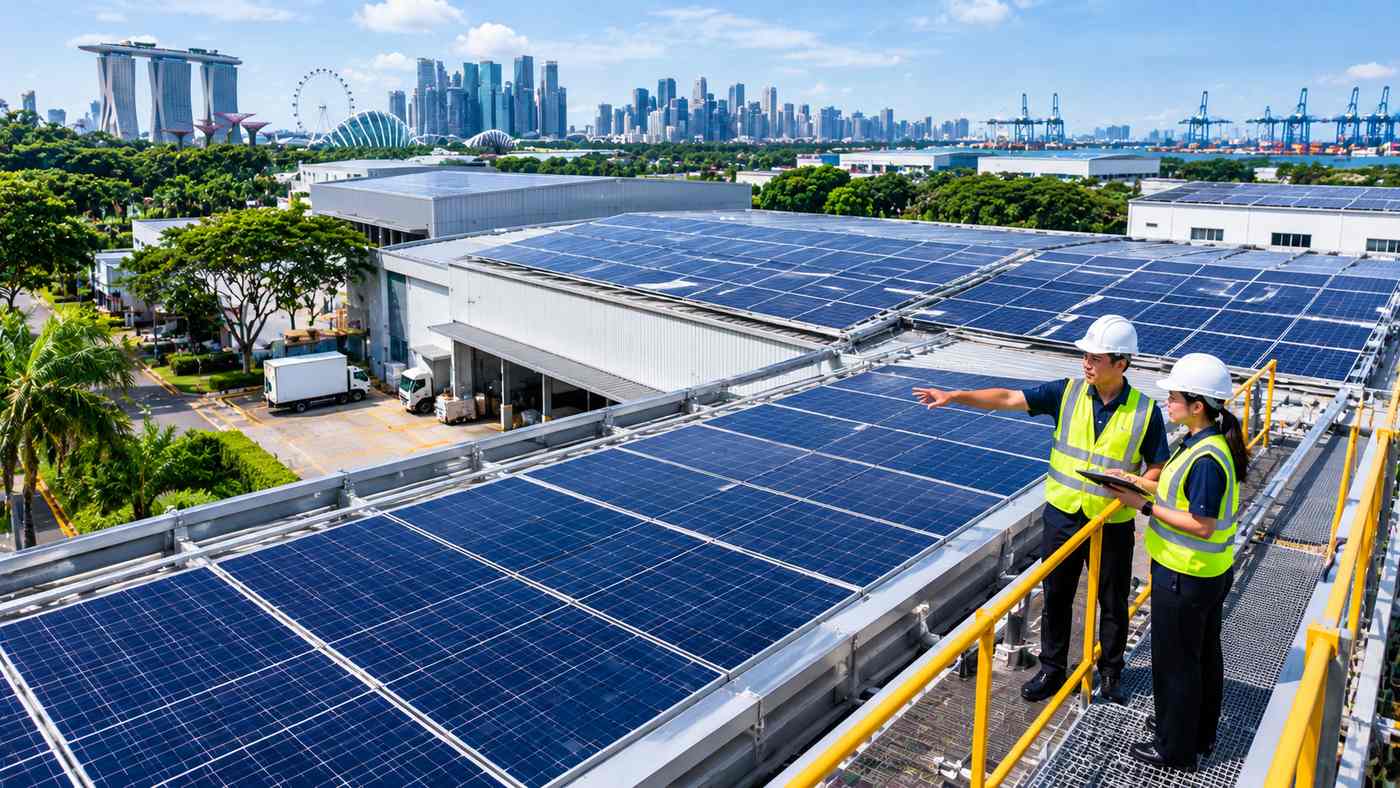
Electricity is an essential operating expense for businesses throughout Singapore. Manufacturing facilities, logistics centres, warehouses, commercial buildings, and retail properties depend on reliable power to operate equipment, maintain comfortable environments, and support daily operations.
As electricity prices fluctuate and sustainability expectations increase, companies are exploring practical ways to manage energy expenditure while reducing their environmental impact.
For businesses researching commercial solar Singapore solutions, rooftop photovoltaic systems provide an opportunity to generate electricity directly at their facilities. Instead of relying entirely on electricity purchased from the grid, organizations can use suitable roof space to produce renewable energy during daylight hours.
Commercial solar is particularly relevant in Singapore, where industrial buildings and large commercial facilities can provide valuable space for renewable electricity generation.
The technology has also become more accessible through financing arrangements such as power purchase agreements, which may allow eligible businesses to adopt solar without paying the entire installation cost upfront.
However, successful solar adoption requires careful consideration of roof suitability, electricity consumption, regulatory approvals, financing, and long-term maintenance.
This guide explores seven important benefits of commercial solar, the installation process, Singapore’s regulatory environment, and how providers such as TotalEnergies ENEOS support businesses transitioning toward cleaner energy.
What Is Commercial Solar Energy?
Commercial solar energy refers to electricity generated by solar photovoltaic systems installed for business or industrial use.
These systems convert sunlight into electrical energy that can power equipment, lighting, cooling systems, and other business operations.
Unlike small residential installations, commercial solar projects may cover extensive roof areas and generate substantial amounts of electricity.
Businesses commonly install solar panels on warehouses, factories, logistics facilities, shopping centres, and other suitable buildings.
How Commercial Solar Panels Work
Solar panels contain photovoltaic cells that generate direct-current electricity when exposed to sunlight.
An inverter converts this electricity into alternating current suitable for most commercial electrical systems.
The generated energy can then supply eligible electrical loads within the building.
If solar generation is insufficient, the facility continues drawing electricity from the grid.
When generation exceeds on-site demand, eligible systems may export surplus electricity according to the relevant arrangements.
Rooftop Solar Versus Ground-Mounted Solar
Rooftop solar systems make use of existing building surfaces.
They are particularly attractive in land-constrained environments because they do not necessarily require additional development land.
Ground-mounted systems use suitable land areas rather than rooftops.
Singapore also explores other solar deployment options, including floating installations and solar systems integrated into infrastructure.
The most appropriate solution depends on site characteristics, regulations, and project economics.
Why Commercial Solar Is Important in Singapore
Singapore has limited land resources and relies heavily on imported fuels for electricity generation.
Solar energy is one of the country’s most practical domestic renewable electricity resources.
The Energy Market Authority has established progressively more ambitious solar deployment targets.
After achieving 2 gigawatt-peak of installed solar capacity ahead of its original schedule, Singapore increased its target to 3 GWp by 2030.
In October 2026, the government also announced an ambition to deploy 4 GWp by 2035.
These developments reflect a broader effort to increase renewable energy adoption.
Making Better Use of Industrial Rooftops
Large commercial roofs can provide suitable space for photovoltaic installations.
For example, warehouses with extensive roof surfaces may accommodate substantial solar arrays when structural and technical conditions allow.
This enables businesses to generate renewable electricity without necessarily changing the primary use of their properties.
Supporting Corporate Sustainability
Many companies are setting targets to reduce greenhouse gas emissions and improve resource efficiency.
On-site solar can contribute to these objectives by displacing electricity that would otherwise be purchased from the grid.
However, environmental claims should accurately reflect the ownership of renewable energy attributes and the applicable accounting methodology.
Managing Long-Term Energy Costs
Electricity expenditure can represent a significant business cost.
On-site solar may reduce the amount of grid electricity required during daylight hours.
Long-term financing arrangements can also offer greater clarity about the price paid for solar-generated electricity.
Actual savings depend on the facility’s energy consumption, electricity tariffs, contract terms, and solar output.
Seven Smart Benefits of Commercial Solar for Businesses
Commercial solar can provide financial, environmental, and operational advantages when a project is properly designed.
1. Reduce Electricity Expenditure
One of the main reasons businesses invest in solar is the potential to reduce electricity costs.
A rooftop system generates power at the facility, allowing some electricity demand to be supplied without purchasing the same amount from the grid.
For example, a manufacturing facility operating machinery throughout the day may consume substantial electricity while solar panels are producing power.
When solar generation matches the facility’s daytime demand, more of that electricity can be used directly.
This can reduce the quantity of grid electricity purchased.
Why Daytime Consumption Matters
Solar panels produce electricity primarily during daylight hours.
Businesses with substantial daytime energy requirements may be well positioned to use the electricity as it is generated.
A warehouse operating cooling systems during the day may have a different solar consumption profile from a facility operating mainly at night.
A detailed assessment is necessary to determine the potential financial benefit.
Savings Are Not Guaranteed
Solar generation varies with weather, shading, system performance, and other factors.
Electricity prices can also change.
A business should review a site-specific financial model rather than assume a universal savings percentage.
2. Reduce Exposure to Electricity Price Fluctuations
Electricity prices can be affected by fuel markets, supply conditions, and other economic factors.
Businesses with substantial energy requirements may find it difficult to predict future expenditure.
A commercial solar system can provide an additional electricity source.
Under certain long-term agreements, the price of solar-generated electricity may be established in advance.
This can make part of the company’s energy expenditure more predictable.
However, contractual pricing should be reviewed carefully.
Some agreements include scheduled price adjustments, indexation, or other conditions.
3. Support Environmental Sustainability Goals
Solar photovoltaic systems generate electricity without combustion during operation.
Using solar electricity can help reduce a company’s reliance on grid power and support broader emissions-reduction efforts.
For organizations reporting environmental performance, renewable electricity generation can contribute useful data.
Corporate Carbon Reporting
Companies may measure electricity-related emissions under Scope 2 accounting frameworks.
However, the treatment of renewable electricity claims depends on contractual arrangements and recognized accounting standards.
Businesses should confirm who owns any associated renewable energy certificates or environmental attributes.
Sustainability Reporting
Solar production data can support internal sustainability monitoring.
Relevant information may include generated electricity, on-site consumption, and estimated emissions impact.
These figures should be calculated consistently and supported by reliable records.
4. Make Productive Use of Existing Property Space
Commercial rooftops can provide an additional function beyond protecting a building from the weather.
Solar panels may allow suitable roof areas to generate useful electricity.
For industrial property owners, this can provide an opportunity to extract additional operational value from existing infrastructure.
However, not every roof is suitable.
Structural Requirements
Engineers must determine whether the roof can safely support the additional loads.
The assessment may consider panel weight, mounting systems, wind loading, and existing structural conditions.
Roof Condition
An ageing roof may require maintenance or replacement before solar installation.
Installing panels over a roof that needs substantial repairs can create unnecessary future expenses.
Shading and Obstructions
Equipment, neighbouring buildings, and other structures may reduce the available solar exposure.
A feasibility study should identify these constraints before the system is designed.
5. Access Solar Through Flexible Financing
One of the major obstacles to commercial solar adoption is the initial installation cost.
Solar projects involve equipment, engineering, mounting structures, electrical connections, testing, and other expenses.
Some businesses prefer not to allocate substantial capital to these activities.
Power purchase agreements can offer an alternative.
Under certain arrangements, a solar developer finances and owns the installation while the business purchases the electricity generated.
This may allow the customer to adopt solar without an upfront investment in the system itself.
However, a no-upfront-capital arrangement still creates contractual responsibilities.
Businesses should evaluate pricing, contract duration, property access, and termination provisions.
6. Improve Energy Monitoring and Operational Planning
Modern commercial solar systems can include monitoring equipment that records electricity generation and relevant operating information.
This data helps businesses understand how their systems perform.
Tracking Solar Output
Monitoring tools can show how much electricity the system produces over time.
Performance changes may reveal maintenance needs or equipment problems.
Understanding Electricity Demand
When solar generation data is considered alongside facility consumption, businesses can better understand their energy patterns.
For example, a manufacturer may identify periods when electricity demand exceeds available solar output.
Improving Energy Efficiency
Solar installation does not replace broader energy management.
Businesses may benefit from combining solar generation with efficient cooling systems, lighting, and operational controls.
The most effective approach addresses both electricity supply and consumption.
7. Strengthen Long-Term Business Sustainability
Commercial solar can support a broader strategy for managing environmental and operational risks.
Businesses increasingly encounter sustainability expectations from customers, investors, and supply-chain partners.
An appropriate renewable energy project can demonstrate practical progress toward relevant environmental objectives.
However, the business value of solar depends on how well the project aligns with actual operations.
A strong strategy involves realistic financial analysis, accurate environmental reporting, and ongoing system performance monitoring.
Exploring TotalEnergies ENEOS Commercial Solar Solutions
Businesses evaluating commercial solar Singapore solutions can explore the offerings provided by TotalEnergies ENEOS.
TotalEnergies ENEOS Renewables Distributed Generation Asia is a joint venture between TotalEnergies and ENEOS focused on distributed solar electricity generation for commercial and industrial customers across Asia.
Headquartered in Singapore, the company develops, finances, installs, operates, and maintains renewable electricity systems for business facilities.
Its commercial solar model emphasizes long-term power purchase agreements that allow eligible customers to purchase solar electricity without financing the entire installation themselves.
Commercial and Industrial Rooftop Solar
The company provides solar photovoltaic solutions for industrial and commercial buildings.
These can include factories, warehouses, logistics centres, and other properties with suitable energy demand and installation space.
Each project requires an assessment of the building’s characteristics and electricity consumption.
Power Purchase Agreements
TotalEnergies ENEOS offers a no-CAPEX model in which it finances and owns the solar system during the agreed PPA period.
The customer purchases the electricity generated according to the contract.
This arrangement can reduce the need for a large initial capital allocation.
Engineering and Installation
The company’s published services cover site evaluation, system design, permitting, construction, testing, and commissioning.
These activities are important because commercial solar installations must comply with applicable electrical, structural, and safety requirements.
Operations and Maintenance
TotalEnergies ENEOS also describes ongoing monitoring and maintenance during the PPA period.
This can reduce the need for customers to manage the solar installation with their own technical teams.
However, responsibilities should always be confirmed through the signed agreement.
Understanding Solar Power Purchase Agreements
A power purchase agreement is a contract under which one party purchases electricity generated by a project owned or operated by another party.
For commercial solar, the arrangement often involves a developer installing photovoltaic panels at the customer’s facility.
The business then purchases electricity according to the agreed terms.
How a Solar PPA Works
A typical arrangement begins with a site assessment.
The developer evaluates whether the property is suitable for solar installation.
If the project is viable, the parties negotiate the commercial and technical terms.
After approval and installation, the developer operates the system while the customer purchases eligible generated electricity.
Potential Advantages
A PPA can reduce the initial capital required from the business.
It may also provide greater visibility into the price of solar electricity over the contract period.
Professional operation and maintenance may be included.
Important Contractual Considerations
Businesses should review the agreement carefully.
Important terms include contract duration, pricing, indexation, access rights, roof maintenance, insurance, equipment ownership, performance responsibilities, and early termination.
The agreement should also explain what happens if the property is sold, leased to another party, or redeveloped.
What Happens at the End of the Agreement?
End-of-term arrangements vary.
Possible outcomes may include extending the contract, transferring ownership, or removing the installation.
The applicable option should be clearly documented before the agreement is signed.
A Singapore Solar Project Example
Real-world projects can help businesses understand how commercial solar works.
In July 2025, TotalEnergies ENEOS announced the commissioning of two rooftop solar photovoltaic systems for Lee Huat Yap Kee, a Singapore-based marine logistics company.
The two systems have a combined installed capacity of approximately 1.2 MWp.
According to the company’s announcement, more than 2,100 solar modules were installed.
The project was estimated to generate approximately 1,600 MWh of renewable electricity annually.
TotalEnergies ENEOS also estimated that the installation would avoid approximately 600 tonnes of carbon dioxide emissions each year.
Under the long-term PPAs, Lee Huat Yap Kee did not need to finance the installation upfront.
TotalEnergies ENEOS undertook responsibility for funding, installation, operation, and maintenance.
These production and emissions figures are company-reported estimates, not guarantees for other sites.
The project illustrates how large logistics buildings can accommodate renewable electricity infrastructure when appropriate engineering and commercial arrangements are in place.
How to Determine Whether a Commercial Roof Is Suitable
A feasibility assessment is essential before proceeding with installation.
Roof Area
The available roof area influences the potential system size.
However, the entire roof may not be usable.
Equipment, access routes, safety setbacks, and other obstructions can reduce available space.
Structural Integrity
A qualified professional should assess the building’s ability to support the installation safely.
The analysis may include loading conditions, mounting arrangements, and structural age.
Solar Exposure
Panels should receive suitable sunlight throughout the day.
Neighbouring structures and rooftop equipment can produce shading.
Roof Ownership and Lease Conditions
Businesses that lease their premises may need the property owner’s permission.
Long-term access rights should be considered because solar installations may remain in place for many years.
Electricity Consumption
A facility with substantial daytime demand may be able to consume a larger share of the electricity it generates.
The electricity load profile is therefore important to system design.
Electrical Infrastructure
The existing electrical installation must be evaluated to determine connection requirements.
A licensed electrical professional may be required to assess the system.
Commercial Solar Installation Process in Singapore
Solar projects generally move through several technical and administrative stages.
Step One: Initial Energy Assessment
The provider reviews electricity bills, consumption patterns, and basic property information.
This helps establish whether solar may be financially and technically suitable.
Step Two: Site Survey
Engineers examine the roof, surrounding conditions, electrical infrastructure, and access requirements.
The survey identifies constraints that may affect design.
Step Three: Feasibility Study
The provider estimates system size, expected electricity generation, costs, and potential savings.
These estimates should account for site-specific conditions.
Step Four: Commercial Proposal
The business reviews the proposed installation and financing structure.
For a PPA, this includes the tariff and major contractual obligations.
Step Five: Regulatory Review
Relevant approvals and licensing requirements are identified.
These may involve building safety, electrical installations, planning, and fire safety.
Step Six: System Design and Procurement
Engineers prepare the detailed layout and equipment specifications.
The selected equipment should be appropriate for the installation environment.
Step Seven: Installation
Qualified personnel install the mounting system, solar modules, inverters, cables, and associated equipment.
Work should follow relevant safety procedures.
Step Eight: Testing and Commissioning
The installation undergoes the required inspections and tests.
The responsible professionals ensure that the system is connected and operated according to applicable rules.
Step Nine: Monitoring and Maintenance
After commissioning, the operator monitors performance and conducts appropriate maintenance.
Ongoing oversight supports reliable operation.
Solar Regulations and Permits in Singapore
Commercial solar projects are subject to Singapore’s applicable electricity, building, and safety requirements.
The Energy Market Authority provides guidance on photovoltaic installation and electrical licensing.
Qualified Person Requirements
Solar installation projects should involve an appropriately qualified professional.
The Qualified Person helps ensure that the design and installation comply with applicable regulations.
Building and Structural Safety
Depending on project circumstances, approvals may be required from the Building and Construction Authority.
Structural suitability is especially important for rooftop systems.
Fire Safety Requirements
The Singapore Civil Defence Force has relevant responsibilities concerning fire safety.
System design and installation must account for applicable access and safety requirements.
Electrical Installation Licensing
EMA states that an Electrical Installation Licence is required for non-residential electrical installations with load demand exceeding 45 kVA.
Additional requirements may apply according to the solar system and electrical arrangement.
Electricity Generation Licensing
Solar photovoltaic installations with capacity of 1 MWac and above may require a generation-related licence and registration with the Energy Market Company, depending on the applicable framework.
Businesses should obtain current professional advice because licensing depends on technical and operational details.
Licensed Electrical Workers
A Licensed Electrical Worker performs relevant electrical responsibilities, including connection and commissioning procedures.
Business owners should not attempt to connect commercial solar equipment without appropriate professional involvement.
How Much Does Commercial Solar Cost in Singapore?
Commercial solar pricing depends on the technical characteristics of each project.
There is no universal installation price applicable to every building.
System Capacity
Larger installations generally require more equipment and installation work.
However, their unit costs may differ from those of smaller projects.
Roof Complexity
Complex roof shapes, structural reinforcement, or difficult site access can increase expenses.
Equipment Selection
Solar module specifications, inverter technology, mounting systems, and monitoring equipment influence costs.
Electrical Infrastructure
Some facilities may require additional electrical works to accommodate the proposed system.
Maintenance Requirements
Long-term operation involves inspection, monitoring, cleaning where necessary, and equipment replacement.
Financing Structure
An owner-funded project has a different financial profile from a third-party-owned PPA installation.
Businesses should compare proposals using total lifecycle costs rather than initial pricing alone.
Comparing Direct Ownership With a Solar PPA
Commercial solar projects can be financed through different arrangements.
Direct Business Ownership
Under direct ownership, the company pays for the installation and generally owns the equipment.
The business may benefit from the generated electricity without paying a separate PPA tariff.
However, the upfront investment and maintenance responsibilities must be considered.
Third-Party Ownership
Under a PPA, the developer typically finances and owns the project.
The customer purchases electricity generated by the installation.
This may preserve capital for other business activities.
However, the long-term contract can create obligations that must be evaluated carefully.
Which Model Is Better?
Neither option is universally superior.
A business with available capital and suitable technical resources may prefer ownership.
Another company may prioritize avoiding upfront expenditure and transferring operating responsibilities.
The correct choice depends on financing costs, electricity demand, property tenure, and contract terms.
Calculating Potential Solar Energy Savings
A realistic savings estimate should begin with the company’s electricity consumption data.
Review Historical Electricity Bills
Electricity bills provide information about usage and charges.
A provider may request several months of records to understand seasonal or operational variations.
Examine Daytime Energy Demand
The amount of generated electricity consumed directly affects project economics.
A system producing more electricity than the facility needs may require a different commercial arrangement for excess generation.
Estimate Annual Production
Solar output depends on installed capacity, sunlight, shading, equipment efficiency, temperature, and system availability.
Professional modelling can provide site-specific estimates.
Compare Electricity Costs
For PPA projects, the customer should compare the contracted solar tariff with the relevant electricity costs.
The analysis should consider applicable charges and future price uncertainty.
Assess Lifecycle Value
Businesses should examine projected costs and benefits across the relevant project or contract period.
A proposal should explain its assumptions and uncertainties.
What Happens to Excess Solar Electricity?
A commercial solar system may sometimes generate more electricity than the building consumes.
Singapore provides mechanisms through which eligible solar installations may export electricity to the grid.
However, the applicable payment arrangements depend on the installation, market participation status, and other conditions.
The Energy Market Authority describes different arrangements for selling surplus solar electricity.
Businesses should confirm the appropriate mechanism with their solar provider and relevant electricity market participants.
The value of exported electricity should not automatically be assumed to equal the retail electricity tariff.
For certain facilities, designing the system around expected self-consumption may be financially important.
Commercial Solar for Different Business Sectors
Several industries may benefit from solar installations.
Manufacturing Facilities
Factories often operate machinery, ventilation systems, and other electrical equipment during daylight hours.
Suitable facilities may be able to consume a meaningful portion of their solar generation.
Logistics and Warehousing
Warehouses often have substantial roof space.
Some also operate refrigeration, lighting, automation equipment, and distribution systems.
Their suitability depends on building characteristics and electricity demand.
Shopping Centres and Retail Properties
Commercial retail facilities may require electricity for lighting, cooling, elevators, and common areas.
Solar systems can contribute to daytime consumption when suitable space is available.
Office Buildings
Office properties may use solar electricity to support eligible common-area and tenant-related electrical demand.
Ownership and electricity metering arrangements require careful consideration.
Cold Storage Facilities
Cold storage businesses often have significant electricity requirements.
Solar may help offset some daytime demand, although refrigeration loads continue after sunset.
Commercial Campuses
Large business campuses may have multiple suitable rooftops or other installation areas.
A coordinated feasibility study can help assess opportunities across several buildings.
Solar Maintenance and Long-Term Performance
Commercial solar systems require ongoing attention to maintain reliable operation.
Performance Monitoring
Monitoring systems can identify changes in electricity generation.
Unexpected reductions may indicate equipment problems or changing site conditions.
Equipment Inspections
Qualified personnel should inspect components according to the manufacturer’s recommendations and applicable requirements.
Panel Cleaning
Dust, dirt, and other deposits may affect performance.
Cleaning schedules should reflect local conditions and safety considerations.
Inverter Maintenance
Inverters are important components of photovoltaic systems.
Their performance and maintenance requirements should be included in the operating plan.
Roof Access and Repairs
Solar operators and property owners should establish procedures for safe roof access and necessary building maintenance.
A well-structured contract should clarify responsibilities when roof work affects the installation.
Environmental Reporting and Renewable Energy Claims
Commercial solar can contribute to corporate sustainability objectives, but businesses should report its environmental effects accurately.
Measuring Generated Electricity
Monitoring systems can provide records of solar electricity production.
Evaluating Emissions Impact
Emissions estimates depend on the electricity being displaced and the selected calculation methodology.
Renewable Energy Certificates
Renewable energy certificates and related environmental attributes can influence which party may make particular renewable electricity claims.
Under third-party financing arrangements, ownership of these attributes should be established contractually.
Avoiding Unsupported Claims
Businesses should not automatically describe themselves as carbon neutral simply because they have installed solar panels.
Solar electricity is one element of a broader emissions profile.
Credible reporting should explain the scope of the claim and the supporting evidence.
Common Mistakes Businesses Should Avoid
Several mistakes can reduce the value of a solar project.
Installing Without a Proper Roof Assessment
A structurally unsuitable roof can create safety and financial problems.
Ignoring Electricity Consumption Patterns
System size should reflect the facility’s expected load and project objectives.
Comparing Only Initial Prices
Long-term operation, maintenance, financing, and contractual terms all affect the overall value.
Overlooking Lease Conditions
Businesses operating from leased properties should confirm access and ownership arrangements.
Assuming Solar Provides Backup Power Automatically
A standard grid-connected solar installation generally does not provide emergency electricity during a grid outage.
Backup operation requires appropriately designed equipment, such as suitable energy storage and switching systems.
Ignoring Maintenance Responsibilities
Even well-designed systems require monitoring and periodic inspection.
Making Unsupported Environmental Claims
Carbon-reduction statements should be based on reliable calculations and appropriate contractual rights.
How to Choose a Commercial Solar Provider
Selecting the right provider is an important part of project planning.
Review Relevant Experience
Examine previous projects involving similar facility types and installation requirements.
Evaluate Engineering Capabilities
The provider should demonstrate an understanding of structural, electrical, and safety considerations.
Request a Detailed Feasibility Study
A professional proposal should explain the system design, estimated generation, and commercial assumptions.
Understand Financing Options
Compare direct ownership with available third-party financing arrangements.
Confirm Contractual Responsibilities
Review ownership, maintenance, access, insurance, pricing, and termination terms.
Examine Performance Monitoring
Understand how the system will be monitored and how operational issues will be addressed.
Verify Regulatory Compliance
The provider should identify the necessary approvals and suitably qualified professionals.
Consider Long-Term Support
Commercial solar is a long-term infrastructure investment.
The provider’s ability to maintain the system over time matters.
The Future of Commercial Solar in Singapore
Singapore continues expanding solar deployment as part of its broader energy transition.
The country’s limited land availability encourages innovative approaches to renewable energy generation.
Industrial rooftops, commercial buildings, floating systems, and other suitable surfaces can contribute to this effort.
As of late 2026, Singapore has set a solar deployment target of 3 GWp by 2030 and a further ambition of 4 GWp by 2035.
These targets indicate continuing interest in scaling renewable electricity infrastructure.
At the same time, solar generation remains weather-dependent.
Energy storage, efficient electricity use, grid planning, and other low-carbon energy sources will remain important parts of Singapore’s energy strategy.
For businesses, the central opportunity is to assess where solar can provide measurable operational and environmental value.
Frequently Asked Questions
What is commercial solar in Singapore?
Commercial solar refers to photovoltaic systems used by businesses and industrial facilities to generate electricity. These systems are commonly installed on suitable rooftops or other approved areas.
Can Singapore businesses install solar without upfront investment?
Yes. Some providers, including TotalEnergies ENEOS, offer power purchase agreements under which the developer finances and owns the system while the customer purchases generated electricity according to the contract.
How much electricity can commercial solar panels save?
Savings depend on the system size, site conditions, electricity consumption, existing tariffs, and financing terms. A professional feasibility assessment is needed to estimate potential savings.
Do commercial solar installations require approval in Singapore?
Applicable projects may require structural, electrical, fire safety, planning, and electricity-related approvals. Requirements depend on the installation’s characteristics and should be assessed by qualified professionals.
Conclusion
Commercial solar energy offers Singapore businesses an opportunity to reduce reliance on grid electricity, make productive use of suitable building space, and support long-term sustainability objectives.
For factories, logistics centres, warehouses, and other commercial facilities, rooftop photovoltaic systems can contribute to electricity cost management when generation aligns with business demand.
However, successful adoption depends on careful engineering, realistic financial modelling, appropriate regulatory approvals, and reliable long-term operation.
Power purchase agreements also provide an alternative for businesses that prefer not to finance a solar installation upfront.
TotalEnergies ENEOS offers commercial and industrial solar solutions covering project development, financing, installation, and maintenance, providing one example of how third-party solar ownership can work.
Organizations considering commercial solar Singapore projects should compare available proposals carefully, review contractual responsibilities, and verify the financial and environmental assumptions.
With the right technology, site conditions, and commercial structure, solar power can become a useful component of a company’s long-term energy and sustainability strategy.
