
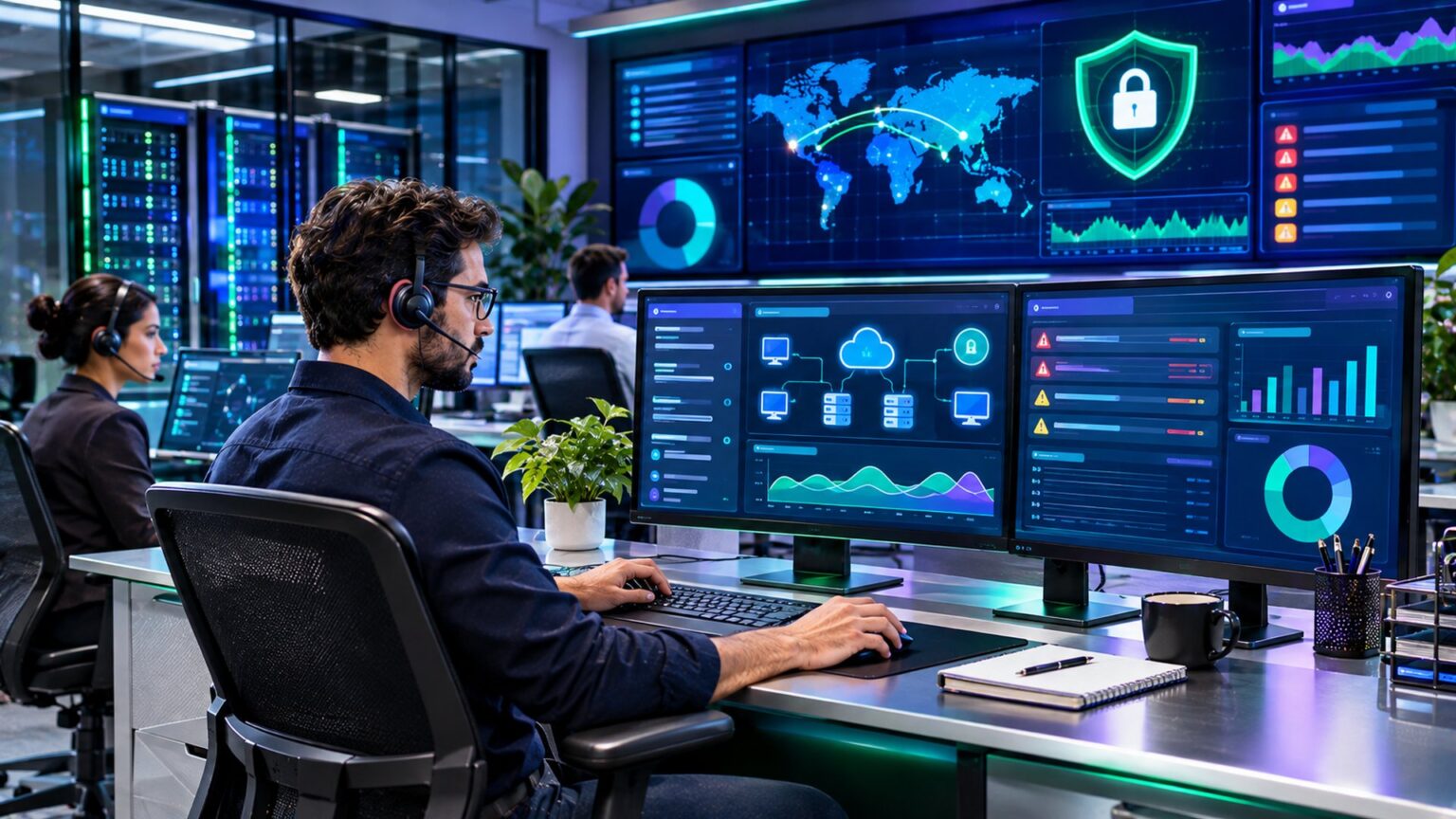
Modern organizations depend on interconnected applications, cloud services, employee devices, and digital infrastructure. As these environments grow, identifying suspicious activity becomes more challenging. SIEM technology helps security teams address this challenge by collecting and analyzing relevant security information from different systems. It provides a coordinated view of potential threats and supports more informed incident response decisions.
Instead of investigating every system separately, analysts can examine related events through a centralized platform. This approach helps organizations understand security incidents in context, prioritize investigations, and improve accountability across their technology environments.
However, effective security monitoring requires more than installing software. Businesses must establish reliable logging practices, configure meaningful detection rules, protect sensitive information, and assign responsibility for investigating alerts. Understanding these requirements is essential for building a dependable security monitoring strategy.
What Is SIEM in Cybersecurity?
SIEM stands for Security Information and Event Management. It refers to software and services that bring together relevant security records, analyze events, identify potentially suspicious behavior, and support investigations across an organization’s digital environment.
The technology combines two related security disciplines. Security information management focuses on organizing and retaining security records, while security event management emphasizes monitoring activity and identifying events that may require investigation.
Together, these capabilities help security professionals understand what happened, which resources were affected, and whether additional action is necessary. The platform does not automatically establish that every unusual event is malicious. Analysts must interpret alerts alongside business context and other evidence.
What Information Does a Security Platform Monitor?
A SIEM platform may receive information from identity management services, operating systems, firewalls, cloud applications, endpoint security tools, and network infrastructure. The exact sources depend on the organization’s technology environment and security priorities.
For example, authentication records may show when accounts are accessed, while application audit records may reveal changes to important settings. Combining these records gives analysts a broader understanding of activity than examining either source independently.
How Does SIEM Work?
Security Log Collection
The first stage involves collecting relevant event records from approved systems. Organizations may use software agents, application integrations, or supported logging protocols to transfer information securely.
Not every available record needs to enter the analytics platform. Selecting useful sources according to business risks helps control costs and prevents unnecessary information from overwhelming security teams.
Data Parsing and Normalization
Different applications produce records in different formats. A firewall, for instance, may describe a network connection differently from a cloud identity service.
Parsing extracts meaningful details from these records. Normalization then maps comparable information into consistent fields, making it easier for analysts to search, compare, and interpret activity across multiple systems.
Event Correlation and Analysis
Event correlation examines relationships between separate security records. An individual failed login might be ordinary, but a combination of unusual authentication activity and unexpected account changes may justify further investigation.
A SIEM can use configured detection rules, statistical analysis, and contextual information to recognize patterns that warrant attention. Its effectiveness depends on the quality of available data and the suitability of its analytical methods.
Alert Generation and Investigation
When monitored activity satisfies a detection condition, the platform can create an alert. Analysts review the available evidence, determine whether the activity represents a genuine concern, and follow established response procedures.
Why Alert Context Matters
An alert is a starting point rather than proof of compromise. Information about affected assets, user responsibilities, recent maintenance, and authorized business activity helps analysts distinguish legitimate operations from potential incidents.
8 Essential Benefits of SIEM for Businesses
Organizations can use centralized security analytics to strengthen monitoring and improve coordination between technical teams. The following benefits depend on appropriate configuration, reliable data, and trained personnel.
1. Centralized Security Visibility
Modern businesses often use different applications, operating systems, and infrastructure providers. Security information can become fragmented across these environments, making investigations difficult.
SIEM helps analysts access selected records through a shared monitoring environment. This visibility reduces the need to manually search unrelated systems and supports a more consistent understanding of security activity across the organization.
2. Earlier Identification of Potential Threats
Continuous analysis can help organizations recognize suspicious behavior before it develops into a more serious incident. Detection rules may highlight unusual account activity, unexpected configuration changes, or alerts from other security products.
Earlier identification gives response teams an opportunity to investigate and determine appropriate protective actions. Nevertheless, detection speed varies with data delivery, analytical coverage, and staff availability.
3. More Organized Incident Response
During an incident, teams need reliable information about affected resources and relevant events. Searching several independent systems can consume valuable time, particularly when records use inconsistent formats.
Centralized analytics helps investigators assemble related evidence and establish a clearer timeline. This supports coordinated decisions about containment, recovery, and communication with responsible business stakeholders.
4. Improved Compliance Reporting
Many organizations must demonstrate that security activity is appropriately recorded and reviewed. A SIEM can help gather evidence of monitoring practices, account activity, and administrative changes.
Reporting features may simplify internal audits and support assessments against applicable requirements. However, purchasing security software does not establish regulatory compliance. Organizations must maintain appropriate policies, controls, documentation, and oversight.
5. Better Prioritization of Security Alerts
Security teams may receive more notifications than they can investigate immediately. Treating every alert as equally urgent can divert attention from incidents involving critical business resources.
Risk scoring, asset information, and alert correlation can help teams prioritize investigations. Analysts should still review prioritization methods regularly to ensure important events are not overlooked or incorrectly classified.
6. Support for Proactive Threat Hunting
Threat hunting involves searching for suspicious activity that may not have generated an existing alert. Security analysts use available information and investigative hypotheses to examine potential weaknesses in detection coverage.
Historical security records can provide valuable context during these investigations. Findings may also help teams develop better detection methods and identify additional monitoring requirements.
7. Stronger Operational Accountability
Security records help organizations understand how important systems are accessed and modified. This can support investigations into unauthorized changes, policy violations, and operational mistakes.
Appropriate logging also helps distinguish technical failures from deliberate misuse. Access to these records should be carefully controlled to protect employee privacy and prevent monitoring from becoming excessive.
8. More Efficient Use of Security Resources
Automated data processing can reduce repetitive work associated with reviewing separate records. Analysts can devote more attention to interpreting evidence, improving detection coverage, and coordinating incident response.
Actual efficiency improvements depend on implementation quality and ongoing maintenance. Businesses should measure operational outcomes rather than assume that automation will automatically reduce security expenses.
Essential Features of a Modern SIEM Platform
Searchable Security Records
Analysts need convenient access to relevant historical information. Search functions should allow authorized users to locate events, examine related activity, and investigate incidents within appropriate time ranges.
Detection Rules and Behavioral Analysis
Configurable rules help organizations identify activity associated with their particular security risks. Some platforms also offer behavioral analytics that highlight deviations from expected patterns. Unusual behavior still requires investigation because legitimate changes can produce similar signals.
Dashboards and Reporting
Dashboards can summarize alert volumes, monitored systems, investigation status, and other operational indicators. Managers should select measurements that support meaningful decisions rather than focus on visually impressive but unhelpful statistics.
Threat Intelligence Integration
Threat intelligence provides context about known malicious activity and emerging security concerns. Integrating suitable intelligence sources may improve investigations, although the information should be evaluated for relevance, accuracy, and freshness.
Integration With Existing Security Tools
A platform should work with the organization’s approved security applications and operational workflows. Compatibility with endpoint protection, identity services, cloud infrastructure, and incident management tools can influence both implementation effort and long term usefulness.
SIEM Versus Other Cybersecurity Technologies
Security monitoring tools have overlapping functions, but their primary responsibilities differ. Understanding these differences helps businesses avoid unnecessary duplication and identify gaps in their security architecture.
Security Analytics Versus EDR
Endpoint Detection and Response, commonly called EDR, focuses on monitoring and investigating activity on devices such as laptops, desktops, and servers. Depending on the product, it may also support direct containment actions.
A SIEM brings together information from a broader range of sources, which can include endpoint detection records. These technologies can complement each other rather than serve as interchangeable replacements.
Security Analytics Versus SOAR
Security Orchestration, Automation, and Response, or SOAR, focuses on coordinating security workflows and automating approved response tasks. It can help manage incident cases, enrich alerts, and organize communication between connected applications.
Some security analytics platforms incorporate similar functionality, but the extent of automation varies. Organizations should define which actions require human approval before enabling automated response capabilities.
Security Analytics Versus XDR
Extended Detection and Response, known as XDR, combines detection and response capabilities across multiple security domains. Its coverage often includes endpoints and may extend to identity, email, network, or cloud services.
Product boundaries increasingly overlap, so buyers should compare actual data coverage, investigation tools, integrations, and response functions rather than rely exclusively on product labels.
Practical Applications Across Different Industries
Financial Services
Banks and financial organizations can monitor account access, administrative activity, and security alerts involving important applications. Coordinated investigations can help teams assess suspicious behavior and protect sensitive financial information.
Healthcare Organizations
Healthcare providers can monitor access to critical applications and investigate unusual activity involving clinical infrastructure. Monitoring practices should respect patient confidentiality and avoid collecting unnecessary sensitive health information.
Retail and Ecommerce
Retailers can use centralized monitoring to investigate suspicious administrative changes, unusual access to online storefronts, and alerts involving payment infrastructure. Security teams must also consider the different systems used across physical stores and digital sales channels.
Technology and Cloud Service Providers
Technology businesses can monitor identity services, production infrastructure, application changes, and cloud administrative activity. Integrating relevant records helps teams understand incidents that affect multiple components of a distributed environment.
How to Implement SIEM Successfully
Effective implementation begins with a clear understanding of business risks. Organizations should establish practical objectives before choosing software or collecting large amounts of information.
Define Monitoring Objectives
Identify critical business services, sensitive information, and the types of incidents that could cause significant disruption. These priorities should guide decisions about monitoring coverage and available resources.
Assign responsibility for managing the platform, investigating alerts, and approving changes to detection configurations. Clearly defined ownership reduces uncertainty during security incidents.
Prioritize Valuable Log Sources
Start with records that support the organization’s most important detection and investigation requirements. Identity activity, administrative changes, endpoint alerts, and relevant cloud audit events may be useful starting points, depending on the environment.
Maintain documentation explaining why each source is collected, who owns it, and how it supports security objectives. Revisit these decisions when infrastructure or business priorities change.
Configure Retention and Data Protection
Establish appropriate retention periods according to investigation needs, privacy considerations, applicable obligations, and storage costs. Original records may require separate secure preservation, especially when analytics processing changes their format.
Use access restrictions, appropriate encryption, and integrity protections to safeguard collected information. Security logs may contain valuable details about business infrastructure and must themselves be treated as sensitive assets.
Develop and Validate Detection Rules
Create detection logic that reflects realistic security risks and available information. Validate it through authorized testing and review the results with responsible security professionals.
Regularly refine detection rules to address inaccurate alerts, changing infrastructure, and new monitoring requirements. A rule that worked well in one environment may require adjustments in another.
Establish Incident Response Procedures
Every important alert category should have a defined investigation and escalation process. Document who reviews alerts, how evidence is preserved, and when business owners need to become involved. These procedures help turn monitoring information into accountable security decisions.
Understanding SIEM Costs and Deployment Options
Cloud Based Deployment
Cloud services can reduce the need to maintain dedicated analytics infrastructure. They may also support flexible capacity and integrations with cloud applications. Buyers should examine data residency, service availability, network dependencies, and ongoing usage charges.
On Premises and Hybrid Deployment
Some organizations operate security analytics infrastructure within their own environments or combine local collection with cloud processing. These approaches may address particular control or connectivity requirements but can introduce additional maintenance and integration responsibilities.
Evaluating Total Ownership Costs
Include implementation services, data ingestion, retention, search charges, software maintenance, employee training, and ongoing detection engineering in budget estimates. A representative pilot can reveal how actual workloads differ from initial assumptions.
Smaller organizations may also consider managed security monitoring services when maintaining a dedicated internal team is impractical. Contracts should clearly describe monitoring coverage, escalation responsibilities, reporting, and access to security records.
Common Challenges and How to Address Them
Even mature security platforms require regular attention. Businesses should recognize operational limitations and develop procedures that support dependable monitoring.
Excessive Alert Volume
Poorly configured detection rules can generate too many low value notifications. Review recurring false positives, adjust rules with appropriate approval, and measure whether changes improve investigation quality without sacrificing important coverage.
Incomplete or Unreliable Information
Missing records, inconsistent timestamps, and failed integrations can make investigations difficult. Monitor the health of logging connections and verify that important data sources continue delivering expected information.
Limited Security Expertise
A SIEM does not replace the judgment of trained security professionals. Organizations need personnel capable of interpreting evidence, understanding infrastructure, and coordinating appropriate responses. Training and external support can help address staffing limitations.
How to Measure Security Monitoring Performance
Useful performance indicators should reflect both operational reliability and investigation outcomes. Examples include detection coverage for critical systems, healthy log source connections, time to review priority alerts, and time to contain confirmed incidents.
Managers should also examine recurring investigation delays and the proportion of reviewed alerts that require action. These measurements help identify opportunities for improvement, but no single metric provides a complete assessment of security effectiveness.
Review performance alongside business risks and available staffing. Faster alert processing is only beneficial when investigations remain accurate and appropriate protective decisions follow.
Frequently Asked Questions
What does SIEM stand for?
It stands for Security Information and Event Management, a technology that consolidates and analyzes relevant security records to support monitoring and investigations.
Is SIEM suitable for small businesses?
Yes, when the solution matches their security requirements, budget, and staffing. Managed services may be an alternative to operating a dedicated internal platform.
Can SIEM prevent cyberattacks?
It primarily supports detection and investigation. Prevention and containment require complementary security controls and appropriate response actions.
What is the difference between SIEM and SOAR?
The former focuses on security information analysis and detection, while SOAR emphasizes coordinated workflows and response automation.
How much does a SIEM solution cost?
Costs depend on licensing, data ingestion, storage, deployment architecture, integrations, and the personnel required to operate the solution.
Does SIEM automatically ensure compliance?
No. It can support monitoring and audit evidence, but compliance requires appropriate organizational policies, security controls, and ongoing assessment.
Conclusion
SIEM provides organizations with a practical foundation for centralized security monitoring, threat detection, and incident investigation. Effective implementation requires reliable records, appropriate detection rules, skilled personnel, and secure information management. By combining these capabilities with complementary security controls, businesses can strengthen their cybersecurity operations and make more informed decisions about digital risks.
