
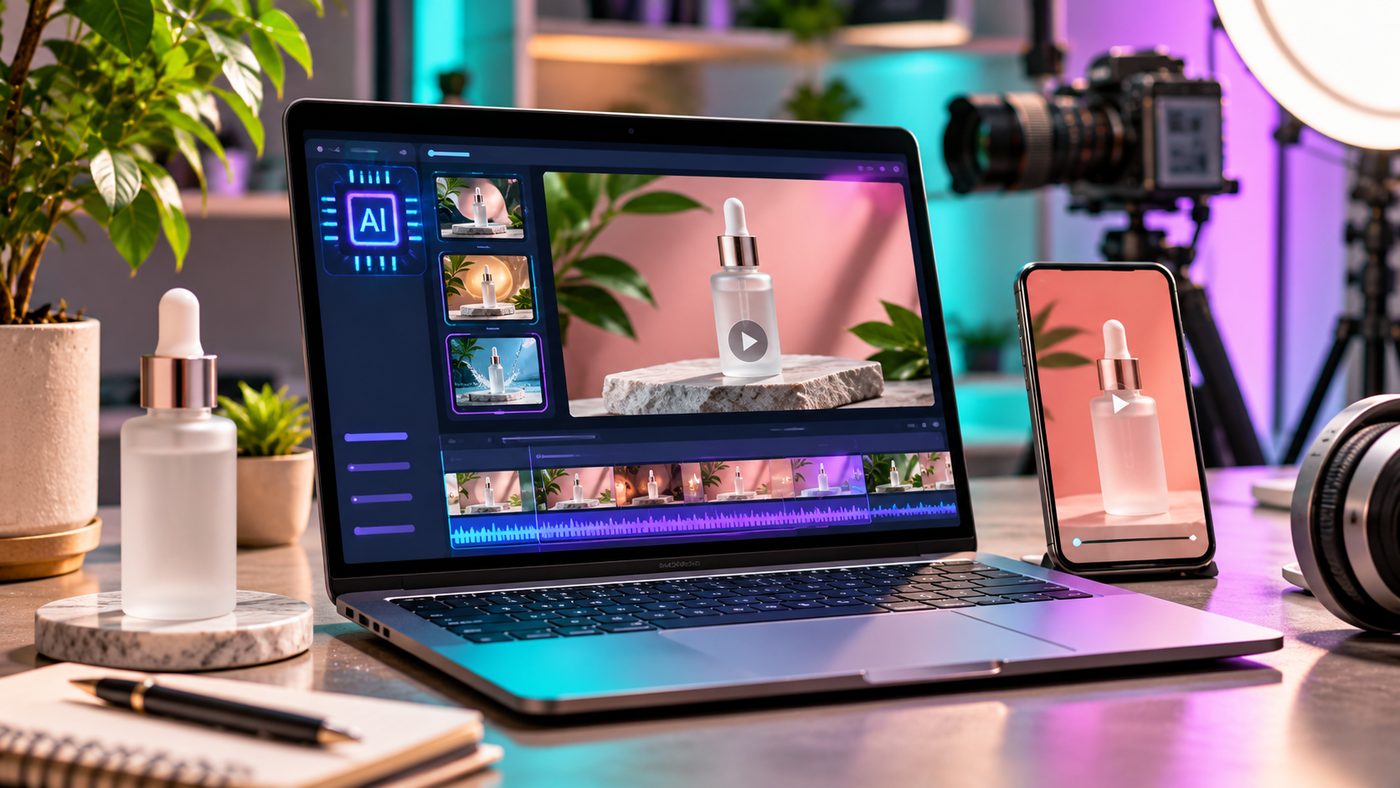
An AI product video generator is changing how ecommerce brands create visual content for online stores, social media, and digital advertising. Instead of organising expensive photography sessions, hiring production crews, and spending hours editing footage, businesses can use artificial intelligence to transform product images into engaging promotional videos.
High-quality product visuals have become an important part of online shopping. Customers want to understand what a product looks like, how it works, and how it may fit into their daily lives before making a purchase. Short product videos can communicate these details more effectively than static images alone, especially when movement, context, and product demonstrations help clarify an item’s features.
However, traditional video production can be costly and time-consuming. Smaller ecommerce businesses may struggle to create fresh visual content for every product, seasonal campaign, or advertising platform.
AI-powered video technology provides an alternative by combining generative artificial intelligence, image processing, animation, and automated content creation.
This guide explores how AI product video generators work, their main features, practical applications, potential limitations, and how ecommerce businesses can use them to develop effective product marketing content.
What Is an AI Product Video Generator?
An AI product video generator is software that uses artificial intelligence to create video content featuring products.
Depending on the platform, users may begin with a product photograph, written description, reference image, or creative prompt.
The software processes these inputs and produces moving visual content that can be used for product presentations, social media promotions, website listings, and advertising campaigns.
Unlike traditional video editing software, AI video generation can create new visual scenes or simulate movement rather than simply arranging previously recorded footage.
How Does AI Product Video Generation Work?
AI video creation systems use trained models to interpret visual and textual information.
When a product photograph is provided, the model may analyse the object’s appearance, shape, colours, and surrounding environment.
Users can then describe the desired scene, camera movement, lighting, or presentation style.
The system generates a sequence of frames intended to create a continuous video.
For example, an ecommerce seller could provide a photograph of a skincare bottle and request a promotional scene featuring soft studio lighting, a marble surface, and slow cinematic camera movement.
The AI may generate a short video that presents the product in this environment.
Results vary according to the quality of the source image, the selected model, the prompt, and the complexity of the requested movement.
Why Ecommerce Businesses Are Using AI Product Videos
Video marketing has become increasingly important for businesses selling products online.
Customers often encounter products through short-form social media content, marketplace listings, and online advertisements.
Producing suitable content for these channels creates a continuous demand for new visual assets.
Reduced Production Requirements
Traditional product videography may require cameras, lighting equipment, studio space, props, professional operators, and post-production software.
AI video creation can reduce some of these requirements.
Businesses may generate content using existing product photographs rather than arranging a completely new filming session.
However, high-quality source images, creative direction, and human review are still important.
Faster Content Experimentation
Marketing teams frequently need to test different visual approaches.
AI tools can help generate several creative concepts without rebuilding a physical studio environment for each version.
For example, the same product might be presented in a luxury studio, a bright kitchen, or an outdoor lifestyle setting.
More Content for Product Catalogues
Online retailers sometimes manage hundreds or thousands of products.
Producing individual videos for every listing can be expensive.
AI-assisted workflows may help teams create consistent video assets across selected parts of a product catalogue.
Greater Creative Flexibility
Generative video technology can produce stylised environments and visual effects that would be difficult or expensive to film.
This flexibility is useful for businesses experimenting with seasonal campaigns or different brand identities.
Important Features of an AI Product Video Generator
Not every AI video platform offers the same tools.
Businesses should evaluate software according to their product categories, content goals, production requirements, and budget.
Image-to-Video Generation
Image-to-video generation transforms a still image into moving content.
The system may animate camera movement, background elements, lighting effects, or selected objects within the scene.
This feature is particularly useful for ecommerce businesses that already have clear product photographs.
Text-to-Video Creation
Some platforms allow users to create video scenes from written prompts.
A prompt describes the subject, environment, visual style, and intended movement.
Text-to-video tools may be useful for conceptual advertising visuals, although maintaining exact product details can be more challenging without suitable reference images.
AI Product Models
Certain tools can create scenes showing people interacting with products.
For example, a fashion retailer might generate a lifestyle presentation featuring a person wearing a jacket.
A homeware business might create an interior scene showing how a decorative object fits into a living space.
Generated models and interactions should be reviewed carefully for realism and accurate product representation.
Automated Background Creation
AI-powered background generation can place products into different environments.
A watch might appear on a premium display stand, while a beverage could be shown in a bright outdoor setting.
Background consistency is particularly important when developing a recognisable brand style.
Video Format Options
Different marketing platforms require different video dimensions.
Common formats include:
- 9:16 for vertical short-form videos
- 1:1 for square social media content
- 4:5 for selected social feed placements
- 16:9 for landscape video presentations
Not every platform supports every format or output resolution.
Product Detail Preservation
For ecommerce marketing, product accuracy is essential.
AI models can occasionally alter labels, packaging, colours, logos, and physical proportions.
Businesses should select tools that prioritise product fidelity and review every generated asset before publication.
Exploring AI Product Video Creation With Caspa AI
Businesses looking for an AI product video generator may consider Caspa AI, a platform focused on AI-assisted product photography and video content for ecommerce brands.
Caspa AI describes its video creation technology as a way to produce product-focused promotional visuals without organising conventional video shoots.
Its platform combines product imagery with generated scenes, models, and video content.
AI Product Videos
Caspa offers tools for transforming product visuals into short promotional videos.
These can help businesses develop content for ecommerce listings and marketing campaigns.
The quality and suitability of generated results depend on the input material and selected settings.
AI Human Models
The platform supports AI-generated human models interacting with products.
This can be relevant for fashion, beauty, accessories, and lifestyle marketing.
However, businesses should check whether the model’s interaction accurately represents the item’s size, shape, and real-world use.
Custom AI Stock Videos
Caspa also promotes AI-generated stock-style video content.
This feature may help businesses create supporting footage that matches a marketing concept.
Ecommerce-Focused Visual Content
In addition to video generation, Caspa offers product photography, background editing, and other ecommerce content tools.
Combining several visual production activities into one workflow may simplify content management.
Caspa AI Pricing Considerations
Caspa’s published pricing page lists video generation as included in its Growth and Scale plans, while its Starter plan is designated for image generation rather than video.
The published monthly prices at the time checked were $39 for Starter, $66 for Growth, and $166 for Scale, with plan-specific credits and features.
Pricing, promotions, credit consumption, and annual billing terms may change.
Businesses should verify the current subscription terms and expected generation costs before purchasing a plan.
How to Create an AI Product Video Step by Step
A structured workflow can help businesses produce more consistent marketing content.
Step 1: Select the Product
Start by choosing a product that would benefit from video presentation.
Products with distinctive designs, useful features, or strong visual appeal may be suitable candidates.
Step 2: Prepare a Clear Product Image
Use a high-quality photograph with accurate colours, sharp details, and suitable lighting.
Avoid heavily compressed images, distracting backgrounds, or partially obscured objects.
The source image gives the AI important information about the product’s appearance.
Step 3: Choose the Video Style
Decide whether the content should resemble a studio advertisement, lifestyle video, social media demonstration, or premium cinematic presentation.
The appropriate style depends on the product, target audience, and marketing channel.
Step 4: Write a Detailed Prompt
A useful prompt should describe the visual scene and desired motion.
For example:
“Create a realistic luxury skincare product video showing the exact supplied serum bottle on a white marble surface. Use soft natural lighting, subtle reflections, slow cinematic camera movement, and a clean premium background. Preserve the bottle’s original shape, cap, colour, and label.”
This kind of instruction provides more direction than simply requesting a product advertisement.
Step 5: Generate the Video
Submit the image and prompt using the available generation controls.
Depending on the platform, users may choose duration, aspect ratio, model, or output settings.
Generation times and available features vary.
Step 6: Review Product Accuracy
Inspect the finished video carefully.
Check the product’s shape, packaging, colours, text, and physical proportions.
Look for unrealistic motion, distorted objects, or changes that could mislead customers.
Step 7: Refine the Results
If the generated result does not meet expectations, adjust the prompt or reference material.
It may be useful to simplify camera movement or reduce the number of complicated actions in a scene.
Step 8: Export and Publish
Once the video is suitable, export it using the available settings.
Confirm that the file meets the technical requirements of the intended website or advertising platform.
Best AI Product Video Ideas for Ecommerce
Different product categories benefit from different video concepts.
Beauty and Skincare
Beauty brands can create premium studio presentations featuring soft lighting, reflective surfaces, and elegant product movement.
The visual style should support the brand’s identity without exaggerating product performance.
Fashion and Accessories
Clothing and accessories can be presented through lifestyle scenes, model interactions, and close-up product details.
Accurate colour and fabric representation are important because customers rely on product visuals when purchasing.
Electronics
Technology brands can use smooth camera movement and detailed product close-ups.
Videos may highlight the appearance of ports, buttons, screens, and physical design elements.
Generated footage should not invent features that the real product lacks.
Furniture and Home Decor
Furniture sellers can place products into digitally generated living spaces.
This helps customers visualise possible styling combinations.
Businesses should take care not to misrepresent actual dimensions or materials.
Jewellery and Watches
Jewellery often benefits from carefully controlled lighting and close-up visuals.
AI-generated scenes can create premium visual presentations, but gemstone appearance and metal finishes should remain accurate.
Food and Beverage
Food brands can develop short promotional videos featuring attractive backgrounds and product packaging.
Care should be taken to avoid unrealistic representations of ingredients, serving sizes, or product contents.
Using AI Product Videos for Social Media Marketing
Social media platforms are important distribution channels for ecommerce video content.
Different channels encourage different creative approaches.
Instagram Reels
Short vertical product videos can introduce new products, showcase visual details, or highlight a seasonal collection.
An effective video should communicate its subject quickly and remain understandable on a small screen.
TikTok Product Content
TikTok-style videos frequently emphasise fast visual storytelling and clear product presentation.
Businesses can experiment with different opening scenes and creative styles.
However, platform trends change, and copying a popular format does not guarantee engagement.
Facebook Video Ads
Product videos can be used in Facebook advertising campaigns where supported.
Creative variations may help businesses test different messages and visual approaches.
YouTube Shorts
Short vertical videos can demonstrate products, provide simple explanations, or introduce new collections.
The content should match the intended audience and advertising objective.
Ecommerce Product Pages
Adding video to a product page may help customers understand an item’s appearance or functionality.
The effect on sales depends on video quality, product type, page performance, and customer expectations.
AI Product Videos vs. Traditional Product Videography
AI-generated and traditionally filmed product videos each have strengths and limitations.
Production Cost
Traditional filming often involves equipment, personnel, location expenses, and editing.
AI tools may reduce these costs for suitable projects.
However, subscriptions, generation credits, review time, and revisions still create expenses.
Creative Control
Traditional filming provides direct control over physical products and recorded actions.
AI generation offers flexible scene creation but can be less predictable when precise physical behaviour is required.
Product Accuracy
Real footage can document how a product genuinely looks or functions.
AI-generated content may introduce visual inaccuracies that require careful checking.
Production Speed
AI tools may support faster experimentation with multiple concepts.
Complex revisions or repeated unsuccessful generations can still consume time.
Suitability
Traditional production remains valuable for demonstrations requiring verifiable physical performance, precise measurements, or regulatory accuracy.
AI video can be particularly useful for creative advertising concepts and visual presentations.
Many brands may benefit from combining both approaches.
How AI Product Videos Can Support Ecommerce Marketing
AI-generated video can contribute to a broader marketing strategy when used thoughtfully.
More Consistent Visual Branding
Businesses can define repeatable visual instructions for lighting, backgrounds, and presentation styles.
This may help maintain consistency across product categories.
Faster Campaign Development
Marketing teams can explore multiple seasonal or audience-specific concepts without arranging new physical shoots for every idea.
Better Product Storytelling
A video can provide context that static images may not communicate as clearly.
For example, a home accessory can be presented within a styled interior environment.
Creative Testing
Businesses can compare different visual approaches through controlled advertising experiments.
Testing should use meaningful performance indicators rather than relying exclusively on subjective impressions.
Supporting Small Business Content Needs
Businesses with limited production resources may find AI tools useful for supplementing existing product photography.
The value depends on subscription costs, output quality, and the amount of manual revision required.
Common Mistakes When Creating AI Product Videos
AI tools can produce attractive visuals, but poor inputs and unrealistic expectations can lead to weak results.
Using Low-Quality Product Images
Blurry or incomplete references make it harder to preserve accurate details.
Use clear source images whenever possible.
Writing Vague Prompts
A short prompt may not provide enough direction for consistent results.
Include relevant scene, lighting, movement, and product-preservation instructions.
Adding Too Much Movement
Excessive camera motion or complicated interactions can increase the likelihood of visual distortions.
Simple, controlled movements often work well for product-focused content.
Ignoring Product Accuracy
A visually impressive video may still be unsuitable if the product’s label, design, or functionality has changed.
Review the finished asset against the original product.
Using Incorrect Aspect Ratios
A landscape video may not display properly in a vertical advertising placement.
Select the intended format before generating content when possible.
Publishing Without Quality Control
Always review AI output before using it in public marketing.
Confirm that the content does not contain misleading claims, inappropriate imagery, or unauthorised intellectual property.
How to Write Better AI Product Video Prompts
Prompt quality can influence the visual consistency of generated content.
A useful prompt generally includes five components.
Identify the Product
Describe the exact product being shown.
Specify important visual characteristics such as colour, materials, shape, and packaging.
Define the Environment
Choose a background that suits the brand and product category.
Examples include a minimalist studio, luxury retail setting, modern kitchen, or natural outdoor environment.
Explain the Lighting
Lighting influences how colours, textures, and surfaces appear.
Soft daylight, warm studio lighting, and controlled reflections can create different visual moods.
Specify Camera Movement
Examples include slow zooms, gentle pans, and controlled product orbit movements.
Simple instructions are often easier to evaluate.
State Accuracy Requirements
Tell the AI to preserve original product details.
For ecommerce use, this can be more important than creating elaborate visual effects.
Measuring the Effectiveness of AI Product Videos
Publishing video content is only one part of an ecommerce marketing strategy.
Businesses should also evaluate whether the videos contribute to measurable objectives.
Video Engagement
Review metrics such as views, watch time, completion rates, and audience retention.
These indicators provide information about how viewers interact with the content.
Click-Through Rate
For advertising campaigns, click-through rate measures how frequently viewers click after seeing an advertisement.
It can help compare creative variations, although it does not measure profitability on its own.
Conversion Rate
Conversion rate indicates the proportion of relevant visitors who complete a defined action.
When evaluating product videos, businesses should account for other factors that may influence conversions, such as pricing, audience targeting, product reviews, and website design.
Production Efficiency
Measure the time and resources required to produce usable assets.
This can include generation credits, editing time, subscription fees, and revision requirements.
Return on Advertising Spend
For paid campaigns, return on advertising spend compares attributed revenue with advertising expenses.
It should be considered alongside profit margins and other business costs.
Important Limitations of AI Product Video Generation
Although generative AI offers useful capabilities, it also introduces challenges.
Product Distortion
AI systems may alter shapes, packaging details, logos, and proportions.
Unrealistic Physical Interactions
Generated hands, materials, liquid movement, and complex mechanical actions may appear unnatural.
Inconsistent Outputs
Different generations using similar prompts may produce substantially different results.
Usage Rights and Licensing
Businesses should review the platform’s commercial-use terms before publishing generated content.
Rights to uploaded materials, music, generated assets, and third-party likenesses may require additional consideration.
Advertising Accuracy
Generated promotional videos must not mislead customers about product capabilities, appearance, or results.
Relevant advertising and consumer protection rules still apply.
How to Choose the Right AI Product Video Generator
Selecting a suitable platform requires comparing practical business needs.
Evaluate Product Fidelity
Check whether the software preserves the appearance of real products.
Review Video Quality
Assess motion consistency, realistic lighting, output resolution, and visible artifacts.
Compare Subscription Plans
Understand included credits, supported features, video generation limits, and additional charges.
Check Export Options
Confirm that the platform supports the formats and aspect ratios needed for your marketing channels.
Consider Ease of Use
A straightforward interface may reduce training requirements for small marketing teams.
Review Commercial Licensing
Confirm whether generated assets can be used in commercial advertising and whether any restrictions apply.
Test Before Scaling
Start with a small number of products before committing to a large production workflow.
The Future of AI Product Video Generation
AI video technology continues to develop as image generation, motion modelling, and editing tools become more capable.
Future improvements may help systems maintain greater consistency across scenes and produce more realistic product interactions.
Ecommerce platforms may also integrate generative visual workflows more closely with product catalogues and publishing tools.
These developments could make it easier for businesses to create tailored visual content for different audiences and marketing channels.
However, higher technical quality does not remove the need for accurate product representation, ethical advertising, and human review.
The most effective workflows are likely to combine automation with clear creative direction and reliable quality control.
Frequently Asked Questions
What is an AI product video generator?
An AI product video generator is software that uses artificial intelligence to create promotional videos from product images, written prompts, or other visual inputs. It can help businesses produce marketing content without filming every scene traditionally.
Can AI turn a product photo into a video?
Yes. Image-to-video tools can use a product photograph as a reference and generate movement, camera effects, or new visual scenes. Results depend on the platform and source material.
Is an AI product video generator suitable for small businesses?
It can be useful for businesses with limited filming resources, particularly when creating short promotional content. Costs, output quality, and required revisions should be evaluated before committing to a subscription.
Does Caspa AI support product video generation?
Yes. Caspa AI offers AI product video generation alongside product photography and other ecommerce visual tools. Its published plans identify video generation as available in the Growth and Scale tiers.
Can AI product videos be used for ecommerce advertisements?
AI-generated videos may be suitable for commercial advertising when the platform’s licensing terms permit the intended use and the content complies with applicable advertising rules.
How long does it take to create an AI product video?
Generation time varies by platform, model, output settings, and system demand. Additional time may be required for prompt adjustments and quality review.
Can I create product videos without professional filming equipment?
Yes. Some platforms can generate videos from existing product images. Clear source photography and careful creative direction can still improve results.
Are AI-generated product videos always accurate?
No. AI-generated footage can contain altered product details, unrealistic motion, or other artifacts. Businesses should carefully review each video before publication.
Conclusion
An AI product video generator offers ecommerce businesses a flexible way to create visual marketing content without relying entirely on traditional video production. By transforming product photographs into engaging promotional scenes, AI tools can support creative experimentation, product presentations, and social media campaigns.
Platforms such as Caspa AI provide ecommerce-focused image and video creation capabilities, but successful results still depend on accurate source materials, thoughtful prompts, and careful quality control.
Businesses that combine AI-assisted production with transparent marketing, consistent branding, and performance measurement can develop a more efficient and adaptable approach to product video content.
