
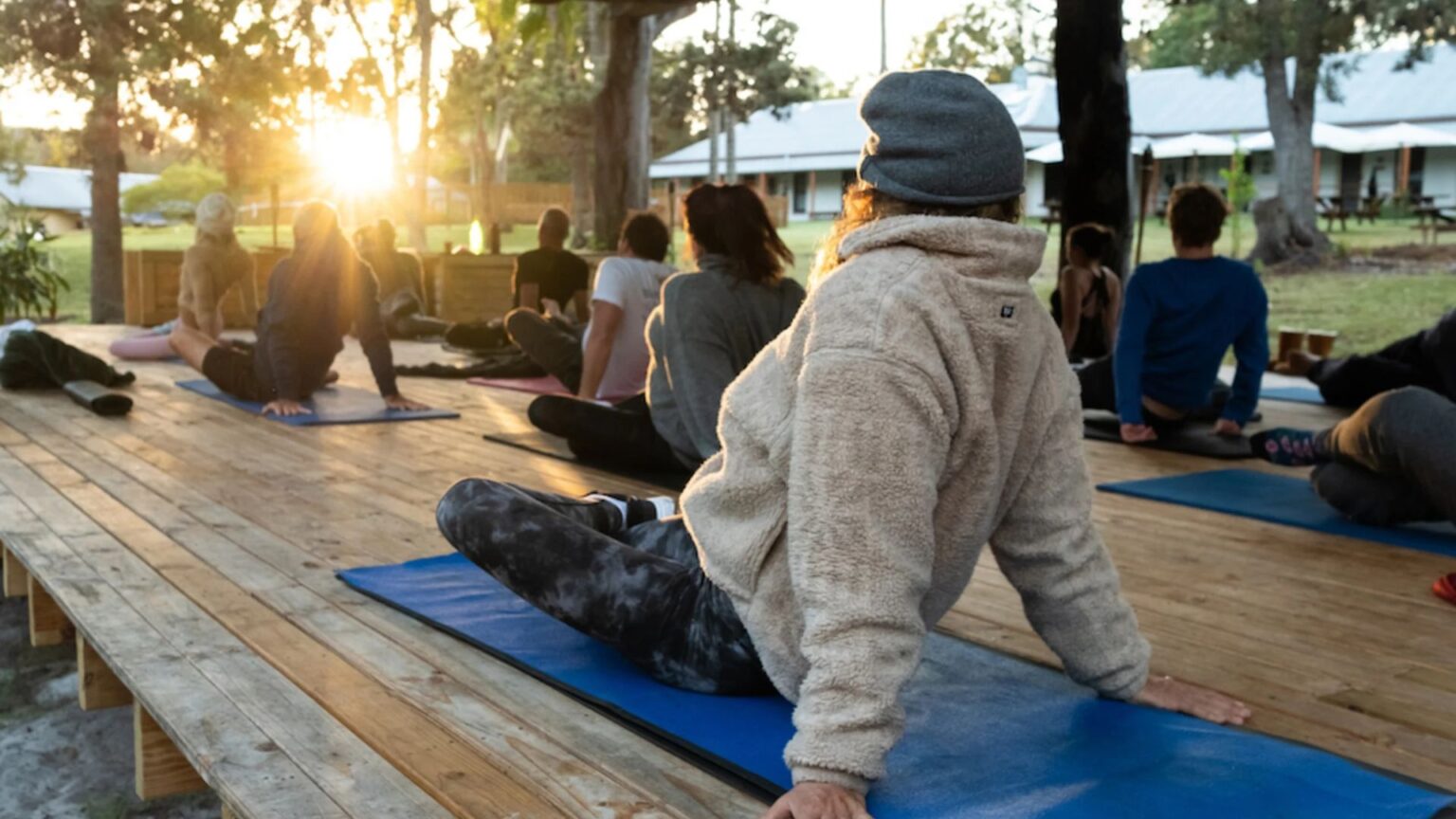
The idea of a women’s retreat has changed considerably over the past decade. What was once shorthand for a weekend of light yoga, group meals, and casual conversation has evolved into something more intentional. Women across age groups and professional backgrounds are seeking time away that actually addresses something — burnout, transition, grief, creative stagnation, physical restoration, or simply the need for unstructured time in an environment built to support it.
The challenge is finding programs that match the depth of that need. Many retreat offerings in the US lean heavily on aesthetic appeal or generic wellness language without delivering meaningful structure. The retreats listed here have been selected because each one addresses a specific kind of need, maintains a clear program identity, and operates in a setting that contributes to the experience rather than decorating it.
This is not a comprehensive ranking. It is a considered list of programs across different regions and formats that represent the range of what a well-designed retreat for women can actually look like.
What Makes a Women’s Retreat Worth the Commitment
A retreat for women only works when the environment, the program, and the purpose are aligned. When any one of those elements is out of balance — a beautiful property with no structured experience, or a dense program in a setting that creates no sense of arrival — women often leave feeling like they attended an event rather than participated in something meaningful. The Retreat Women’S overview at Raven’s Retreat in Hocking Hills is one example of how environment and intention can be developed together, particularly in a natural setting that removes the distractions of daily life rather than simply rearranging them.
What distinguishes a retreat women’s experience from a standard wellness getaway is the degree to which the program is designed around restoration or transformation as a goal, not as a byproduct. The difference matters because it shapes how time is structured, what kind of facilitation is offered, and how participants are expected to engage.
The Role of Natural Setting in Program Quality
There is a well-documented relationship between time spent in natural environments and measurable reductions in stress-related symptoms, including those associated with cortisol regulation and cognitive fatigue. Research published through the National Institutes of Health has consistently found that exposure to natural settings — forests, rivers, open terrain — produces physiological changes that indoor environments, even high-quality ones, do not replicate.
This matters for retreat design because it means the location is not incidental. Retreats held in forested or rural environments often produce outcomes that more urban programs struggle to achieve within the same time frame, not because of programming differences alone, but because the setting is doing part of the work. When evaluating any retreat women’s experience, the relationship between landscape and program is worth examining before enrollment.
Hocking Hills, Ohio — Raven’s Retreat
Hocking Hills is a region of southeastern Ohio known for its rock formations, old-growth forest, and creek systems. It is not a resort corridor. It is a place where the terrain itself creates a particular kind of quiet that is difficult to access in more developed areas. Raven’s Retreat has built its women’s retreat programming around that setting, using the natural environment as an active component of the experience rather than simply a backdrop.
The retreat women’s program at this location is structured to support both individual reflection and group experience, with time designed around the specific needs of women who may be in personal or professional transition. The property maintains a small group model, which keeps the experience from becoming impersonal or event-like.
Esalen Institute, Big Sur, California
Esalen has operated on the California coast since the 1960s and remains one of the most substantive retreat institutions in the country. It offers women-specific programs alongside its broader workshop calendar, with facilitators drawn from fields including somatic therapy, contemplative practice, and expressive arts.
The property sits on cliffs above the Pacific Ocean, and that geography is central to the experience. What distinguishes Esalen from many newer retreat programs is its institutional depth — it has decades of developed curriculum, a faculty model, and a culture of inquiry that takes the work seriously. It is not a luxury spa that also offers workshops. The retreat women’s offerings here are embedded in a broader intellectual and experiential tradition.
Why Program Lineage Matters
Retreats that have operated for multiple decades carry something that newer programs do not yet have — refined curriculum, tested facilitation methods, and an understanding of what actually produces lasting change versus what simply feels significant in the moment. When assessing a retreat women’s program, the age and consistency of the institution is a reasonable signal of program quality, particularly for participants seeking transformation rather than relaxation.
Kripalu Center for Yoga and Health, Stockbridge, Massachusetts
Kripalu is one of the largest dedicated retreat centers in North America, located in the Berkshires of western Massachusetts. It offers women-focused programming throughout the year, with particular depth in areas such as midlife transitions, grief, creative recovery, and leadership development for women in professional roles.
What sets Kripalu apart from smaller retreat centers is the breadth of its residential program calendar. Women can find multi-day immersives that address very specific life circumstances rather than generic wellness topics. The facility is residential, meaning participants live on-site and are removed from their daily environments entirely for the duration of the program. That structural separation is significant for people managing high levels of ongoing responsibility.
Breitenbush Hot Springs, Detroit, Oregon
Breitenbush is a worker-owned cooperative retreat center set within the Willamette National Forest. It operates on geothermal energy and maintains a strong commitment to low-impact land use. Women’s retreats at Breitenbush are often facilitated by independent practitioners who bring focused expertise in areas such as trauma-informed movement, plant-based healing traditions, and ecological awareness.
The retreat women’s experience here tends to attract participants who are interested in a more austere and grounded setting. It is not a polished property. The accommodations are simple, the food is communal, and the environment places natural experience ahead of comfort. For some participants, that directness is precisely what makes it effective.
The Value of Simplicity in Retreat Design
Not all effective retreat women’s programs operate from high-amenity properties. There is a meaningful difference between comfort that supports restoration and comfort that distracts from it. Breitenbush’s approach to simplicity removes layers of stimulation that can interfere with the quieter internal work many women arrive hoping to do. For retreats where the goal is genuine psychological rest, reduced sensory complexity in the environment can be more useful than luxury.
Feathered Pipe Ranch, Helena, Montana
Feathered Pipe Ranch has offered retreat programming in Montana since the 1970s and maintains a distinctive calendar of women-focused programs across the summer season. The ranch sits in a mountain valley setting and offers a mix of wellness, contemplative, and leadership-oriented programs for women at various life stages.
The retreat programming here often combines physical activity with reflective practice, using the Montana terrain for hiking and outdoor experience alongside more structured indoor programming. The retreat women’s model at Feathered Pipe draws from a relatively small group format, which supports the kind of continuity and trust that multi-day programs require to be effective.
Miraval Arizona, Tucson, Arizona
Miraval operates at a different scale and price point than most of the other properties on this list. It is a full-service resort with a dedicated retreat philosophy, and it offers women-specific programming within a larger residential wellness calendar. The desert setting in the Sonoran landscape contributes to the experience in ways specific to that region — open terrain, dry heat, and a visual environment that is itself clarifying.
The retreat women’s programming at Miraval is structured around choice — participants select from a range of activities, therapeutic offerings, and workshops rather than following a fixed group itinerary. That model works well for women who are experienced retreat participants and have a clear sense of what they are seeking. It is less appropriate for those who benefit from more external structure.
Omega Institute, Rhinebeck, New York
Omega Institute is a nonprofit organization operating on 250 acres in the Hudson Valley. It has offered retreat and workshop programming since 1977 and maintains one of the most extensive women’s program calendars of any retreat institution in the country. Programs range from weekend intensives to week-long residential workshops, with facilitators drawn from professional and academic backgrounds across a wide range of disciplines.
What distinguishes Omega is the seriousness with which it approaches women’s development as an area of study and practice. The retreat women’s programming here is not themed around aesthetics or general relaxation. It is built around defined outcomes — whether creative development, professional clarity, healing from loss, or the particular challenges of aging and identity that women navigate in midlife and beyond.
How Nonprofit Structure Affects Program Design
Retreat centers operating under nonprofit models often invest differently in program quality than for-profit properties. Without shareholder returns driving decisions, more resources can be directed toward facilitator quality, curriculum development, and scholarship access — which means the participant pool tends to be more economically diverse and the program goals tend to be less commercially driven. For women seeking a retreat experience grounded in genuine community rather than consumer experience, nonprofit institutions often produce a different and often more durable kind of outcome.
Conclusion: Choosing the Right Retreat for the Right Reason
The seven programs described here are not interchangeable. They serve different needs, attract different participants, operate in different landscapes, and hold different philosophies about what a retreat is for. That diversity is the point. There is no single definition of what a well-designed retreat women’s experience looks like, and the most important factor in choosing one is clarity about what you are actually seeking.
If you need genuine rest in a natural environment with minimal structure, a property like Raven’s Retreat in Hocking Hills or Breitenbush in Oregon will likely serve you better than a program-dense institution. If you are looking for deep curriculum, diverse facilitation, and an extended residential experience, Kripalu or Omega offer something different and more appropriate for that purpose.
What all seven share is a commitment to designing the retreat women’s experience around actual human need rather than around marketability. That is not a small distinction. It is, in practice, the most reliable indicator of whether a retreat will produce something that lasts beyond the drive home.
Before enrolling in any program, take time to review the program structure, the facilitator backgrounds, the group size, and the property’s stated philosophy. A well-matched retreat is not found by scanning photographs. It is found by reading carefully and being honest about what the time away is actually meant to accomplish.
