

Local businesses rarely need another generic montage of their storefront, products, and opening hours. They need a reason for someone to stop scrolling, remember the business, and care about what happens next. A short serial story can deliver that attention without requiring the business owner to become a full-time creator.
This guide shows how a solo freelancer can package AI-assisted micro dramas as a measurable content service for bakeries, salons, cafés, gyms, property agents, and other local businesses. It covers the offer, sales conversation, production workflow, approval gates, pricing logic, and performance review that turn a creative experiment into a repeatable client service.
Sell a repeatable story format, not “AI content”
Most owners are not shopping for a new generation model or prompt technique. They are trying to solve practical problems: empty weekday appointments, an unknown new location, a seasonal promotion, weak social engagement, or an offer that looks identical to every competitor’s.
Frame the service around those outcomes. Instead of saying, “I make AI videos,” offer something concrete:
• a three-episode origin story for a newly opened café;
• a weekly customer dilemma for a salon or fashion store;
• a neighborhood mystery that reveals a product in the final episode;
• a before-and-after character arc for a fitness or education business;
• a recurring fictional employee who explains a service through short scenes.
The word “fictional” matters. Do not fabricate customer testimonials, medical outcomes, financial results, awards, or events. The story can be imaginative while product details and business claims remain accurate.
Choose clients with visual and narrative raw material
Not every business is ready for a micro-drama campaign. A good prospect has at least two of the following:
1. A visually recognizable place, product, or process.
2. A recurring customer question that can become conflict.
3. A clear seasonal moment, launch, or limited offer.
4. An owner willing to approve a fictional concept and factual details.
5. Enough social activity to publish several connected posts.
A bakery has ingredients, deadlines, celebrations, and handmade details. A property agent has keys, rooms, moving days, and hidden histories. A gym has routines, setbacks, and accountability. These are story materials, not merely backgrounds.
Avoid a client whose offer depends on unverifiable promises or who expects the AI video to impersonate real customers. Ask for approved product photos, brand colors, location references, factual service information, and any restricted claims before writing.
Build three service packages that are easy to compare
Simple packaging makes the sales conversation easier. The following structure is illustrative; adjust the scope and price to your market, production time, revision policy, and rights.
Concept pilot
Deliver one story premise, one character reference, one polished still, one short scene plan, and one revision round. The pilot helps the client judge tone before commissioning a series.
Three-episode launch
Deliver a hook episode, complication, and payoff. Include captions, posting notes, and a small set of thumbnails. This package fits a launch, holiday, or limited promotion.
Monthly serial
Deliver a recurring character, a four- or six-episode arc, platform variations, and a monthly performance review. Retainers become more defensible when the service includes editorial planning, not just a fixed number of files.
Define what is not included: paid media management, account posting, live-action filming, actor releases, translation, voice cloning, or unlimited revisions. A clear boundary protects both the freelancer and the client.
Find a premise inside the business instead of bolting on a trend
The best local-business stories make the product or service necessary to the conflict. A random romance inside a bakery may collect views while failing to help the bakery. A stronger premise uses the business logic:
A baker closing the shop finds an uncollected wedding cake and a handwritten note that suggests the ceremony never happened.
The cake is not a decorative prop. It creates the deadline, emotional question, and visual identity. The next episode can follow the baker’s decision: call the customer, deliver the cake, or investigate the message.
Use a four-part premise check:
• Business connection: Could this story happen only in this type of business?
• Human conflict: Is there a decision, relationship, or risk beyond “buy now”?
• Visual proof: Can one frame communicate the setting and problem?
• Safe claim: Does the story avoid presenting fiction as a real customer event?
If the story passes all four, it can entertain and still strengthen the client’s identity.
A practical APOB AI workflow for a bakery micro drama
The walkthrough below creates the visual anchor for the forgotten-wedding-cake premise. It stops at the still-image review stage so the character, cake, lighting, and setting can be approved before video credits are used.
Step 1: Select a character that fits the client brief
Choose a Community Model or an authorized custom model that matches the fictional role. Record the selected model name and do not swap the character midway through the campaign.
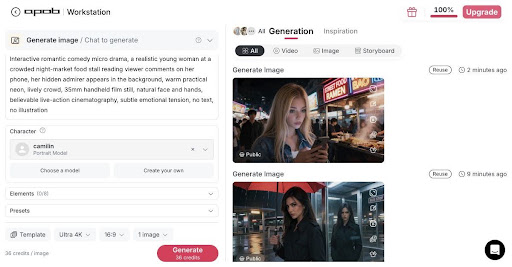
Figure 1. The character model is locked before the campaign scene is prompted.
The client should approve whether the character is presented as a fictional owner, employee, customer, or narrator. Never imply that a public Community Model is an actual member of the client’s staff.
Step 2: Write a prompt with business, conflict, and cinematography
The prompt used for the concept image was:
Cinematic local-business micro drama, a realistic bakery owner in an apron closing the shop at midnight discovers a forgotten wedding cake with a handwritten message, warm oven light, rain on the front window, flour floating in the air, 35mm film still, natural human face and hands, believable commercial short-film realism, emotional mystery, no text, no illustration.
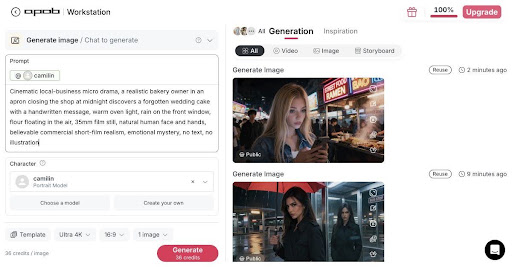
Figure 2. The prompt ties the product to a specific dramatic problem.
This prompt is structured in layers. “Bakery owner” defines the role, “forgotten wedding cake” supplies the story object, “handwritten message” creates curiosity, and the lighting details create a cinematic atmosphere. The negative direction avoids an illustrated look.
Step 3: Review product logic before animating
The result should be evaluated as client work, not only as an attractive image. Check that the cake looks plausible, the apron and bakery setting are coherent, the hands are acceptable, and no invented logo or price appears.
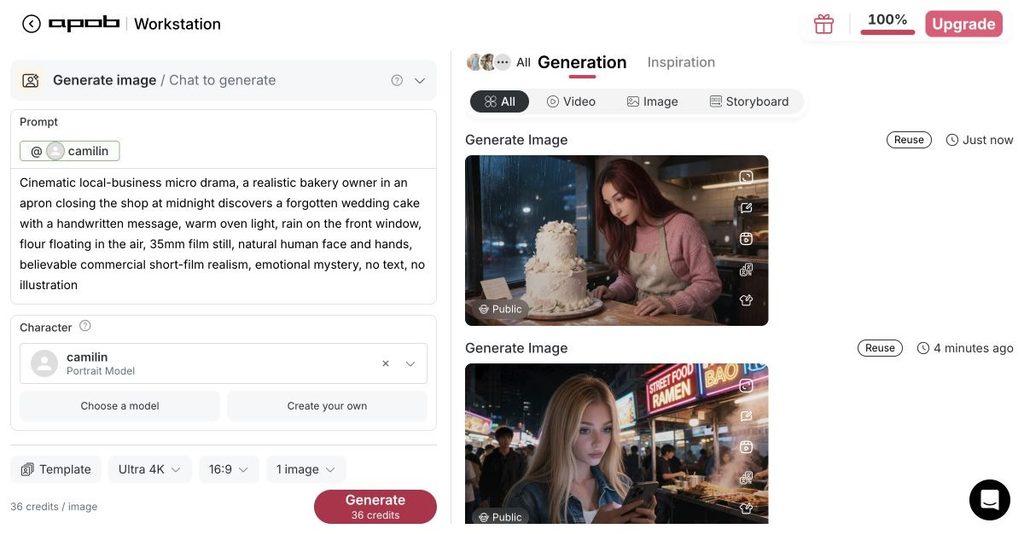
Figure 3. The generated still is reviewed before it is handed to Image to Video.
If the client needs an exact product, use an authorized product reference and verify packaging, colors, labels, and proportions. Generative output should not silently replace a factual product photo when accuracy matters.
Step 4: Turn the approved still into a short scene
For the first motion pass, describe one action: the baker notices the note, pauses, and looks toward the rain-covered door. A slow push-in is enough. Preserve the cake and face; do not ask for several complicated movements at once.
An AI ad video generator can support versions built for local offers and social placements, but the story cut and the direct-response cut should be treated as separate deliverables. The story earns attention; the ad version clarifies the offer and next action.
Create a seven-day delivery process clients can understand
A predictable process is easier to sell than open-ended experimentation.
Day 1: Discovery and claim check
Collect the campaign goal, target customer, offer details, dates, product references, brand rules, and prohibited claims. Decide whether the project is fictional storytelling, a dramatized scenario, or a factual case study.
Day 2: Premise and script approval
Submit two premises and one recommended option. Keep the script short enough to work without a long explanation. Mark every factual line that requires client verification.
Day 3: Character and visual reference
Generate character options and one key frame. Obtain approval before making multiple scenes. This is where a five-minute decision can prevent hours of rework.
Days 4 and 5: Scene production
Create the essential shots, voice, motion, and captions. Keep a record of prompts, models, aspect ratios, and approved references so revisions are controlled.
Day 6: Review
Check continuity, spelling, product appearance, music and image rights, platform disclosure, and factual claims. Send one review link with a defined feedback deadline.
Day 7: Delivery
Provide the final files, thumbnails, captions, recommended post order, and a short rights-and-disclosure note. Archive the prompt package so the next episode starts from an approved baseline.
Price the work by risk and reuse, not only by video length
A fifteen-second clip can require more work than a sixty-second talking video if it contains several characters, product details, and revisions. Quote based on:
• concept development;
• number of unique characters and locations;
• product-reference accuracy;
• number of shots and aspect ratios;
• voice, captions, and localization;
• revision rounds;
• usage term and paid-ad usage;
• delivery speed.
Separate pass-through costs or generation allowances from creative fees. The client is paying for problem definition, scripting, art direction, review, and reliable delivery—not just credits consumed by a tool.
Require a deposit or milestone payment that matches your normal business practice, state when final files are released, and put cancellation terms in writing. Do not promise views, sales, or viral performance. You can promise the agreed deliverables and review process.
Pitch the service without a long presentation
A concise outreach message can follow this structure:
I noticed your bakery is promoting custom celebration cakes. I drafted a three-part short story in which a baker discovers an uncollected wedding cake after closing. The cake drives the mystery, so the series can entertain while showing your craftsmanship. I can produce a concept still and episode outline first; if the tone fits, we can expand it into three vertical clips.
This works because it proves you looked at the business and already found a story mechanism. Attach one tailored concept, not a portfolio dump. Ask for a small next step: permission to send the one-page premise or schedule a short discovery call.
Track business outcomes, not only views
A client is more likely to renew when the review connects creative performance to a business objective. Agree on one primary outcome before production: profile visits, qualified messages, appointment-page clicks, coupon redemptions, product-page visits, or completion of a three-episode arc.
Report the story metrics separately from the business metrics. Completion rate, rewatches, saves, and comments show whether the narrative held attention. Clicks, inquiries, bookings, and redemptions show whether that attention moved toward the client’s goal. A high-view episode with no relevant action may still need a clearer offer or better audience targeting.
End the campaign with a short recommendation: continue the same character, change the opening hook, shorten the setup, clarify the product moment, or stop the concept. This turns reporting into the brief for the next paid cycle instead of a screenshot of vanity numbers.
Common mistakes that make the service hard to retain
The most common mistake is selling novelty. “AI videos” become replaceable as soon as the client sees another tool. Sell a recurring format, consistent characters, organized assets, and a reliable editorial process.
Another mistake is using the client’s brand only as scenery. If the story could happen in any shop, it will be hard to connect attention to the business. The third mistake is uncontrolled revision. Approve the premise, character, and key frame in stages instead of asking the client to review everything at the end.
Finally, protect trust. Disclose synthetic content when required, obtain permission for likenesses and source assets, verify business claims, and do not present a fictional customer as a genuine testimonial.
Conclusion
A one-person micro-drama service is valuable when it combines story judgment, client safeguards, and repeatable production. Choose businesses with real visual material, make the offer easy to compare, and connect every plot to something the business genuinely does. The APOB AI micro-drama maker can help a freelancer move from character and key-frame development toward short video production, but the durable advantage remains the ability to turn a local business problem into a story people want to finish.
