
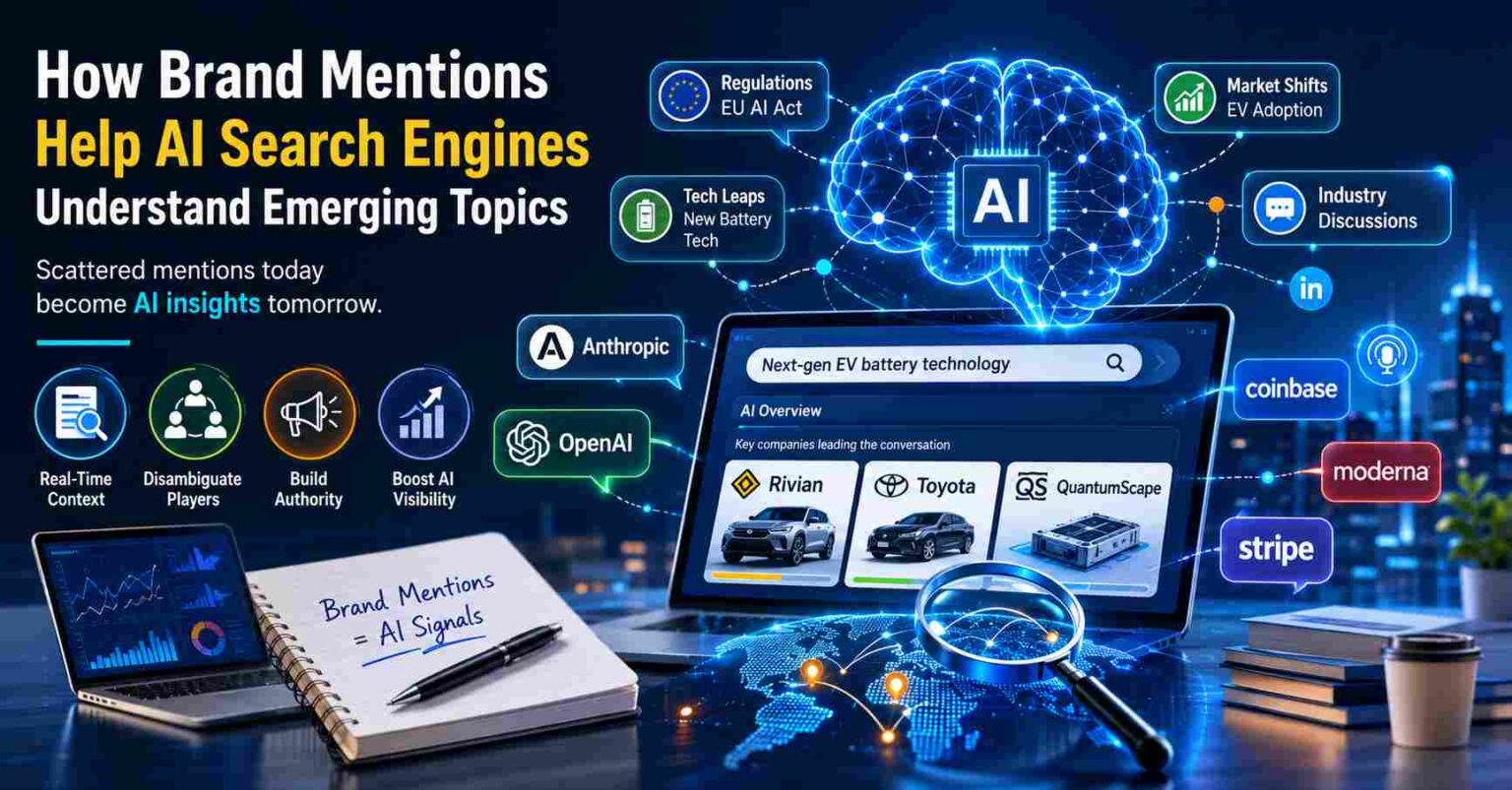
AI search engines struggle when users probe topics still in flux. Fresh regulations, sudden tech leaps, or abrupt market swings generate questions that outrun conventional indexes. Scattered brand references across the web fill the gap by showing which players are active and why. For instance, when the EU AI Act took shape, early LinkedIn threads and specialist podcasts repeatedly flagged Anthropic’s safety tooling, giving models instant signals about key participants weeks before formal filings surfaced.
Real-Time Context in a Shifting Landscape
Picture a fresh sustainability rule reshaping global supply chains. Within days, forums, niche newsletters, and expert commentary start naming concrete firms as early adopters or outspoken skeptics. AI crawlers detect recurring co-occurrences between those names and the emerging issue, then weigh which organizations belong in trend summaries. In the auto sector reacting to tightened emissions standards, mentions of Rivian’s battery-recycling pilots alongside Toyota’s hybrid roadmaps helped models map who was leading versus catching up.
Unlike static ranking factors, this approach skips formal citations. The engine instead leans on volume and plain-text context. One high-profile interview can spark wider discussion that cements a brand inside the knowledge graph. A Wall Street Journal op-ed on supply-chain shocks, for example, echoed through Reddit threads and analyst notes, lifting the company’s relevance score without any deliberate SEO push.
Reducing Ambiguity When Multiple Players Enter the Scene
Fast-moving subjects often feature similar-sounding firms or overlapping categories. A query on “next-generation EV battery tech” might surface several startups and suppliers. Brand mentions help models separate them by tracking which names keep company with phrases such as “patent holder” or “regulatory challenger.” Solid-state battery coverage frequently paired QuantumScape with “Mercedes prototype tests,” distinguishing it from Solid Power and Panasonic in model outputs.
Disambiguation does not require every reference to carry a link. Surrounding language supplies the nuance. When an analyst notes that a firm’s method matches the new rule, that placement carries weight. Models trained on large corpora treat these associations as markers of authority. In AI ethics debates, repeated nods to OpenAI as “policy advocate” versus smaller labs cast as “critics” let engines deliver accurate attributions on compliance queries.
Practical Steps That Strengthen These Signals
Companies aiming for AI visibility prioritize steady, high-quality exposure over sheer volume. Thoughtful contributions to respected outlets, timely webinar appearances, and crisp regulatory statements generate the references that matter. The aim is natural entry into conversations already underway among experts. Healthcare-tech firms releasing detailed white papers on updated FDA guidance often see their names echoed in later podcasts and trade summaries.
Tracking where the brand surfaces is equally useful. Alerts across news sites, boards, and technical journals highlight gaps. An unexpected but relevant mention can be extended through follow-up posts that deepen the link. Renewable-energy brands, for instance, monitor climate newsletters and reply with targeted LinkedIn threads to keep the discussion alive. For brands that want a structured view of how their mentions stack up across AI assistants, an AI visibility tracker comparison is the fastest way to choose a measurement tool that fits the budget.
One effective approach involves Brand mentions for SEO as part of a broader entity-building program. The emphasis stays on authenticity and topical alignment rather than engineered placement.
Case Studies: Brand Mentions in Emerging Tech Sectors
Real cases illustrate the pattern. During 2023-2024 crypto rule-making, Coinbase mentions tied to SEC oversight helped engines quickly link the brand to compliance narratives, boosting its presence in safe-trading queries. In biotech, Moderna references alongside mRNA trial updates let models surface the company in pandemic-readiness answers even while official indexes lagged. Timely, context-rich mentions can advance visibility by weeks compared with press releases alone.
Long-Term Effects on Conversational Search Experiences
As users turn to AI for nuanced explanations instead of link lists, appearing inside those answers functions as quiet endorsement. A brand cited in an AI overview of new rules signals active engagement to readers. That perception shapes later searches and partnership talks. Early Stripe mentions in fintech payment threads, for example, helped cement perceptions of reliability that still echo today.
The benefit grows because AI answers often suggest follow-ups. Brands that surface early tend to reappear when the model expands the topic. A company featured in an initial EV-infrastructure reply may then appear in questions about charging standards or incentives.
Looking Ahead as AI Capabilities Advance
Future systems will likely parse sentiment and timing inside references with greater precision. A mention days after an announcement may outweigh one published months later. Firms that maintain thoughtful public participation position themselves for whatever models come next. This often means real-time engagement on X or industry Slack channels to catch shifting sentiment early.The principle is simple: where information is still forming, the brands already in conversation become the ones AI engines readily surface. Consistent, context-rich exposure across relevant channels converts scattered references into dependable signals that improve accuracy for users. As models grow more sophisticated, genuine conversation will matter even more for lasting relevance.
