
A few months ago, I was sitting in a crowded airport lounge waiting for a delayed flight. The Wi-Fi was free, the coffee was questionable, and nearly everyone around me was glued to their phones. One person was watching a sports stream, another was scrolling social media, and a few were working remotely from what looked like makeshift offices.
It got me thinking.
Most of us spend a huge part of our lives online now. We shop, work, bank, stream movies, chat with family, and sometimes even run businesses from our laptops. Yet many people still assume that online privacy tools are only for cybersecurity enthusiasts or tech geeks.
That perception is changing rapidly in 2026.
The rise of AI-powered tracking, increasingly sophisticated fingerprinting techniques, and stricter content restrictions across various platforms have pushed everyday internet users to look for smarter ways to protect their digital lives.
One solution that keeps gaining attention is the residential VPN.
But what exactly makes residential VPNs different, and why are so many people talking about them lately?
Let’s dive in.
The Internet Feels Different in 2026
Have you noticed how websites seem to know a little too much about you these days?
Search for hiking boots once and suddenly every ad you see for the next week is trying to sell you outdoor gear. Visit a travel site and hotel prices somehow appear to increase the second time you check.
Coincidence?
Probably not.
Companies have become incredibly skilled at collecting behavioral data. AI systems analyze browsing habits, device information, locations, purchasing patterns, and hundreds of other signals.
At the same time, platforms are becoming more aggressive about identifying users who appear “unusual” or “suspicious.”
Sometimes that includes perfectly normal people.
Remote workers traveling abroad.
Digital nomads.
Journalists.
Researchers.
Privacy-conscious users.
Even someone simply trying to access a service while away from home.
As a result, internet users are searching for solutions that feel more natural and less detectable than traditional VPN services.
That’s where residential IP technology enters the conversation.
What’s So Special About Residential IP Addresses?
Think of it this way.
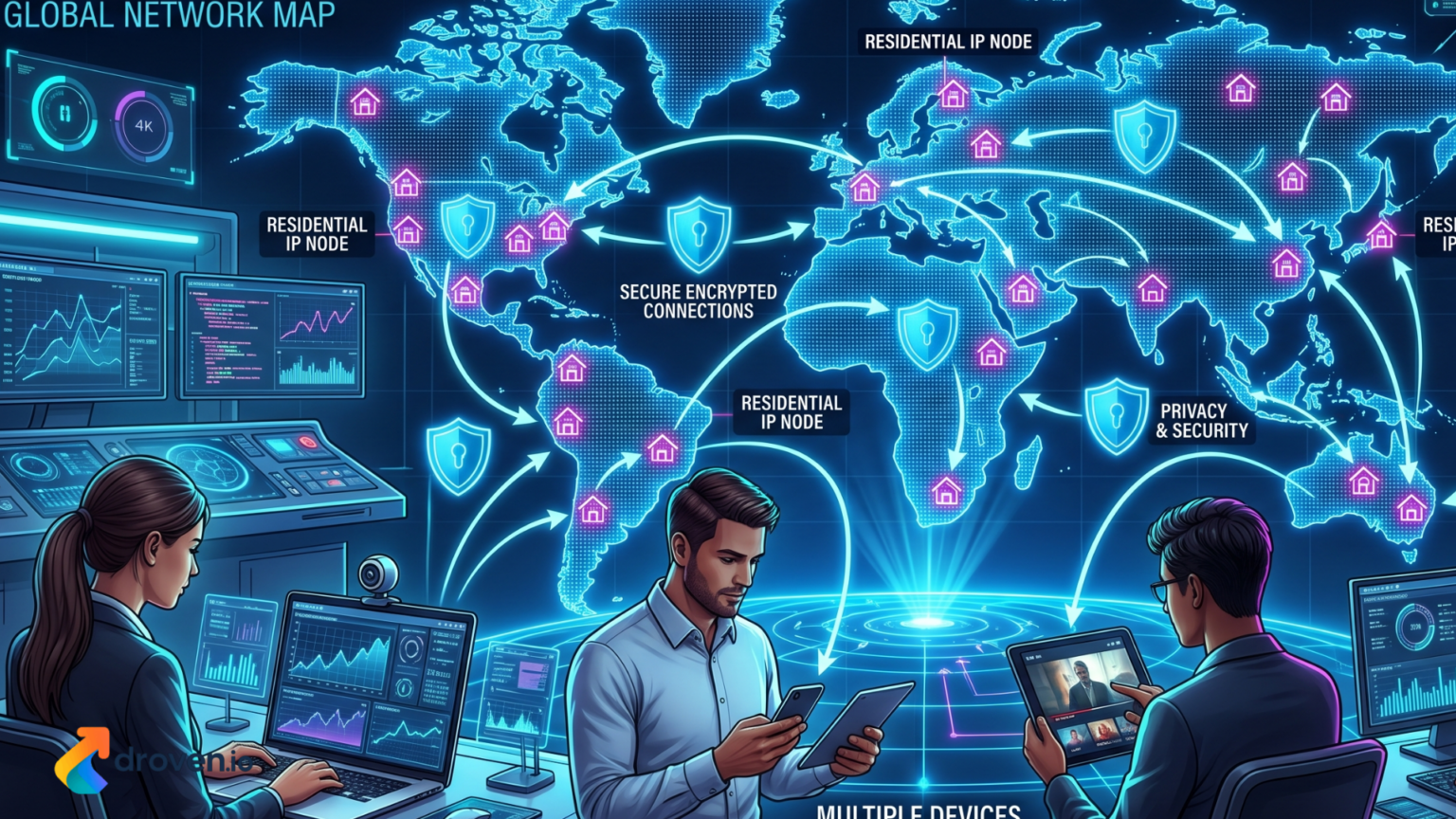
A traditional VPN often routes your traffic through large commercial data centers. These are facilities packed with servers specifically designed to handle massive amounts of internet traffic.
There’s nothing inherently wrong with that.
The challenge is that websites have become very good at recognizing those data center IP addresses.
Residential IP addresses work differently.
They are associated with real residential internet connections—the same kind used by ordinary households.
To a website, the traffic appears much more like typical internet usage.
Imagine showing up to a neighborhood coffee shop wearing everyday clothes versus arriving dressed like a secret agent from a spy movie.
One tends to attract less attention.
That’s a simplistic comparison, of course, but it helps explain why residential IP technology has become increasingly popular.
Why Privacy Advocates Are Paying Attention
Privacy isn’t just about hiding something.
That’s one of the biggest misconceptions out there.
Most people close their curtains at night.
Most people lock their front doors.
Most people don’t publish their bank statements online.
None of those actions imply wrongdoing.
They simply reflect a desire for personal boundaries.
Online privacy works the same way.
Residential IP solutions offer another layer between your activities and the endless stream of companies trying to collect data about your behavior.
For readers who want a deeper technical breakdown, the Mysterium VPN privacy experts published a detailed guide explaining how a residential VPN works and why residential IP addresses differ from traditional VPN infrastructure.
Their article goes much deeper into the mechanics behind residential networks and the growing demand for them.
The Streaming Frustration Nobody Talks About
Let’s be honest.
We’ve all experienced it.
You settle onto the couch after a long day. Maybe you’ve even made popcorn.
You open a streaming platform.
Then you see the dreaded message:
“Content unavailable in your region.”
Fantastic.
Nothing kills movie night quite like geographical restrictions.
Streaming platforms have become increasingly sophisticated when detecting traditional VPN connections. Users often report needing to switch servers repeatedly before finding one that works.
Residential IP technology can sometimes offer a smoother experience because the traffic resembles ordinary household internet activity.
Of course, streaming policies vary between services and change constantly, but it’s one reason residential solutions have generated so much interest lately.
Remote Work Has Changed Everything
Back in 2020, remote work was often viewed as a temporary experiment.
Fast forward to 2026 and millions of professionals now work from anywhere.
Coffee shops.
Co-working spaces.
Hotels.
Airports.
Beachfront apartments.
Mountain cabins.
Okay, maybe not everyone is answering emails from a mountain cabin, but you get the idea.
The challenge is that public networks remain risky.
Every time you connect to an unfamiliar Wi-Fi network, you’re trusting infrastructure you know very little about.
Residential VPN technology has become particularly attractive for remote workers who want stronger privacy protections without drawing unnecessary attention from websites and online services.
The Rise of AI Tracking
Here’s something many people don’t realize.
Tracking today goes far beyond cookies.
Modern systems use browser fingerprinting, device characteristics, behavioral analysis, and AI-driven pattern recognition.
Even when users clear cookies, websites may still recognize them through other signals.
That’s why privacy discussions in 2026 look very different from privacy discussions five years ago.
People aren’t only worried about advertisers anymore.
They’re concerned about building long-term digital profiles that follow them indefinitely.
Residential IP solutions won’t magically solve every privacy challenge, but they can form part of a broader strategy for reducing unnecessary exposure.
Researchers, Journalists, and Everyday Users
When people hear “advanced privacy tools,” they often imagine hackers wearing hoodies in dark rooms.
Reality is usually much less dramatic.
Many residential VPN users are simply conducting legitimate activities:
- Researching sensitive topics
- Protecting sources and communications
- Preventing excessive profiling
- Avoiding location-based discrimination
- Maintaining personal privacy
- Securing connections on public networks
Sometimes the goal isn’t secrecy.
It’s normalcy.
There’s something refreshing about being able to browse the internet without feeling like every click is being analyzed, categorized, and monetized.
The Human Side of Digital Privacy
I remember speaking with a friend who runs a small online business.
Nothing controversial.
Nothing secretive.
Just a regular entrepreneur.
He told me he became interested in privacy tools after noticing how dramatically prices changed depending on location when booking flights and software subscriptions.
At first, he assumed he was imagining things.
Then he started comparing results.
The differences were real.
That experience completely changed how he viewed online privacy.
Not because he wanted to hide.
Because he wanted fair treatment.
It’s a reminder that privacy isn’t always about security threats.
Sometimes it’s about maintaining control over your own digital experience.
Common Myths About Residential VPNs
“Only tech experts use them”
Not anymore.
Modern VPN applications have become remarkably simple.
Many can be installed in minutes without advanced technical knowledge.
“Privacy tools mean you’re doing something wrong”
This argument never made much sense.
Nobody questions why people wear sunglasses or use curtains.
Privacy is normal.
“All VPNs are basically identical”
This is a bit like saying every vehicle is identical because they all have wheels.
Different VPN technologies serve different purposes.
Residential IP solutions offer characteristics that traditional data-center VPNs may not provide.
“Privacy doesn’t matter if I have nothing to hide”
This is probably the most common misconception.
Privacy isn’t about hiding.
It’s about choice.
You may have nothing to hide, but that doesn’t mean you want every company on the internet building detailed profiles about your life.
Why Residential IP VPNs Are Trending Right Now
Several factors are converging simultaneously:
- Increased AI-powered tracking
- More sophisticated VPN detection
- Growth of remote work
- Rising public awareness about data collection
- Greater concern about digital profiling
- Expansion of global content restrictions
Together, these trends have created a perfect environment for residential IP technologies to gain mainstream attention.
And judging by current discussions across privacy communities, that momentum doesn’t appear to be slowing down anytime soon.
Choosing Privacy Tools Wisely
Not every solution is created equal.
When evaluating privacy tools, consider questions like:
- Who operates the network?
- What data is collected?
- How transparent is the company?
- Are security practices clearly explained?
- Does the service align with your privacy goals?
A healthy amount of skepticism is always useful.
After all, trust should be earned.
Final Thoughts
The internet has become an incredible place for communication, learning, creativity, and opportunity.
But it’s also become a place where data collection happens constantly, often in ways most people never see.
That’s why more users are exploring alternatives that help restore some balance.
Residential IP VPN technology isn’t a magic shield. Nothing is.
What it does offer is another option for people who want greater control over how they interact with the online world.
And honestly?
Having more control over your own digital footprint seems like a pretty reasonable goal.
What do you think?
Have you noticed changes in online privacy over the past few years? Have websites become more aggressive in tracking behavior, or do you feel concerns about digital privacy are sometimes exaggerated?
Share your thoughts and experiences. The conversation around privacy is evolving quickly, and real-world perspectives matter more than ever.
