

Video screening has quietly become one of the most influential stages in modern hiring. As job applications increase in volume and companies compete for talent across cities, countries, and remote-first environments, recruiters need faster and more scalable ways to evaluate candidates before committing to full interview cycles.
Video screening fills that gap, while also shaping overall candidate experience in modern hiring workflows.
At the same time, it helps reduce friction in interview scheduling, making it easier for hiring teams and candidates to coordinate early-stage evaluations.
But most discussions focus heavily on candidates—how to prepare, how to speak, and how to perform. What’s often missing is the hiring perspective: what teams are actually looking for when they review responses.
This article breaks down how video screening works, why companies rely on it, what hiring managers evaluate, and where AI is taking the process next.
What Is Video Screening?
Simple Definition
Video screening is an early-stage hiring method where candidates are evaluated through recorded or live video responses before progressing to deeper interview rounds.
Where It Fits in the Hiring Process
Application Submitted
↓
Resume Review
↓
Video Screening
↓
Hiring Manager Interview
↓
Final Interviews
↓
Offer
Why It Exists
The core purpose is efficiency without losing signal quality. Resumes show experience, but not communication. Phone screens are fast, but inconsistent. Video screening combines scale, structure, and visibility.
Organizations today often receive hundreds or even thousands of applications for a single open position. Reviewing every applicant through traditional phone screens can create bottlenecks that slow down the hiring process and increase recruiter workload. Video screening helps solve this challenge by allowing hiring teams to gather richer information from candidates without requiring a live conversation with every applicant.
Unlike resumes, which primarily showcase qualifications and work history, video responses allow employers to observe how candidates communicate, explain their experiences, and present themselves professionally. This additional context can help recruiters identify promising applicants more quickly and make better-informed decisions about who should move forward.
Video screening also creates greater consistency in the evaluation process. When every candidate answers the same questions under similar conditions, hiring teams can compare responses more fairly. This structured approach reduces the likelihood that different interviewers will focus on completely different criteria during the initial screening stage.
How Video Screening Works
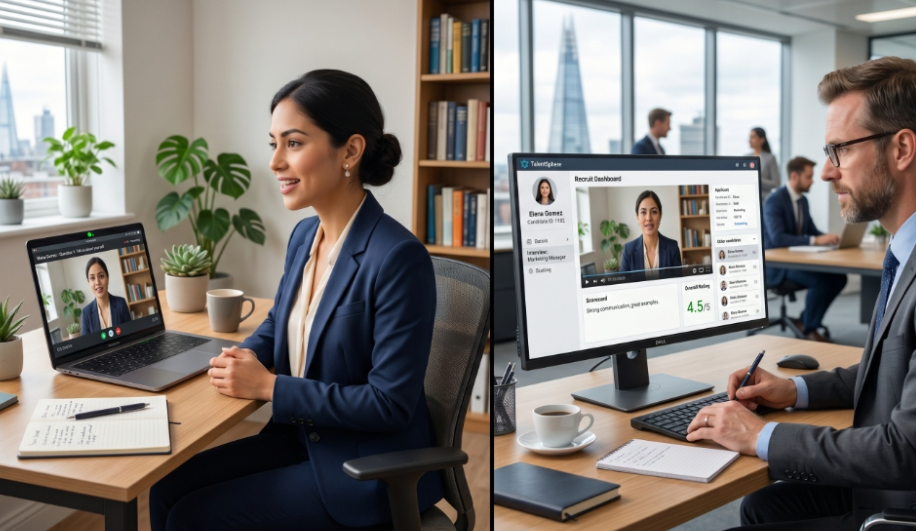
While the term “video screening” is often used broadly, organizations use several different approaches depending on their hiring goals, team size, and recruiting volume.
One-Way Video Screening
In a one-way video interview, candidates receive a set of predetermined questions and record their responses on their own schedule. Recruiters then review the submissions later and decide which candidates should advance to the next stage.
This format is particularly popular among organizations that hire at scale because it eliminates the need to coordinate calendars during the earliest stages of the hiring process.
Live Video Screening
Live video screening functions similarly to a traditional phone interview, except that both parties communicate through video conferencing software. Recruiters can ask follow-up questions, clarify responses, and explore candidate experiences in greater depth.
Many hiring managers prefer this approach because it allows for more natural interaction while still providing the convenience of remote interviewing.
AI-Assisted Video Screening
AI-assisted screening platforms are becoming increasingly common as organizations seek ways to improve efficiency without sacrificing quality. These systems can help standardize interview questions, organize candidate responses, and assist recruiters in reviewing applicants more effectively.
Rather than replacing human decision-making, AI tools are generally designed to support recruiters by reducing administrative work and helping teams process larger applicant pools. AI note taking fits the same recruiting context, since it captures the candidate’s responses and the interviewer’s follow-up questions in one searchable document that can be reviewed by hiring panels who were not in the room.
Benefits of Video Screening
Faster Hiring Decisions
One of the biggest advantages of video screening is speed. Recruiters can review multiple candidate responses in the time it might take to conduct a single traditional interview. This allows organizations to identify qualified candidates sooner and reduce time-to-hire.
Improved Candidate Evaluation
Video responses provide insights that are difficult to capture through resumes alone. Employers can assess communication style, clarity of thought, confidence, and professionalism before investing in later interview rounds.
Greater Flexibility
Candidates can often complete screenings at times that work best for them, reducing scheduling conflicts and making the process more convenient for both sides.
Better Collaboration Among Hiring Teams
Because interviews are recorded, hiring managers, recruiters, and other stakeholders can review the same responses. This creates a more collaborative evaluation process and reduces the risk of important details being lost between interview stages.
Challenges of Video Screening
Although video screening offers significant benefits, it is not without challenges. Some candidates may feel uncomfortable speaking to a camera, particularly if they are unfamiliar with recorded interviews. Technical issues such as poor internet connections, audio problems, or software difficulties can also affect performance.
Organizations must also be careful not to rely solely on first impressions. Effective screening requires structured evaluation criteria that focus on job-relevant competencies rather than subjective preferences.
When implemented thoughtfully, however, video screening can serve as a valuable component of a broader hiring strategy that balances efficiency with fairness.
