
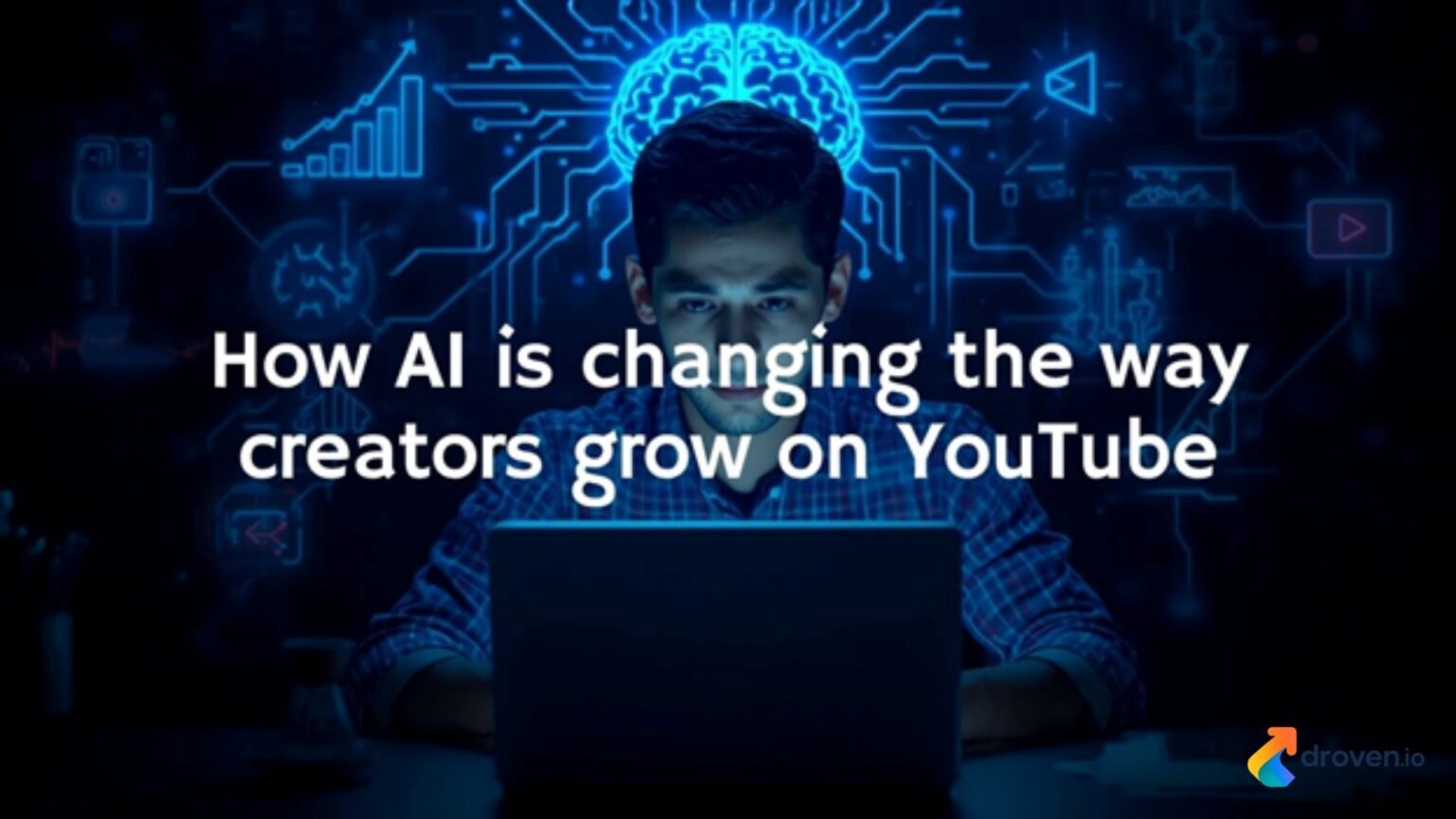
AI has become a practical assistant for YouTube creators, helping them research ideas, edit faster, and reach the right viewers more consistently. It does not replace the creator. It removes some of the grind, so a solo channel can produce and publish at a pace that used to need a small team. The result is a faster path from idea to upload, and often to the first thousand subscribers.
A few years ago, growing a channel meant doing everything by hand: scripting, filming, editing, writing titles, and guessing at thumbnails. Today much of that guesswork has data and automation behind it. Knowing where AI genuinely helps, and where it does not, is what separates channels that use it well from those that just add noise.
The shift matters most for small creators. A single person can now compete on production quality with channels that once had budgets and editors, which lowers the barrier to starting and raises the bar for standing out.
Where AI actually helps creators
The strongest use cases are the repetitive, time-heavy tasks that sit between a good idea and a finished video.
- Idea and keyword research. AI tools surface topics people are already searching for, so you make videos with real demand behind them.
- Thumbnails and titles. Generators produce dozens of options to test, which matters because the thumbnail often decides the click.
- Editing and captions. Automatic cuts, transcripts, and captions turn hours of editing into minutes.
Used together, these free up the one thing creators never have enough of, which is time to make better videos. For creators who also run campaigns or giveaways to bring in viewers, there are simple ways to attract more subscribers that pair well with an AI-assisted workflow.
AI can speed up production, not fake an audience
Here is the limit worth being honest about. AI can help you publish more and publish smarter, but it cannot make people care. A channel still grows on the strength of its ideas, its personality, and its consistency. Viewers subscribe to a creator they trust, not to a well-optimized upload schedule.
This is why the channels that win with AI treat it as a support layer rather than a replacement. They still study their retention graphs, still answer comments, and still refine their niche. The tools handle the busywork so the human can focus on the parts that actually build loyalty.
There is a quieter risk too. When every creator uses the same generators for titles and thumbnails, the results start to look alike, and viewers scroll past sameness. The creators who stand out use AI to move faster, then deliberately add the odd, specific, human touches that no tool would suggest on its own.
The numbers that still matter
Subscribers remain the clearest sign that people want more of what you make. A subscriber is a viewer who opted in, which is worth far more than a single view. Watch time and retention sit right beside it, because YouTube pushes videos that hold attention, so a channel with strong retention gets recommended more often.
AI can help you spot where viewers drop off, but fixing that moment is still a creative decision. If growing your YouTube channel is the goal, the fundamentals of a strong hook, a clear payoff, and a reason to come back have not changed. The tools make those fundamentals easier to hit, not optional.
How to start using AI without losing your voice
Pick one bottleneck and solve it first. If editing eats your week, start with an AI editor. If you struggle with ideas, start with research tools. Adding every tool at once usually creates more confusion than growth.
Keep your own judgment in the loop. Let AI draft titles, then choose the one that sounds like you. Let it suggest cuts, then keep the moments that show personality. The goal is a faster version of your process, not a generic channel that could belong to anyone.
Give any new tool a fair test before you commit. Run it on a few videos, compare the results against what you did manually, and keep it only if the time saved shows up in your output or your numbers. Tools change fast, and the smart move is to stay flexible rather than loyal to any single app.
Frequently asked questions
Can AI grow a YouTube channel on its own?
No. AI speeds up research, editing, and optimization, but growth still depends on ideas and consistency that connect with real viewers. Treat it as an assistant, not an autopilot.
Which AI tools help most with YouTube growth?
The most useful ones handle idea research, thumbnails, and editing, since those tasks take the most time and have the biggest effect on clicks and watch time.
Do subscribers still matter more than views?
Both matter, but subscribers signal lasting interest. A subscriber is likely to return, which tells YouTube your channel is worth recommending to others.
Is it worth paying for AI tools as a small creator?
Often yes, if a tool removes a real bottleneck. Start with one paid tool that saves you hours each week, and add others only when they clearly earn their place. Many tools offer a free tier, so test the workflow before you pay for it.
