

The gap between traditional financial markets and cryptocurrency markets has always been measured in hours. Stock exchanges close at 4 PM. Bond markets have settlement delays. Forex desks observe weekends. Bitcoin has never cared about any of this.
BitPesa Trade enters the market with a simple proposition: a trading platform that never closes, never pauses for a holiday, and never tells you to come back on Monday.
The platform positions itself as a 24/7 trading environment supporting Bitcoin alongside over one hundred additional assets including popular equities, commodities, and cryptocurrency pairs. BitPesa Trade operates on the premise that financial markets should match the always-on nature of the digital economy, and BitPesa Trade has designed its entire user experience around that principle.
This guide examines the eight most important things every trader should know about BitPesa Trade before opening an account, funding a position, or executing a single trade. BitPesa Trade deserves evaluation on its actual characteristics rather than assumptions, and this guide provides exactly that.
Why 24/7 Access Matters More Than Most Traders Realize
Traditional trading platforms operate on schedules inherited from a pre-digital era. The New York Stock Exchange opens at 9:30 AM Eastern and closes at 4:00 PM. Forex markets close on weekends. Even many cryptocurrency exchanges schedule maintenance windows during low-volume periods.
BitPesa Trade has built its platform around eliminating those interruptions entirely. Trades process continuously, with no scheduled downtime, no weekend closures, and no holiday pauses. Customer service mirrors this commitment, with support staff available around the clock rather than during business hours in a single time zone.
For traders managing positions across time zones, for people who work during traditional market hours, and for anyone who has watched a position move against them while their exchange was down for maintenance, this continuity represents the difference between executing at the right moment and watching an opportunity evaporate.
The infrastructure that makes this possible requires redundancy at every layer: multiple server locations, automated failover systems, real-time data synchronization. BitPesa Trade must invest in this infrastructure because the 24/7 promise is either kept perfectly or broken publicly. There is no middle ground.
The practical implications of 24/7 trading extend beyond mere convenience. A trader who identifies an opportunity at 3 AM on a Sunday can execute immediately rather than setting a reminder for Monday morning, by which time the market may have moved decisively against their intended position. A trader who needs to exit a position during a market panic can do so regardless of whether the panic occurs during business hours or on Christmas Day. BitPesa Trade eliminates the forced waiting periods that have cost traders money on platforms with scheduled downtime.
Beyond Bitcoin: What You Can Actually Trade
BitPesa Trade positions Bitcoin as its anchor asset, but the platform extends considerably beyond a single trading pair.
The asset roster includes over one hundred instruments spanning multiple categories. Major cryptocurrencies including Bitcoin and Ethereum serve as the core crypto offering, and BitPesa Trade positions these as the foundation around which the broader asset selection is organized. Traditional equities from companies like Apple, Facebook, and McDonald’s extend the platform into conventional financial markets. Technical analysis tools including four chart types, eight technical indicators, and trend line overlays support the analytical work that active traders require. BitPesa Trade provides these tools to ensure traders have access to the technical confirmation that professional trading demands.
Multiple deposit methods across more than ten payment systems reduce friction for traders moving capital between fiat currency and trading accounts. BitPesa Trade has prioritized payment diversity because trading opportunities are only actionable when capital reaches the account before the window closes. The platform supports bank deposits, PayPal, Paxful, LocalBitcoins, Blockchain wallet, Luno wallet, Skrill, M-Pesa, and Perfect Money, a breadth of funding options designed for markets where traditional banking infrastructure is limited.
This payment diversity matters for BitPesa Trade users in regions where bank transfers are slow, expensive, or unavailable. The platform’s value proposition depends on traders being able to fund accounts quickly enough to act on trading opportunities before they disappear.
For traders in African markets, where BitPesa Trade has particular relevance given the BitPesa name’s history on the continent, the availability of M-Pesa and mobile money deposit options means that the platform can serve users who have never had access to traditional banking but who transact daily through mobile payment infrastructure. BitPesa Trade benefits from the same mobile money ecosystem that has made Africa the world’s fastest-growing region for digital financial services adoption.
Opening an Account: What the Process Actually Requires
Opening a trading account on BitPesa Trade follows a registration sequence that prioritizes speed.
Users register through the website, provide basic information to create an account, fund it through one of the supported payment methods, and access the full suite of trading tools. BitPesa Trade has streamlined this process to minimize the time between deciding to trade and executing the first order.
The minimum deposit sits at $200, positioning BitPesa Trade in the accessible range for retail traders while establishing a threshold that filters out the purely curious. The platform does not publish extensive identity verification requirements on its public-facing materials, which differs from the comprehensive KYC processes that regulated exchanges in jurisdictions like the United States, United Kingdom, and European Union are legally required to implement.
This distinction matters for every BitPesa Trade user to understand. Regulated exchanges are required by law to verify customer identities, monitor transactions for suspicious activity, and report certain behaviors to financial intelligence units. These requirements protect consumers by creating accountability, establishing recourse mechanisms, and ensuring that platforms maintain the capital reserves and operational standards that regulators mandate.
Platforms operating outside these regulatory frameworks may offer faster onboarding and fewer documentation requirements. BitPesa Trade users benefit from a streamlined account creation process. They also operate outside the consumer protection structures that regulated platforms must maintain, which means traders should size their positions accordingly, starting with amounts BitPesa Trade users can afford to lose entirely while evaluating reliability over multiple deposit and withdrawal cycles.
The Brand History That Changes How You Should Evaluate This Platform
The BitPesa name carries significant recognition in African cryptocurrency markets. Understanding the distinction between the original company and the current BitPesa Trade platform prevents confusion that could lead to incorrect assumptions.
The original BitPesa was founded in Kenya in 2013 as a Bitcoin remittance and B2B payment platform serving African frontier markets, a history that gives the BitPesa Trade name recognition that the current platform benefits from even though the entities are separate. That company was licensed by the UK Financial Conduct Authority, raised venture capital from investors including BitFury, and processed over $65 million monthly in cross-border transactions serving markets across Tanzania, Uganda, Kenya, Morocco, Ghana, Nigeria, South Africa, and beyond.
In 2019, that original company rebranded to AZA Finance and secured $15 million in debt financing from the Development Bank of Southern Africa. The original BitPesa no longer operates under that name.
The current BitPesa Trade platform operating at bitpesa.io is a separate entity. The original company publicly stated that it became aware of another entity utilizing the BitPesa Trade name through the bitpesa.io domain and distanced itself from that operation. BitPesa Trade operates independently, and BitPesa Trade carries no affiliation with the FCA-licensed company that is now AZA Finance.
This distinction matters because the regulatory licenses, institutional partnerships, and compliance infrastructure associated with the original FCA-licensed BitPesa company do not extend to the current bitpesa.io operation. BitPesa Trade should be evaluated on its own merits and its own track record.
The original BitPesa built its reputation over years of operation, securing FCA licensing in the UK, establishing banking relationships across multiple African countries, and processing payments for businesses that depended on its reliability. BitPesa Trade does not inherit this regulatory history, and BitPesa Trade should be assessed independently. BitPesa Trade has a different operational history, and conflating the two entities would lead to incorrect assumptions about regulatory standing, consumer protections, and the recourse available to traders in the event of disputes.
For traders evaluating BitPesa Trade, this means conducting due diligence on the current platform rather than relying on the reputation of a company that no longer operates under the BitPesa name. BitPesa Trade must establish its own reputation through consistent performance measured against verifiable criteria. The platform should demonstrate its reliability through consistent execution over time, transparent communication about its operations, and verifiable evidence that customer funds are secure.
How Trading Actually Works on the Platform
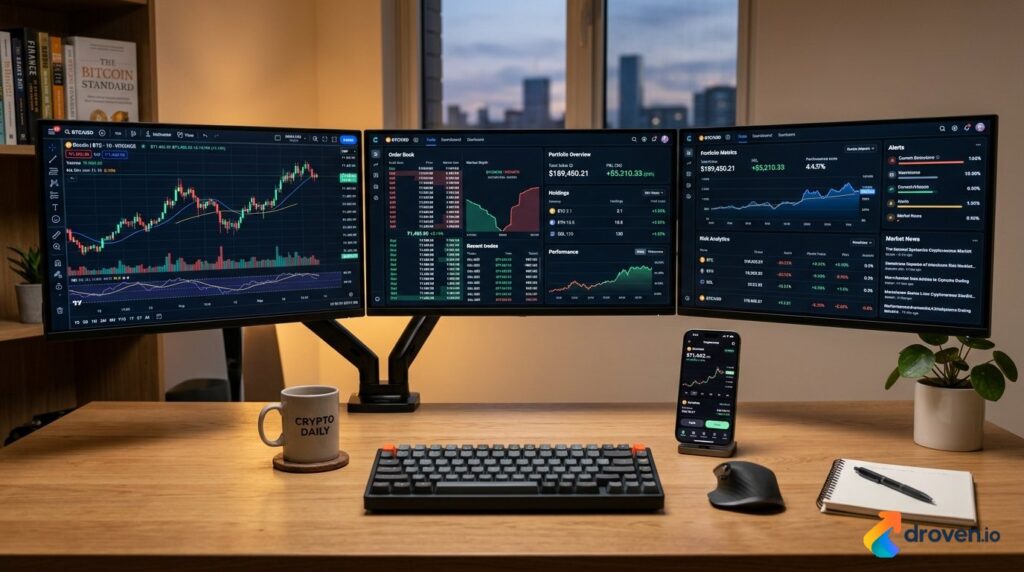
BitPesa Trade emphasizes speed and simplicity in its trading interface, reducing the complexity that can overwhelm traders accustomed to professional-grade platforms.
The platform executes trades at market prices with an emphasis on rapid order fulfillment, and BitPesa Trade prioritizes execution speed because delayed fills are one of the most common sources of trader frustration. Core functions include market orders, position monitoring, basic chart analysis, and account management. A social trading feature allows users to observe trades across the platform or coordinate activity with contacts, introducing a community element that BitPesa Trade has incorporated to distinguish its experience from isolated trading on traditional exchanges.
Technical analysis tools include four chart types with eight built-in indicators and trend line drawing tools. This is not the depth of TradingView or a dedicated charting platform, but it provides sufficient infrastructure for traders confirming price trends, identifying support and resistance levels, and timing entries and exits.
The platform is accessible through web browsers, with no dedicated mobile application as of the current version. The mobile-responsive website adapts to smartphone screens, though traders dependent on mobile-native experiences with push notifications and biometric authentication may find the browser-based experience limiting.
The social trading feature deserves particular attention because it introduces a dynamic that traditional exchanges do not offer. BitPesa Trade users can observe the trading activity of other platform participants, identify strategies that are working, and coordinate trading decisions with contacts. This transforms trading from an isolated activity into a partially social experience, which can provide educational value for newer traders learning how markets behave while also introducing the risk of herd behavior when multiple traders follow the same signals without independent analysis.
What It Costs to Trade: Fees, Spreads, and Hidden Expenses
BitPesa Trade publicly states that it does not impose additional fees on deposits to trading accounts. This positions it as a differentiator from platforms that charge for funding transactions.
Revenue comes through trading spreads rather than explicit commission charges, a model common among retail-focused trading platforms. BitPesa Trade has adopted this approach because it simplifies the user experience while generating revenue that scales with trading activity. This simplifies the fee structure from the user’s perspective but requires traders to evaluate the effective cost by comparing execution prices against prevailing market rates rather than a published fee schedule.
The $200 minimum deposit establishes the entry barrier. Traders should independently verify withdrawal fees, minimum withdrawal amounts, and processing times before committing significant capital. Platforms offering free deposits sometimes offset those costs through withdrawal charges or wider trading spreads. Understanding the total cost of a complete trading cycle, from deposit through execution through withdrawal, is more valuable than evaluating any single fee component in isolation.
For BitPesa Trade users who trade frequently, the spread-based fee model means that trading costs accumulate with each transaction rather than being visible as a line item on a monthly statement. A trader executing ten trades per day at an average spread of one percent is paying ten percent in total trading costs, regardless of whether those trades were profitable. BitPesa Trade users should calculate their effective trading costs by comparing execution prices against reference rates from major exchanges before concluding that a no-commission platform is cheaper than one charging explicit fees.
The Security Question Every Trader Must Ask
BitPesa Trade describes its approach to security in terms of transaction handling, emphasizing that all transactions are processed securely and precisely with core values of honesty, openness, and transparency.
Traders should independently evaluate whether the platform publishes the specific security measures that have become standard expectations in the cryptocurrency exchange industry: cold storage custody for the majority of customer assets, Proof-of-Reserves audits with cryptographic verification, insurance coverage for specific categories of loss, regular penetration testing by independent security firms, and bug bounty programs that incentivize responsible vulnerability disclosure.
Platforms that do not publicly document these specific security measures may still operate with robust internal practices. The absence of public documentation simply means traders cannot independently verify the claims. This elevates the importance of starting with smaller position sizes while evaluating execution quality, withdrawal reliability, and customer support responsiveness over time.
The security evaluation that every BitPesa Trade user should conduct is not about finding a platform that is perfectly secure, because no such platform exists. It is about understanding what specific protections the platform provides, what protections it does not provide, and sizing positions accordingly. A trader who deposits $20,000 on a platform with unverified security practices is taking a different risk than a trader who deposits $200 and withdraws profits regularly. BitPesa Trade users who manage their exposure to the platform itself, treating deposited funds as at-risk capital rather than safely custodied assets, are practicing the risk management that the cryptocurrency industry has learned through painful experience over multiple exchange failures.
Frequently Asked Questions
What is BitPesa Trade and how does it differ from other trading platforms?
BitPesa Trade is a 24/7 trading platform supporting Bitcoin and over 100 additional assets with no scheduled downtime, positioning itself around continuous market access rather than traditional exchange operating hours.
Is BitPesa Trade related to the original BitPesa company founded in Kenya?
No, the original BitPesa company rebranded to AZA Finance in 2019 and is not affiliated with the current BitPesa Trade platform operating at bitpesa.io, which is a separate entity.
What assets can I trade on BitPesa Trade?
BitPesa Trade supports Bitcoin, Ethereum, and additional cryptocurrencies alongside traditional equities including Apple and Facebook, with over 100 instruments available for trading.
What is the minimum deposit required on BitPesa Trade?
BitPesa Trade requires a minimum deposit of $200 to open a trading account, positioning the platform in the accessible range for retail traders.
Does BitPesa Trade charge fees on deposits?
BitPesa Trade states that it does not impose additional fees on deposits to trading accounts, generating revenue through trading spreads rather than explicit commission charges.
Is BitPesa Trade regulated by financial authorities?
The current BitPesa Trade platform does not publicly claim the FCA licensing or other regulatory registrations associated with the original BitPesa company now operating as AZA Finance, and traders should verify the regulatory standing of any platform before depositing funds.
Conclusion
BitPesa Trade enters a market where 24/7 trading access is no longer a differentiator but an expectation that platforms either meet or fail. The platform’s emphasis on continuous availability, broad asset coverage, multiple deposit methods, and simplified trading experience serves retail traders who prioritize accessibility over advanced order types and deep analytical tools. BitPesa Trade has built its offering around the recognition that many traders want markets to be available when they are available, not the other way around.
The distinction between the original BitPesa company, now AZA Finance, and the current BitPesa Trade platform is essential context that every BitPesa Trade user should understand before depositing funds. Regulatory licenses, institutional partnerships, and compliance infrastructure associated with the original company do not transfer to the current operation. Evaluating BitPesa Trade on its own characteristics is the only approach that produces accurate risk assessment.
The minimum deposit, the 24/7 availability, the asset coverage, and the deposit methods represent the platform’s value proposition. The absence of publicly documented security certifications, regulatory registrations, and institutional-grade custody infrastructure represents the information gap that traders must weigh against that value proposition. Informed decisions require acknowledging both sides of that equation.
