
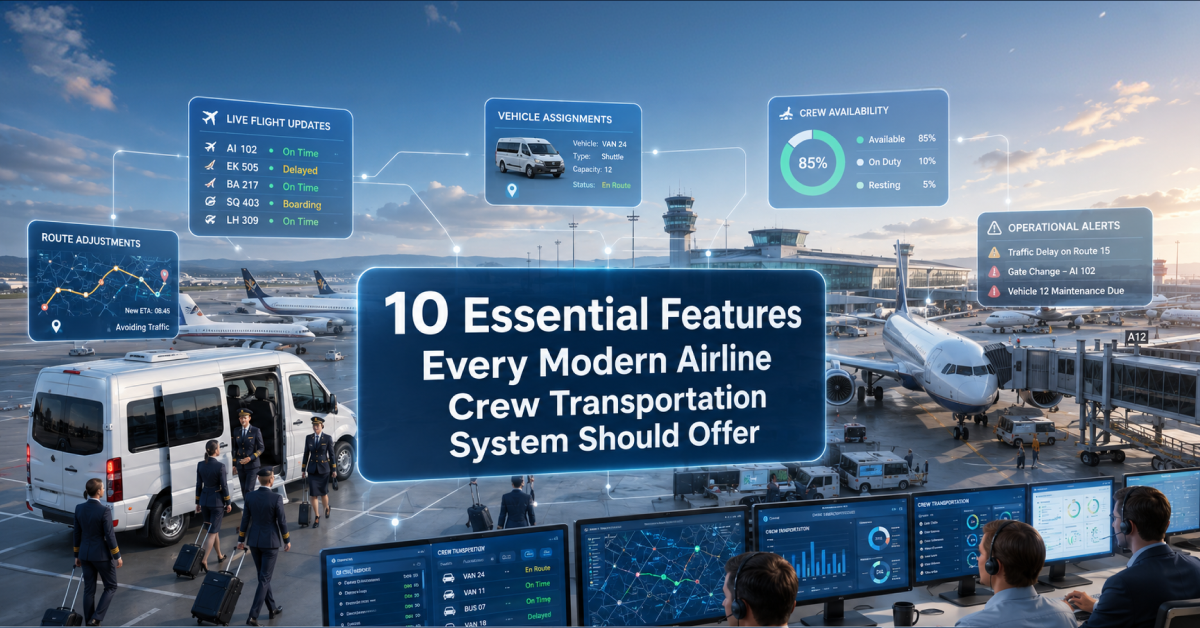
A missed pickup does not just inconvenience one crew member. It can delay a flight and disrupt an entire day of operations. This is why airline crew transportation systems deserve more attention than they usually get. Airlines that overlook this area often pay for it later in delays.
Most airlines invest heavily in flight scheduling and passenger experience. Ground movement of crew members often runs on outdated tools. Many teams still rely on manual coordination and shared spreadsheets. The real problem shows up on disrupted days. Routine days rarely expose any weakness in the setup. A system that works fine normally can fall apart during a delay.
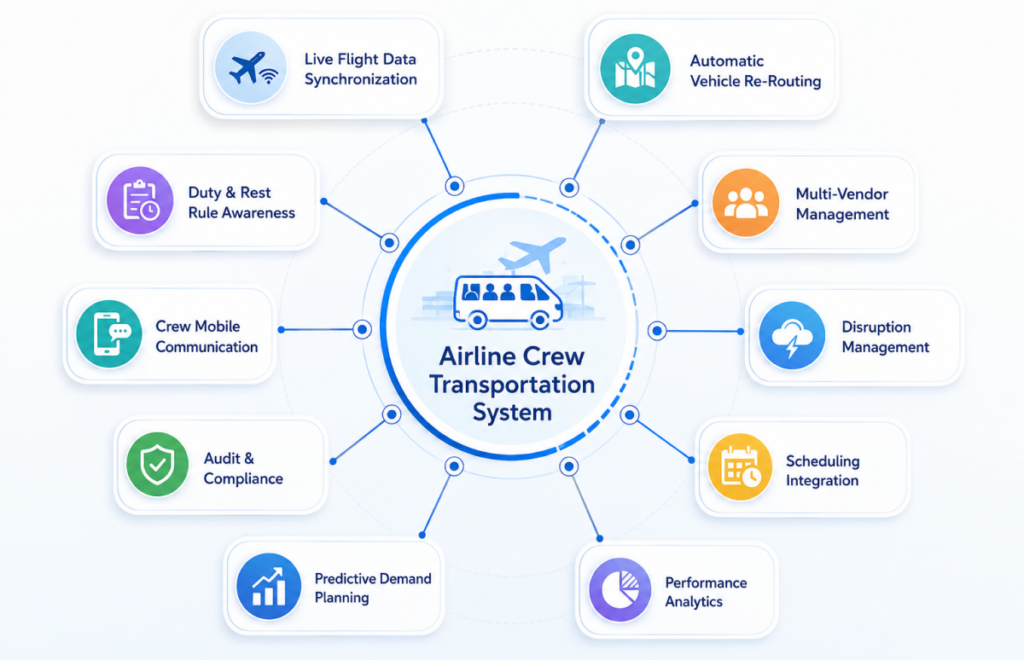
This blog breaks down ten features of strong airline crew transportation systems. Each feature ties back to how well the platform performs under pressure.
Live Flight Data Sync Instead Of Static Schedules
Many transportation tools still rely on schedules uploaded once a day. That approach fails the moment a flight changes gate or gets delayed. Modern airline crew scheduling depends on tools that read live flight data.
Strong airline crew transportation systems treat flight status as a constant input. Flight data should feed the system continuously, never as a one time upload.
- Why Static Imports Create Risk
A static schedule assumes flights run exactly as planned. Airports rarely work that way, especially during busy travel seasons. When a flight lands early or late, a static system cannot react. Dispatchers end up manually calling drivers to adjust pickup windows. This manual patchwork increases the chance of human error. It also slows down response time when every minute matters.
- What Live Sync Actually Solves
A connected system adjusts pickup times automatically as flights change. It reflects gate changes, delays, and diversions as they happen. Crew members are not left waiting because of outdated information. This single feature prevents a large share of avoidable delays.
Automatic Re-Routing When Flights Change
Flight changes happen daily across every airline network. Manual rebooking of ground transport cannot keep pace with that volume. A modern platform should re-route vehicles automatically when flight status changes. This is one area where airline crew transportation services are tested the most.
- How Automatic Re Routing Works
The system detects the new arrival or departure time instantly. It reassigns the nearest available vehicle to match the update. Dispatchers receive a notification instead of rebuilding the plan manually. This shifts the human role from reactive fixing to simple oversight.
- Why This Matters For Diversions
Diversions create some of the most chaotic scenarios for crew movement. A crew scheduled to land in one city may suddenly land elsewhere. Weak airline crew transportation systems leave dispatchers scrambling for last minute transport. Strong platforms keep the response fast and organized during a diversion.
Duty Time And Rest Rule Awareness Built Into Routing
Crew rest requirements are not optional guidelines for any airline. Regulations such as FAA Part 117 set strict limits on duty and rest. Ground transportation timing directly affects whether crews meet these limits.
- Why Rest Rules Belong In The Routing Logic
A pickup scheduled too early can cut into legally required rest. A system unaware of these rules cannot flag that risk in advance. Building rest awareness into routing prevents violations before they occur. This turns a scheduling feature into a genuine compliance safeguard. It also shows why rest awareness belongs inside airline crew transportation systems by default.
- Practical Impact On Operations
Airlines already invest in airline crew scheduling software to manage duty limits. Ground transport systems need that same level of rule awareness. When both systems align, crew fatigue risk drops significantly. Compliance teams also spend less time cross checking pickup logs manually.
Multi Vendor Visibility In One Dashboard
Airlines rarely rely on a single ground transport vendor across every station. Most airline crew transportation systems have to manage several vendors at once. Different cities often mean different contracted operators on the ground. Without a unified view, oversight becomes fragmented and inconsistent.
- The Problem With Vendor Silos
Each vendor may use its own portal or reporting method. Dispatchers end up switching between systems to track crew movement. This slows down response time and increases the chance of miscommunication.
- What Unified Visibility Looks Like
Effective crew logistics management requires one dashboard across every vendor. Ops teams should see every active trip regardless of which operator runs it. This consistency improves accountability across the entire network. It also makes vendor performance easier to compare across airports. The strongest airline crew transportation systems treat vendor visibility as a core requirement. It should never be treated as an optional add on.
Crew Facing Mobile Communication
Back end dispatch tools only cover half the equation. Crew members need direct visibility into their own transportation status. The best airline crew transportation systems put that information in the crew member’s hands.
- Why Ops-Only Dashboards Fall Short
A dispatcher may know a vehicle is running late. The crew member waiting at the terminal often does not know. This gap creates unnecessary stress during tight layovers or quick turnarounds.
- Features Crew Members Actually Need
A dedicated mobile experience should include the following.
- Live vehicle location shared directly with the crew member
- Estimated wait time updated in real time
- Direct contact details for the assigned driver
- Push notifications for any schedule changes
This level of transparency builds trust in the system. It also reduces the number of calls dispatchers receive for updates.
Surge And Mass Disruption Handling
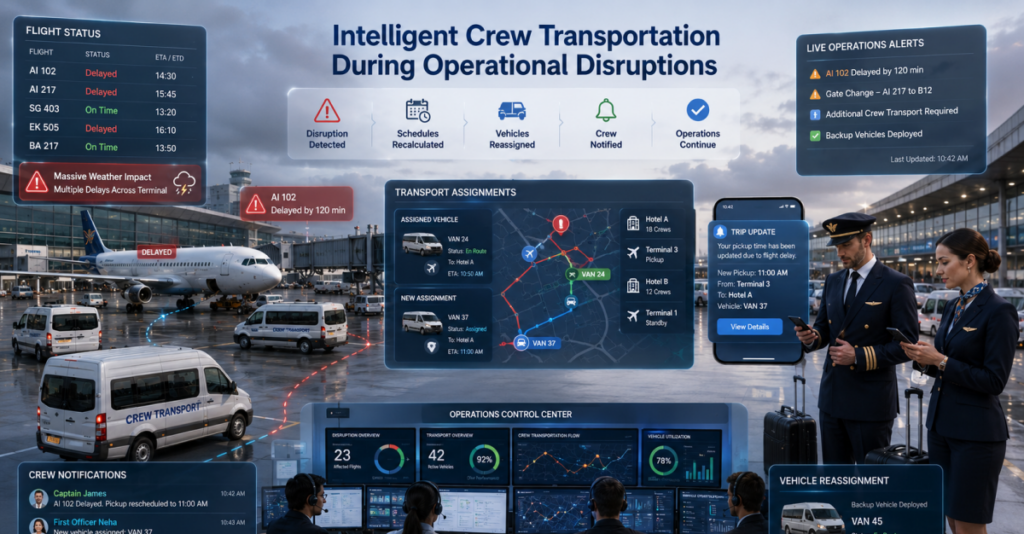
Weather events and system wide delays rarely affect just one person. They often affect hundreds of crew members across multiple stations at once.
- Why Normal Day Systems Fail During Surges
A platform built only for routine volume can collapse under sudden demand. Dispatch queues back up, and response times slow down fast. This is where weak airline crew transportation systems cause the most visible damage.
- What Surge Ready Systems Do Differently
They automatically prioritize trips based on urgency and duty time limits. They scale vehicle assignment without needing more dispatcher headcount. Reliable airline crew transportation services are judged most fairly during these moments. A calm response during a mass disruption reflects strong underlying design.
Audit Trail For Safety And Duty Of Care Reporting
Documentation matters just as much as real time performance. Airlines need clear records for compliance reviews and safety audits. This is a core function that all airline crew transportation systems must support.
- What A Proper Audit Trail Includes
Pickup and drop-off times for every crew movement. Driver credential verification records kept on file. Vehicle safety check logs tied to each individual trip.
- Why This Goes Beyond Convenience
Regulators may request this data after a serious incident. A system without organized records makes that process slow and stressful. A system with built in audit trails turns reporting into a quick export. This also strengthens duty-of-care commitments toward crew members, the same high-touch vip transportation standard the software is built around. Solid documentation is a mark of mature airline crew transportation systems.
Integration With Crew Scheduling And Payroll Systems
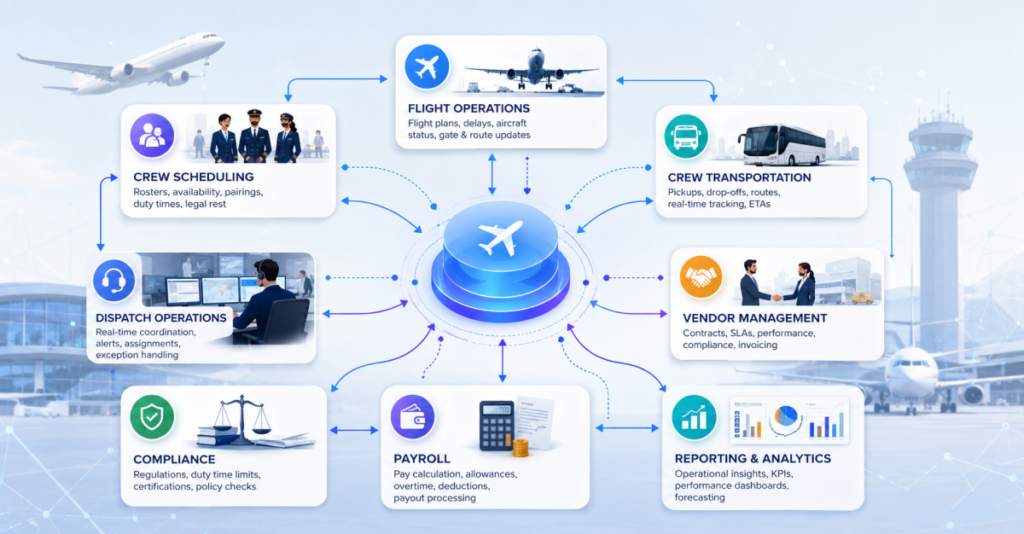
Disconnected systems create duplicate work and constant data mismatches. Well-built airline crew transportation systems never operate as isolated tools. They connect with a broader transportation management system and the wider network of airline scheduling systems.
The Cost Of Poor Integration
Dispatchers may enter the same schedule data twice across two systems. Errors introduced in one system often go uncaught for days. Payroll discrepancies can also arise when transport records do not match duty hours.
- What Strong Integration Looks Like
Modern airline crew scheduling platforms should sync directly with transport dispatch tools. Updates in one system should reflect automatically in the other. This reduces administrative overhead and keeps records consistent across departments. It also gives finance teams cleaner data for payroll processing. Airlines that connect these systems build far more dependable airline crew transportation systems overall.
- Predictive Demand Planning
Reacting to disruptions matters, but preventing them matters more. Predictive planning uses historical data to anticipate transportation needs early. This is where the most advanced airline crew transportation systems stand apart.
- How Predictive Planning Works
The system analyzes past flight delays and seasonal weather patterns. It identifies stations likely to face disruption on a given day. Vehicles get pre positioned in high risk locations before delays cascade.
- Why This Reduces Overall Disruption
Crew members wait far less often for transport to arrive. Dispatchers spend less time scrambling to find last minute vehicles. This proactive approach reflects a real shift in airport shuttle management software design. Airlines using predictive tools tend to see fewer last minute service gaps.
Transparent Cost And Performance Reporting
Procurement and operations teams need clear visibility into vendor performance. Without this data, contract renewals rely mostly on assumptions. Transparent reporting is what separates mature airline crew transportation systems from newer ones.
- What Should Be Tracked
On time performance rates for each individual vendor. Cost per trip across different stations and time periods. Frequency of service failures or delayed pickups over time.
- Why Transparency Improves Vendor Relationships
Clear reporting removes ambiguity during contract negotiations. Vendors with strong performance data can earn expanded contracts. Underperforming vendors can be addressed early before problems escalate further. This data driven approach strengthens crew logistics management across the whole network.
Quick Evaluation Checklist For Airlines
Airlines evaluating a new crew transport platform can use this checklist:
- Does the system sync with live flight data instead of static schedules
- Can it automatically re route vehicles when flights change
- Does it factor in duty time and rest rule compliance
- Does it offer one dashboard across multiple vendors
- Does it give crew members direct mobile visibility into their trip
- Can it handle surge volume during mass disruptions
- Does it maintain a clear audit trail for safety reporting
- Does it integrate with existing crew scheduling and payroll tools
- Does it support predictive demand planning
- Does it provide transparent cost and performance reporting
This checklist offers a practical starting point for internal evaluation. It also helps ops teams compare vendors using the same criteria.
Final Thoughts
A crew transportation system reveals its real value on the hardest days. Anyone can manage crew movement when every flight runs on time. The true test comes during a storm, a diversion, or a mass delay.
Airlines that invest in strong airline crew transportation systems protect more than logistics. They protect crew wellbeing, regulatory compliance, and overall flight reliability. Disruptions are becoming more frequent across the industry each year. This makes the case for dependable airline crew transportation systems stronger every season.
