
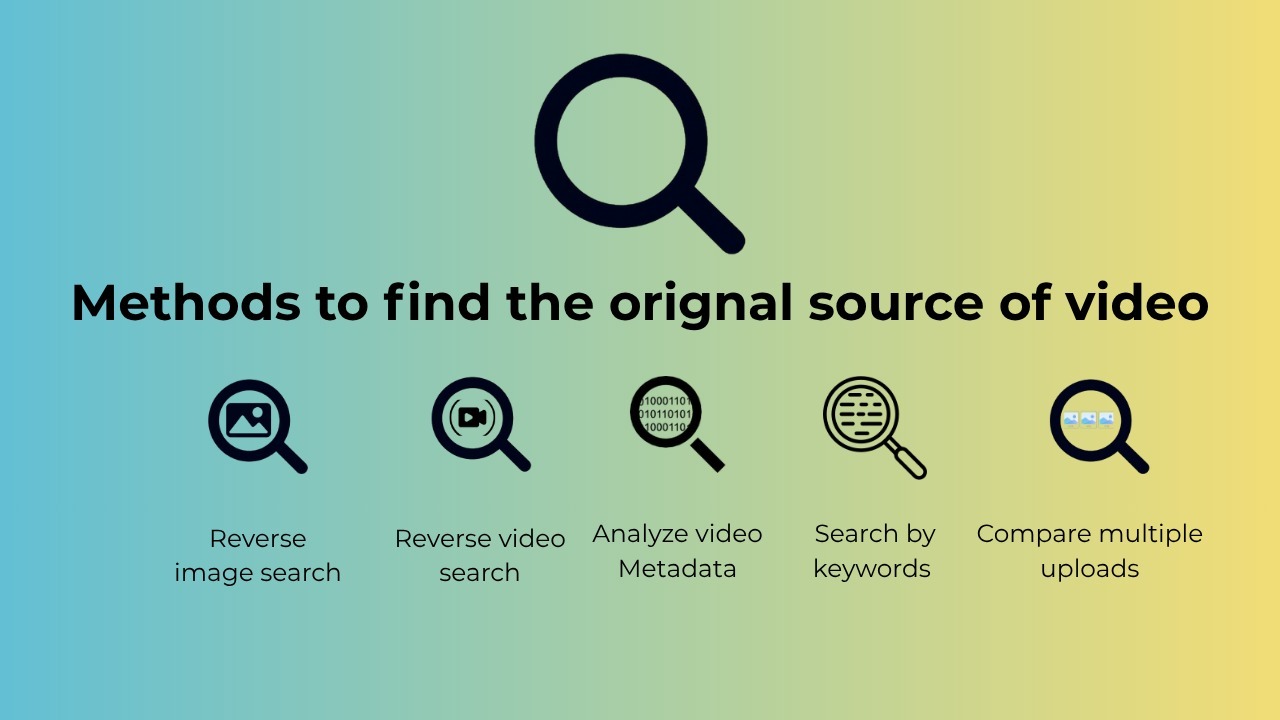
Every day, thousands of videos are uploaded on social media, news sites, and video-sharing sites. Many of the videos are true, but others are shared with false claims, edited to change their context, or re-posted without attribution. Knowing how to find a video’s original source has become an essential digital skill. This is true whether you’re a journalist, researcher, content creator, or simply trying to fact-check something you’ve seen online.
Digital investigators often use several verification techniques instead of just one to determine where a video originally appeared and whether it has been altered. This guide will walk you through five handy methods to locate the source for nearly any publicly available video.
1. Reverse Video Search Method
One of the most effective methods to find video source online is Reverse Video Search. It is done through online tools. Instead of relying only on titles or descriptions, a reverse video finder compares the video’s visual content with videos already published online. It can analyze screenshots, short clips, video URLs, or even descriptive keywords to locate exact matches and visually similar videos across multiple websites.
Unlike a traditional keyword search, this method analyzes visual features inside the video itself. A reverse video lookup can help identify where a video first appeared, reveal reposted versions, and detect edits or clips that have been shared out of context.
This method is especially useful when:
- A viral video has no visible source.
- The same clip appears on multiple social media platforms.
- You want to verify whether a video has been reposted or edited.
- You need to compare different versions of the same video.
2. Reverse Image Search Method Using Video Frames
Another reliable verification method is to analyze individual frames extracted from a video. Since every video is made up of individual frames, even a single clear screenshot can reveal valuable clues about its origin. This method is generally called Reverse Image Search.
You can do a reverse image search to see where that frame has been used online before. Capture a clear frame, preferably one showing a landmark, street sign, building, logo, or another distinctive detail, and upload it to Google Lens or another reverse image search tool.
3. Analyse Video Metadata
Another useful way to investigate a video’s origin is by examining its metadata. Many videos contain hidden information known as metadata. Depending on how a file has been created, edited, or uploaded, metadata may include details such as:
- Creation date
- Recording device
- File format
- Resolution
- GPS coordinates (if applicable)
- Editing software
Looking through this information can give you some valuable clues about the history of a video.
How it works
- Open a metadata tool such as MediaInfo or ExifTool and upload the original video.
- Review details like the creation date, device, file format, and location (if available).
- Compare the metadata with the video’s claims to help verify its origin.
4. Investigate the Context Using Keywords and Online Clues
Sometimes, verifying a video has less to do with the file itself and more to do with the clues hidden inside it. In some cases, the verification process has very little to do with the video file and is more about deciphering the contextual cues found inside the video file. Look for clues such as:
- Street signs
- Recognizable landmarks
- Spoken language
- Business logos
- Vehicle license plates
- Event banners
- Weather conditions
Use this information to conduct targeted keyword searches rather than generic ones. Here are some examples:
- “NewYork event July 2026 video”
- “Festival in Blue Mosque drone footage”
- “2025 city marathon finish line video”
Including a geographical location, date or an event may assist in identifying the older version of a video.
How it work
- Identify important clues in the video, such as landmarks, signs, logos, or spoken language.
- Search Google using specific keywords related to those clues.
- Compare the results with the video to find earlier uploads or the original source.
5. Compare Multiple Uploads to Build a Timeline
Another reliable verification method is to compare multiple uploads of the same video across different platforms. Popular videos are often uploaded to multiple platforms with different titles or edits. Comparing these versions can help identify the original upload.
Compare their:
- Upload dates
- Video length
- Captions
- Watermarks
- Early comments
If one version appeared before the others, it may indicate the original publisher. Timeline comparison is especially useful for verifying breaking news and viral social media clips.
Why Combining Multiple Methods Produces Better Result
No single verification method is perfect. Reverse image searches may miss the full video, metadata is often stripped after uploading, and keyword searches can produce unrelated results.
Professional investigators combine multiple methods by:
- Performing a Reverse Video Search.
- Checking important video frames.
- Analysing metadata.
- Investigating contextual clues.
- Comparing upload timelines.
Using several methods together leads to more accurate verification.
Common Mistakes to Avoid
Here are some of the most common mistakes people make:
- Assuming the first upload is the original.
- Trusting reposted videos without checking earlier versions.
- Ignoring edited or cropped clips.
- Depending on only one verification method.
A few extra minutes of verification can prevent misinformation from spreading.
Final Thoughts
Finding the original source of a video isn’t always straightforward, but using several verification techniques together greatly improves your chances of getting accurate results. A combination of Reverse Video Search, reverse image searches, metadata analysis, contextual research, and timeline comparisons can reveal where a video first appeared and whether it has been edited or shared out of context.
Whether you’re fact-checking a viral post, conducting research, protecting your own content, or simply trying to verify what you’re watching, these methods provide a practical and reliable approach. A reverse video finder or reverse video lookup tool can often be the quickest starting point, but combining multiple techniques will always produce the most trustworthy results.
