
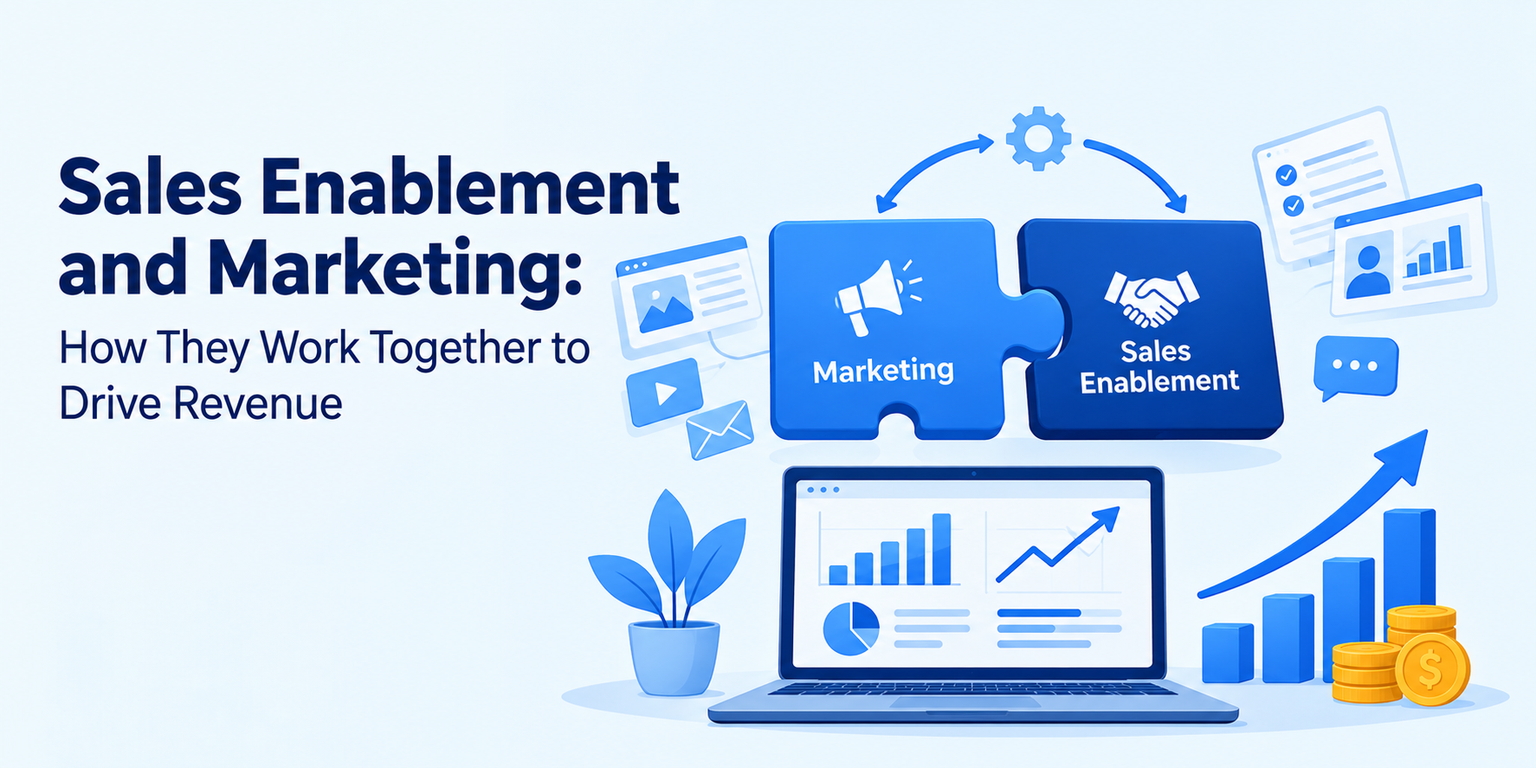
Ask five people to define sales enablement and you’ll probably get five different answers. Some call it training. Some call it content. Some just point at their CRM and shrug.
Here’s the thing: sales enablement is the ongoing work of giving reps what they need to close deals. That includes content, tools, coaching, and the information that turns a cold lead into a signed contract.
And it’s rarely a one-department job.
What Is Sales Enablement, Really?
If you’re asking what is sales enablement in plain terms, start here: it’s the process of equipping sales reps to sell more effectively, and to do it consistently across the whole team.
That’s different from sales training, which teaches a specific skill like objection handling. It’s also different from sales operations, which builds the technical backend: CRM workflows, reporting pipelines, tool stacks.
Enablement sits above both. It pulls training, content, and process together into something reps can actually use in the field.
For teams that don’t have the bandwidth to build this in-house, working with a partner that offers sales enablement services can shortcut months of trial and error, especially around content structure and rep-ready messaging.
Quick summary: Sales enablement is the continuous process of giving reps the content, tools, and training to close more deals. It’s broader than sales training and separate from sales operations, even though all three work together.
Why Sales Enablement Needs Marketing at the Table
Here’s where a lot of companies trip up. They treat sales enablement and marketing as two separate lanes that occasionally cross paths.
That’s a mistake.
Marketing produces most of the content reps actually use with prospects: case studies, one-pagers, battlecards, product decks. Sales, meanwhile, sits in front of buyers every day. They know exactly which objections come up, which content lands, and which pieces gather dust.
Without a real feedback loop, marketing sales enablement work turns into guesswork. Marketing builds what it thinks reps need. Reps ignore half of it because it doesn’t match what buyers actually ask.
When sales enablement and marketing operate as one motion instead of two silos, that gap closes fast. Reps tell marketing what’s missing. Marketing builds it. Reps use it. Deals move faster.
What Marketing Brings to the Enablement Table
Marketing’s job in enablement isn’t just “make content.” It’s making the right content, and keeping it current.
A few things marketing typically owns:
- Case studies that prove the product works, ideally within a few months of a new launch
- Battlecards that arm reps against specific competitors
- Email templates reps can personalize instead of writing from scratch
- Product one-pagers that answer the buyer’s first three questions
Old content is worse than no content. A pricing sheet from two years ago, or a case study for a product that’s been rebuilt since, actively hurts a rep’s credibility mid-call. Marketing needs a standing process to audit and refresh this library, not a one-time project that gets forgotten.
Note: Case studies carry more weight than almost any other content type reps use. If your business launched a new product in the last six months and doesn’t have a case study yet, that’s the first gap to close.
Where Sales Enablement Automation Fits In
Manual sales enablement doesn’t scale. Once a team grows past a handful of reps, sales enablement automation becomes less of a nice-to-have and more of a requirement.
A few examples of what that looks like in practice:
- Follow-up sequences that trigger automatically when a prospect goes quiet
- Automated scheduling links that let ready buyers book time without a back-and-forth
- Live chat routing that surfaces only qualified leads to reps, filtering out poor fits before they ever hit a rep’s queue
None of this replaces good content or good coaching. It just removes the busywork so reps spend more time actually selling and less time chasing logistics.
Choosing a Sales Enablement Platform
A sales enablement platform is where most of this comes together. At minimum, it should centralize your content library, track which pieces reps actually use, and connect to your CRM so usage data ties back to real deal outcomes.
The specific vendor matters less than the fit. A platform that reps find clunky won’t get adopted, no matter how good the content inside it is. Test with a handful of reps before rolling anything out wide.
Important: Content adoption rate is the single most useful metric for gauging whether your enablement platform and content strategy are actually working. It’s a leading indicator, unlike win rate or sales cycle length, which take months to move.
Building the Sales-Marketing Enablement Loop
A simple loop keeps this whole system healthy:
- Sales flags gaps: objections they can’t answer, content that’s missing or stale
- Marketing builds or updates the content
- Sales tests it in real conversations
- Both sides review adoption and deal impact, then adjust
Run this quarterly at minimum. Skip the loop, and you’ll end up with a content library that looks impressive but sits unused, which is the fastest way to waste an enablement budget.
FAQs
1. What is sales enablement in simple terms?
Sales enablement is the ongoing process of giving sales reps the content, training, and tools they need to sell more effectively and close deals more consistently across the whole team.
2. Does marketing or sales own sales enablement?
Neither owns it alone. At most companies, sales enablement sits jointly between marketing, which produces content, and sales, which surfaces real buyer feedback and content gaps.
3. What’s the difference between sales enablement and revenue enablement?
Sales enablement focuses on equipping sales reps specifically. Revenue enablement extends that same support across marketing and customer success, covering the full customer journey, not just the sales stage.
4. What tools do I need to get started with sales enablement?
Start with a CRM for pipeline visibility, a sales enablement platform to centralize and track content, and a way to measure content adoption. Add call coaching tools as the team scales.
