
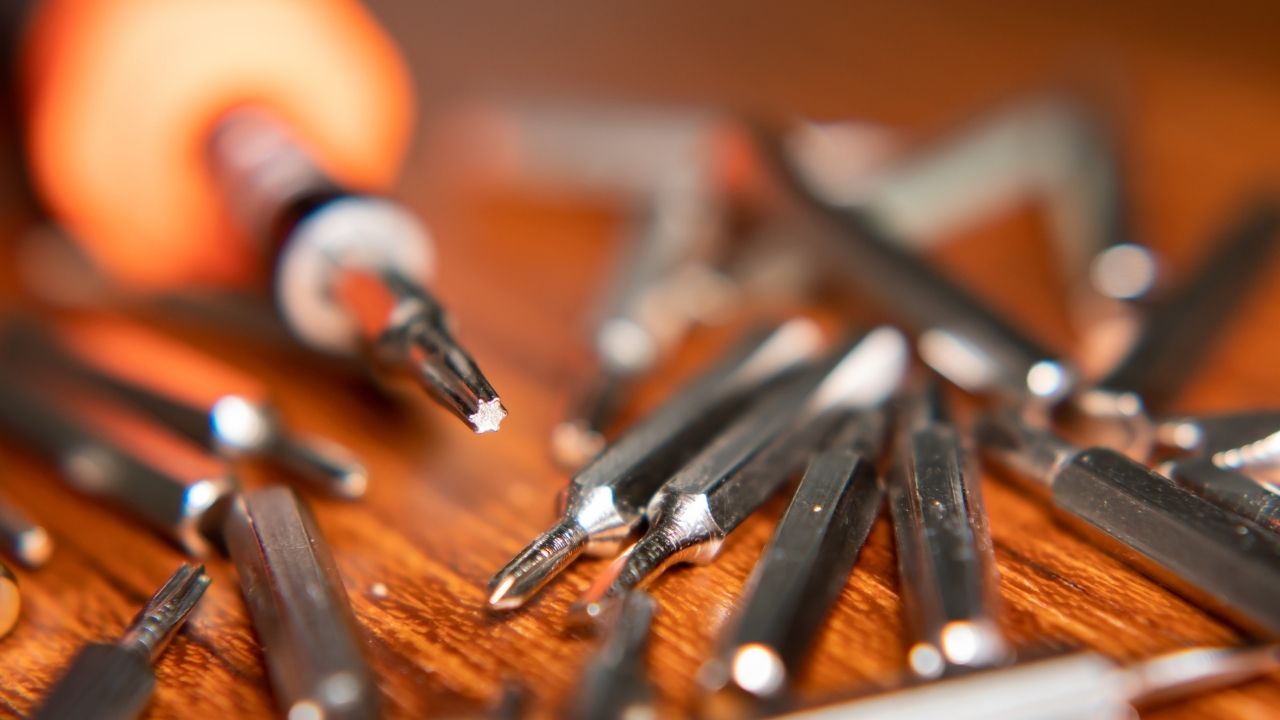
Screwdrivers are among the most commonly used hand tools for assembling, repairing, installing, and maintaining equipment. Although they all perform the basic function of turning screws, different screw head designs require different screwdriver types.
Using the correct screwdriver helps the tool engage properly with the screw head and can reduce the risk of slipping or damaging the fastener. Screwdrivers are available in a variety of tip shapes, sizes, handle designs, and specialised configurations.
Common Types of Screwdrivers
Flathead or Slotted Screwdriver
A flathead screwdriver has a straight, flat blade that fits into a single slot on the screw head. It is commonly used for general maintenance, older hardware, and some electrical terminals.
Choosing the correct blade width and thickness is important because a poorly fitted screwdriver can slip and damage the screw head.
Phillips Screwdriver
Phillips screwdrivers have a cross-shaped tip designed for Phillips screws. They are widely used in household equipment, electronics, appliances, construction, and general assembly work.
Phillips screwdrivers are available in different sizes, so the tip should match the screw correctly before applying force.
Pozidriv Screwdriver
A Pozidriv screwdriver looks similar to a Phillips screwdriver but has a different tip design with additional contact points. It is designed to provide improved engagement and reduce the risk of the screwdriver slipping out under load.
Although Phillips and Pozidriv screws can look similar, using the correct driver type is recommended to reduce the risk of damaging the fastener.
Torx Screwdriver
A Torx screwdriver has a six-point, star-shaped tip. Its design provides good contact with the corresponding screw and is commonly used in automotive equipment, electronics, machinery, and industrial applications.
Torx sizes are usually identified with a T-number, such as T10, T20, or T25.
Hex or Allen Screwdriver
Hex screwdrivers are designed for screws with a six-sided internal recess. They are commonly used for furniture assembly, bicycles, machinery, and mechanical equipment.
Hex fasteners can also be used with Allen keys, depending on the design and application.
Square or Robertson Screwdriver
Square screwdrivers have a square-shaped tip that fits corresponding square-drive screws. The design can provide secure engagement and is used in applications such as woodworking, construction, and certain specialised equipment.
Tri-Wing Screwdriver
Tri-wing screwdrivers are designed for specialised screws with a three-wing pattern. They can be found in some consumer electronics, cameras, gaming devices, and other equipment that uses less common fastener designs.
Precision Screwdrivers
Precision screwdrivers are designed for small screws used in devices and detailed equipment. They are commonly used for:
- Mobile phones
- Watches
- Computers
- Cameras
- Electronic devices
- Small instruments
These tools are available with different tip types, including Phillips, flathead, Torx, and other specialised profiles.
Specialised Screwdriver Types
In addition to tip design, some screwdrivers are designed for specific working conditions.
Insulated Screwdrivers
Insulated screwdrivers are designed for electrical work and feature insulation intended to provide protection when used according to their voltage rating, safety procedures, and applicable regulations.
Torque Screwdrivers
Torque screwdrivers are used when screws need to be tightened to a specified torque value. They can help control the amount of torque applied, which can be important for precision assemblies and components that could be damaged by over-tightening.
Ratchet Screwdrivers
Ratchet screwdrivers use a mechanism that allows the handle to turn continuously in one direction without removing and repositioning the tip after every movement. This can make repetitive fastening tasks more convenient.
Impact Screwdrivers
Impact screwdrivers are designed for situations involving tight or difficult-to-remove fasteners. Depending on the tool design, they can convert impact force into rotational movement to help loosen screws.
Choosing the Right Screwdriver
When selecting types of screwdriver for a particular task, the first step is to identify the screw drive pattern and then select the matching screwdriver type and size.
Important factors to consider include:
- Screw head design
- Correct tip size
- Required torque
- Available working space
- Electrical safety requirements
- Precision needed for the application
- Frequency of use
A correctly sized screwdriver should fit firmly into the screw head with minimal movement. Using an incorrect or poorly fitting tip can increase the risk of slipping, stripping the screw, or damaging the surrounding material.
Conclusion
Different screwdriver types are designed to match different screw head patterns and working requirements. Flathead, Phillips, Pozidriv, Torx, hex, square, and precision screwdrivers are among the commonly used options, while insulated, torque, ratchet, and impact models are intended for more specific applications.
Understanding the screw type and selecting the correct tip and size can make fastening and removal more efficient while helping to reduce unnecessary damage to the screw or equipment.
