
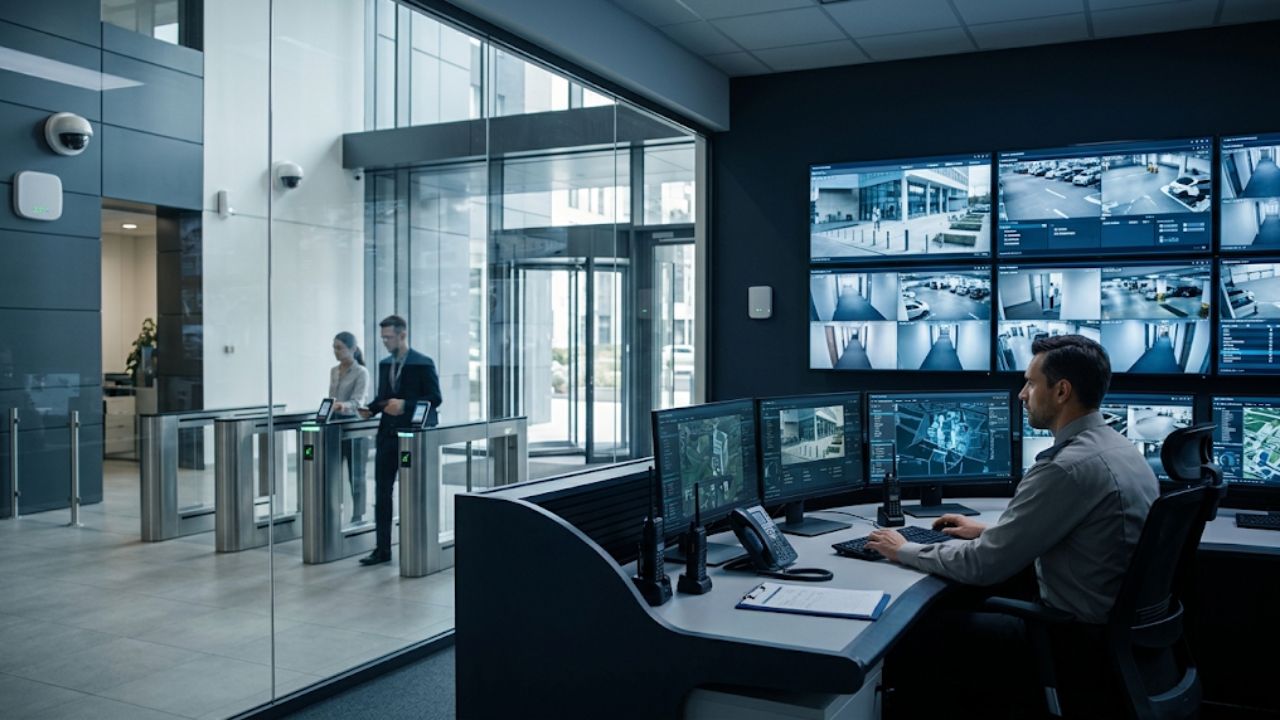
Modern businesses face a wide range of security challenges. From theft and unauthorized access to vandalism, workplace incidents, and cybersecurity concerns, protecting employees, customers, property, and sensitive information has become a major priority.
A strong security strategy goes beyond installing a few cameras at the entrance. Businesses increasingly rely on integrated security solutions that combine surveillance, access control, alarms, monitoring, and other technologies. Professional commercial security systems service providers can help businesses design, install, maintain, and upgrade these systems according to their specific needs.
Why Business Security Matters
Every commercial property has different security risks. A retail store may be primarily concerned with shoplifting and after-hours intrusion, while an office building may need stronger access control and visitor management.
Warehouses, healthcare facilities, financial institutions, manufacturing plants, and educational facilities also have unique requirements.
A properly designed security system can help businesses:
- Deter unauthorized activity
- Monitor important areas
- Control access to restricted spaces
- Improve employee and visitor safety
- Protect equipment and inventory
- Create useful records of security incidents
- Respond more quickly to potential threats
Security technology does not eliminate every risk, but it can provide businesses with greater visibility and control.
The Role of Commercial Security Services
A professional security provider can support a business throughout the life of its security system.
Rather than simply selling individual devices, a service provider can evaluate the property, identify vulnerabilities, recommend appropriate technology, install equipment, configure systems, and provide ongoing maintenance.
This approach is important because security systems need to work together. A camera, access-control system, alarm, and monitoring solution are more effective when they are properly integrated.
Professional services may include:
- Security assessments
- System design
- Equipment installation
- Video surveillance
- Access control
- Alarm systems
- Security monitoring
- System maintenance
- Upgrades and troubleshooting
Video Surveillance for Better Visibility
Security cameras are among the most recognizable components of commercial security.
Modern surveillance systems can provide high-resolution video and allow authorized personnel to monitor activity around a property. Cameras can be positioned at entrances, parking areas, loading zones, hallways, storage areas, and other important locations.
Many systems also support remote access, allowing business owners or security personnel to view cameras from approved computers or mobile devices.
Video footage can also provide valuable information when an incident occurs. Reviewing recordings may help determine what happened, identify individuals involved, or establish a timeline of events.
However, businesses should consider privacy requirements and applicable laws when deploying surveillance equipment.
Access Control Protects Restricted Areas
Not every employee or visitor needs access to every part of a commercial property.
Access-control systems allow businesses to manage who can enter specific areas. Depending on the system, access may be controlled through key cards, mobile credentials, PINs, biometric technologies, or other authentication methods.
For example, a company may restrict access to server rooms, financial offices, storage facilities, laboratories, or employee-only areas.
Access-control technology can also make it easier to remove access when an employee leaves the organization. Instead of recovering a physical key, administrators can deactivate a digital credential.
Alarm Systems Add Another Layer of Protection
Commercial alarm systems can help detect unauthorized entry and other potentially dangerous conditions.
Door and window sensors, motion detectors, glass-break sensors, panic buttons, and other devices can be incorporated into a security system based on the property’s requirements.
When an alarm is triggered, the appropriate response may involve notifying designated personnel, activating on-site alerts, or communicating with a professional monitoring service.
The exact response depends on the system configuration and the business’s security procedures.
Professional Monitoring and Faster Awareness
Some businesses choose professional monitoring services to provide continuous oversight of their security systems.
When an alarm or other monitored event occurs, a monitoring center can follow established procedures for assessing and responding to the signal. This can provide an additional layer of support, particularly outside normal business hours.
Monitoring can be especially valuable for businesses that cannot have security personnel physically present around the clock.
Maintenance Is Just as Important as Installation
Installing a sophisticated security system is only the beginning. Equipment can fail, software can require updates, cameras can become misaligned, and batteries may need replacement.
Regular maintenance helps ensure that security equipment remains operational when it is needed.
A professional commercial security systems service can provide inspections, troubleshooting, repairs, and system updates. Routine maintenance may also identify potential problems before they become serious security gaps.
Businesses should establish a maintenance schedule appropriate for their equipment, property, and risk level.
Integrating Security Technologies
One of the biggest developments in commercial security is the integration of multiple systems.
Instead of managing surveillance, access control, and alarms independently, businesses can use platforms that connect different security technologies.
For example, an access-control event could be associated with nearby camera footage, allowing authorized personnel to see what happened around the time a door was accessed.
Integration can improve situational awareness and make security operations more efficient.
Security Systems Can Support Employee Safety
Commercial security is not only about protecting physical assets. Employees are an important part of any security strategy.
Emergency communication systems, controlled access, surveillance, and panic or duress features can help businesses respond to certain workplace emergencies.
Security systems can also support visitor management by helping organizations control who enters their facilities and where visitors are permitted to go.
Businesses should combine technology with clear emergency procedures and employee training for the best results.
Choosing the Right Security Provider
The quality of the security provider matters as much as the technology itself.
Businesses should look for providers with experience in commercial environments and ask about installation practices, system compatibility, maintenance, monitoring options, and customer support.
Before selecting a provider, it can be useful to determine:
- What areas need protection?
- Which assets are most important?
- Who needs access to restricted areas?
- Is remote monitoring required?
- Does the business need ongoing maintenance?
- What are the applicable privacy and compliance requirements?
- Can the system expand as the business grows?
A security system should be designed around the business rather than forcing the business to adapt to a generic package.
The Future of Commercial Security
Security technology continues to evolve. Artificial intelligence, cloud-based platforms, mobile credentials, analytics, and connected devices are changing how businesses monitor and protect their facilities.
AI-powered video analytics, for example, can help identify specific types of activity and reduce the need for security personnel to continuously watch every camera feed. Cloud-based systems can also make remote administration easier for organizations with multiple locations.
As these technologies develop, professional security services will remain important for designing, configuring, maintaining, and securing increasingly complex systems.
Conclusion
Modern businesses need security strategies that address more than traditional locks and alarms. Integrated surveillance, access control, alarms, monitoring, and professional maintenance can provide multiple layers of protection.
A reliable commercial security systems service can help businesses assess their risks, implement appropriate technology, and keep their security infrastructure functioning over time.
By combining the right technology with strong policies, employee awareness, and regular maintenance, businesses can create a more secure environment for their people, property, and operations.
