
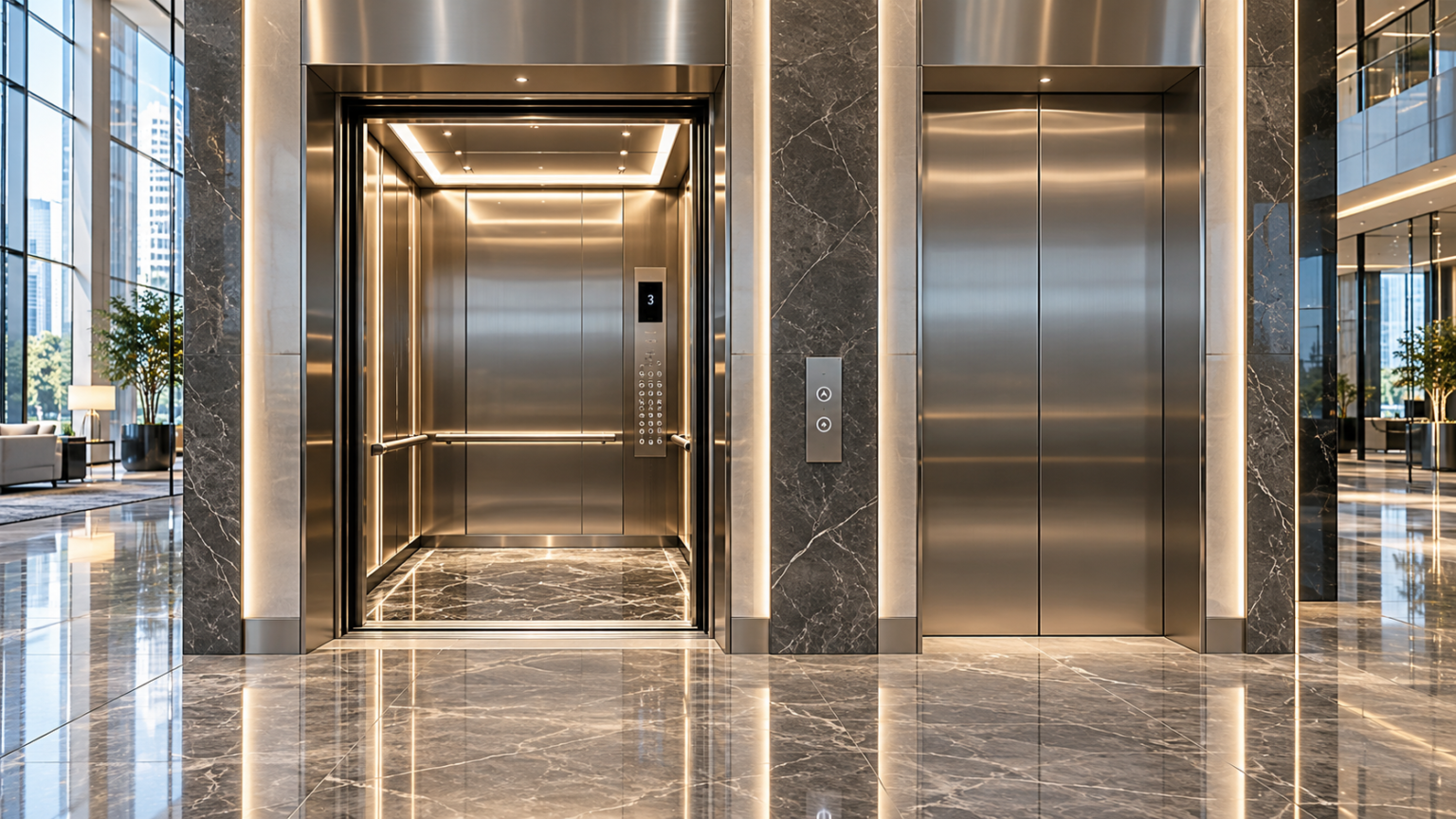
Modern buildings depend on reliable vertical transportation to keep people moving safely and efficiently. From residential apartment complexes and luxury hotels to shopping centres, hospitals, and commercial offices, elevators influence accessibility, convenience, and the overall experience of building occupants. Choosing a dependable Passenger Elevator Manufacturer is therefore an important decision for property developers, architects, building owners, and construction professionals who want a long-lasting solution that balances safety, performance, design, and operating costs.
A passenger elevator is much more than a moving cabin. It is a coordinated mechanical and electrical system consisting of lifting equipment, controllers, safety mechanisms, automatic doors, monitoring devices, and carefully designed structural components.
Each element must function correctly to deliver consistent transportation between floors.
A poorly specified elevator may create excessive waiting times, inconvenient passenger movement, maintenance difficulties, or unnecessary energy consumption. Conversely, a properly planned installation can improve building accessibility and support efficient daily operations.
This guide explains how passenger elevator systems work, the technologies available, the importance of safety and accessibility standards, and seven essential considerations when selecting a manufacturer.
What Is a Passenger Elevator Manufacturer?
A passenger elevator manufacturer is a company involved in designing, manufacturing, integrating, or supplying elevator systems intended primarily to transport people between different building levels.
Depending on the company’s business model, it may manufacture major components, assemble complete systems, develop control technologies, or coordinate production through specialist suppliers.
Some manufacturers provide complete project support, including technical design, equipment production, installation coordination, commissioning, and maintenance arrangements.
Others focus primarily on equipment supply and work with independent installation and service companies.
Understanding this distinction is important when comparing potential suppliers.
Main Components of a Passenger Elevator
A conventional passenger elevator contains multiple systems that operate together.
The elevator car provides the enclosed passenger space, while the guide rails maintain alignment during movement.
Traction elevators generally use a motor-driven sheave, suspension means, and counterweight system to move the car.
Hydraulic elevators use a different lifting arrangement involving hydraulic equipment.
The controller manages commands, operating sequences, and coordination between components.
Landing and car doors control passenger entry and exit.
Additional safety equipment protects passengers and maintenance personnel against specified hazardous conditions.
The exact configuration varies according to the elevator type and applicable safety standards.
Why Elevator Manufacturing Quality Matters
Manufacturing quality influences dimensional accuracy, component compatibility, ride comfort, and long-term reliability.
However, a well-manufactured elevator also requires appropriate design, installation, inspection, and maintenance.
The complete operating system must be considered rather than evaluating the cabin or motor independently.
This is why experienced building professionals assess technical documentation, applicable certifications, installation capabilities, and service arrangements before selecting equipment.
1. Choose a Passenger Elevator Manufacturer With Strong Safety Standards
Safety should be the first priority when selecting passenger elevator equipment.
Elevators carry people through enclosed vertical shafts, often across numerous floors. Proper engineering must address movement control, door operation, mechanical stability, electrical protection, and emergency conditions.
A responsible manufacturer should be able to explain the safety systems included in its equipment and provide documentation supporting compliance with applicable requirements.
Understanding International Elevator Safety Standards
Requirements differ between countries and jurisdictions.
In North America, ASME A17.1/CSA B44 is a major safety code covering elevators and escalators.
The 2025 edition addresses important aspects of equipment design, installation, operation, maintenance, inspection, and repair.
Internationally, ISO 8100-1:2026 provides safety rules for the construction and installation of qualifying passenger and goods-passenger lifts.
ISO 8100-2:2026 addresses design rules, calculations, verification, and testing of lift components.
Different jurisdictions may adopt different editions, use regional standards, or apply additional local rules.
A manufacturer should therefore identify which standards govern the specific project rather than simply claiming general international compliance.
Essential Elevator Safety Features
Passenger elevators may incorporate several protective systems according to their type, design, and applicable requirements.
These can include:
- Speed monitoring and overspeed protection
- Safety gear and braking systems
- Door locking and interlocking mechanisms
- Door obstruction detection devices
- Overload monitoring
- Emergency communication equipment
- Protective control circuits
- Suitable emergency lighting
- Unintended car movement protection
- Buffer and terminal stopping arrangements
The required combination depends on the elevator design and governing safety code.
A product description alone is not enough to demonstrate compliance.
Emergency Communication and Passenger Assistance
Passengers should have an appropriate means of requesting assistance if an elevator stops unexpectedly.
Emergency communication arrangements may include two-way communication devices connected to a designated assistance service.
Certain projects may also incorporate automatic rescue equipment that operates under defined power-failure conditions.
These features must be evaluated against applicable building and elevator requirements.
Passengers should never attempt to force elevator doors open or escape from a stopped car without direction from authorised rescue personnel.
Verification and Inspection
Before an elevator enters regular service, it may require testing, inspection, and approval by an authorised authority or inspection body.
The requirements depend on the installation location.
A dependable passenger elevator manufacturer should supply relevant technical files, test documentation, installation instructions, and component information to support compliance.
Safety is a continuous responsibility involving manufacturers, installers, inspectors, building owners, and maintenance providers.
2. Evaluate Elevator Technology and Mechanical Performance
Different buildings require different lifting technologies.
The best system for a small residential development may not be appropriate for a high-rise office tower or a busy commercial complex.
A manufacturer should assess the building’s height, travel distance, available space, passenger demand, and operating conditions before recommending a system.
Traction Passenger Elevators
Traction elevators use a motor-driven system to move the car through the shaft.
Many designs incorporate a counterweight to balance part of the load and support efficient operation.
Modern traction systems frequently use variable-frequency drive technology to provide controlled acceleration, movement, and stopping.
Traction elevators are widely considered for medium-rise and high-rise buildings, although suitability depends on the specific design and performance requirements.
Gearless Traction Technology
Gearless traction systems use a motor configuration that drives the traction sheave without a conventional reduction gearbox.
These systems can provide smooth operation and may offer advantages in certain energy and maintenance applications.
However, performance depends on the complete installation.
Motor efficiency alone does not determine total elevator energy consumption.
Machine Room Elevators
Machine room elevators have a dedicated space for certain operating equipment.
The arrangement can provide access for maintenance and may suit buildings with particular engineering or equipment requirements.
However, the space needed for a machine room must be included in the architectural plan.
The appropriate choice depends on the building and the manufacturer’s design.
Machine Room-Less Elevators
Machine room-less elevators, often abbreviated as MRL elevators, are designed without a conventional separate machine room.
Their machinery is accommodated within a specially engineered arrangement associated with the elevator shaft.
MRL systems may help architects reduce the space allocated to elevator equipment.
They are commonly considered in modern apartment buildings, hotels, and commercial properties.
Nevertheless, machine room-less does not mean maintenance-free.
Equipment access, ventilation, safety arrangements, and service procedures still require careful planning.
Hydraulic Passenger Elevators
Hydraulic elevators use pressurised fluid and hydraulic equipment to move the car.
Depending on the design, they may suit certain low-rise buildings and projects with particular structural requirements.
Their performance, energy consumption, travel limitations, and maintenance needs differ from those of traction systems.
A competent manufacturer should explain these trade-offs without presenting one technology as universally superior.
3. Select the Right Passenger Capacity and Elevator Speed
One of the most common mistakes in elevator planning is choosing equipment based only on the number of floors.
The building’s daily traffic pattern is equally important.
An elevator that performs adequately in a small residential building may create long waiting times in a busy commercial property.
Understanding Elevator Load Capacity
Passenger elevator capacity is typically specified using a rated load in kilograms or another recognised unit.
Commonly available commercial configurations include 630 kg, 800 kg, and 1000 kg, although many other capacities are available.
The correct load rating must be selected through engineering analysis and applicable standards.
A larger load rating does not automatically guarantee better transportation performance.
Door width, cabin dimensions, passenger demand, and lift availability also matter.
Evaluating Passenger Traffic
Traffic analysis considers how many people are expected to use elevators and when demand is highest.
A residential building may experience increased movement in the morning and evening.
An office tower may have a concentrated morning arrival period, lunchtime traffic, and an afternoon departure peak.
Hotels, shopping centres, and hospitals have different travel patterns.
Elevator planning specialists may assess handling capacity, waiting intervals, journey time, and peak demand.
These calculations help determine whether the building requires one elevator, several elevators, or a coordinated elevator group.
Choosing the Appropriate Speed
Elevator speed should relate to travel height, floor count, traffic requirements, and passenger comfort.
A low-rise residential building may not need the same rated speed as a tall commercial tower.
Acceleration, deceleration, levelling accuracy, and door operation can also influence the time passengers spend travelling.
Selecting unnecessarily high speed can increase equipment costs without delivering proportionate benefits in every building.
Planning for Future Occupancy
Buildings sometimes change significantly after construction.
An office may gain additional tenants, while a residential project may experience increased occupancy.
A passenger elevator manufacturer should help evaluate reasonable future demand during the design stage.
Retrofitting additional shafts later can be difficult and expensive.
Thoughtful planning supports long-term building functionality.
4. Look for Energy-Efficient Passenger Elevator Solutions
Energy efficiency is an increasingly important consideration in modern building design.
Elevators consume electricity during movement and may also consume power while waiting for passengers.
Their overall energy use depends on traffic patterns, equipment design, control systems, lighting, and other factors.
A manufacturer should provide meaningful technical information rather than relying entirely on promotional descriptions.
Variable-Frequency Drives
Variable-frequency drives allow suitable elevator motors to operate with controlled speed and torque.
When correctly integrated, they can improve movement control and contribute to efficient operation.
They are widely used in modern elevator systems.
However, overall energy performance must be evaluated across the complete elevator installation.
Regenerative Drive Systems
Certain traction elevators use regenerative drive technology.
Under suitable load and movement conditions, regenerative systems can return electrical energy to the building’s electrical network rather than dissipating all available energy as heat.
Potential savings depend on usage patterns, load balance, drive configuration, and electrical integration.
The presence of a regenerative drive does not guarantee a fixed percentage reduction in energy consumption.
LED Cabin Lighting
LED lighting can reduce the electricity used for cabin illumination when compared with less efficient lighting technologies.
It may also provide long service life and a wide range of lighting design options.
The total benefit depends on how long the lighting operates and the equipment’s power consumption.
Standby and Sleep Functions
Some elevators include standby features that reduce the energy consumed by lighting, displays, ventilation, or selected components when the lift is idle.
These functions should not interfere with required safety systems or essential operation.
Understanding Energy Performance Standards
ISO 25745-2:2015 provides a method for estimating and classifying elevator energy performance.
It considers operational energy use for specified elevator types.
This framework can help building professionals compare equipment using more structured information.
The standard should be applied according to the relevant project conditions rather than treating a rating as a universal prediction of future electricity bills.
Evaluating Lifetime Energy Costs
Initial equipment price is only one component of ownership cost.
Electricity consumption, servicing, replacement components, and future modernisation may influence total expenditure.
A building owner should evaluate these costs over a realistic operating period.
An energy-efficient system becomes most valuable when it also meets the building’s safety, traffic, and reliability requirements.
5. Choose a Passenger Elevator Manufacturer That Offers Customisation
Every building has different architectural and functional requirements.
A hotel may prioritise interior appearance and passenger comfort, while a hospital may require larger car dimensions and specialised movement arrangements.
Apartment buildings may focus on dependable daily service and practical maintenance.
Customisation allows elevator systems to respond to these different needs.
Cabin Interior Design
Passenger elevator interiors can incorporate stainless steel panels, decorative finishes, mirrors, handrails, flooring options, and various lighting arrangements.
The selected materials should be durable, easy to maintain, and compatible with the product’s technical requirements.
A luxury hotel might choose decorative wall panels and refined lighting.
A busy residential complex may prefer scratch-resistant finishes and straightforward cleaning.
The objective should be to match appearance with the intended level of use.
Custom Cabin Dimensions
Some projects require non-standard cabin dimensions because of architectural restrictions or specific accessibility needs.
A manufacturer may offer customised car sizes, shaft configurations, and entrance arrangements.
However, these modifications are subject to engineering limitations and applicable safety requirements.
Not every shaft can safely accommodate every requested cabin size.
Door Configuration Options
Elevator doors may be configured with different opening arrangements, depending on the equipment and building design.
Door width and operating speed can influence passenger flow.
Wider openings may be particularly important where occupants regularly use wheelchairs, mobility equipment, luggage, or other bulky items.
The correct specification depends on accessibility requirements and intended use.
Customising Elevator Controls
Control panels can incorporate different finishes, display technologies, and user interfaces.
Modern elevators may provide touchless call options, destination management, access control integration, or building management connectivity.
These features should be evaluated for reliability, usability, cybersecurity, and future maintenance.
Evaluating GOTS Passenger Elevator Options
For example, GOTS Elevator presents a product range covering machine room and machine room-less passenger elevators, different cabin designs, and customised dimensional requirements.
Its published passenger elevator catalogue includes standard load options such as 800 kg and 1000 kg.
The company also requests project information such as shaft dimensions, number of floors, travel height, decorative requirements, and optional features when preparing quotations.
These are useful details for project planning.
As with any supplier, buyers should request model-specific drawings, technical specifications, relevant compliance evidence, and confirmation of available local installation and maintenance support before placing an order.
6. Prioritise Accessibility and Passenger Comfort
A passenger elevator serves people with different mobility needs, physical abilities, and travel expectations.
Accessibility should be addressed from the earliest design stage rather than treated as an optional decorative feature.
Wheelchair Accessibility
Accessible elevator design may require minimum cabin dimensions, suitable door openings, reachable controls, and adequate space for movement.
Requirements vary by country and building type.
In the United States, Section 407 of the ADA Standards addresses accessible passenger elevators.
The requirements include provisions for cabin dimensions, door openings, operating controls, hall signals, and other features.
Other countries apply their own accessibility regulations and standards.
A product marketed as accessible should be checked against the actual requirements of the intended location.
Audible and Visual Floor Information
Passengers with visual or hearing impairments may rely on audible announcements, visible indicators, or tactile controls.
Clearly presented floor information improves usability for a wide range of building occupants.
Accessible controls should be positioned and identified according to applicable standards.
Smooth Acceleration and Stopping
Ride comfort is influenced by acceleration, deceleration, vibration, and levelling performance.
Sudden movement can be uncomfortable, particularly for older passengers or individuals with mobility limitations.
A well-designed elevator control system should manage these operating conditions appropriately.
Noise and Vibration Management
Excessive elevator noise can affect both passengers and nearby building occupants.
Mechanical equipment, guide components, door systems, and installation quality all influence acoustic performance.
Noise requirements should be considered during architectural and engineering design.
Cabin Ventilation and Lighting
The cabin environment contributes to passenger comfort.
Suitable ventilation and illumination help create a more pleasant travel experience.
The precise requirements depend on the equipment and local regulations.
Lighting and ventilation should remain compatible with required emergency arrangements.
Making Everyday Operation Intuitive
Passengers should be able to identify controls, select floors, and recognise arrival information without confusion.
Simple interfaces and clearly arranged controls may be more useful than highly decorative designs that are difficult to understand.
Usability is particularly important in public buildings serving visitors who are unfamiliar with the property.
7. Evaluate Maintenance, Warranty and After-Sales Support
An elevator is a long-term mechanical system that requires continued attention after installation.
Even advanced equipment needs inspections, servicing, adjustments, and occasional component replacement.
This makes manufacturer support an essential part of the purchasing decision.
Availability of Replacement Parts
Before selecting a supplier, ask how replacement parts will be obtained.
Consider the availability of door components, controllers, electrical parts, sensors, and other service items.
A product with limited parts availability may be difficult to maintain when faults occur.
Qualified Installation Teams
Correct installation affects safety, ride quality, and long-term performance.
Installation should be performed by competent personnel who follow the manufacturer’s instructions and applicable regulations.
Local approval and inspection processes must also be completed where required.
Preventive Maintenance Programmes
Preventive maintenance typically involves inspecting, testing, cleaning, adjusting, and servicing equipment according to the applicable code and manufacturer instructions.
The appropriate frequency depends on elevator type, traffic levels, age, operating conditions, and legal requirements.
Maintenance should be carried out by appropriately qualified professionals.
Emergency Repair Response
Building owners should understand what assistance is available when an elevator stops operating.
Ask whether the supplier provides local service, authorised service partners, emergency support, or remote technical assistance.
Response times should be confirmed in writing rather than assumed from general marketing descriptions.
Warranty Coverage
A manufacturer may offer warranties covering specified equipment or components.
However, warranty length and conditions can vary.
Buyers should determine whether the agreement includes labour, travel, replacement components, and any exclusions.
Installation warranties and manufacturer equipment warranties may also be separate.
Modernisation and Future Compatibility
Elevator technology continues to evolve.
Control systems, communication equipment, and user interfaces may eventually require updating.
A long-term support plan should address component availability and possible modernisation.
Selecting equipment with maintainable systems and clear technical documentation can simplify future planning.
Types of Buildings That Benefit From Passenger Elevators
Different building categories place different demands on vertical transportation.
Recognising these differences helps manufacturers and property developers select appropriate systems.
Residential Apartment Buildings
Apartment residents need dependable movement between floors.
Elevators may also transport prams, shopping bags, luggage, and mobility aids.
The design should account for daily usage, occupancy levels, and accessibility.
Commercial Office Buildings
Office towers can experience concentrated periods of demand.
Multiple elevators may be coordinated through group control systems to improve passenger distribution.
Traffic analysis becomes important when the building has many floors and occupants.
Hotels and Resorts
Hotel elevators carry guests, luggage, and visitors.
Comfortable movement, attractive interiors, and reliable operation can contribute to the overall guest experience.
Separate service elevators may be appropriate depending on the hotel’s design.
Shopping Centres
Retail environments may need to serve large numbers of visitors, including families and people using mobility devices.
Cabin dimensions, entrance visibility, accessibility, and traffic capacity are particularly relevant.
Hospitals and Healthcare Buildings
Healthcare facilities may require specialised lifts for stretchers, beds, medical equipment, or controlled movement.
A standard passenger elevator may not satisfy these requirements.
Hospital-specific systems should be specified according to the building’s operational needs.
Educational and Institutional Buildings
Universities, libraries, and public facilities often need accessible transportation between levels.
Clear controls, appropriate capacity, and reliable maintenance support are important.
How to Compare Passenger Elevator Manufacturers
Comparing suppliers solely by purchase price may overlook important technical differences.
A structured evaluation considers both immediate requirements and long-term ownership.
Examine the Product Portfolio
A manufacturer with several elevator configurations may be better positioned to offer equipment suited to different building types.
However, product variety should not replace detailed engineering assessment.
Request Detailed Specifications
Ask suppliers for technical drawings, rated load, speed, car dimensions, hoistway requirements, electrical requirements, control features, and relevant safety documentation.
Compare equivalent specifications rather than relying on general product names.
Confirm Applicable Certification
Request evidence relevant to the destination country’s requirements.
A manufacturer’s general certification or management-system certificate does not necessarily establish that a particular elevator model is approved for a specific installation.
Compliance must be evaluated at the correct product and project level.
Review Completed Projects
Relevant installation experience can help demonstrate familiarity with comparable buildings.
Ask about projects with similar heights, traffic requirements, and technical specifications.
References can be useful, but they should be considered alongside engineering documents and contractual commitments.
Evaluate Installation Responsibilities
Determine which company is responsible for equipment delivery, installation, testing, certification, and commissioning.
Where several contractors participate, responsibilities should be clearly documented.
Compare Service Capabilities
A manufacturer offering international equipment supply may depend on local partners for maintenance and repairs.
Verify that suitable technical support is available where the elevator will operate.
Assess Communication and Documentation
The supplier should provide clear answers about specifications, project schedules, warranty terms, and technical limitations.
Accurate communication during the quotation stage often helps avoid misunderstandings later.
Understanding the Passenger Elevator Manufacturing and Installation Process
A passenger elevator project involves several stages before the equipment becomes operational.
Initial Building Assessment
The project begins with information about building height, number of floors, intended use, passenger demand, and site dimensions.
Architects and engineers may work with the manufacturer to identify suitable equipment.
Technical Design
The manufacturer or design team prepares equipment specifications and relevant drawings.
These documents may include shaft dimensions, pit requirements, overhead clearances, car sizes, and equipment layouts.
Structural and electrical compatibility should be checked at this stage.
Equipment Production
Once the design is approved, the relevant equipment and components are produced or sourced according to the supplier’s manufacturing arrangements.
Quality checks may include dimensional inspection, component verification, and factory testing.
Site Preparation
The building must provide suitable structural support, shaft conditions, electrical services, and safe access for installation personnel.
Responsibilities should be coordinated between the building contractor and elevator supplier.
Installation and Integration
Qualified technicians install and connect the elevator’s mechanical, electrical, and control systems.
This work must follow approved technical documentation and applicable regulations.
Testing and Commissioning
Testing and commissioning verify that the equipment operates as intended and that required protective functions perform correctly.
Inspection or certification by authorised personnel may be required before the lift is released for passenger use.
Ongoing Maintenance
After commissioning, the owner should implement an appropriate inspection and maintenance programme.
Service records help document equipment condition, repairs, and recurring faults.
What Determines the Cost of a Passenger Elevator?
There is no single fixed price that applies to every elevator project.
The total cost depends on the building and the requested system.
Number of Floors and Travel Distance
Greater travel height can increase engineering and equipment requirements.
The number of landings also affects doors, controls, and installation work.
Rated Load and Cabin Dimensions
A larger cabin may require different structural, lifting, and control specifications.
Capacity should be selected based on actual traffic requirements.
Elevator Technology
Machine room, machine room-less, traction, and hydraulic systems have different equipment and construction requirements.
Each should be evaluated according to project suitability.
Interior Finishes
Decorative panels, specialist lighting, custom flooring, and premium materials can affect the final cost.
These options should be separated from essential safety and performance requirements.
Local Installation Conditions
Existing buildings may require structural modifications, shaft preparation, electrical work, and other changes.
New-build projects may be able to integrate elevator requirements earlier in the design process.
Shipping and Import Requirements
International purchases can involve transportation, customs duties, taxes, documentation, and local certification expenses.
Buyers should ask which charges are included in the quotation.
Maintenance and Operational Costs
A complete budget should include ongoing servicing, inspections, electricity, repairs, and eventual modernisation.
This provides a more meaningful comparison than equipment purchase price alone.
Common Mistakes to Avoid When Purchasing a Passenger Elevator
Choosing equipment without a proper traffic assessment can lead to inadequate capacity or unnecessary expenditure.
Another mistake is assuming that every elevator model satisfies the same regulations.
Local compliance should be verified before purchase.
Building owners may also focus excessively on decorative cabin finishes while overlooking service availability.
A visually impressive lift is of limited value if replacement components cannot be obtained promptly.
Failing to confirm shaft dimensions is another expensive problem.
Even small dimensional differences can affect installation feasibility.
Some buyers accept vague quotations that exclude essential components, commissioning, or shipping charges.
Others fail to establish who will maintain the equipment after installation.
A careful procurement process addresses these concerns before contracts are signed.
The Future of Passenger Elevator Manufacturing
Elevator technology continues to develop in response to changing building requirements.
Manufacturers are exploring more connected systems, improved control strategies, and equipment designs that support efficient operations.
Intelligent Dispatch Systems
Advanced dispatch systems can coordinate multiple elevator cars according to passenger demand.
Destination control technology may group passengers travelling to similar floors, depending on the system and building configuration.
Its effectiveness depends on traffic patterns, system capacity, and appropriate setup.
Remote Equipment Monitoring
Connected monitoring systems may collect operating information that helps maintenance teams identify faults or changing performance conditions.
Remote data can support troubleshooting, but it does not eliminate the need for qualified on-site inspections.
Predictive Maintenance
Condition monitoring and analytical tools may help identify developing equipment problems.
For example, unusual operating patterns could prompt further inspection.
Predictive systems should support professional maintenance rather than replace safety-critical testing.
Improved Energy Management
Manufacturers continue to develop efficient motors, controls, standby functions, and regenerative technologies.
The greatest benefits depend on integrating these features with the building’s actual operating conditions.
Better Integration With Building Systems
Modern elevators may exchange information with access control, fire alarm interfaces, or building management systems when supported by the equipment and local requirements.
Integration must be planned carefully to protect essential safety functions.
Customised Architectural Experiences
Cabin design is also evolving.
Manufacturers may offer additional materials, lighting options, digital information displays, and architectural finishes.
The challenge is to provide attractive spaces while maintaining durability, accessibility, and compliance.
Frequently Asked Questions
1. What does a Passenger Elevator Manufacturer do?
A Passenger Elevator Manufacturer develops or supplies systems that transport people between building floors, including elevator cars, drives, controls, doors, and safety equipment.
2. What is the difference between MR and MRL passenger elevators?
MR elevators use a dedicated machinery room, while MRL elevators accommodate the machinery without a conventional separate machine room. Suitability depends on building design and technical requirements.
3. How do I choose the right passenger elevator capacity?
Capacity should reflect building occupancy, peak passenger demand, travel height, accessibility requirements, and a professional elevator traffic assessment.
4. Which safety standards apply to passenger elevators?
Requirements depend on the installation country. Examples include ASME A17.1/CSA B44 in North America and ISO 8100 standards internationally, alongside locally adopted regulations.
5. Are modern passenger elevators energy efficient?
Many modern elevators use efficient drives, LED lighting, standby controls, and sometimes regenerative systems. Actual consumption depends on equipment design and building usage.
6. Can a Passenger Elevator Manufacturer customise elevator designs?
Many manufacturers offer different cabin dimensions, finishes, door arrangements, control options, and capacities, subject to engineering limitations and applicable safety requirements.
Conclusion
Choosing the right Passenger Elevator Manufacturer is an important investment in building safety, accessibility, comfort, and long-term performance. A dependable supplier should provide suitable technology, transparent technical specifications, relevant compliance evidence, and reliable maintenance arrangements. By evaluating passenger demand, energy performance, customisation, and total ownership costs, building professionals can make better-informed decisions. The result is a vertical transportation system designed to serve occupants reliably throughout the building’s operating life.
