
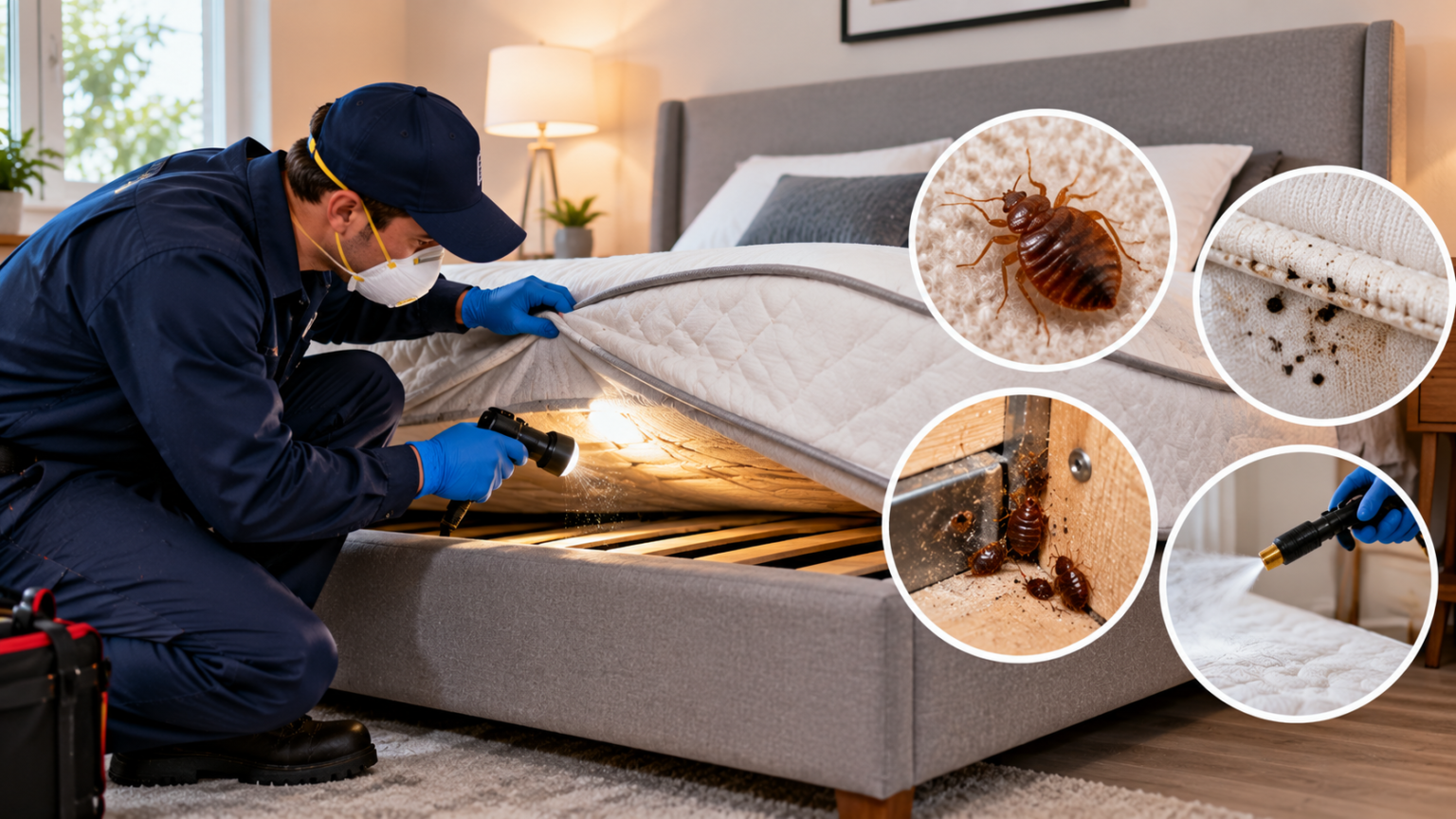
Few household pests create as much concern as an infestation that affects the places where people sleep and rest. These small insects can be difficult to detect during the early stages of an infestation, and their ability to hide in narrow cracks and protected areas makes them particularly challenging to eliminate. They can spread through luggage, clothing, furniture, bedding, and other personal belongings, allowing an infestation to move from one place to another without being immediately noticed. Learning how these pests behave, how to identify signs of an infestation, and how to respond appropriately can make treatment more effective.
Bed Bugs are small, parasitic insects that feed primarily on blood. Adult insects are generally reddish-brown, flattened, and oval-shaped, while younger insects are smaller and lighter in color. They commonly hide in mattresses, box springs, bed frames, furniture joints, cracks, crevices, and other areas close to where people spend extended periods. Although they are not known for living exclusively in beds, sleeping areas are often important locations because they provide convenient access to a host.
An infestation can be stressful, but early recognition can make the problem easier to manage. Simply washing bedding or spraying a readily available household product may not eliminate an established infestation because these insects can remain hidden in locations that are difficult to reach. Effective control generally requires inspection, identification, treatment, monitoring, and prevention of reinfestation.
Understanding These Household Pests
These insects are specialized parasites that rely on blood meals for nourishment. They do not build nests in the traditional sense, but they gather in protected areas where they can remain undisturbed between feedings.
Their flattened bodies allow them to enter very small spaces. This characteristic makes them difficult to locate during a casual inspection. They may hide behind headboards, inside furniture joints, beneath fabric edges, around mattress seams, or in cracks in walls and flooring.
They are also capable of surviving for periods without feeding, depending on environmental conditions and other factors. This means that simply leaving a room unused for a short period is not necessarily an effective method of eliminating an infestation.
Understanding their behavior is important because successful treatment depends on addressing hiding places as well as the visible insects.
How to Identify an Infestation
Identifying an infestation early can be difficult because individual insects are small and may remain hidden during daylight hours. Several signs can nevertheless provide clues.
Small dark spots on mattress seams, bedding, furniture, or nearby surfaces may indicate insect fecal material. Shed skins, eggs, eggshells, or live insects can also be evidence of an infestation.
Another possible indication is the presence of reddish stains on bedding. These may occur when an insect is crushed after feeding.
Bites can sometimes provide a clue, but skin reactions alone are not a reliable method of identifying the pest. Different insects and skin conditions can produce similar-looking marks, and some people may not react noticeably at all.
For this reason, physical evidence should be considered more reliable than assuming that a skin reaction automatically indicates an infestation.
Where They Commonly Hide
Sleeping areas are important inspection points, but an infestation may extend beyond the mattress. Bed frames, headboards, nightstands, upholstered furniture, curtains, carpets, baseboards, and wall cracks can all provide hiding locations.
The insects tend to favor narrow, protected spaces. They may hide close to the area where people sleep and gradually spread outward as the population increases.
Furniture seams and joints deserve particular attention because they provide dark, sheltered areas. Electrical outlets, cracks around trim, and gaps in flooring can also potentially serve as hiding locations.
A thorough inspection should therefore cover the entire surrounding area rather than focusing exclusively on the mattress.
How Infestations Spread
These pests do not typically spread by jumping or flying. Instead, they are often transported from one location to another through belongings.
Luggage is a common concern because it can remain in hotels, transportation areas, homes, and other environments where insects may be present. Clothing, bags, used furniture, bedding, and other portable items can also provide opportunities for transportation.
An infestation may therefore begin after an individual unknowingly brings insects into a property. Once introduced, the insects can gradually establish themselves in nearby hiding places.
Used furniture should be inspected carefully before being brought indoors. Items with numerous seams, cracks, or upholstered surfaces can be particularly difficult to inspect thoroughly.
Why Early Detection Matters
Early detection can simplify treatment because a smaller population may be easier to locate and contain. As an infestation grows, insects can spread into additional rooms and hiding places, increasing the amount of work required for elimination.
Prompt action also helps reduce the possibility of accidentally transporting insects to another property. Moving infested furniture or belongings without precautions can spread the problem.
When suspicious evidence is found, identifying the pest before starting treatment is important. Several insects can resemble one another, and incorrect identification can lead to ineffective control measures.
A professional pest inspection can be useful when physical evidence is unclear or the infestation appears extensive.
Inspecting the Sleeping Area
The bed should be one of the first areas inspected when an infestation is suspected. Mattress seams, piping, handles, labels, and the underside of the mattress can contain hiding insects or evidence.
The box spring should also be examined carefully, particularly around seams and the lower fabric covering. Bed frames and headboards can provide additional hiding areas.
The surrounding floor and furniture should then be inspected. Flashlights can help reveal insects, shed skins, and other evidence in dark spaces.Inspection should be systematic rather than rushed. Moving from one area to another and documenting evidence can help determine how extensive the problem may be.
Cleaning and Containment
Cleaning can support treatment, but ordinary cleaning alone may not eliminate an established infestation. Bedding and clothing that can safely tolerate high heat may be laundered and dried according to appropriate care instructions.
Items that have been treated should be kept separate from untreated belongings to reduce the risk of reinfestation.Vacuuming can also help remove insects and debris from certain accessible surfaces. Particular attention can be given to mattress seams, bed frames, floors, and nearby cracks.
After vacuuming, the contents or disposable components should be handled carefully to avoid releasing insects back into the environment.Decluttering can make inspection and treatment easier. Reducing unnecessary items around the bed can eliminate some potential hiding places and provide technicians with better access.
Mattress Encasements
Specially designed mattress and box-spring encasements can be useful as part of an integrated control strategy. These covers are designed to prevent insects from entering or leaving the enclosed mattress or foundation.
An encasement should be selected specifically for this purpose and installed according to the manufacturer’s instructions. It should remain intact and be inspected periodically for tears or openings.
Encasements are not necessarily a complete solution for an infestation because insects can hide in other areas. They are better understood as one component of a broader treatment and monitoring strategy.
Heat Treatment
Heat is one method used by professionals to control these insects. Properly conducted heat treatment raises temperatures in infested areas to levels capable of killing insects and their eggs.
Professional heat treatment requires specialized equipment, monitoring, and careful preparation. Simply turning up a household thermostat or using an improvised heat source is not an equivalent method and can create fire or property-damage risks.
The effectiveness of professional heat treatment depends on achieving and maintaining appropriate temperatures in all relevant areas. Hidden spaces, dense materials, and objects that block heat transfer need to be considered.
Because of these requirements, professional heat treatment is generally more appropriate than attempting to create extreme temperatures independently.
Chemical Treatment
Chemical control may also be used when appropriate. Different products have different active ingredients, application methods, and limitations.
Pesticides should always be used according to their labels and applicable regulations. Applying excessive amounts or using products in unintended ways can create health and property risks without necessarily improving control.
Some populations may also show reduced susceptibility to certain insecticides, which is one reason integrated pest management approaches are often more effective than relying on a single chemical product.
Professional technicians can select treatments based on the pest identification, infestation conditions, accessible areas, and applicable product requirements.
Integrated Pest Management
Integrated pest management combines multiple control methods rather than relying on one technique. Inspection, cleaning, monitoring, physical control, heat, encasements, and carefully selected chemical treatments may all play a role.
The specific combination depends on the property and the extent of the infestation. The goal is to reduce the population while preventing surviving insects from establishing themselves again.
Monitoring is especially important. A property should not automatically be considered pest-free simply because no insects are visible immediately after treatment.Follow-up inspections can help determine whether additional treatment is necessary.
Preparing for Professional Treatment
Proper preparation can improve the effectiveness of professional pest control. Technicians may provide instructions regarding bedding, clothing, furniture, clutter, and access to affected areas.
These instructions should be followed carefully. Moving belongings from an infested room to another part of the property without guidance can unintentionally spread the insects.Technicians may also need access to mattresses, furniture, baseboards, closets, and other potential hiding locations.
The preparation requirements vary depending on the treatment method, so property owners should follow the specific instructions provided by the pest-control professional.
Protecting Other Rooms
When an infestation is discovered, it is understandable to want to move to another bedroom. However, changing sleeping locations can potentially encourage insects to follow the available host and spread the infestation to another area.
Similarly, moving mattresses, furniture, clothing, or bedding from one room to another without appropriate precautions can distribute the problem.
A better approach is to follow a coordinated treatment and containment plan. The goal should be to prevent unnecessary movement of infested belongings while allowing professionals to inspect and treat affected areas.
Traveling and Preventing Introduction
Travelers can take practical precautions to reduce the possibility of bringing pests home. When staying away from home, luggage can be kept elevated rather than placed directly on beds or upholstered furniture.
After returning, luggage and clothing should be inspected. Washable clothing can be laundered and dried according to its care instructions.
Suitcases can be inspected around seams, pockets, zippers, and other protected areas. If suspicious evidence is discovered, belongings should be handled carefully rather than immediately distributed throughout the home.These precautions do not guarantee prevention, but they can reduce opportunities for insects to travel unnoticed.
Inspecting Used Furniture
Used furniture can be an economical option, but upholstered pieces and items with numerous joints can present inspection challenges.
Before bringing used furniture indoors, inspect seams, cracks, undersides, joints, and other concealed areas. Look for live insects, dark spotting, shed skins, or other evidence.Mattresses and upholstered furniture deserve particular caution because their construction can create numerous hiding places.
If the item’s history is unknown and thorough inspection is not possible, bringing it indoors may carry unnecessary risk.
Common Treatment Mistakes
One of the most common mistakes is assuming that visible insects represent the entire infestation. Because these pests hide effectively, seeing one insect may indicate that others are nearby.Another mistake is relying on a single treatment method without monitoring the results. A spray may kill exposed insects while leaving hidden individuals unaffected.
Moving belongings between rooms can also worsen the situation by distributing insects to new areas.
Improvised heating methods are another concern. Household appliances, space heaters, or other devices should not be used to create extreme temperatures because of the risk of fire and property damage.Finally, repeatedly applying pesticides without understanding the product’s instructions can be ineffective and potentially hazardous.
Working With a Pest Control Professional
Professional assistance can be especially valuable when an infestation is extensive, recurring, or difficult to confirm. Technicians can inspect the property systematically and identify potential hiding areas that may be missed during a casual inspection.
When selecting a provider, property owners should ask about the inspection process, treatment methods, preparation requirements, follow-up visits, and monitoring procedures.
A good treatment plan should address both active insects and the possibility of surviving individuals. Follow-up is important because eggs or hidden insects may remain after the initial service depending on the treatment method.Clear communication also helps property owners understand what they need to do before and after treatment.
Maintaining Vigilance After Treatment
After treatment, continued observation is important. New evidence does not necessarily mean the initial treatment was ineffective, but it should be reported to the pest-control provider.
Avoid immediately introducing used furniture or unnecessary items into treated areas. Continue inspecting sleeping areas and surrounding furniture periodically.
If monitoring devices or interceptors have been recommended, they should be checked according to the instructions provided.Consistent monitoring can help identify any remaining activity before it becomes widespread again.
Health and Household Considerations
These pests are primarily known for feeding on blood and causing bites or skin reactions in some people. Reactions vary considerably between individuals, and some people may show little or no visible response.
The psychological stress associated with an infestation can also be significant. Sleep disruption and concern about carrying insects to other locations can make the situation particularly frustrating.
Keeping the response organized can help. Confirm the pest, contain belongings, follow treatment instructions, and monitor the results rather than repeatedly trying unrelated remedies.If someone experiences a severe or unusual reaction, appropriate medical advice should be sought.
Long-Term Prevention
Long-term prevention focuses on reducing opportunities for introduction and detecting problems early. Regular inspection of sleeping areas, cautious handling of used furniture, and careful management of luggage after travel can all be useful.
Maintaining an uncluttered environment can also make future inspections easier. Although clutter does not necessarily cause an infestation, excessive belongings can create additional hiding locations and make treatment more difficult.
Property owners should also avoid assuming that a clean home is automatically protected. These insects can occur in a wide range of environments and are not simply a result of poor housekeeping.Awareness and early detection are more useful prevention tools than relying on cleanliness alone.
Final Thoughts
Bed Bugs can be challenging household pests because of their small size, ability to hide in narrow spaces, and capacity to travel unnoticed through belongings. Recognizing physical evidence, inspecting sleeping areas carefully, and responding promptly can help limit the scope of an infestation.
Effective control generally requires more than cleaning visible surfaces. A comprehensive approach may involve inspection, laundering appropriate items, vacuuming, encasements, monitoring, professional heat treatment, carefully selected chemical treatments, and follow-up inspections.
Property owners should also avoid common mistakes such as moving infested belongings between rooms, relying entirely on one treatment method, or using improvised heating techniques. Professional guidance can be particularly valuable when the infestation is extensive or when identification is uncertain.
Prevention remains an important part of long-term pest management. Travelers can inspect luggage and clothing after trips, while used furniture should be carefully examined before being introduced into the home. Regular monitoring makes it easier to identify suspicious signs before an infestation becomes extensive.
Ultimately, bed bugs are a manageable pest problem when addressed systematically. Confirming the problem, understanding where the insects hide, using appropriate control methods, and continuing to monitor after treatment can greatly improve the chances of successful elimination. A thoughtful response is more effective than repeatedly applying unverified remedies, and professional assistance can provide additional expertise when ordinary household measures are not enough.
