
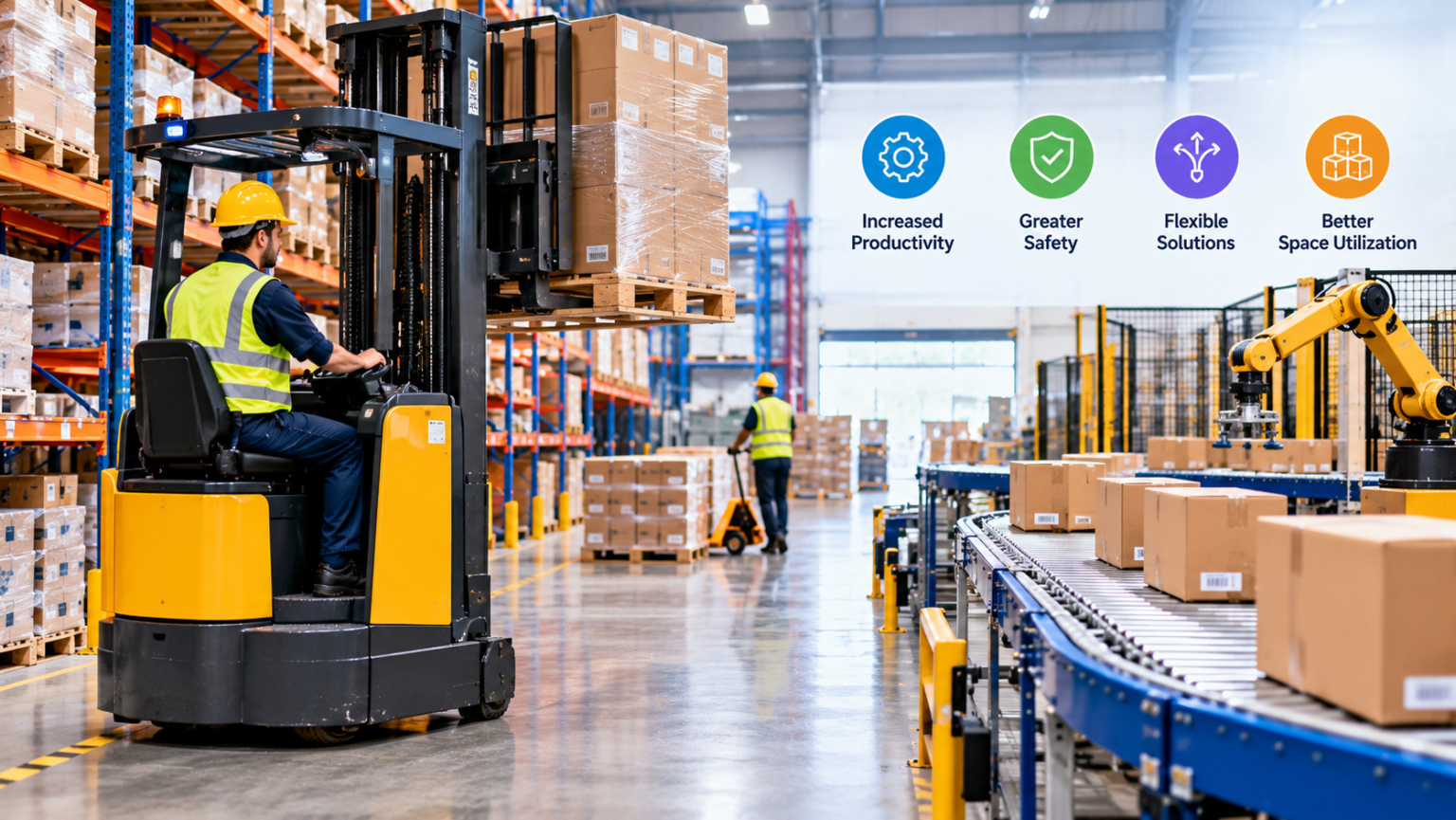
Efficient material handling plays an important role in the daily operation of warehouses, manufacturing facilities, distribution centers, construction projects, and other businesses that regularly move heavy or bulky materials. The ability to transport products, pallets, equipment, and supplies safely and efficiently can directly affect workflow, employee productivity, storage organization, and overall operational continuity. Because material handling requirements can change according to workload, project schedules, inventory levels, facility layouts, and seasonal demand, businesses need access to equipment that can adapt to their circumstances. Purchasing every machine required for occasional or changing workloads is not always the most practical approach, particularly when certain equipment may only be needed for a limited period. Flexible equipment solutions allow businesses to access the machinery necessary for specific applications while maintaining greater control over their equipment strategy. A properly selected forklift can support loading and unloading, warehouse transportation, inventory movement, production processes, and many other tasks, making equipment selection an important part of planning an efficient material handling operation.
Selecting Equipment Based on Operational Requirements
Every material handling application has its own requirements, which means equipment selection should be based on the actual work rather than simply choosing a machine based on availability. Businesses should consider the average and maximum load weights, dimensions of the materials, required lifting heights, travel distances, aisle widths, surface conditions, operating hours, and whether the equipment will primarily be used indoors or outdoors. The type of material being handled can also influence the required equipment configuration. Some operations may require standard lifting capacity, while others may involve unusually heavy loads, narrow storage aisles, elevated racks, specialized attachments, or demanding outdoor conditions. Understanding these factors before selecting equipment can help businesses avoid using machinery that is unsuitable for the application. It can also help operators work more efficiently because equipment that matches the environment and workload is generally easier to incorporate into established processes. A professional material handling provider can review these requirements and help identify equipment options that correspond with the specific demands of the operation.
Supporting Temporary and Changing Workloads
Businesses often experience periods when their normal equipment fleet is not sufficient for the amount of work that needs to be completed. Increased inventory, seasonal demand, temporary projects, facility expansion, construction work, or unexpected changes in production can create a need for additional lifting equipment. Purchasing another machine for a short-term requirement may leave the business with underutilized equipment once the workload returns to normal. Rental solutions provide an alternative by allowing businesses to add equipment for the period in which it is actually needed. This flexibility can be particularly useful when the duration of a project is uncertain or when management wants to avoid permanently increasing the size of its fleet. Instead of allowing equipment shortages to slow down loading, unloading, storage, or production activities, companies can evaluate their current requirements and obtain additional machinery according to the expected workload. This approach can help businesses respond to operational changes without making every temporary requirement a permanent equipment investment.
Improving Warehouse Workflow and Productivity
Warehouse productivity depends on the coordinated movement of materials throughout the facility. Incoming shipments must be unloaded, products need to be transferred to appropriate storage areas, inventory may need to be replenished, and completed orders must be moved toward shipping areas. When equipment is poorly matched to the facility, employees may spend additional time maneuvering around obstacles, repositioning loads, or waiting for machinery to become available. Appropriate lifting equipment can help create a more organized workflow by allowing materials to move between designated areas with fewer unnecessary delays. The right equipment can also be selected according to aisle dimensions, storage heights, floor conditions, and traffic patterns. Businesses should therefore look at the complete movement of materials rather than considering a forklift only as a machine for lifting pallets. Its role within the broader workflow can influence how efficiently employees receive, store, retrieve, stage, and dispatch materials throughout the working day.
Managing Equipment Requirements Without Unnecessary Fleet Expansion
Maintaining a large equipment fleet can involve more than the initial cost of purchasing machinery. Businesses also need to consider storage, scheduled maintenance, inspections, repairs, replacement parts, battery or fuel requirements, tires, operator training, and eventual equipment replacement. When machines are used continuously, these responsibilities can be a normal part of fleet management. However, when a machine is required only occasionally, permanently adding another unit may not provide the same operational value. Flexible rental arrangements can allow businesses to access equipment for specific projects or periods of increased demand without necessarily expanding their permanent fleet. This can be useful for companies that are growing but are still evaluating their long-term equipment requirements. It can also help businesses respond to temporary opportunities without immediately committing capital to machinery that may have limited use after the project is completed. A balanced equipment strategy may include a combination of owned machines for regular operations and rented equipment for temporary, specialized, or additional capacity needs.
Choosing the Appropriate Capacity
Capacity is one of the most important factors when evaluating lifting equipment. A machine must be appropriate for the weight and configuration of the loads it is expected to handle, while other factors such as lifting height and attachments can also affect its operating capabilities. Businesses should avoid selecting equipment based solely on a typical load if occasional materials are significantly heavier or require different handling methods. At the same time, choosing equipment with substantially more capacity than necessary for routine tasks may not always be the most efficient solution. Reviewing the complete range of loads handled during a normal operating cycle can provide a clearer picture of the required equipment specifications. The dimensions and center of gravity of a load can also influence equipment selection, particularly when materials are tall, unusually shaped, or handled at significant heights. Careful planning helps businesses identify equipment that is suitable for the intended application and supports consistent handling practices.
Considering Indoor and Outdoor Applications
The operating environment can significantly influence the type of equipment required. Indoor facilities may have smooth floors, limited ventilation, restricted aisle widths, and specific requirements concerning emissions or noise. Outdoor operations may involve uneven surfaces, changing weather conditions, ramps, loading areas, construction materials, and longer travel distances. A machine that works effectively in one environment may not be appropriate for another, so businesses should identify where and how the equipment will be used before arranging a rental or acquisition. Power source can also become an important consideration. Electric equipment may be suitable for many indoor applications, while internal-combustion equipment can be useful for certain outdoor or heavy-duty requirements. These decisions should be based on the application, facility conditions, load characteristics, operating schedule, and manufacturer specifications rather than on a single general rule. Evaluating the environment in advance helps ensure that equipment can perform its intended duties without creating unnecessary operational complications.
Maintaining Equipment Reliability Through Professional Support
Equipment reliability is essential for businesses that depend on material handling machinery throughout the working day. Even when equipment is properly selected, routine use can eventually lead to wear on mechanical, electrical, hydraulic, and other components. Regular maintenance and timely repairs can help identify problems before they become more disruptive to operations. A professional service program may include inspections, scheduled maintenance, troubleshooting, repairs, and replacement of worn components. Businesses should also pay attention to changes in equipment performance, such as unusual sounds, reduced lifting performance, steering difficulties, braking concerns, hydraulic leaks, warning indicators, or other signs that a machine may require attention. Addressing concerns promptly can help reduce the possibility of extended downtime. When rental equipment is supported by a provider with service capabilities, businesses can also have a clearer process for reporting equipment concerns and obtaining technical assistance when needed.
The Importance of Parts Availability
Replacement parts are another important element of effective equipment support. Material handling machines contain numerous components that can eventually require maintenance or replacement due to normal wear or operating conditions. Tires, filters, hoses, hydraulic components, electrical parts, brakes, chains, forks, seats, batteries, and other equipment components can all play a role in reliable operation. Delays in obtaining the correct replacement part can extend repair periods and affect productivity, particularly when a machine is essential to daily operations. Businesses that use multiple equipment brands may also benefit from working with a provider that understands different makes and models. A strong parts department can help identify appropriate components and support technicians during repair work. Reliable parts availability does not eliminate the need for maintenance, but it can help make the repair process more organized and reduce avoidable delays when equipment requires attention.
Supporting Operator Safety and Proper Equipment Use
Equipment selection should always be accompanied by appropriate operator training and workplace procedures. Forklifts and other lifting machines are powerful pieces of equipment that require operators to understand their controls, limitations, load-handling requirements, and operating environment. Operators should be familiar with inspection procedures and should know how to identify conditions that require equipment to be removed from service. Businesses should also establish clear procedures for pedestrian movement, loading and unloading, parking, charging or fueling, travel paths, visibility, and communication between employees. Training should be relevant to the equipment being used and should be reinforced through consistent workplace practices. Regular attention to safe operating procedures can help businesses create a more organized environment in which employees understand their responsibilities around material handling equipment. Professional training programs and equipment guidance can provide additional support for companies seeking to establish or strengthen their equipment safety practices.
Using Equipment Rentals for Replacement Needs
Unexpected equipment downtime can create significant challenges when a machine is essential to daily operations. A forklift may become unavailable because of mechanical repairs, scheduled maintenance, an inspection issue, or accidental damage. If there is no replacement option available, employees may have to wait, manually move materials, or reorganize work around the unavailable machine. These disruptions can affect production schedules, loading activities, inventory movement, and shipping operations. Rental equipment can provide a temporary solution while the primary machine is being repaired or serviced. This can be particularly valuable for businesses that cannot afford to leave important material handling tasks unfinished. Instead of purchasing a replacement machine for a temporary situation, a company can evaluate whether renting equipment for the expected repair period would provide the required capacity. Having access to a dependable rental provider can therefore become part of a broader business continuity strategy.
Supporting Specialized Material Handling Applications
Not every material handling task can be completed efficiently with a standard forklift. Certain facilities may require equipment designed for narrow aisles, elevated storage, high-capacity loads, rough surfaces, or specialized material movement. Specialized equipment can help businesses address tasks that would otherwise require inefficient workarounds. For example, narrow-aisle equipment can be useful where storage density is important, while high-capacity equipment may be necessary for particularly heavy loads. Pallet jacks and walkie-rider equipment can support different warehouse transportation requirements, while aerial equipment may be useful for elevated work unrelated to conventional pallet handling. Businesses should identify the specific task before selecting the equipment category. Access to a diverse equipment fleet can make it easier to match machinery with specialized requirements rather than forcing one machine to perform every task.
Planning for Long-Term Business Changes
Equipment requirements can change as a business expands, reorganizes its facility, introduces new products, changes storage systems, or takes on larger contracts. A machine that is suitable for today’s workload may not necessarily be the right solution several years from now. Long-term equipment planning should therefore include consideration of future operational changes. Rental programs can provide flexibility while a company evaluates its long-term requirements, especially when future workload levels are difficult to predict. Businesses can use rental periods to address current needs while gathering practical information about equipment utilization, operator feedback, maintenance requirements, and workflow performance. This information can then support future fleet planning. Rather than making equipment decisions solely according to immediate demand, companies can review how machinery fits into their broader operational strategy and determine whether ownership, rental, or a combination of both is appropriate for different applications.
Building a More Organized Fleet Management Approach
Effective fleet management involves understanding how equipment is used, when maintenance is required, which machines experience the highest workload, and where additional capacity may be needed. Businesses can benefit from maintaining accurate records of equipment usage, inspections, repairs, maintenance schedules, and operating issues. These records can help identify recurring problems and reveal whether certain machines are being overused while others remain underutilized. Fleet information can also support better decisions when equipment needs to be replaced, upgraded, or supplemented with rental machinery. A professional material handling provider can assist with fleet evaluations and help businesses consider equipment requirements across the entire operation. By looking at the fleet as an integrated system rather than a collection of individual machines, companies can make more informed decisions about availability, maintenance, utilization, and future equipment needs.
Creating Greater Flexibility in Material Handling
Flexibility is increasingly important for businesses that need to respond to changing workloads while maintaining efficient operations. Equipment needs may increase temporarily because of seasonal activity, construction projects, facility changes, inventory fluctuations, or unexpected operational demands. A flexible equipment strategy allows businesses to address these situations without automatically making permanent changes to their fleet. Forklift rentals can provide access to additional lifting capacity when businesses need equipment for a defined period, while professional service and parts support can help maintain equipment reliability throughout its working life. When combined with appropriate operator training, maintenance planning, equipment selection, and fleet management, rental solutions can become an important component of a comprehensive material handling strategy. The goal is not simply to obtain another machine, but to ensure that the available equipment supports the actual workflow and business requirements.
Conclusion
A successful material handling operation depends on much more than having lifting equipment available. Businesses need machinery that matches their loads, facility layout, operating environment, lifting requirements, workflow, and expected usage. They also need reliable maintenance, accessible replacement parts, trained operators, and a clear plan for managing equipment when operational demands change. Flexible equipment solutions can help businesses respond to temporary workloads, replacement requirements, specialized applications, and long-term changes without treating every equipment need as a permanent fleet expansion. By carefully evaluating capacity, application, operating environment, rental duration, maintenance support, and future requirements, businesses can develop an equipment strategy that supports productivity and operational continuity. Working with an experienced material handling provider can further simplify the process by bringing equipment selection, rentals, service, parts, training, and fleet support together. A thoughtful approach to equipment planning allows businesses to keep material movement organized while remaining prepared for changing operational demands and future growth.
