
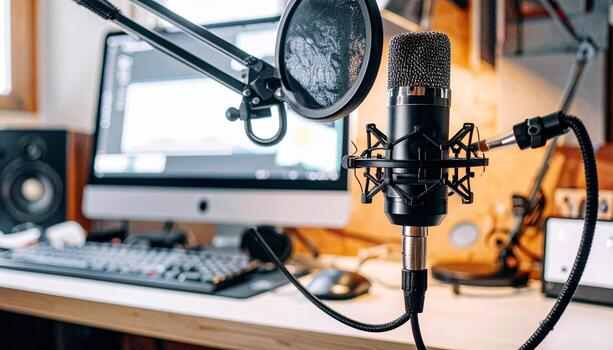
A few years ago, creating a polished video with a narrator required a studio booking, a performer, and days of editing. Today, a marketer can type a script into an app and get a finished voice track in minutes. AI voice generators, automatic video editors, and text-to-video tools have become part of everyday content workflows, and the quality keeps improving.
So why do brands, studios, and publishers still hire professional voice talent and record in real studios? The answer is not that technology fails. It is that the best results usually come from knowing exactly where each tool shines and where a human performance still makes the difference.
What AI Voice and Video Tools Do Well
Used in the right place, these tools are genuinely useful:
- Speed. A draft voice-over for an internal presentation or a rough cut can be ready in minutes.
- Cost for simple jobs. Short, low-stakes content such as internal training clips or quick previews can be produced cheaply.
- Iteration. You can try several versions of a script and hear them instantly before committing to a final recording.
- Localization drafts. Translated scripts can be previewed in multiple languages for review.
- Accessibility. Text-to-speech helps make written content available as audio.
For these tasks, an AI-generated voice is often good enough, and sometimes ideal.
Where Human Voices Still Win
The gap shows up in the moments that matter most to a brand:
- Emotional range. A human performer can shift from warmth to urgency to humour within a single line, guided by context and direction.
- Interpretation. A professional reads between the lines, emphasizing the word that carries the meaning, not just reading the words in order.
- Brand personality. A recognizable voice becomes part of a brand’s identity, and consistency across campaigns builds trust.
- Direction and adjustment. In a session, a director can ask for a softer tone, a faster pace, or a different attitude, and the performer responds instantly.
- Handling of difficult material. Names, technical terms, accents, and humour often need judgment that automated tools still get wrong.
Listeners also tend to notice when something sounds slightly off. Even small oddities in rhythm or breath can make a message feel less trustworthy, which matters for advertising, explainer videos, and customer-facing content. For narrated ads and explainers, Counnter speech tool can estimate a script’s speaking time before recording, helping teams plan a voice track that fits the intended runtime.
The Practical Answer: A Hybrid Workflow
Most teams that produce content regularly end up combining both approaches:
- Use AI for drafts and temp tracks. Test timing, structure, and messaging before spending on a final recording.
- Use human talent for the final version. Record the voice that represents the brand in a controlled studio.
- Use automation for repetitive work. Cleaning up files, transcribing, and creating captions saves hours.
- Keep humans in charge of creative decisions. Tone, casting, and emotion are judgment calls.
This approach captures the speed of the technology without giving up the quality of a real performance.
Many Toronto brands follow this pattern, drafting with AI and then recording the final version with a production partner such as Encounter Studios, which offers dedicated rooms for voice-over, ADR, music, and podcasts.
A Quick Decision Guide
Ask these questions before choosing:
- Who will hear this? Internal teams can tolerate more shortcuts than customers.
- What is at stake? A brand campaign, a product launch, or a message about safety deserves real performance.
- How long will it live? Content that will be used for years justifies a proper recording.
- Does it need emotion or personality? If yes, lean toward a human voice.
- Is the content sensitive or legal? Contracts, health information, and public statements benefit from a trained professional.
Consent and Rights Matter
AI voice tools raise real questions about permission and ownership. Cloning or imitating someone’s voice without clear consent can create legal and ethical problems. If you use any voice technology, read the tool’s licensing terms, get written permission from any person whose voice is used, and keep records of how the audio was produced. Professional studios and talent agreements make these questions simple, because rights and usage are defined in writing.
What a Professional Session Adds
Recording in a proper studio is about more than a good microphone. A sound-isolated booth removes room noise and echo, an engineer monitors levels in real time, and a director shapes the performance take by take. Professional studios also support remote sessions, so clients can direct a recording live without being in the building.
For brand work that needs a distinctive, consistent sound, professional voice-over recording delivers clean audio that is ready to edit, mix, and reuse across campaigns, from explainer videos to podcasts and ads.
Tips for Better Results With Either Approach
- Write for the ear: short sentences, natural phrasing, and numbers written the way they are spoken
- Mark pronunciation for names, brands, and unusual terms
- Record or generate a short test before committing to the full script
- Listen on both headphones and phone speakers
- Keep a consistent voice across all of a campaign’s content
Quick Questions
Can AI voices replace professional voice actors? For simple, low-stakes content they can be a practical tool, but for emotional, brand-defining work most teams still prefer human performances.
Is it legal to use AI-generated voices in marketing? It depends on the tool’s terms, the consent of anyone whose voice is imitated, and local rules, so read the licence and keep written permissions.
What is the best use of AI in a video workflow? Drafting scripts and timing, transcription, captions, and cleaning up audio are strong uses that save time without replacing creative decisions.
How do I decide between AI and a studio recording? Consider the audience, the stakes, the lifespan of the content, and how much emotion or personality it needs.
The Bottom Line
AI voice and video tools are powerful additions to any content team, and ignoring them would be a mistake. But a message that carries your brand’s personality, builds trust, and needs to feel human still benefits from a real voice recorded well. The smartest teams do not choose one or the other. They use technology to move faster and people to make the work worth listening to.
