
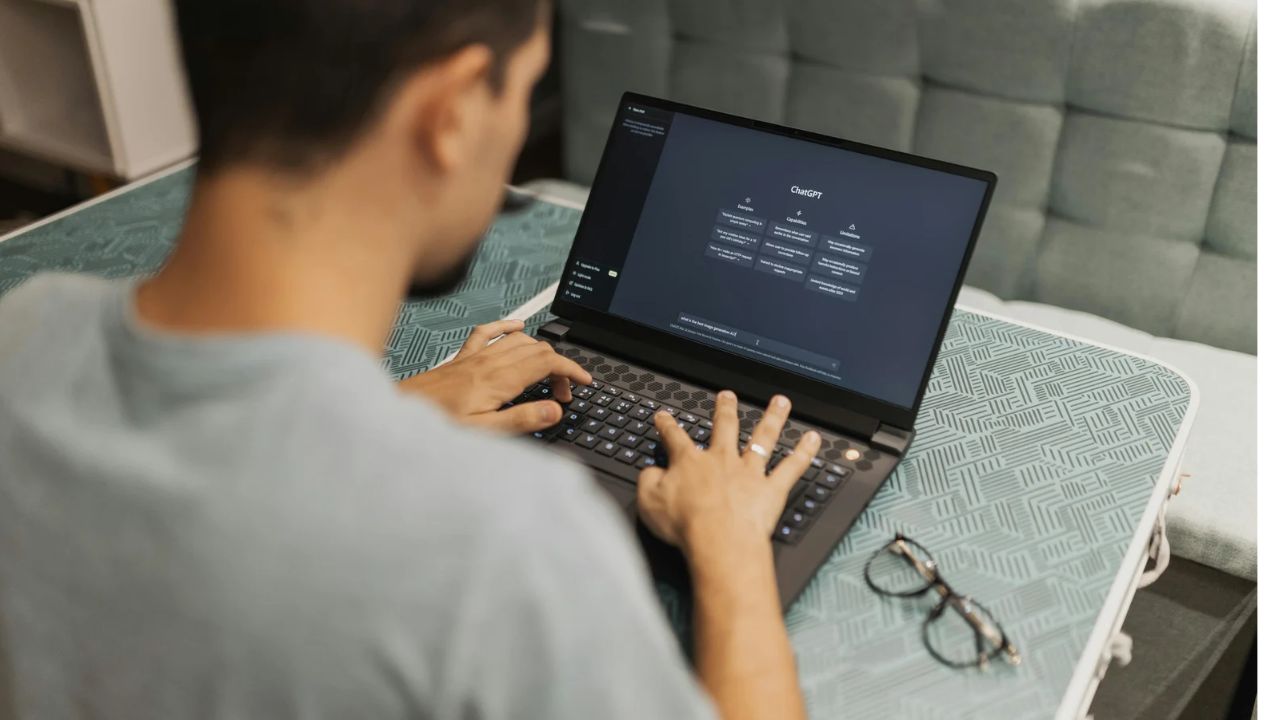
Ask a doctor who uses an AI scribe what changed, and you’ll usually hear about evenings. The notes are finished before they leave the building. In one JAMA Network Open study of 263 providers across six health systems, burnout fell from 51.9% to 38.8% after just 30 days with an ambient scribe. That result is real, and it explains why these tools spread so quickly.
There’s a second effect, though, and it shows up on the claims side.
Fuller notes support higher billing codes, and insurers have noticed. In PwC’s Behind the Numbers 2027 report, nearly 70% of health plan actuaries ranked AI documentation and coding tools among their top three cost drivers. PwC expects the medical cost trend for employer plans to reach 9% in 2027, its highest level in 17 years.
As a result, practices are stuck in a strange squeeze. The scribe pushes codes up, and payers push them back down. Here’s how that squeeze works and what you can do about it.
Why AI scribes push codes higher
An ambient scribe hears the entire visit, including anything a patient mentions at the door and any medication changes you discuss. It also time-stamps the encounter. Since the 2021 E/M guideline changes, visit levels rest on medical decision-making or total time, so a fuller note often supports a higher level.
The numbers bear this out. Trilliant Health studied six large health systems that adopted ambient AI. Between 2018 and 2024, the share of new-patient visits billed at the top two levels (99204-99205) rose by roughly 12 to 20 percentage points. In one system, 80% of new-patient visits ended up in that high-intensity group. Similarly, a UCSF study of 1.2 million visits found that physicians using AI scribes billed 1.81 more relative value units per week than colleagues who didn’t, with no rise in denied claims.
So is this upcoding?
Mostly, I don’t think so. Plenty of physicians under-coded for years because their notes were thin or because they feared audits, and Trilliant itself says the shift likely reflects more complete, rules-based documentation. The trouble is that payers don’t grade intent. They see a curve bending upward and respond to it.
Payers are now downcoding automatically
Insurers didn’t wait for the research to settle. According to Becker’s ASC, Cigna began lowering payment rates for higher-level E/M claims (99204-99205, 99214-99215, and 99244-99245) in October 2025 for visits that don’t meet its complexity standards. Aetna has since widened its claim and code review program, which downcodes some level 4 and 5 visits, from 12 pilot states to every commercial state except Louisiana. BCBS of Massachusetts is doing something similar for clinicians who routinely bill at the top levels.
Blue Cross and Blue Shield of Illinois began stricter E/M reviews on July 1, 2026. Within weeks, one suburban pediatrician estimated that about 40% of his higher-level sick-visit claims had been downcoded. Meanwhile, a Chicago behavioral health practice reportedly saw around 2,400 claim reductions in July alone, according to Polsinelli.
Regulators are pushing back, but slowly.
In March 2026, Maryland fined Cigna $80,000 and ordered it to stop automatic downcoding, requiring it to dispute a claim and request records instead. Illinois went further with its Transparency in Downcoding Act, which requires a real person to make or review each downcoding decision and bans downcoding based solely on diagnosis codes. The catch? It doesn’t take effect until January 1, 2028.
To be fair, not every payer program runs on AI. Cigna has said its E/M policy doesn’t, and BCBSIL hasn’t said what drives its reviews. Even so, the effect looks like an arms race, with software raising codes on one side and automated reviews cutting them on the other.
Why small practices take the biggest hit
Large health systems have documentation-integrity teams, coders and analysts who can tune a scribe and defend every level 4 on appeal. A three-provider clinic, by contrast, usually has one or two billers and a physician who approves the scribe’s code suggestion between patients.
As Digital Health Insights noted, this arms race rewards size. Big systems capture the early revenue bump, while small practices risk adopting late, missing the upside and then working under rates insurers have already pushed down. The Texas Medical Association made a similar point in a letter to Cigna, warning that automatic downcoding forces small and independent practices to fight harder for fair payment.
Then there’s the appeal math. If a payer trims 40% of your higher-level visits, each appeal needs a chart, a letter, and someone’s afternoon. For a small team, writing off the difference is often cheaper, and that’s the part of automatic downcoding that stings most.
In other words, a small practice can’t afford to bill a code it can’t prove. It can’t afford to under-bill out of fear, either.
The specialty blind spot: dermatology and same-day procedures
Most coverage of AI scribes centers on primary care. Dermatology has a different problem, and right now it may be the bigger one.
Interestingly, Trilliant’s data (mentioned earlier) shows skin visits barely moved. From 2021 to 2024, the share of established-patient visits for skin conditions billed at high intensity rose from 39.7% to 41.8%, one of the smallest gains among diagnosis groups. So in dermatology, the risk isn’t level creep. It’s the day a visit and a procedure happen together.
Many dermatology visits end with a biopsy, a destruction, or a shave removal. To bill the visit as well, the E/M has to be significant and separately identifiable, which coders mark with modifier 25. The quick evaluation that led to the procedure is already covered by the procedure itself. For that reason, coding advisers have long recommended a separate procedure note and warned against counting a diagnostic procedure’s findings twice.
An ambient scribe doesn’t think in those boxes. It writes one smooth story of the visit. The lesion check that led to the biopsy falls under the exam; the procedure sits right beside it, and the suggested code might read 99213-25 when the visit was really just the pre-procedure look.
Timing makes this urgent. In July 2026, CMS proposed a 2027 Medicare rule for situations in which a visit with modifier 25 and a procedure with a global period (most minor skin procedures have one) occur together. Only the most expensive service would be paid in full; the rest would be paid at 50% of the cost. CMS said dermatology, otolaryngology and podiatry would take the biggest hit, and the AMA pushed back in its September comments. The final rule, scheduled for around November 1, 2026, settles whether the cut goes ahead, gets softened, or is dropped, so check it before you plan around it. Whatever CMS decides, same-day visits are clearly on its radar, and a blended AI note is weak evidence.
That’s why your Dermatology EHR matters as much as the scribe. Body maps, lesion photos, and separate procedure templates give each service its own record, which is what an auditor wants to see.
A 5-point monthly coding check
You don’t need a compliance department to stay ahead of this. Once a month, pull these five numbers yourself or ask your billing partner to do so.
- Compare each provider’s visit-level mix before and after the scribe went live, especially the share of 99214-99215 and 99204-99205. A rise is fine if the charts back it up. A sudden jump in one quarter means someone should read ten charts.
- Track downcoding by payer. Remittances that pay at a lower amount than you billed (CARC 150 is the usual flag) indicate whether the problem is your notes or the payer’s policy.
- Have each provider reread ten of their own AI notes. Look for labs the note says were reviewed but weren’t, exam findings nobody checked, and phrases that repeat word for word across patients.
- Watch your modifier 25 rate. In procedure-heavy specialties, count how often a visit is billed with a same-day procedure, then spot-check whether each one had its own separate problem.
- Compare time with complexity. A note that claims high-complexity decision-making on an eight-minute visit will stand out, because the scribe’s own time stamps sit in the record.
If two of these move the wrong way at once, fix the workflow before you fight the payer.
What to look for in an AI-powered EHR
Most of the risk above lives in the gap between the scribe and the claim. When the scribe is a separate app, its note gets pasted into the chart, someone picks a code, and nobody sees the whole chain. So when you compare tools, ask a few blunt questions:
- Does the scribe write straight into the EHR, so the note, codes, and claim share one record?
- Does it explain a suggested level by pointing to the decision-making in the note, or does it just output a number?
- Can it keep procedure documentation apart from the visit note?
- Does anything check the claim before it goes out, and does a clinician have to sign off first?
This is where integrated AI in Healthcare suites earns its keep. Modern EHRs with integrated healthcare AI solutions pair a multilingual AI Scribe with an AI Claim Editor that flags coding warnings and errors before a claim is submitted. Some have even added AI Fax, AI Show Rate (to reduce no-shows), and more to go a step further in providing better care.
Whichever tool you pick, the rule stays the same. The person who saw the patient should approve what gets billed, with the reasoning in front of them.
Final Thoughts
AI scribes are worth keeping. Getting evenings back is a real gain, and so is a note that finally reflects the work. Still, the scribe’s code suggestion is a draft, and treating it as final could get expensive. Payers are automating their side, Medicare has proposed cutting payment for same-day visit-and-procedure pairs, and state protections like Illinois’ law are more than a year away.
So read your numbers every month, keep procedures in their own notes, and choose tools that show their reasoning. The practices that come through this in good shape will be the ones that can prove every code they bill.
