
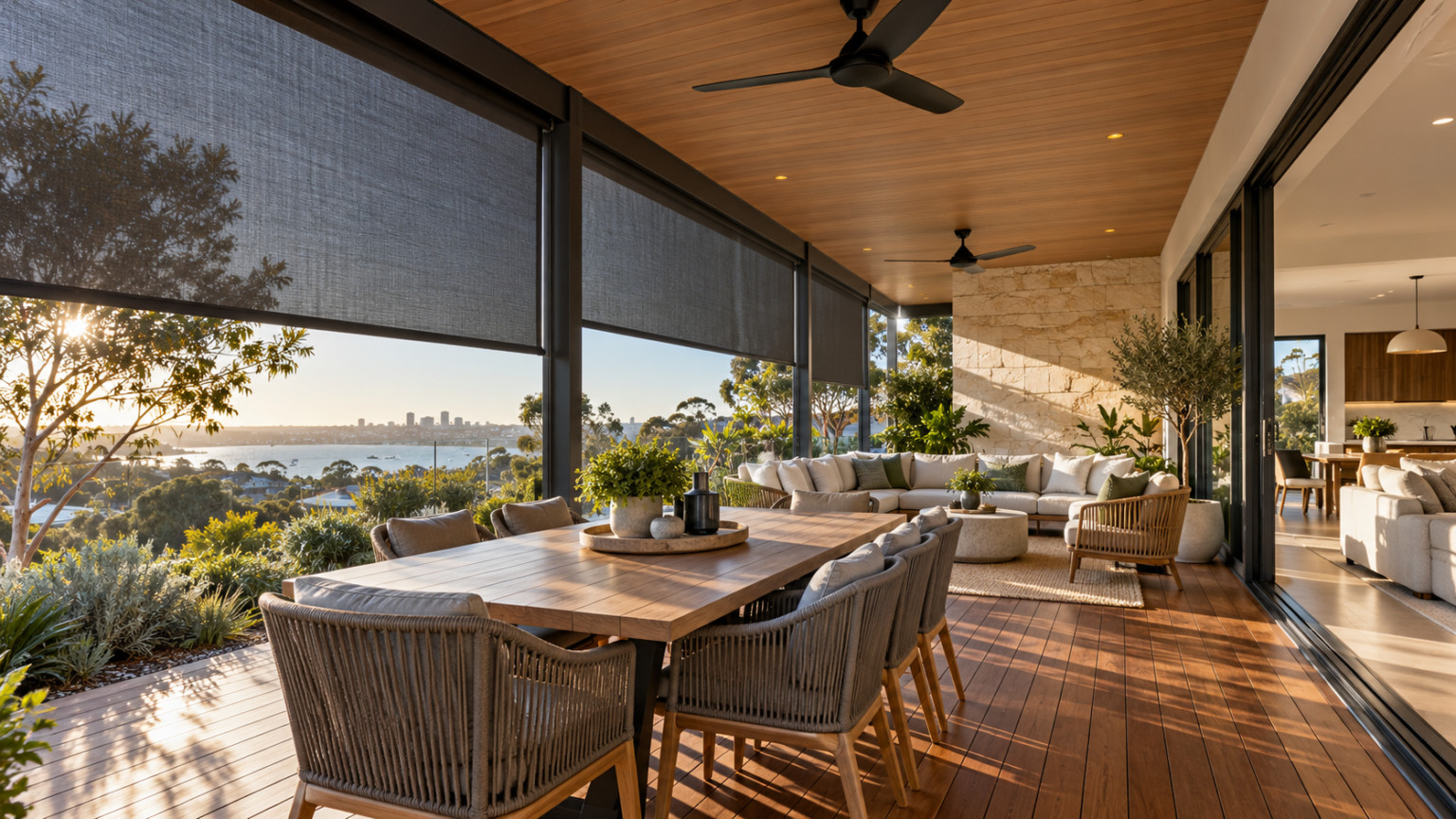
Creating a comfortable outdoor living space is an important consideration for homeowners in Western Australia. With warm summers, strong afternoon sunlight, changing coastal breezes, and seasonal rainfall, patios and alfresco areas benefit from practical weather protection. Installing Outdoor blinds in Perth can help homeowners control sunlight, improve privacy, reduce glare, and make outdoor entertaining areas more comfortable throughout the year.
Modern outdoor blinds are available in different fabrics, colours, operating systems, and designs. Some provide filtered shade while maintaining airflow, while others offer greater protection from wind and rain. Choosing the right option requires understanding your property’s orientation, exposure to weather, and everyday needs.
This guide explains the main types of outdoor blinds, their benefits, installation considerations, maintenance requirements, and practical ways to select a system that suits Perth’s climate.
Why Outdoor Blinds Are Important for Perth Homes
Perth experiences a Mediterranean climate characterised by hot, dry summers and cooler, wetter winters. These seasonal conditions can make uncovered or poorly shaded outdoor spaces uncomfortable at different times of the year.
Outdoor blinds provide adjustable protection without permanently closing off a patio or entertaining area. Homeowners can raise them when conditions are pleasant and lower them when additional shade or privacy is needed.
Protection Against Strong Summer Sunlight
Direct sunlight can quickly make an alfresco area uncomfortable, particularly when it enters from the west during the afternoon.
Quality outdoor shade blinds reduce direct sun exposure and can help limit heat buildup around outdoor furniture and adjacent glass doors.
The amount of heat reduction depends on the material, colour, openness of the fabric, installation position, and ventilation.
Greater Comfort During Windy Conditions
Perth’s well known afternoon sea breeze often brings welcome relief during summer. However, wind can also disrupt outdoor meals, move lightweight furnishings, and make exposed patios less comfortable.
Suitable outdoor blinds can reduce wind entering an entertaining area when operated within their rated limits.
They are not designed to withstand every weather event, so installation quality and manufacturer instructions remain essential.
Improved Privacy in Residential Areas
Homes built close to neighbouring properties may have limited privacy around patios, courtyards, and balconies.
Outdoor privacy blinds create a visual screen while allowing homeowners to retain some connection with their surroundings.
Different fabrics offer varying levels of screening, making privacy an important consideration when choosing a material.
Understanding the Different Types of Outdoor Blinds
Several outdoor blind systems are commonly used in Australian homes. Each offers a different balance of cost, convenience, appearance, and weather protection.
Understanding these differences helps buyers select a practical solution rather than choosing a product based on appearance alone.
Track Guided Outdoor Blinds
Track guided blinds use vertical side channels to hold the blind material in position.
Their design provides a relatively neat finish and limits the movement of fabric compared with some freely hanging systems.
These blinds are particularly useful for covered patios where a controlled opening and closing mechanism is preferred.
Outdoor Roller Blinds
Traditional outdoor roller blinds use a rotating tube to raise and lower the material.
They may be operated manually or with a motor, depending on the product.
Some systems use securing straps or other fittings to hold the lowered blind in place.
Their suitability for exposed locations depends on the design, fixings, fabric, and installation conditions.
Cable Guided Blinds
Cable guided systems use tensioned vertical cables to guide the blind as it moves.
They can suit contemporary outdoor spaces where homeowners prefer a lighter visual appearance.
However, their weather protection and resistance to fabric movement can differ from fully enclosed track systems.
Clear PVC Cafe Blinds
Clear PVC blinds create a transparent screen that can help limit wind driven rain while preserving outdoor views.
They are often considered for sheltered entertaining areas where visibility is important.
Unlike breathable mesh, clear PVC restricts airflow and may allow unwanted heat buildup when exposed to strong sunlight.
Seven Essential Considerations When Choosing Outdoor Blinds in Perth
Selecting the right blind involves more than deciding on a colour or operating mechanism. The following considerations help determine whether an installation will provide lasting practical value.
1. Identify the Main Purpose of Your Outdoor Blinds
Before comparing products, decide what you want your blinds to achieve.
Some homeowners need strong afternoon shade, while others prioritise privacy, weather protection, or maintaining garden views.
A west facing patio may require a different fabric from a sheltered courtyard that receives limited direct sunlight.
Consider how the outdoor area is used throughout the day.
A family dining space may benefit from glare reduction during meals, while an outdoor lounge may require privacy during evening gatherings.
It is also worth identifying whether the blinds will remain lowered for extended periods or be adjusted several times daily.
These considerations influence material choice, operating convenience, and long term maintenance.
2. Choose the Right Fabric for Your Climate and Lifestyle
Fabric selection has a significant influence on performance. Different materials provide different levels of shade, visibility, ventilation, and weather resistance.
Mesh Outdoor Blinds
Mesh is a popular option for outdoor shading because its woven structure can filter sunlight while permitting some airflow.
It is particularly useful where maintaining ventilation is important during Perth’s warm summers.
Mesh is available in various openness levels, colours, and material specifications.
A denser fabric generally provides greater visual screening, although the relationship between openness, privacy, and heat control varies by product.
Clear and Tinted PVC Blinds
PVC materials are designed for situations where limiting wind and rain entry is a priority.
Clear PVC preserves visibility, while tinted options may reduce some glare depending on their specifications.
However, PVC does not provide the same ventilation as open weave mesh.
In sun exposed spaces, enclosed PVC panels can trap warm air, making ventilation planning particularly important.
Acrylic and Other Outdoor Fabrics
Some outdoor blind systems use acrylic or other purpose designed textiles that provide substantial shade and colour options.
These fabrics may be appropriate for areas where visibility through the blind is not a priority.
Water resistance, weather durability, and cleaning requirements should be confirmed for the exact product.
What to Check Before Selecting a Fabric
Request physical samples and review them under natural daylight.
Look for information about UV protection, colourfastness, openness, expected durability, and cleaning instructions.
Do not assume that a fabric described as weather resistant is completely waterproof.
The manufacturer’s technical specifications provide a more reliable basis for comparison than general marketing descriptions.
3. Consider the Blind Operating System
An operating mechanism should be convenient, dependable, and appropriate for the size of the installation.
Manual blinds are commonly selected for residential patios because they offer straightforward operation without electrical components.
Motorised blinds can be more convenient for large openings or installations that are difficult to reach.
They may use wall switches, remote controls, or compatible automation systems.
Manual Operation
Manual systems may have lower initial equipment costs and simpler servicing requirements.
They are often suitable for accessible openings that homeowners can operate comfortably.
Motorised Operation
Motorised systems allow controlled movement without manually lifting the blind.
Some products can connect to compatible home automation equipment or environmental sensors.
However, automation does not eliminate the need for supervision, appropriate maintenance, and safe operation during changing weather.
Where electrical connections are required, installation should comply with applicable Australian electrical requirements.
4. Evaluate Wind Exposure and Structural Strength
Wind resistance deserves particular attention in coastal and exposed Perth properties.
Blinds installed near open landscapes, elevated balconies, or exposed corners may experience different loads from those installed within sheltered courtyards.
The width of the opening, fabric type, fixing method, and strength of the supporting structure all influence performance.
A well designed blind attached to an unsuitable structure may still create safety problems.
Ask the installer about product specific wind performance, mounting requirements, and operating limitations.
Follow the manufacturer’s guidance during windy weather. Some track guided systems permit specific secured positions in ordinary windy conditions, but very strong winds and storms generally require full retraction.
Outdoor blinds should never be treated as storm shutters or structural safety barriers.
5. Measure Your Outdoor Area Carefully
Accurate measurements are essential for smooth operation and an attractive finished appearance.
Even small differences between the top and bottom of an opening can affect installation.
Professional measurements should account for the full opening, available mounting surfaces, surrounding obstacles, and required operating clearances.
Posts, beams, outdoor lighting, power points, and sliding doors can influence the final design.
Large openings may require several individual blinds rather than one continuous panel.
Separating the installation into appropriate sections can also make operation and maintenance more manageable.
Homeowners should discuss the available mounting space before committing to a product, especially when working with existing pergolas or unusual patio structures.
6. Balance Privacy, Visibility, and Ventilation
Outdoor blinds should improve comfort without making the space unnecessarily dark or enclosed.
For example, a tightly woven dark mesh may provide excellent visual screening under certain lighting conditions, but it can also reduce the amount of natural light entering the area.
Lighter materials may create a brighter appearance, although their privacy performance can differ.
Privacy also changes with lighting.
A fabric that limits visibility during daylight may allow people outside to see more clearly into a brightly illuminated patio at night.
Ventilation is another important consideration.
Where airflow is a priority, breathable mesh may be preferable to a continuous PVC screen.
Evaluate the overall comfort of the space rather than considering shade, visibility, and privacy as separate issues.
7. Compare Installation Quality, Warranty, and Long Term Value
A reliable outdoor blind installation depends on both the product and the workmanship.
Professional installers should assess mounting surfaces, recommend suitable fixing methods, and explain the system’s operation.
A detailed quotation should identify the blind system, material, operating mechanism, measurements, installation work, and any additional components.
Ask whether fabric, hardware, motors, and installation workmanship have separate warranty conditions.
Warranty exclusions may apply to particular weather events, misuse, or maintenance issues.
It is also useful to ask about replacement components and repair services.
A slightly higher initial price may offer better value if the selected system has suitable materials, dependable support, and straightforward maintenance.
How Outdoor Blinds Can Improve Alfresco Living
An outdoor entertaining area becomes more practical when homeowners can respond to changing sunlight and weather.
Adjustable blinds help create a flexible space for dining, relaxing, and spending time with family.
Creating a Comfortable Outdoor Dining Area
Sunlight entering directly across a dining table can make afternoon meals uncomfortable.
Outdoor blinds help reduce glare and provide adjustable screening without permanently changing the open character of the patio.
For areas used regularly, easy operation is particularly valuable.
Supporting Indoor Comfort
When direct sunlight enters through adjoining glass doors, nearby indoor spaces may also experience additional heat gain.
Well positioned external shading can reduce solar exposure before it reaches the glazing.
However, any improvement in indoor temperature or cooling demand depends on the home’s orientation, window design, insulation, ventilation, and other factors.
Outdoor blinds should therefore be considered part of a broader approach to passive shading rather than a guaranteed energy saving solution.
Improving the Appearance of Outdoor Spaces
Modern blind systems are available in colours and finishes designed to complement different architectural styles.
Neutral fabric colours can blend with contemporary homes, while darker tones may suit charcoal window frames and modern outdoor furnishings.
Matching the frame finish to existing structural elements can create a consistent appearance.
A carefully selected design should complement the property without unnecessarily obstructing attractive garden or landscape views.
How Much Do Outdoor Blinds Cost in Perth?
The cost of outdoor blinds varies considerably because installations differ in size, material, complexity, and operating system.
There is no single price that accurately represents every residential installation.
Several factors influence a quotation.
Size and Number of Openings
Larger openings generally require more fabric and may need additional structural or operating components.
A patio with several separate openings can also involve more installation work than a simple single blind.
Material and Hardware Quality
Different mesh grades, PVC materials, track systems, and fixing components affect pricing.
A quotation should clearly state which products are included so that comparisons are meaningful.
Manual or Motorised Controls
Motorisation typically increases the initial cost because it adds a motor and associated controls.
Electrical installation, compatible automation accessories, or additional preparation may create further expenses.
Installation Complexity
Difficult access, unusual mounting surfaces, structural modifications, and nonstandard opening shapes can affect labour requirements.
For a useful comparison, request written itemised quotations based on the same opening dimensions and similar product specifications.
The lowest quotation is not necessarily the best value if important installation components or support services are excluded.
Professional Installation and Local Approval Considerations
Professional installation helps ensure that the blind operates smoothly and that its fixings are appropriate for the supporting structure.
An experienced installer should inspect the patio, confirm measurements, explain material choices, and identify any practical limitations.
Checking Existing Structures
Pergolas and patio frames must be capable of supporting the proposed installation and associated loads.
Older structures, lightweight framing, and unusual mounting arrangements may require further assessment.
Blinds should not be attached to damaged or unsuitable surfaces simply because convenient fixing points are available.
Understanding Council and Strata Requirements
Approval requirements depend on the property and the nature of the proposed work.
Some installations may involve planning, building, or local government considerations, especially when structural alterations, public spaces, or significant changes to an existing enclosure are involved.
Apartments, townhouses, and strata managed properties may also have rules covering external appearance and alterations.
Before installation, confirm the relevant requirements with the local council, strata manager, or other appropriate authority.
The requirements for an ordinary residential blind should not be assumed to be identical to those for constructing or enclosing a patio.
Maintaining Outdoor Blinds for Better Longevity
Outdoor blinds are regularly exposed to dust, sunlight, moisture, and airborne debris.
Routine care helps preserve their appearance and operation.
Clean Fabrics Carefully
Use the cleaning methods recommended by the fabric manufacturer.
Many mesh materials can be maintained with gentle cleaning, but PVC may require different approved products and softer handling.
Avoid abrasive brushes, aggressive chemicals, and high pressure washing unless the manufacturer specifically permits them.
Inspect Tracks and Moving Components
Check that tracks remain free of leaves, dirt, and other obstructions.
If a blind becomes difficult to operate, avoid forcing the mechanism.
Unusual movement, friction, or noise may indicate that professional adjustment is necessary.
Manage Moisture and Weather Exposure
Allow wet materials to dry as recommended before storing them in a rolled position for extended periods.
Trapped moisture can contribute to staining or mould under suitable conditions.
During severe weather, retract blinds according to the manufacturer’s instructions and avoid operating them against excessive wind pressure.
Coastal properties may benefit from more frequent inspection of exposed metal components because of salt laden air.
Common Mistakes to Avoid When Buying Outdoor Blinds
Some purchasing decisions can reduce the effectiveness of an otherwise suitable installation.
Choosing a blind purely because it looks attractive may result in insufficient shade, excessive enclosure, or inconvenient operation.
Ignoring the direction of afternoon sunlight can also lead to poor fabric selection.
Other common mistakes include failing to compare material specifications, overlooking mounting strength, choosing an inconvenient operating system, and assuming all fabrics provide the same weather protection.
Homeowners should also avoid treating a blind as a substitute for required pool fencing, child safety barriers, or other protective structures.
Careful planning, realistic expectations, and clear discussions with an installer can prevent many of these problems.
How to Choose a Reliable Outdoor Blind Installer in Perth
Choosing an experienced installation provider is just as important as selecting suitable materials.
A reputable installer should be prepared to explain the available products, assess your outdoor area, and provide clear installation recommendations.
Ask about previous experience with similar patio structures and wind exposed properties.
Review the quotation to understand what is included, who will carry out the installation, and how warranty concerns are handled.
It is helpful to compare physical fabric samples and operating demonstrations before making a final decision.
Homeowners should also confirm expected maintenance requirements, availability of replacement parts, and any conditions that could affect performance.
A supplier who explains product limitations clearly is often more useful than one who promises complete protection against every weather condition.
Frequently Asked Questions
What are the best outdoor blinds for Perth’s climate?
UV resistant mesh blinds are often practical for sunny patios because they provide shade and ventilation. The best choice depends on the property’s orientation, wind exposure, and protection requirements.
Are outdoor blinds suitable for windy areas in Perth?
Some outdoor blinds are designed for exposed conditions, but performance depends on the system, fixings, and installation. Follow the manufacturer’s wind limits and retract blinds during severe weather.
Do outdoor blinds help keep patios cooler?
Yes, suitable outdoor blinds can reduce direct sunlight and glare, which may improve comfort. Actual temperature changes depend on the fabric, ventilation, orientation, and surrounding environment.
Should I choose mesh or PVC outdoor blinds?
Mesh is generally preferable where shade and airflow are priorities. PVC may suit sheltered spaces needing greater wind and rain screening, although ventilation and heat buildup require consideration.
Can outdoor blinds be motorised?
Yes, many outdoor blind systems offer motorised operation. Available controls and automation features vary by manufacturer, and electrical installation requirements depend on the chosen system.
How long do outdoor blinds last in Perth?
Their lifespan depends on material quality, weather exposure, installation, usage, and maintenance. Product warranties and manufacturer care instructions provide a better guide than a universal lifespan estimate.
Conclusion
Outdoor blinds in Perth offer a practical way to improve shade, privacy, and comfort in residential alfresco areas. Choosing the right combination of fabric, operating system, installation method, and weather protection is essential for dependable performance. By considering local climate conditions, comparing product specifications, and following appropriate maintenance practices, homeowners can create an outdoor living space that remains attractive, functional, and enjoyable across different seasons.
