
Robotics research often requires more than simulation. Developers need physical hardware to test algorithms and evaluate how robots perform in real-world conditions. Choosing a suitable robot can be challenging when projects involve different movement, control, and AI requirements.
TRON 1 is a bipedal robot designed for research and development. This article examines its key capabilities, research applications, and expansion options for different experimental needs.
Quick Answer: What Can TRON 1 Do in Robotics Research?
TRON 1 is a bipedal robot designed for robotics research and development. It can help researchers study robotic movement, test control algorithms, and explore applications in reinforcement learning and embodied AI.
What Are the Key Features of the TRON 1 Robot
TRON 1 combines flexible hardware and developer-friendly tools to support different robotics research needs. Its key features make it easier to experiment with movement, develop algorithms, and test robotic functions.
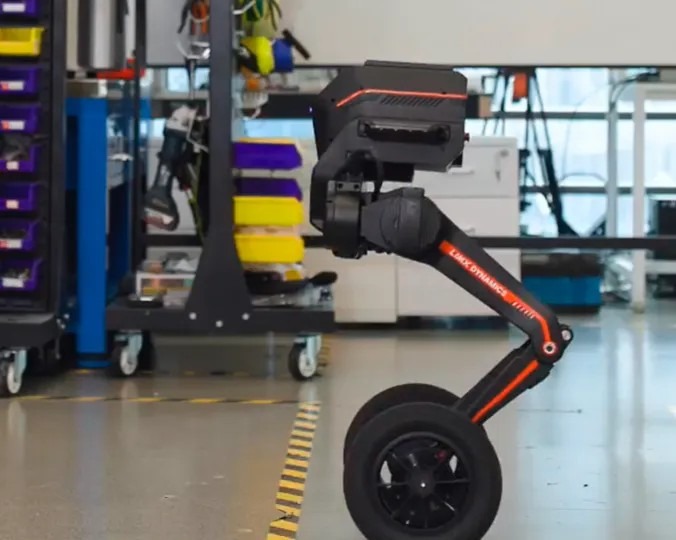
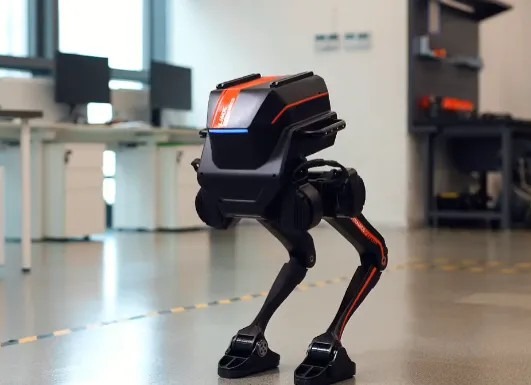
- Three locomotion modes: Supports point-foot, sole, and wheeled configurations, allowing researchers to study different movement patterns.
- Modular hardware design: Features interchangeable components with automatic hardware recognition, making it easier to switch configurations.
- Open development interfaces: Provides an open SDK and hardware interfaces for developing custom control algorithms and robotic applications.
- Python and simulation support: Supports Python development and platforms such as NVIDIA Isaac, MuJoCo, and Gazebo for algorithm testing.
- Expandable hardware: Supports optional robotic arm, voice interaction, and sensor kits for additional research applications.
What Robotics Research Can Be Conducted with TRON 1
These hardware and software capabilities give TRON 1 practical value beyond its specifications, allowing researchers to test ideas on a physical robot across several areas.
Locomotion and Motion-Control Experiments
Researchers can use TRON 1 to examine how a biped robot balances, steps, turns, and adapts to different foot-end configurations. The point-foot and sole modes provide distinct legged setups, while wheeled mode allows movement experiments on a different mobility base. Developers can adjust motion-control parameters and observe how changes affect stability and movement.
Reinforcement Learning and Sim-to-Real Testing
TRON 1 supports reinforcement-learning workflows from simulation to physical testing. Researchers can train and refine policies in environments such as NVIDIA Isaac, MuJoCo, or Gazebo, use the robot’s URDF model to represent its structure, and then deploy Python-based algorithms to the hardware for Sim-to-Real validation. This helps compare simulated results with real robot behavior.
Embodied AI and Human-Robot Interaction
For embodied AI and human-robot interaction projects, TRON 1 can be paired with the optional Voice Interaction Kit, which supports voice wake-up and speech control. Researchers can prototype spoken commands and test how the robot responds in interactive settings. This creates a practical basis for studying voice-driven robot behavior rather than interaction in software alone.
Robotics Education and Algorithm Development
TRON 1 can also serve as a hands-on teaching tool for universities and robotics training programs. Students can use its Python interfaces, SDK, manuals, and code examples to learn how control algorithms connect with physical hardware. They can start with basic movement tasks, then modify and evaluate their own programs on the robot.
How Can TRON 1 Be Expanded for Different Research Needs
Beyond its core research uses, TRON 1 supports optional expansion kits that add manipulation, voice interaction, and environmental sensing capabilities for more specialized experiments.
Robotic Arm Expansion for Manipulation and Whole-Body Control
The optional Arm Expansion Kit adds a robotic arm and gripper to TRON 1, supporting experiments in mobile manipulation, whole-body control, and motion planning. It supports both Arm + Sole and Arm + Wheeled configurations, allowing researchers to study how the arm and mobile base coordinate during object handling and movement.
Voice Kit for Voice Interaction Research
The Voice Interaction Kit adds an NVIDIA NX computing module and a high-fidelity microphone array. It enables voice wake-up and speech control, allowing developers to prototype spoken commands and test voice-driven interaction between people and the robot. This makes it useful for research into natural-language interfaces and interactive robot applications.
Sensor Kit for Mapping, Localization, and Navigation
The Sensor Expansion Kit combines LiDAR with a depth camera to help TRON 1 perceive and navigate its surroundings. It supports 3D mapping, relocalization, navigation, and dynamic obstacle avoidance, giving researchers the hardware needed to test how a mobile robot builds environmental maps, estimates its position, and plans routes in changing environments.
Conclusion
TRON 1 shows how a bipedal robot can support diverse robotics research, from locomotion and motion control to reinforcement learning and embodied AI. Its flexible design makes it suitable for both practical experiments and technical development.
With open development tools and expandable hardware, TRON 1 gives researchers and developers more ways to test algorithms, study robotic behavior, and explore new applications in robotics.
FAQs
What locomotion modes does TRON 1 support?
TRON 1 supports three interchangeable locomotion modes: point-foot, sole, and wheeled. Its modular foot-end design allows users to switch between configurations through quick assembly and disassembly. The robot automatically recognizes the installed hardware and adapts its software, supporting different movement and motion-control experiments.
Can TRON 1 be used for reinforcement learning and Sim-to-Real research?
Yes. TRON 1 supports reinforcement learning and Sim-to-Real development through Python-based programming, comprehensive URDF models, and compatibility with NVIDIA Isaac, MuJoCo, and Gazebo. Researchers can develop and test algorithms in simulation before deploying them on the physical robot to evaluate real-world performance.
What expansion kits are available for TRON 1?
TRON 1 offers three optional expansion kits. The Arm Expansion Kit supports mobile manipulation and whole-body control. The Voice Interaction Kit enables voice wake-up and speech control. The Sensor Expansion Kit combines LiDAR and a depth camera for 3D mapping, relocalization, navigation, and obstacle avoidance.
