
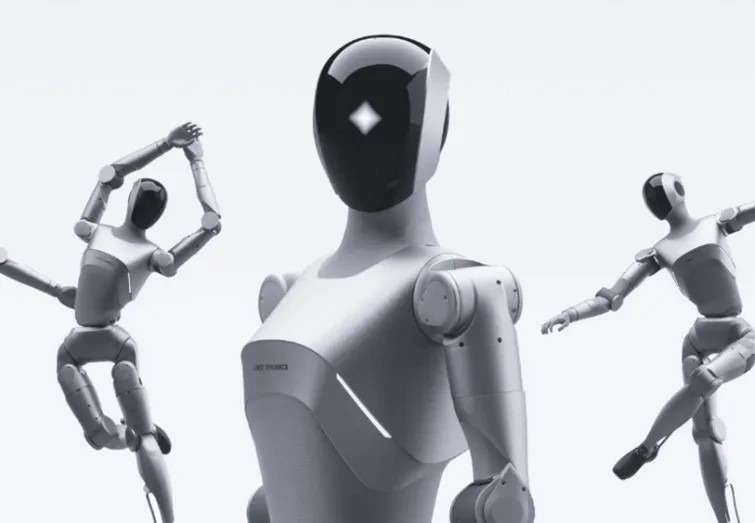
Humanoid robots combine artificial intelligence, advanced sensors, and mechanical systems to perform tasks in human environments. From manufacturing plants to research laboratories, these machines are being developed to handle physical work, interact with people, and adapt to changing surroundings.
However, humanoid robots still face challenges involving mobility, safety, battery life, and cost. This guide explains what humanoid robots are, how they work, their current applications, and the developments that could shape their future.
What Is a Humanoid Robot?
A humanoid robot is a machine designed to resemble the human body in appearance, structure, or movement. Unlike conventional industrial robots, which often perform fixed tasks, humanoid robots aim to operate in environments designed for people.
Definition and Key Characteristics
Humanoid robots typically have a head, torso, arms, and legs, although their designs vary. Some use wheels instead of legs, while others have articulated hands capable of grasping objects.
Their main characteristics include human-like movement, environmental awareness, and interaction with objects or people. Advanced models combine cameras, sensors, and artificial intelligence to navigate surroundings and perform physical tasks.
However, not every humanoid robot can walk independently or make complex decisions. Capabilities depend on mechanical design, control systems, and autonomy.
Humanoid Robots vs. Traditional Robots
Traditional robots often perform specific industrial tasks, such as welding, packaging, or moving materials. They typically operate in controlled environments with precisely programmed movements.
Humanoid robots emphasize flexibility. Their human-like proportions may allow them to use existing tools, navigate workplaces, and interact with equipment designed for people.
However, humanoid designs are not always more efficient. Fixed robotic arms often handle repetitive operations faster, while wheeled robots may transport goods using less energy. Humanoid robots are most useful when adaptability offers clear advantages.
How Does a Humanoid Robot Work?
A humanoid robot combines mechanical components, sensors, and computer-based control systems. These technologies allow it to observe surroundings, process information, and translate decisions into physical movements.
Sensors, Cameras and Environmental Perception
Humanoid robots use sensors to understand their environment and monitor movement. Cameras capture visual information, while depth sensors or LiDAR systems help identify obstacles and estimate distances.
Inertial measurement units (IMUs) track orientation and acceleration to support balance. Joint encoders measure limb positions, while force and tactile sensors provide feedback when gripping objects.
The control system combines these measurements to interpret the environment. For example, a robot carrying a box must recognize its position, adjust its grip, and avoid obstacles while moving.
Artificial Intelligence and Decision-Making
Artificial intelligence helps humanoid robots recognize objects, interpret instructions, and select actions. Machine learning models can support visual recognition, language understanding, and movement planning.
Some robots use vision-language-action models that connect visual observations and spoken instructions with physical actions. Others rely on traditional control algorithms, predefined procedures, or human supervision.
For example, when instructed to pick up an object, a robot may identify its location, choose a suitable grip, and calculate the required movements.
However, unexpected situations remain challenging. Reliable operation requires safeguards, continuous feedback, and coordination between AI planning and motion control.
Motors, Actuators and Human-Like Movement
Humanoid robots move through actuators that control their joints. These commonly combine electric motors, gears, and position sensors, although some designs use hydraulic mechanisms.
Walking requires coordination between the hips, knees, ankles, and upper body. The control system continuously adjusts joint movements to maintain balance.
Robotic hands require precise force control and finger coordination to manipulate objects. Battery systems power these components, making energy-efficient movement essential for extended operation.
What Are Humanoid Robots Used For?
Humanoid robots are being tested in environments where human-like movement and manipulation could be useful. Industrial applications currently offer some of the clearest opportunities, while many personal applications remain experimental.
Manufacturing, Warehousing and Logistics
Manufacturing and logistics are major areas of humanoid robot development. Potential tasks include transporting materials, loading equipment, sorting goods, and moving containers between workstations.
Some companies have demonstrated humanoid robots handling containers in warehouses and loading components on automotive production lines. These applications generally focus on repetitive, clearly defined tasks rather than unrestricted work.
Humanoid robots could help businesses automate selected operations without redesigning entire facilities. However, their commercial value depends on reliability, productivity, maintenance costs, and safety.
Healthcare, Assistance and Service Roles
Researchers are exploring humanoid robots for healthcare support, rehabilitation, and assistance with everyday activities. Potential applications include delivering supplies, supporting physical therapy, and helping with routine service tasks.
Human-like arms and hands may allow robots to interact with existing equipment and household objects. However, working safely around patients requires reliable perception, precise movement, and supervision.
Most advanced physical assistance applications remain experimental. Humanoid robots cannot currently replace trained healthcare professionals or human caregivers.
Research, Education and Everyday Applications
Universities and research laboratories use humanoid robots to study AI, walking, balance, manipulation, and human-robot interaction.
Educational institutions also use smaller humanoid platforms to teach programming, electronics, and robotics principles.
Other proposed applications include reception services, domestic assistance, and public-facing tasks. While demonstrations show improving capabilities, widespread everyday deployment remains limited by cost, reliability, and environmental complexity.
Benefits and Challenges of Humanoid Robots
Humanoid robots could automate physical tasks in environments designed for people. However, their potential advantages must be balanced against technical and economic limitations.
Main Advantages of Humanoid Robots
A major advantage is compatibility with human environments. Humanoid robots may use existing stairs, doors, workstations, and tools without extensive infrastructure changes.
Their combination of mobility and manipulation could also support different tasks throughout the day. Instead of performing one fixed operation, a capable robot could move between activities.
Humanoid robots may eventually reduce human exposure to hazardous or physically demanding work and help businesses address labor shortages. However, these benefits require reliable performance under real operating conditions.
Current Limitations in Cost, Safety and Battery Life
Humanoid robots remain expensive because they require sophisticated actuators, sensors, processors, and mechanical components.
Battery life presents another challenge. Walking, lifting, and balancing consume energy, limiting operating time before recharging.
Safety is equally important. Robots working near people must detect obstacles, control movements accurately, and respond to unexpected events.
Other limitations include restricted dexterity, inconsistent performance in unfamiliar environments, and maintenance requirements. These challenges explain why many applications remain in pilot programs rather than widespread deployment.
What Is the Future of Humanoid Robots?
The future of humanoid robots depends on improvements in artificial intelligence, mechanical efficiency, battery technology, and manufacturing costs.
Advances in perception and machine learning could help robots adapt to unfamiliar objects and complete more complex tasks. Better actuators and energy-efficient movement may extend operating time, while larger production volumes could lower hardware costs.
Industrial environments will likely remain important early markets because they offer predictable tasks and measurable productivity benefits.
Over time, humanoid robots may expand into healthcare, public services, and homes. However, widespread adoption will require dependable autonomy, stronger safety measures, and clear economic advantages.
Conclusion
Humanoid robots combine artificial intelligence, sensors, and mechanical systems to perform human-like movements and physical tasks. Their applications are expanding in manufacturing, logistics, and research, although cost, safety, and technical limitations continue to restrict widespread deployment.
As AI, actuators, and battery technology improve, humanoid robots could become more practical in everyday environments. Their long-term success will depend on completing useful tasks safely, reliably, and efficiently rather than simply replicating human appearance or movement.
