
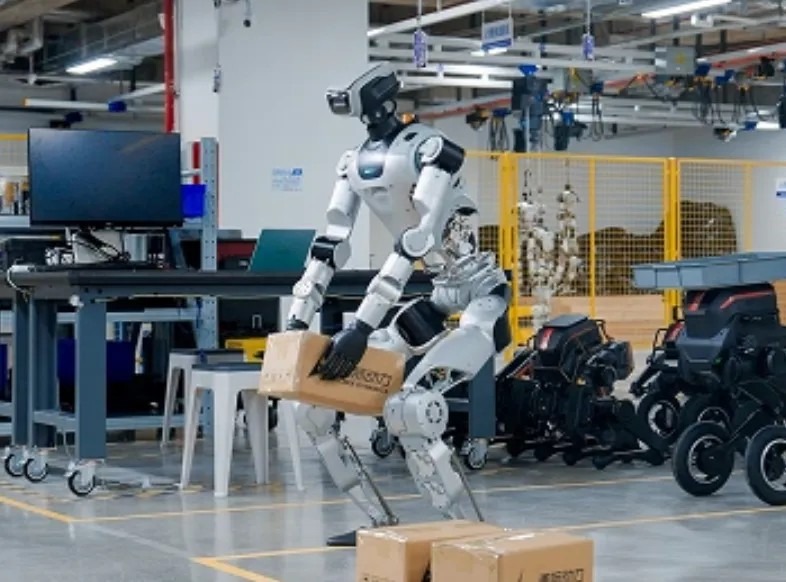
Humanoid robots are moving beyond research laboratories and entering real-world working environments. With human-like movement, artificial intelligence, and increasingly sophisticated robotic hands, they could perform physical tasks across industries that traditionally rely on human workers.
From manufacturing and logistics to healthcare and agriculture, these machines offer opportunities to automate repetitive work and improve workplace safety. This article explores seven industries that could benefit from humanoid robots in 2026, their potential applications, and the challenges businesses must overcome before adopting them.
1. Manufacturing and Industrial Production
Manufacturing is one of the most promising industries for humanoid robots because factories contain repetitive physical tasks and equipment designed for human workers.
Automated Assembly and Material Handling
Humanoid robots could assist with assembling components, moving materials, and loading production equipment. Their human-like arms and hands allow them to interact with tools and workstations without requiring extensive changes to existing facilities. They may also move between different workstations as production requirements change, offering flexibility compared with machines designed for a single operation.
Repetitive and Hazardous Factory Tasks
Factories often involve repetitive movements, heavy lifting, and exposure to potentially dangerous equipment. The humanoid robot could take over selected tasks in these environments, reducing workers’ exposure to physical risks. They may also operate in areas that are uncomfortable or unsuitable for people, provided their sensors and safety systems can handle the conditions reliably.
2. Warehousing and Logistics
Warehouses require continuous material movement, sorting, and inventory handling. Humanoid robots could support these operations by performing tasks that currently require workers to move between shelves, containers, and conveyor systems.
Picking, Packing, and Sorting Goods
Humanoid robots equipped with cameras and robotic hands could identify products, pick up packages, and place items into designated containers. Their ability to reach different heights and manipulate objects may help them work with existing warehouse layouts. However, handling fragile, irregularly shaped, or unfamiliar products remains technically challenging.
Moving Materials and Managing Inventory
Robots could transport containers, move supplies between workstations, and assist with inventory operations. Combined with warehouse management software, they may help businesses track materials and reduce manual handling. Their usefulness will depend on navigation accuracy, battery life, and the ability to operate safely alongside workers and other automated equipment.
3. Healthcare and Elderly Care
Healthcare facilities face growing demands for patient support, routine services, and physical assistance. Humanoid robots could help with selected tasks, although their use around patients requires particularly high safety and reliability standards.
Patient Assistance and Routine Support
Humanoid robots may eventually assist with simple activities such as retrieving objects, delivering personal items, and helping patients access everyday equipment. Their human-like design could make interaction more natural in certain situations. However, tasks involving physical contact, mobility assistance, or medical decisions require careful supervision and should not be treated as replacements for trained healthcare professionals.
Hospital Logistics and Medical Supply Delivery
Hospitals regularly move medicines, supplies, equipment, and other materials between departments. Humanoid robots could help transport lightweight items and perform routine delivery tasks. By reducing time spent on internal logistics, they may allow healthcare workers to focus more on patient care. Reliable navigation and secure handling would be essential in busy clinical environments.
4. Construction and Infrastructure
Construction sites involve physical work, heavy materials, changing environments, and potential safety hazards. Humanoid robots could eventually assist with selected activities where their mobility and ability to use human-oriented tools provide an advantage.
Material Transportation and Site Assistance
Humanoid robots could carry tools, move smaller materials, and transport supplies between designated work areas. Their ability to navigate human-designed spaces may make them useful on sites with stairs, doors, and existing equipment. However, payload capacity and battery limitations currently restrict the amount of physical work they can perform.
Working in Hazardous Environments
Construction workers may encounter unstable structures, high temperatures, dust, and dangerous machinery. Humanoid robots could perform certain inspections or material-handling tasks in areas that pose risks to people. Specialized sensors and protective hardware would be necessary, as ordinary humanoid platforms are not automatically suitable for harsh industrial environments.
5. Agriculture and Food Production
Agriculture and food processing involve repetitive physical tasks, changing working conditions, and seasonal labor demands. Humanoid robots could provide additional automation where human-like manipulation is useful.
Crop Handling and Agricultural Tasks
Humanoid robots may eventually assist with harvesting, carrying produce, sorting crops, and handling agricultural equipment. Their hands could manipulate individual items more flexibly than some fixed automation systems. However, outdoor conditions, uneven ground, delicate crops, and unpredictable weather make agricultural applications particularly challenging.
Food Processing and Packaging
Food production facilities require consistent sorting, packaging, and handling. Humanoid robots could assist with moving ingredients, arranging products, and transferring packages between processing stages. Their adoption would require suitable hygiene standards, washable or protected components, and precise handling to prevent product damage or contamination.
6. Retail and Hospitality
Retail stores, hotels, and restaurants involve customer interaction alongside repetitive operational work. Humanoid robots could support selected services while allowing employees to focus on more complex customer needs.
Inventory Management and Shelf Replenishment
Humanoid robots could help check shelves, identify missing products, and move stock from storage areas to display locations. Their ability to reach different shelf heights may be useful in stores designed for human employees. Accurate object recognition and safe movement through crowded aisles would remain essential.
Customer Assistance and Service Tasks
In hotels and retail environments, humanoid robots could greet visitors, provide basic information, and guide customers to specific locations. Some may also transport lightweight items or support routine service operations. However, human employees remain better suited to handling complex requests, complaints, and situations requiring judgment or empathy.
7. Education and Research
Education and scientific research offer important opportunities for humanoid robotics because these environments require experimentation, programming, and interaction with people.
Robotics Education and Programming
Humanoid robots can serve as practical learning platforms for students studying programming, electronics, artificial intelligence, and mechanical engineering. Students can experiment with movement control, sensor integration, and object recognition while observing how software affects physical behavior. These activities help connect theoretical concepts with real engineering challenges.
Scientific Research and Human-Robot Interaction
Researchers use humanoid robots to investigate balance, walking, manipulation, perception, and human-robot interaction. Their human-like structure provides a useful platform for studying how machines can operate in environments designed for people. Research in these areas may also contribute to improvements in assistive robotics and autonomous systems.
What Challenges Could Limit Humanoid Robot Adoption?
Despite their potential, humanoid robots are not suitable for every industry or task. Their commercial value depends on whether they can perform useful work reliably and economically.
Cost, Reliability, and Battery Life
Advanced actuators, sensors, processors, and robotic hands make humanoid robots expensive to develop and maintain. Battery limitations can also restrict operating hours, particularly during walking and heavy physical work. Businesses must consider charging time, repairs, software integration, and human supervision when calculating the total cost of ownership.
Safety, Adaptability, and Human Supervision
Humanoid robots must recognize obstacles, control their movements, and respond safely when people enter their working area. They can also struggle with unfamiliar objects and unexpected situations. Until their reliability improves, many applications will require human supervision, especially in healthcare, construction, and other environments where mistakes could cause serious harm.
Conclusion
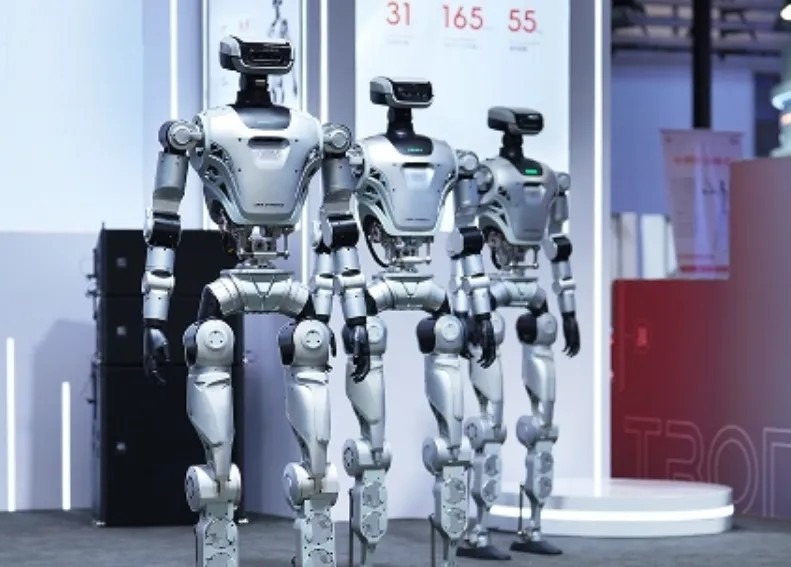
Humanoid robots could benefit manufacturing, logistics, healthcare, construction, agriculture, retail, and education by automating selected physical tasks. Their human-like movement and ability to interact with existing equipment offer opportunities that traditional automation may not always provide.
However, widespread adoption will depend on improvements in AI, battery life, safety, and operating costs. For now, structured environments with repetitive tasks offer the most practical opportunities for humanoid robot deployment.
