
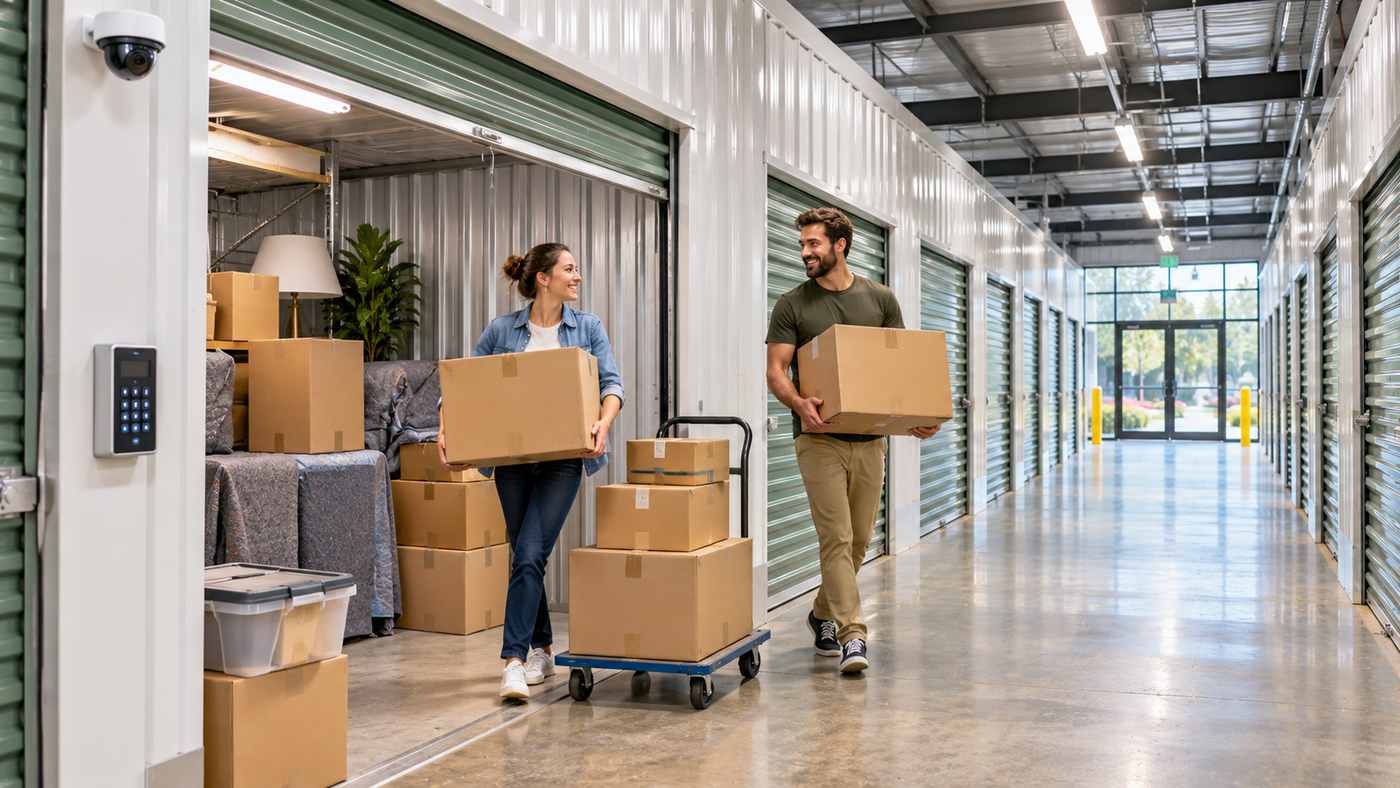
Finding extra space for your belongings can make moving, renovating, downsizing, or managing a growing business much easier. However, selecting a storage unit involves more than finding an affordable monthly rate. You also need to consider security, temperature conditions, accessibility, insurance, and how well the facility protects your belongings.
Choosing a trusted storage facility helps you store household items, furniture, important documents, and business supplies with greater confidence. The right facility should offer a combination of suitable storage options, transparent rental terms, convenient access, and practical security measures.
For residents and businesses in Georgia, climate-controlled indoor storage can be particularly useful because of the region’s warm, humid weather.
This guide explains seven essential factors to evaluate before renting a storage unit, along with packing advice, cost considerations, and an example of a self-storage facility serving LaGrange and the surrounding Troup County area.
Why Choosing a Trusted Storage Facility Matters
A storage facility temporarily becomes an extension of your home or business. The items you place inside may include expensive furniture, seasonal equipment, family keepsakes, or important records.
Poor storage conditions can contribute to moisture problems, deterioration, pest exposure, or unnecessary handling damage.
Security weaknesses may also create risks involving unauthorized access or theft.
A dependable facility should take reasonable steps to address these issues while explaining what protections are included and which responsibilities remain with the renter.
What Makes a Storage Facility Trustworthy?
Several characteristics are worth looking for:
- Controlled access to the property or storage buildings
- Security cameras and appropriate lighting
- Clean and properly maintained storage areas
- Clear rental agreements and payment policies
- Suitable climate-control options
- Convenient operating and access hours
- Helpful customer support
- Transparent information about insurance or protection plans
No facility can guarantee that belongings will never be damaged, but well-managed storage conditions can help reduce avoidable risks.
Understanding Different Types of Self-Storage Units
Before comparing rental options, identify the type of storage that best matches your belongings.
Standard Storage Units
Standard units provide enclosed space without necessarily maintaining controlled temperature or humidity conditions.
They are commonly used for items that can tolerate changing environmental conditions.
Availability and suitability depend on the facility and local weather.
Climate-Controlled Storage Units
Climate-controlled units are intended to maintain more consistent indoor conditions.
These spaces may be useful for wooden furniture, documents, clothing, photographs, and other items that could be affected by excessive heat or moisture.
However, the exact temperature and humidity management capabilities vary.
Ask the operator what conditions are maintained and whether humidity is specifically controlled.
Indoor and Drive-Up Storage
Indoor storage is accessed through a building or shared corridor.
Drive-up units allow vehicles to approach the storage door directly.
Drive-up access can be convenient for frequent loading, while indoor units may provide additional separation from outdoor weather conditions.
Neither arrangement is automatically better. Your choice depends on the items being stored and how often you need access.
7 Smart Tips for Choosing a Trusted Storage Facility
1. Evaluate the Facility’s Security Features
Security should be one of your first considerations.
Look for controlled entrances, functioning surveillance cameras, appropriate lighting, and reliable locking arrangements.
Some properties use personalized gate codes to restrict access.
Others provide individually secured units or monitored buildings.
Ask whether the facility has documented procedures for responding to security incidents, fires, or other emergencies.
Also inspect the condition of doors, locks, hallways, and access points.
A well-maintained property may demonstrate attention to daily operations, although appearance alone does not establish security.
The Insurance Information Institute recommends evaluating controlled access and surveillance features when selecting a self-storage facility.
2. Consider Climate-Controlled Storage for Sensitive Belongings
Heat and humidity can affect certain stored materials.
Wood may expand or contract with changes in environmental conditions. Paper records can deteriorate when exposed to excessive moisture, while upholstery and clothing may develop unwanted odors if stored improperly.
In Georgia, temperature and humidity conditions make storage environment an important consideration.
Climate-controlled indoor units can help reduce exposure to extreme conditions compared with some conventional storage arrangements.
However, climate control does not eliminate every environmental risk.
Items should be clean and dry before storage, and appropriate containers should be used.
Ask the facility about its environmental monitoring practices rather than assuming that every climate-controlled unit maintains identical conditions.
3. Choose the Correct Storage Unit Size
Renting too much space can increase monthly costs.
Choosing a unit that is too small may force you to stack belongings unsafely or make important items difficult to reach.
Start by creating an inventory.
Include furniture dimensions, boxes, appliances, and any equipment you intend to store.
Consider whether you need a pathway to access belongings during the rental period.
For general planning, common unit sizes include:
| Approximate Size | Typical Storage Uses |
|---|---|
| 5 × 5 ft | Boxes, seasonal decorations, small household items |
| 5 × 10 ft | Small furniture, boxes, compact apartment overflow |
| 10 × 10 ft | Contents of some small apartments, depending on furnishings |
| 10 × 20 ft | Larger household storage or substantial business supplies |
These descriptions are illustrative. Actual capacity depends on ceiling height, item dimensions, stacking, and safe access requirements.
For unusual furniture or equipment, request measurements rather than relying entirely on size labels.
4. Review Access Hours and Location
A conveniently located facility can save time and transportation expenses.
This matters particularly when moving several loads or accessing business materials regularly.
Consider the distance from your home, workplace, or intended moving destination.
Review the difference between customer access hours and staffed office hours.
Some storage businesses allow renters to enter the property outside office hours using an authorized access code.
However, employees may not be available during every permitted access period.
If you anticipate frequent visits, choose a location with access arrangements suited to your schedule.
5. Compare Rental Costs and Contract Terms
The lowest advertised monthly rate is not necessarily the lowest overall cost.
Ask for a written explanation of all applicable charges.
These may include administrative fees, locks, required or optional protection coverage, and other services.
Review whether promotional pricing is temporary.
You should also ask whether monthly rates can change, how much advance notice is provided, and what happens if a payment is late.
Month-to-month contracts can provide flexibility for temporary storage needs.
However, flexible contracts do not necessarily guarantee an unchanged rate.
Read the rental agreement before signing and retain a copy for future reference.
6. Check Cleanliness and Maintenance
A storage facility should have clean, accessible common areas and properly functioning doors.
When visiting, look for signs of water intrusion, visible mold, significant pest activity, damaged walls, or poorly maintained equipment.
Ask about cleaning procedures, pest management, and how maintenance issues are reported.
Inspect your individual unit before moving anything inside.
Document any existing damage or concerns and notify the operator.
A clean environment cannot guarantee perfect preservation, but regular maintenance is an important part of responsible storage management.
7. Review Customer Service and Insurance Options
Reliable customer support is especially useful during a move or unexpected problem.
Check whether staff can explain unit sizes, rental conditions, access procedures, and billing policies.
Read recent independent reviews, paying attention to repeated experiences rather than relying on one unusually positive or negative comment.
Insurance deserves separate consideration.
Some homeowners or renters insurance policies provide limited off-premises coverage, but conditions and exclusions vary.
Facility protection plans are not necessarily equivalent to conventional insurance.
Ask what coverage is required, what events are included, and how claims are handled.
LaGrange Climate Storage: A Local Storage Example in Georgia
For people comparing options in Troup County, a trusted storage facility is one that provides clear information about its units, access procedures, rental flexibility, and security features.
LaGrange Climate Storage, located at 110 Commerce Avenue, LaGrange, GA 30241, is an example of a facility focused on indoor climate-controlled storage.
According to its official website, the Commerce Avenue location offers units ranging from approximately 25 to 375 square feet.
The facility advertises ground-floor access, code-controlled gate entry, security cameras, moving supplies, and the availability of moving dollies.
Its listed customer access hours are 6:00 AM to 10:00 PM daily, with separate staffed office hours.
Climate-Controlled Storage for Household Belongings
Indoor storage may be practical for people storing wooden furniture, clothing, seasonal belongings, books, or photographs.
The facility’s storage options are designed for people who prefer an indoor environment rather than conventional outdoor-access units.
Customers should confirm the available sizes and environmental controls before renting.
Storage During Moving and Relocation
A temporary storage unit can help when a lease ends before the next home becomes available.
It can also provide additional space during remodeling, downsizing, or household transitions.
For people moving to LaGrange, a centrally located storage facility may reduce unnecessary trips.
Storage for Students and Local Businesses
Students may need short-term storage between academic terms.
Local businesses may need space for documents, promotional materials, equipment, or seasonal inventory.
The facility advertises month-to-month rental arrangements, which may suit temporary or changing requirements.
Current availability, pricing, promotions, and rental conditions should always be confirmed directly.
How to Pack and Organize a Storage Unit Properly
Choosing a suitable facility is only part of protecting your belongings.
The way items are packed and arranged also matters.
Use Durable Containers
Choose sturdy cardboard boxes or suitable plastic storage containers.
Avoid overloading boxes beyond their intended weight capacity.
Heavy items should generally be placed at the bottom, with lighter belongings above them.
Use appropriate protective materials for fragile items.
Label Everything Clearly
Label boxes by contents and destination room.
For example, kitchen equipment, office documents, and seasonal decorations can be grouped separately.
A simple inventory spreadsheet can help you locate items without opening every container.
Avoid writing unnecessarily sensitive information on visible labels.
Protect Furniture and Electronics
Clean and thoroughly dry furniture before storage.
Use breathable coverings where appropriate and follow manufacturer recommendations for delicate materials.
For electronics, remove batteries when suitable, protect cables, and use appropriate packaging.
Important files should be backed up separately rather than relying on a single stored device.
Keep an Access Pathway
If you plan to retrieve items regularly, leave sufficient space to move safely through the unit.
Store frequently used belongings near the entrance.
Avoid unstable stacks, blocked exits, or arrangements that could create falling-object hazards.
What Should You Avoid Keeping in Storage?
Many facilities restrict hazardous, illegal, perishable, or otherwise unsuitable materials.
Commonly prohibited items may include flammable liquids, certain chemicals, explosives, and food likely to spoil or attract pests.
Living animals and human occupancy are not appropriate uses of ordinary self-storage units.
Restrictions vary by facility, so read the rental agreement carefully.
Ask the operator before storing unusual equipment, valuable collections, or materials with special environmental requirements.
Essential documents, medications, and irreplaceable possessions may be better kept in a more immediately accessible or specialized location.
Understanding Storage Insurance and Protection Plans
A common mistake is assuming that the facility automatically insures everything inside a rented unit.
That is not always the case.
The Insurance Information Institute explains that some homeowners and renters policies provide coverage for belongings stored away from the residence, subject to specific limits and exclusions.
Separate coverage may be necessary depending on the value and type of property.
Before renting, confirm the following:
- Whether coverage is required by the facility
- Whether your existing policy applies to stored property
- Which damage or theft events are covered
- The applicable deductible and coverage limits
- How claims must be reported
Keep photographs and an inventory of valuable stored items.
These records may be useful if damage or loss occurs.
How Much Does Renting a Storage Facility Cost?
Storage costs vary by location, available space, climate control, contract terms, and local demand.
A small indoor unit generally has different pricing from a large unit designed to hold substantial household furniture.
Facilities may also offer promotional introductory rates.
Before selecting a unit, calculate the cost for your expected rental period.
For example, a temporary moving arrangement may last two months, while business storage could continue much longer.
Longer rental periods make future price changes and recurring charges especially important.
Instead of evaluating the advertised monthly rate alone, compare the total expected expense.
Also consider the cost of transportation, packing supplies, locks, and suitable protection coverage.
When Is Renting Storage Worth It?
Storage can be useful when it solves a genuine space or timing problem.
During a move, it may provide flexibility between closing or lease dates.
For homeowners, it can free space during renovations or seasonal organization.
Businesses may benefit from storing records or supplies without expanding their primary premises.
However, ongoing storage costs can eventually exceed the value of keeping unused items.
Review your belongings periodically and determine whether continued storage remains worthwhile.
A trusted facility should make those decisions easier through transparent terms and accessible customer support.
Frequently Asked Questions
1. What should I look for in a trusted storage facility?
Look for controlled access, security cameras, clean units, suitable climate-control options, transparent pricing, flexible rental terms, and helpful customer support.
2. Is climate-controlled storage worth the extra cost?
It may be worthwhile for temperature- or humidity-sensitive belongings, such as wooden furniture, photographs, documents, and certain electronics. The benefits depend on storage conditions and item requirements.
3. Can I rent a storage unit for only one month?
Many facilities offer month-to-month rentals. However, minimum charges, cancellation notice requirements, and other terms depend on the individual rental agreement.
4. Does a storage facility insure my belongings?
Not necessarily. Some facilities offer protection plans, while certain homeowners or renters policies provide limited off-premises coverage. Confirm the actual coverage and exclusions before renting.
Conclusion
Choosing a trusted storage facility requires careful consideration of security, climate control, storage space, accessibility, and rental costs.
The right facility should provide suitable conditions for your belongings while clearly explaining its services and customer responsibilities.
For residents and businesses in LaGrange, Georgia, indoor storage options such as LaGrange Climate Storage illustrate the features worth evaluating.
By comparing facilities carefully and packing belongings properly, you can make storage more convenient, organized, and dependable.
