
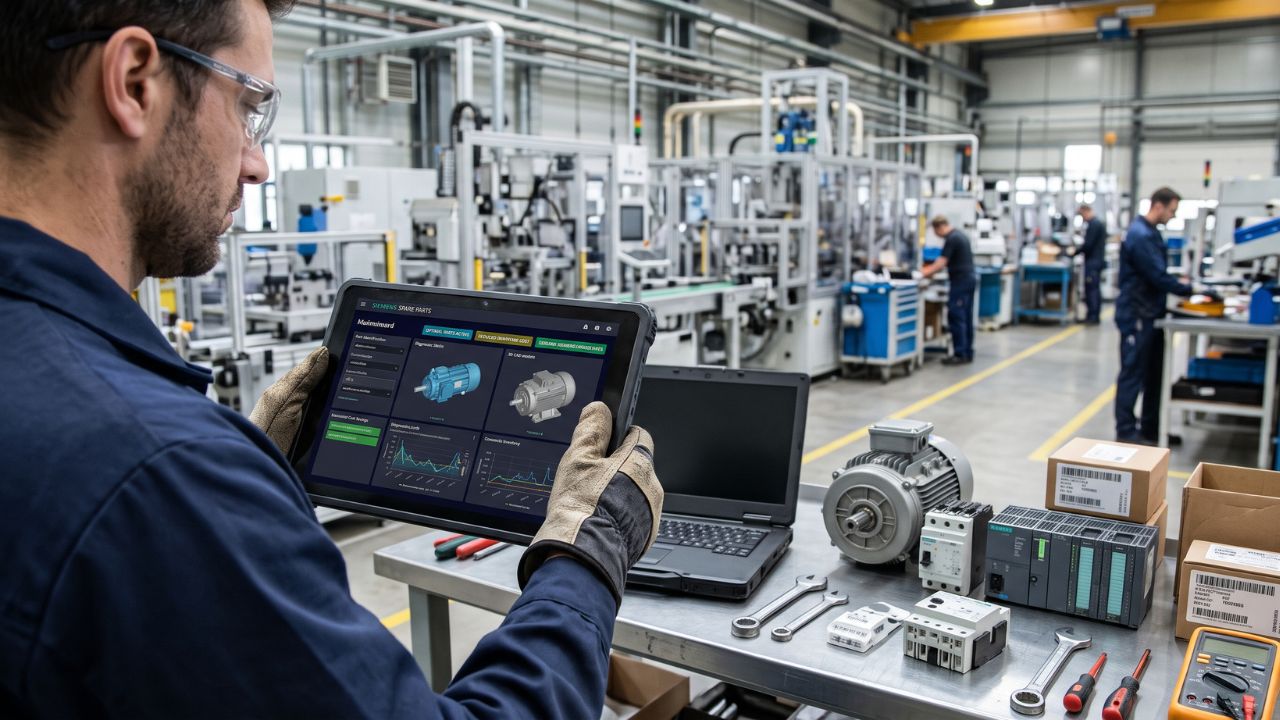
Midway through the production shift everything seems to be running smoothly. The machines are running and workers are busily working away. Suddenly a key automation part breaks down. Within minutes the maintenance staff identify what the problem is, however, they have no replacement parts.
Now the clock is ticking. Production is interrupted, delivery schedules are under pressure, and someone is making increasingly desperate calls to suppliers. A small component. A surprisingly large expense.
Scenarios such as these are why it is so important for an industrial business to have access to quality Siemens spares. Having the right stock control system in place will help reduce any downtime and avoid replacing equipment unnecessarily. However, it is not simply a case of buying spares. Smart planning is needed.
1. Don’t Let a Missing Component Shut Down Production
Unplanned downtime can be one of the biggest costs in your industrial operations. Every hour lost whilst waiting for a replacement part can impact productivity, workforce efficiency and delivery schedules.
Having critical Siemens spares on hand will help your maintenance team by providing ready access to the correct spare parts. This is especially helpful if you have Siemens PLCs, industrial drives, power supplies or communication modules.
You’ll want to identify critical parts. Parts that are critical to production, commonly fail or take a long time to source. There’s little reason to stock every component imaginable. But having no replacement for a critical module? That’s a different kind of budgeting problem.
2. Replace the Faulty Part, Not the Entire System
Here’s a question worth asking whenever equipment develops a fault: does the entire system really need replacing? Most of the time you won’t have to!
You may be able to simply replace your broken Siemens I/O Module with a compatible part. This helps businesses save money by not having to upgrade their whole PLC system. This is particularly useful if a facility has an existing automation system that is still meeting their production needs.
It is important to ensure that you have the correct compatibility. Make sure you check that the model number, hardware revision, electrical specifications and system requirements are correct. Similar-looking components aren’t necessarily interchangeable. Discovering that after placing an order is an avoidable headache.
3. Make Preventive Maintenance Actually Work
Preventive maintenance is supposed to stop small problems from becoming expensive failures. But there’s a practical limitation: identifying a component that needs replacing doesn’t help much if the replacement isn’t available.
Keeping the correct amount of Siemens spares on-hand will help reduce downtime by ensuring that you have what you need for your planned maintenance. It will help you schedule your maintenance around your production. You can also learn a lot from your maintenance history.
If you are having the same part fail regularly then it is worth looking into. Maybe the part is overheating, there are voltage issues, it is getting dirty or installed incorrectly. Constantly replacing the part doesn’t sound like a sustainable solution. Sometimes you can save the most money by fixing the cause of the part failing.
4. Avoid Turning Your Storeroom Into an Expensive Museum
Having replacement components available is sensible. Accumulating shelves of expensive parts that nobody uses is not. Too much stock will tie up working capital, take up valuable space and increase the risk of obsolete parts.
A better option would be to categorise spares based upon how critical they are to your system, how frequently they fail, how long it takes to replace them and how much they cost.
Some critical Siemens components which are difficult to get hold of may make sense to have extra stock on hand. However, less critical parts which can easily be sourced may be better to order as and when needed.
Having regular stock reviews can help businesses identify what they have in stock which isn’t being used and helps to ensure they are buying the right things based upon equipment requirements.
5. Know Where to Turn When Parts Are Hard to Find
Even the best prepared maintenance teams will occasionally face issues with sourcing parts. Older systems will often have issues due to some parts being discontinued by the manufacturer.
Having an industrial automation supplier is useful. Classic Automation could be a great choice for businesses looking into parts and repairs for their industrial automation. They offer a range of products.
Before purchasing, ensure that the parts are available, compatible and in good condition. As well as checking if they come with a warranty. This will help avoid any costly mistakes.
Spend Less Time Fighting Breakdowns
Reducing industrial maintenance costs isn’t simply about finding cheaper replacement components. It’s about preventing unnecessary downtime, extending equipment service life, and avoiding emergency purchasing whenever possible.
With a sensible inventory strategy, access to reliable Siemens spare parts, and consistent preventive maintenance, industrial businesses can make equipment management more predictable.
Machines will eventually fail. That’s part of running an industrial operation. But allowing one missing component to bring an entire production line to a standstill? That’s a problem worth planning around.
