
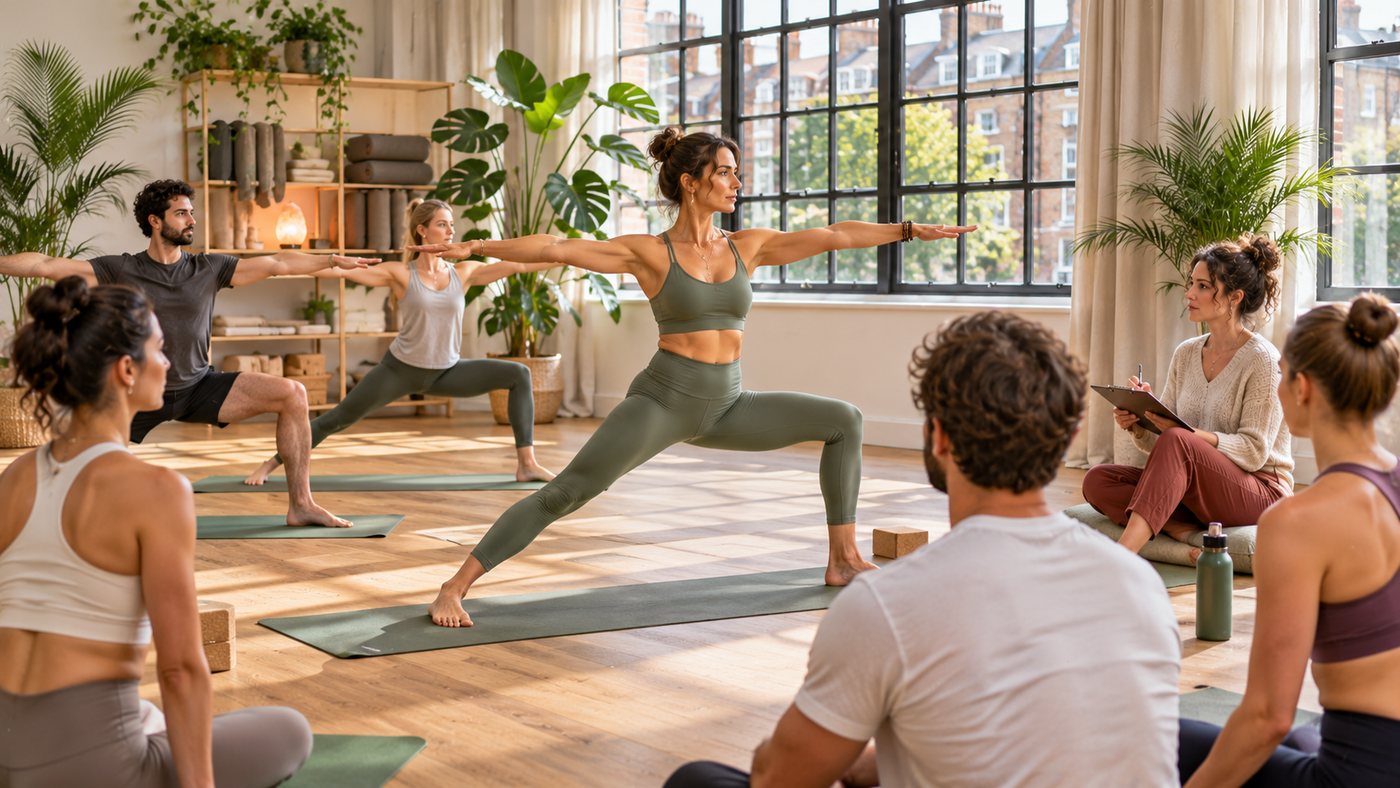
Yoga has become an important part of many people’s fitness, wellbeing, and personal development routines. From gentle stretching and mindful breathing to dynamic movement and meditation, different yoga traditions offer opportunities to develop physical awareness, concentration, and a deeper understanding of the practice.
For people who have developed a genuine interest in yoga, becoming an instructor may be a rewarding next step.
Professional yoga teacher training provides structured education in movement, anatomy, breathing techniques, philosophy, class planning, and teaching methods. It also creates opportunities to practise guiding others under the supervision of experienced instructors.
However, choosing a suitable training programme requires careful research. Courses differ in teaching style, accreditation, study format, assessment requirements, costs, and the support offered after graduation.
In the United Kingdom, aspiring instructors can explore weekend courses, residential programmes, hybrid learning, and fully online training. Each option offers different advantages depending on personal commitments and preferred learning methods.
This guide explores seven essential steps for choosing a 200-hour yoga instructor course, understanding certification, building teaching confidence, and preparing for professional opportunities.
What Is Yoga Teacher Training?
Yoga teacher training is a structured educational programme designed to help participants develop the knowledge and practical skills required to teach yoga responsibly.
A comprehensive course goes beyond performing physical postures.
It introduces the principles behind yoga practice, how the body moves, how to communicate instructions clearly, and how to adapt sessions for students with different needs.
Training also helps aspiring teachers develop their personal approach to creating classes.
What Is a 200-Hour Yoga Teacher Training Course?
A 200-hour programme is a widely recognised foundation for aspiring yoga instructors.
It generally covers physical techniques, teaching methodology, anatomy, philosophy, ethics, and supervised teaching practice.
Yoga Alliance establishes educational standards for registered 200-hour yoga schools.
Its core curriculum covers four broad categories:
- Techniques, Training and Practice
- Anatomy and Physiology
- Yoga Humanities
- Professional Essentials
These areas help trainees understand both the practical and professional responsibilities of teaching.
Is 200 Hours Enough to Become a Yoga Teacher?
A well-designed 200-hour course can provide foundational teaching knowledge.
However, completing the required hours does not automatically make someone experienced in every yoga style or suitable for teaching students with complex medical needs.
Teaching confidence develops through continued study, supervised practice, feedback, and experience.
Graduates should continue learning after completing their initial qualification.
1. Understand Your Goals Before Starting Yoga Teacher Training
The first step is deciding why you want to undertake a teaching qualification.
Not everyone enrolling in a yoga teacher course intends to become a full-time instructor.
Some participants want to develop their personal practice, while others hope to teach part-time or build a professional career.
Identify Your Motivation
Consider what attracts you to teaching.
You may enjoy helping others learn movement, developing mindful routines, or explaining yoga philosophy.
A clear motivation can help you choose a course that supports your interests.
Decide Which Yoga Styles Interest You
Different training programmes emphasise different yoga traditions.
Common approaches include Hatha, Vinyasa, restorative, and Yin yoga.
Hatha classes may focus on individual postures and controlled pacing.
Vinyasa often links movements in flowing sequences.
Restorative practices typically use supported positions and a slower approach.
Understand the course’s emphasis before enrolling.
Evaluate Your Current Experience
You do not need to perform advanced postures to begin every teacher training programme.
However, some experience as a yoga practitioner can help you understand classroom routines, terminology, and basic movements.
Ask the school about its recommended experience level.
Set Realistic Career Expectations
A yoga qualification does not guarantee paid teaching opportunities.
Potential careers depend on experience, location, networking, business skills, and demand.
Approach the course as an educational investment rather than a promise of immediate employment.
2. Choose the Right Yoga Teacher Training Format
Training format can strongly influence the learning experience.
A course that works well for a full-time employee may differ from one suitable for someone taking several weeks away from work.
In-Person Weekend Training
Weekend programmes divide study across several months.
This may allow participants to continue working while attending scheduled sessions.
In-person training also provides opportunities for direct feedback, group practice, and supervised demonstrations.
Intensive Residential Training
Residential programmes concentrate part of the learning into a shorter period away from everyday responsibilities.
Participants may practise yoga, study theory, and complete training activities in a dedicated setting.
However, travel expenses, physical intensity, and time away from home need consideration.
Online Yoga Instructor Courses
Online programmes can provide flexible access to lectures, demonstrations, reading materials, and assignments.
They may be suitable for people who cannot attend a training centre regularly.
However, learners should evaluate the quality of interactive teaching, practical feedback, assessment, and mentoring.
Hybrid Training
Hybrid programmes combine online modules with in-person teaching.
This can offer flexibility while retaining opportunities for face-to-face practice.
Training Format Comparison
| Format | Main advantage | Important consideration |
|---|---|---|
| Weekend course | Fits around regular commitments | Requires consistent attendance |
| Residential | Immersive learning environment | Travel and accommodation |
| Online | Flexible study schedule | Practical feedback and motivation |
| Hybrid | Combines remote and direct instruction | Scheduling and technical access |
The best option depends on how you learn and the time you can realistically commit.
3. Study Yoga Anatomy, Movement and Safe Teaching Practices
Understanding human anatomy is essential for responsible teaching.
Yoga students differ in mobility, strength, physical experience, and health circumstances.
An instructor should recognise these differences rather than expecting everyone to perform identical movements.
Learn Basic Musculoskeletal Anatomy
Training commonly covers joints, muscles, posture, and movement patterns.
These concepts help teachers explain positions clearly and recognise when a modification may be appropriate.
However, an introductory anatomy course does not qualify a yoga instructor to diagnose injuries or medical conditions.
Understand Individual Variation
Not every body moves in the same way.
Anatomical differences, previous injuries, and personal comfort can influence movement.
Teachers should avoid forcing students into a predetermined appearance of a pose.
Practise Accessible Modifications
A well-designed class may provide alternative positions or supportive props.
Yoga blocks, straps, blankets, and bolsters can help participants adapt certain movements.
Modifications should be appropriate to the student’s needs and the teacher’s training.
Respect Personal Boundaries
Physical adjustments and hands-on assistance require particular care.
A teacher should request appropriate consent and understand that students can decline physical contact.
Clear verbal instructions are often preferable to unnecessary physical manipulation.
Know Your Professional Scope
Yoga instructors should not promise to cure medical conditions or provide treatment outside their competence.
Students with significant injuries, medical conditions, or other concerns may need guidance from an appropriately qualified healthcare professional.
Safe yoga teaching involves understanding the limits of the instructor’s role.
4. Develop Teaching, Sequencing and Communication Skills
Knowing how to practise yoga is different from knowing how to teach it.
Teachers must communicate effectively, plan lessons, observe students, and create an environment where people feel comfortable participating.
Learn Clear Verbal Cueing
Verbal cues explain how to enter, maintain, and leave a position.
Effective instructions are specific enough to guide students without overwhelming them.
For example, a teacher might describe foot placement, breathing, and general movement direction.
Understand Class Sequencing
Sequencing refers to the arrangement of movements and other activities within a yoga class.
A session may begin with gentle movement, progress through a selected sequence, and end with a period of relaxation.
The structure should suit the participants, style, and intended purpose.
Practise Teaching Small Groups
Teaching fellow trainees can help build confidence.
The experience allows new instructors to practise voice projection, timing, demonstrations, and classroom awareness.
Constructive feedback is particularly valuable.
Learn to Observe Students
Teachers should pay attention to how participants respond to instructions.
Students may require a slower pace, clearer explanation, or alternative positions.
Observation should be supportive rather than judgmental.
Build an Inclusive Teaching Environment
A welcoming class recognises that students differ in age, ability, experience, and personal preferences.
Avoid assuming that everyone has the same goals or physical capabilities.
Encourage participants to exercise appropriate personal choice.
5. Explore Yoga Teacher Training With YogaHaven
Choosing an experienced training provider can make the learning process more structured.
Prospective trainees should evaluate the curriculum, teaching team, assessment methods, and available support.
YogaHaven’s 200-Hour Training Programmes
People interested in yoga teacher training can explore YogaHaven, a UK-based yoga studio and teacher education provider.
YogaHaven states that it has delivered teacher training since 2006 and has trained more than 1,000 graduates.
Its educational approach combines practical teaching, yoga philosophy, anatomy, sequencing, ethics, and professional development.
The provider advertises several training formats to accommodate different lifestyles.
London-Based Yoga Teacher Training
YogaHaven’s London course is promoted as a weekend-based 200-hour programme with online support.
The published fee is approximately £3,000.
Its September 2026 cohort includes training dates extending into 2027.
The company’s contact page indicates that training weekends take place in Battersea, while its Clapham studio is located at 63 Wingate Square, London SW4 0AF.
Applicants should confirm the precise teaching venue and full schedule before committing.
Morocco Residential Programme
YogaHaven also advertises a residential training option in Morocco.
Its published January 2027 programme combines a residential week near Taghazout with five additional training modules attended in London or online.
The advertised investment is £3,450.
The course page states that residential transfers are included, while international flights are the participant’s responsibility.
Other travel and accommodation requirements should be checked directly.
Croatia Residential Training
The company has also offered residential training in Croatia, combining an immersive week with additional modules.
Its published 2026 programme is dated for the latter part of the year.
Prospective students should request updated dates for future cohorts.
Flexible Online Learning
YogaHaven advertises self-paced online training for people who prefer to study remotely.
Its online programme aims to cover the knowledge and teaching skills associated with a 200-hour foundation.
Applicants should ask about current pricing, practical assessments, instructor support, and completion requirements.
What Makes the Curriculum Relevant?
YogaHaven describes teaching that includes Hatha and Vinyasa sequencing, voicework, anatomy, practical demonstrations, philosophy, and business skills.
The provider also advertises post-graduation mentorship and opportunities to teach community classes.
These opportunities should be understood as programme benefits, not guaranteed employment.
Choosing the Right Course
Before enrolling, request the latest syllabus and confirm the qualification, total learning hours, course dates, practical attendance requirements, payment terms, and assessment process.
A suitable training programme should support meaningful learning rather than focus exclusively on obtaining a certificate.
6. Understand Yoga Teacher Certification and Professional Registration
Teacher certification can be confusing because different organisations use similar terminology.
Understanding the distinction between completing training and registering with a professional body is important.
What Is Yoga Alliance?
Yoga Alliance is an international organisation that establishes standards for registered yoga schools and teachers.
Its RYS 200 designation refers to a school registered to deliver a qualifying 200-hour training programme.
What Is RYT 200?
RYT 200 stands for Registered Yoga Teacher at the 200-hour level.
Under Yoga Alliance requirements, eligible applicants complete an approved training programme and apply for registration.
Holding a course completion certificate does not automatically mean someone has completed the separate registration process.
Is Yoga Alliance Registration Mandatory in the UK?
Yoga teaching is not subject to one universal UK statutory licence that every instructor must hold.
However, studios, employers, professional associations, and insurers may establish their own qualification requirements.
Therefore, a widely recognised training certificate may be useful when seeking employment or obtaining appropriate insurance.
Verify the Training Provider
Before paying for a course, confirm the exact accrediting or registering organisation.
Ask which credential the qualification supports.
If the course advertises Yoga Alliance recognition, verify the relevant school’s status and requirements through the appropriate directory.
Continuing Professional Development
Initial qualification should be the beginning of professional learning.
Teachers may undertake additional education in areas such as restorative yoga, accessible movement, anatomy, teaching methodology, or other specialisations.
Advanced study can help instructors strengthen their skills and understand their responsibilities more deeply.
7. Plan Your Career After Completing Yoga Teacher Training
Graduation marks the transition from learning to applying practical teaching skills.
Some graduates begin teaching community classes, while others pursue opportunities with yoga studios, leisure facilities, or private clients.
Start With Appropriate Teaching Experience
New instructors may benefit from supervised community classes or suitable beginner-level teaching opportunities.
These sessions can help improve timing, communication, and confidence.
Build a Professional Teaching Profile
A short biography should explain your qualifications, teaching style, and areas of interest.
Avoid exaggerated medical or therapeutic claims.
A professional website or portfolio can help potential clients understand what you offer.
Consider Different Teaching Environments
Opportunities may include yoga studios, community centres, corporate wellbeing programmes, private classes, and online sessions.
Each environment creates different responsibilities.
For example, teaching remotely may require careful attention to visibility, communication, and participant safety.
Understand Yoga Teacher Insurance
Instructors should explore appropriate professional and public liability insurance.
Coverage requirements depend on the activities, venue, insurer, and services offered.
Check whether the policy covers online teaching, private lessons, or other specific activities.
Learn Basic Business Skills
Self-employed instructors may need to manage scheduling, pricing, marketing, invoicing, records, and applicable UK tax obligations.
Clear cancellation policies and payment arrangements can help prevent misunderstandings.
Build a Sustainable Schedule
Teaching multiple physically demanding sessions can create fatigue.
Plan adequate preparation and recovery time.
Professional development should support both teaching quality and personal wellbeing.
How Much Does Yoga Teacher Training Cost in the UK?
Training fees depend on the provider, course format, location, accommodation, learning materials, and instructor support.
A residential course may involve different expenses from an online programme.
Understand the Full Cost
Before enrolling, request a written breakdown of:
- Tuition fees
- Deposit requirements
- Payment plan terms
- Books and learning materials
- Travel expenses
- Accommodation
- Assessment or resit fees
- Professional registration fees
- Insurance after qualification
Some costs may already be included in the course price.
Compare Value Rather Than Price Alone
A lower-priced course may suit someone who wants flexible theoretical learning.
A course with extensive supervised teaching and personalised feedback may justify a higher fee for another student.
The most important question is whether the programme meets your learning needs.
Check Cancellation and Refund Conditions
Training agreements may include deposit rules, withdrawal deadlines, and limitations on refunds.
Read the current terms carefully.
A marketing statement about a money-back guarantee should be supported by specific written conditions.
What Should a Good 200-Hour Yoga Teacher Training Curriculum Include?
A comprehensive curriculum should develop practical and theoretical understanding.
| Training area | What students should learn |
|---|---|
| Asana practice | Postures, variations and movement principles |
| Anatomy | Muscles, joints and individual movement differences |
| Breathing | Suitable pranayama methods and precautions |
| Philosophy | Historical foundations and ethical principles |
| Meditation | Approaches to attention and mindfulness |
| Sequencing | Building appropriate class structures |
| Teaching methodology | Cueing, demonstration and observation |
| Ethics | Consent, boundaries and professionalism |
| Practice teaching | Supervised experience and feedback |
| Business skills | Insurance, planning and communication |
A well-designed programme should also explain how trainees are assessed.
Completing attendance requirements is not necessarily the same as demonstrating teaching competence.
Can Beginners Join Yoga Teacher Training?
Some training providers welcome participants with relatively limited yoga experience.
Others recommend a longer period of regular practice.
There is no single experience requirement applying to every private course.
However, aspiring teachers should consider whether they have sufficient familiarity with basic yoga classes to benefit from the programme.
Questions Beginners Should Ask
Ask how much previous practice is recommended, whether the course assumes knowledge of particular styles, and how beginners are supported.
It is also useful to understand whether physical demonstrations can be adapted for different abilities.
You Do Not Need Extreme Flexibility
Teaching yoga involves communication, safe movement guidance, and understanding students.
Being able to perform difficult poses does not automatically make someone a good teacher.
Similarly, limited flexibility does not automatically exclude someone from appropriate training.
Online vs. In-Person Yoga Teacher Training: Which Is Better?
Neither format is universally superior.
In-person training offers immediate feedback, direct observation, and opportunities to practise teaching with other students.
Online training can offer more control over study schedules and reduce travel requirements.
Hybrid learning combines elements of both.
Consider Your Learning Style
If you benefit from direct interaction and immediate correction, a studio-based course may be preferable.
If you need to study around family or professional responsibilities, online learning may provide greater flexibility.
Evaluate Practical Assessment
Whichever format you select, ask how teaching competence is evaluated.
A course should include meaningful opportunities to practise instruction and receive feedback.
Confirm Professional Recognition
Before registering for an online programme, verify that its qualification meets the requirements of the professional organisations or potential employers relevant to your goals.
Common Mistakes When Choosing Yoga Instructor Training
Selecting a Course Solely on Price
Low tuition does not necessarily indicate adequate mentoring or practical teaching.
Review the complete syllabus.
Confusing Certification With Registration
A certificate of completion and membership of a professional organisation are separate matters.
Confirm both.
Ignoring Teaching Practice
Understanding poses is not enough.
Look for supervised teaching and meaningful feedback.
Overlooking Anatomy and Safety
Teaching requires awareness of limitations, adaptations, and appropriate professional boundaries.
Assuming Employment Is Guaranteed
A course may support career development without providing paid teaching positions.
Choosing an Unsuitable Schedule
A demanding programme can become difficult to complete when it conflicts with work or family commitments.
Failing to Review Terms
Check deposits, refund policies, attendance requirements, and additional expenses before enrolling.
Yoga Teacher Training Application Checklist
| Requirement | What to verify |
|---|---|
| Course duration | Total hours and schedule |
| Training format | In-person, online or hybrid |
| Qualification | Exact certificate awarded |
| Registration | Professional recognition and eligibility |
| Curriculum | Teaching, anatomy, ethics and philosophy |
| Teaching practice | Supervised practical sessions |
| Assessment | Completion standards |
| Trainers | Relevant teaching experience |
| Course location | Confirmed venue |
| Tuition | Full cost and payment plan |
| Refunds | Written terms |
| Graduate support | Mentoring and further development |
How to Prepare Before Your First Training Session
Preparation can make the learning process more comfortable.
Start by reading any introductory materials supplied by the school.
Maintain an appropriate personal yoga practice while respecting your physical limits.
Prepare a notebook for teaching concepts, anatomy notes, and observations.
Check whether the programme requires specific books, equipment, or digital access.
Consider your weekly schedule and reserve time for reading, assignments, and personal practice.
Most importantly, approach training with curiosity.
You do not need to know every answer at the beginning.
A strong teacher develops through listening, asking questions, practising, and learning from feedback.
The Future of Yoga Teacher Training in the UK
Yoga education continues to adapt to changing learning preferences and professional expectations.
Online courses, digital teaching resources, and hybrid programmes have created more ways to access structured education.
At the same time, the importance of practical teaching, safe instruction, ethics, and personal interaction remains.
Training organisations are also paying greater attention to accessibility, diverse student needs, and ongoing professional development.
For aspiring instructors, the most valuable course is not necessarily the one promising the fastest route to certification.
It is a programme that develops real teaching ability, encourages responsible practice, and supports continued learning.
Frequently Asked Questions
1. How long does yoga teacher training take in the UK?
A foundational yoga teacher training course commonly involves 200 hours of study. Depending on the format, training may be completed through an intensive programme, several months of weekend sessions, or flexible online learning.
2. Can I become a yoga teacher without previous teaching experience?
Yes. Foundational courses are designed for aspiring instructors, although individual schools may recommend previous yoga practice. The programme should include teaching methods, practical assessment, and appropriate supervision.
3. Is YogaHaven yoga teacher training recognised?
YogaHaven advertises its 200-hour training as Yoga Alliance certified. Prospective students should verify the specific course’s recognition, school registration, and eligibility for any professional credential they intend to pursue.
4. Can I work while completing yoga teacher training?
Many trainees continue working while studying through weekend, online, or hybrid programmes. The feasibility depends on the course schedule, required attendance, assignments, and personal commitments.
Conclusion
Yoga teacher training can provide a strong foundation for people who want to deepen their understanding of yoga and develop the skills needed to guide others.
A suitable programme should combine anatomy, teaching practice, philosophy, ethical awareness, and ongoing feedback.
By comparing course formats, qualifications, fees, and graduate support, aspiring instructors can choose an educational pathway that fits their goals and supports responsible, confident teaching.
