
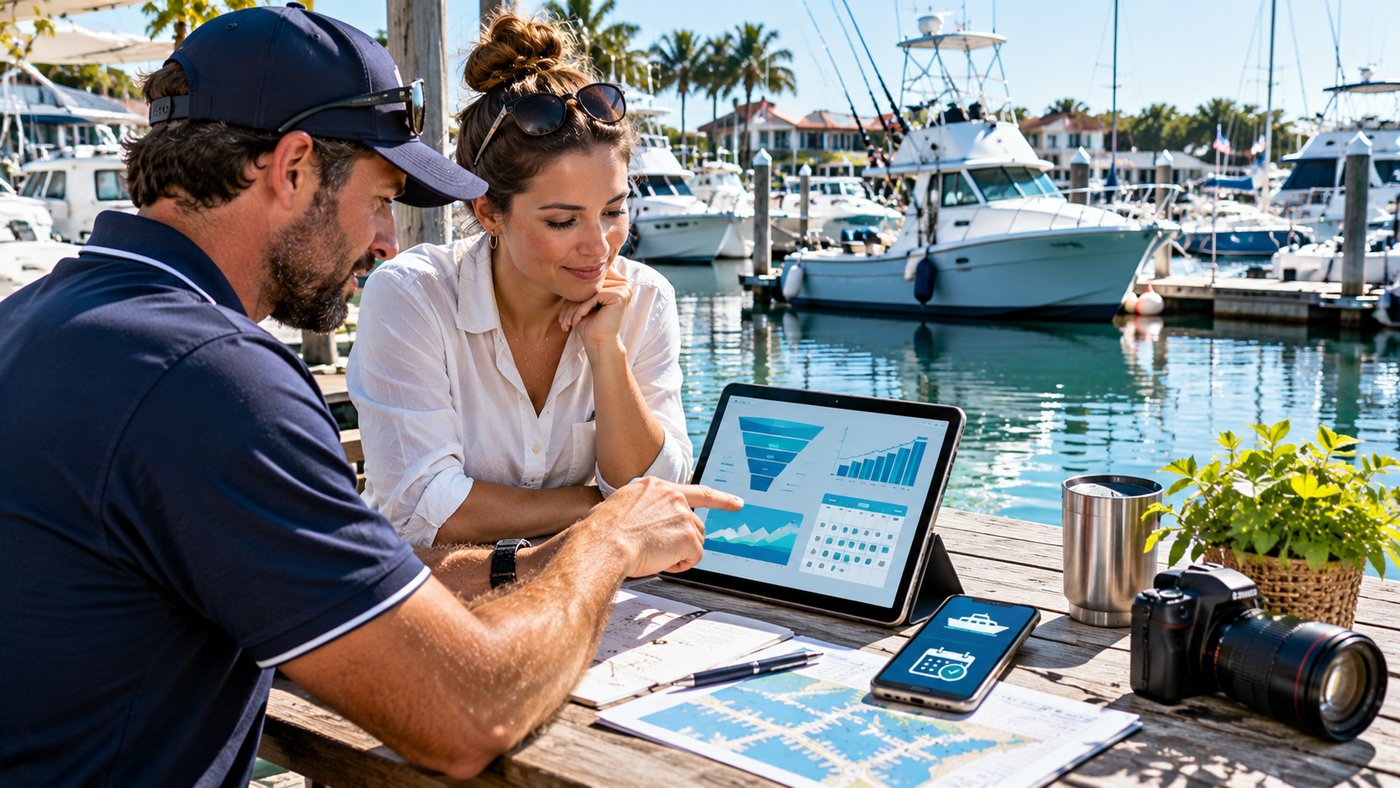
The marine industry operates differently from many other markets. Boat dealerships, yacht brokers, fishing charters, marina operators, and marine service businesses serve customers who often make decisions based on weather, location, budget, safety, availability, and trust.
For these businesses, marine digital marketing is not simply about increasing website traffic or social media followers. It is about connecting with the right audience, answering important buying questions, generating qualified enquiries, and converting interest into real sales or bookings.
A prospective boat buyer may compare models for months before contacting a dealership. A family planning a fishing charter may research prices, trip durations, weather policies, and customer reviews before booking.
These different buying journeys require carefully planned marketing strategies.
Modern digital marketing tools help marine businesses improve search visibility, publish useful content, run targeted advertising, manage customer enquiries, and measure commercial results.
However, successful marketing depends on coordinating these activities rather than treating each channel as a separate task.
This guide explores seven practical strategies for turning online visibility into measurable business opportunities throughout the marine industry.
What Is Marine Digital Marketing?
Marine digital marketing refers to the use of online channels and technology to promote boating-related businesses, products, and services.
It combines search engine optimization, content marketing, social media, digital advertising, email communication, and website conversion strategies.
The objective is to help marine businesses reach people who are interested in their offerings.
Which Businesses Benefit From Marine Marketing?
Marine marketing can support several types of businesses:
- Boat dealerships and yacht brokers
- Fishing charter operators
- Boat rental and tour companies
- Marinas and dry-storage facilities
- Marine repair and maintenance companies
- Boat manufacturers
- Marine equipment retailers
- Yacht management businesses
- Diving and water sports operators
Although these businesses belong to the same broad industry, their customer journeys differ.
A boat dealer may need to nurture a prospect through a lengthy purchasing decision.
A sunset cruise company may focus on helping customers select an available date and complete an online reservation.
A marine repair business may need to attract local customers searching for urgent technical assistance.
Understanding these differences helps marketers design more relevant campaigns.
1. Build a Website That Converts Marine Visitors Into Customers
A business website should function as more than an online brochure.
It should help potential customers understand the offering, evaluate their options, and take the next step.
Design for the Customer Journey
Start by identifying what visitors need to know.
A boat dealership website should make it easy to find available vessels, specifications, pricing information, financing details, and contact options.
A fishing charter website may need clearly displayed trip durations, passenger capacity, departure locations, booking options, and cancellation policies.
The information should match the customer’s decision-making process.
Create Dedicated Service Pages
Avoid placing every service on one generic homepage.
A marine maintenance company might create separate pages for engine servicing, fiberglass repair, hull maintenance, and electrical troubleshooting.
This allows each page to answer specific questions.
Use Clear Calls to Action
A call to action explains what the visitor can do next.
Examples include:
- Request a Boat Viewing
- Check Charter Availability
- Get a Service Estimate
- Contact a Yacht Broker
- Book a Marina Consultation
The action should match the page and the customer’s stage of interest.
Make Mobile Navigation Easy
Many customers research marine activities on smartphones, particularly while travelling or planning holidays.
A mobile-friendly website should feature readable text, fast-loading images, accessible menus, and simple contact forms.
Build Trust Through Transparency
Include genuine photographs, accurate descriptions, appropriate business details, and clear terms.
For charter businesses, explain what happens if weather conditions prevent a trip.
For boat sales, accurately describe vessel condition, available documentation, and the inspection process.
Trust can be more valuable than a visually impressive website that leaves important questions unanswered.
2. Use Marine SEO to Reach High-Intent Buyers
Search engine optimization helps marine businesses become discoverable when prospective customers search for relevant products or experiences.
A carefully organized SEO strategy can connect a business with people already researching its offerings.
Identify Buyer-Focused Keywords
Keyword selection should reflect actual customer needs.
For example, a charter business in Florida might research:
- Private fishing charters in Florida
- Family fishing trips near me
- Offshore fishing charter prices
- Half-day vs full-day fishing charter
- Fishing charter cancellation policy
A boat dealership may target searches involving particular vessel categories, brands, and locations.
Optimize Local Search Visibility
Local visibility is particularly important for marinas, repair shops, and charter companies.
Eligible businesses should maintain accurate Google Business Profiles with appropriate locations, business categories, contact details, and operating information.
Customer reviews can also provide useful context for prospective buyers.
Avoid artificial reviews or misleading business information.
Create Useful Location Pages
A marine company operating in multiple legitimate service areas may create location-specific pages.
However, each page should offer relevant information rather than repeating identical paragraphs with different city names.
Useful details might include departure points, nearby waterways, available services, and practical customer instructions.
Optimize Boat Inventory Pages
Boat listings should contain accurate specifications and descriptions.
Useful information can include vessel type, length, model year, propulsion, condition, available equipment, location, and asking price where appropriate.
High-quality original photographs and clear descriptions improve the customer experience.
Improve Technical SEO
Google recommends creating websites that search engines can crawl and understand.
Marine businesses should review mobile usability, site architecture, broken links, image optimization, indexing, and page performance.
Large photo galleries and videos may need particular attention to loading performance.
Measure Organic Search Performance
Google Search Console can show which search queries and pages generate impressions and clicks.
These reports can help businesses improve content based on actual search behavior.
However, search rankings and traffic alone do not prove that an SEO strategy is producing revenue.
The next step is connecting relevant visits with enquiries and sales.
3. Turn Marine Content Marketing Into a Sales Tool
Content marketing is especially valuable when customers need significant information before making a purchasing decision.
Marine businesses frequently receive questions about pricing, safety, equipment, boating experience, trip schedules, and ownership responsibilities.
Answering these questions online can make the sales process more efficient.
Treat Your Blog as a Customer Resource
A blog should not exist only to publish company announcements.
It can become an organized collection of practical answers that help customers evaluate products and services.
For example, a charter operator might publish:
- What to Bring on Your First Fishing Charter
- Half-Day vs Full-Day Fishing Trips
- How Weather Affects Charter Bookings
- Are Fishing Charters Suitable for Families?
- What Is Included in a Private Boat Charter?
These topics address questions that often arise before a booking.
Connect Content With the Sales Process
Marine businesses exploring Marine Digital Marketing Into Sales can review Colby Uva’s systems-first marketing blog.
The website discusses using educational content to answer customer questions, strengthen buyer confidence, and support real sales conversations.
Its marine-specific approach emphasizes the importance of treating content as a practical business asset rather than publishing articles without clear objectives.
This is particularly relevant for charter operators, yacht brokers, and marine service companies whose customers may require several interactions before committing.
Create Content for Each Buying Stage
| Customer stage | Useful content |
|---|---|
| Awareness | Boating guides and destination information |
| Research | Boat type comparisons and charter explanations |
| Evaluation | Pricing, inclusions, safety information |
| Decision | Availability, inspection and booking details |
| After purchase | Maintenance and ownership guides |
Matching content to the buying stage can help businesses guide prospects toward appropriate next steps.
Use Real Marine Experience
Original knowledge provides value.
A fishing captain can explain how different seasons influence trip planning.
A marine technician may describe common maintenance mistakes.
A yacht broker can explain what buyers should examine during a vessel inspection.
Such content is more useful than generic marketing articles containing unsupported claims.
Include Relevant Next Steps
An educational article should naturally guide interested readers toward the appropriate service.
For example, a guide about preparing for a fishing trip might link to available charter packages.
Avoid inserting unrelated promotional messages into every section.
4. Use Paid Advertising to Generate Qualified Marine Leads
Paid advertising can help marine businesses reach relevant customers through search engines and social platforms.
It may be particularly useful for seasonal bookings, new inventory, product launches, and specific service promotions.
Target High-Intent Searches
Search advertisements can reach people actively seeking a service.
For example, an advertisement for boat engine repair may appear alongside a relevant search in a supported geographic area.
The landing page should match the service advertised.
Use Geographic Targeting
Location matters in marine marketing.
A fishing charter operating from one harbor may have limited value in attracting people searching for trips in an unrelated region.
Advertising settings should reflect the business’s actual operating area and target audience.
Promote Real Experiences
Photographs and videos can show vessels, destinations, equipment, and customer experiences.
Use authentic visual materials when presenting the actual service.
If promotional images are illustrative, avoid making them appear to document experiences that were never delivered.
Account for Seasonality
Marine demand may change according to climate, tourism patterns, fishing seasons, school holidays, and regional conditions.
Advertising budgets should reflect genuine demand and operational capacity.
A company should not increase bookings for dates when suitable vessels or staff are unavailable.
Track Advertising Outcomes
A campaign may attract many clicks without generating meaningful enquiries.
Evaluate cost per qualified lead, booking requests, completed sales, and relevant revenue.
Test Campaign Messages
Different customers may respond to different benefits.
A family charter advertisement could emphasize beginner-friendly experiences and clear trip inclusions.
A yacht brokerage advertisement may focus on available vessels, inspections, and professional support.
Test relevant messages while keeping claims accurate.
5. Build Trust With Marine Social Media Marketing
Boating is naturally visual.
Photos of open water, fishing experiences, luxury vessels, marinas, and marine destinations can attract attention online.
However, attractive imagery alone does not guarantee sales.
Choose Relevant Platforms
Instagram and Facebook can support visual storytelling, community engagement, and selected promotional campaigns.
YouTube may be valuable for boat walkthroughs, technical demonstrations, and destination guides.
LinkedIn can help marine manufacturers, suppliers, and B2B service providers communicate with professional audiences.
Publish Real Experiences
Share accurate vessel photographs, behind-the-scenes footage, customer experiences with permission, and useful educational material.
For example, a boat rental business may show customers how to prepare for departure.
A repair company might explain the signs of a maintenance problem.
Answer Common Questions
Short videos can address questions about passenger capacity, trip duration, safety equipment, or vessel maintenance.
Useful content may encourage customers to visit the website for more information.
Encourage Genuine Customer Reviews
Satisfied customers may choose to share feedback or recommend the business.
Reviews should reflect authentic experiences.
Do not purchase fake testimonials or create misleading ratings.
Connect Social Media With Booking Pages
When someone becomes interested in a charter or boat rental, make the next step easy.
Provide a relevant link to service information or an appropriate booking page.
Measure Useful Engagement
Followers, likes, and views can provide context about content reach.
However, the more meaningful commercial measures may be qualified enquiries, appointments, bookings, and sales.
6. Improve Lead Follow-Up and Booking Conversion
Generating enquiries is not the same as generating revenue.
Marine companies need a reliable process for responding to interested prospects and helping them make decisions.
Respond to Relevant Enquiries Promptly
A customer may contact several charter operators while comparing options.
An organized response process helps prevent important questions from being overlooked.
However, employees should not make promises about response times or availability that the business cannot meet.
Use a CRM Where Appropriate
A customer relationship management system can organize prospects and previous interactions.
Useful fields may include the requested service, preferred dates, vessel interests, lead source, and follow-up status.
Collect only information appropriate for the business purpose.
Create Helpful Follow-Up Messages
A charter operator might send an appropriate follow-up explaining trip inclusions, departure instructions, and available booking options.
A boat dealer may provide additional specifications or information about arranging a viewing.
Messages should provide value rather than create artificial pressure.
Clarify Booking Conditions
Many marine activities depend on weather and operational conditions.
Customers should understand cancellation policies, deposits, refund arrangements, and rescheduling procedures.
Clear explanations can reduce uncertainty during the buying process.
Support Longer Sales Cycles
Yacht purchases and larger marine investments may involve several months of research.
A prospect who is not ready to buy immediately may still benefit from relevant information.
Maintain organized follow-up records and respect customer communication preferences.
Avoid Excessive Automation
Automated reminders can be useful, but messages should remain accurate and appropriate.
Human judgment is essential when customers have complex questions about safety, pricing, or vessel suitability.
7. Measure Marine Marketing Performance and Sales ROI
A marine marketing strategy should be evaluated according to business outcomes rather than activity alone.
Website visits, social media reach, and advertising impressions are useful metrics, but they do not automatically represent sales.
Track Qualified Leads
A qualified lead is a prospect who meets criteria relevant to the business.
For example, a charter enquiry may be qualified when the customer wants an available service, has a suitable group size, and is considering a realistic booking date.
A yacht sales lead may require a different evaluation.
Measure Booking Conversion Rate
A simplified booking conversion calculation is:
Booking conversion rate = Confirmed bookings ÷ Eligible enquiries × 100
Suppose a charter business receives 100 eligible enquiries and 18 become confirmed bookings.
Its illustrative booking conversion rate is 18%.
Use the same definitions when comparing different reporting periods.
Calculate Cost Per Booking
Marketing expenditure should be compared with completed business outcomes.
For example, suppose an operator spends $1,500 on a campaign that generates 15 attributable bookings.
The simplified advertising cost per booking is:
$1,500 ÷ 15 = $100.
This excludes other costs and does not establish profitability.
Review Customer Acquisition Cost
A business should consider appropriate marketing and sales expenses when calculating the cost of acquiring a customer.
Customer acquisition cost may be especially useful for comparing channels over time.
Track Revenue and Profitability
A campaign generating more bookings may still be financially disappointing if advertising costs, fuel, crew expenses, platform fees, and other operating costs are too high.
Monitor contribution margins alongside revenue.
Evaluate Retention
Repeat bookings and customer referrals may contribute to long-term growth.
Marine service businesses may also benefit from recurring maintenance relationships.
Build a Simple Performance Dashboard
| Metric | What it helps evaluate |
|---|---|
| Organic search clicks | Search discovery |
| Qualified enquiries | Lead relevance |
| Booking conversion rate | Sales process effectiveness |
| Cost per booking | Marketing efficiency |
| Revenue per booking | Commercial value |
| Customer acquisition cost | Acquisition expense |
| Repeat booking rate | Customer retention |
| Response time | Enquiry handling |
Review these metrics regularly and make improvements based on evidence.
Marine Digital Marketing Strategies by Business Type
Different marine businesses need different marketing priorities.
| Marine business | Recommended focus |
|---|---|
| Boat dealership | Inventory SEO, vessel videos, enquiry management |
| Yacht brokerage | Detailed listings, buyer education, lead nurturing |
| Fishing charter | Local SEO, reviews, direct booking pages |
| Marina | Location pages, facility information, availability enquiries |
| Marine repair company | Service SEO, local visibility, trust signals |
| Boat rental company | Pricing clarity, booking usability, seasonal campaigns |
| Marine equipment retailer | Product SEO, educational guides, e-commerce optimization |
A coordinated strategy should reflect how customers actually choose each service.
How to Create a Marine Marketing Funnel
A marine marketing funnel connects initial discovery with customer action.
Awareness Stage
Introduce potential customers to boating activities, useful information, or relevant products.
Educational content, destination guides, and appropriate advertising may help.
Consideration Stage
Provide information that supports comparison.
Examples include boat specifications, trip inclusions, service descriptions, and pricing explanations.
Decision Stage
Make it easy for customers to book, request a quote, schedule a viewing, or speak with a relevant representative.
Post-Purchase Stage
Provide useful follow-up information, support instructions, and appropriate opportunities for repeat business.
The 2026 National Marine Manufacturers Association strategy similarly distinguishes industry-wide boating awareness from the more direct sales responsibilities of manufacturers and dealers.
This is an important reminder that marketing channels have different jobs within the customer journey.
A Practical 90-Day Marine Marketing Plan
Businesses can improve their marketing without attempting to change everything simultaneously.
Month 1: Website and Lead Generation Foundation
Review current website content, booking options, and search visibility.
Identify important customer questions and weaknesses in the enquiry process.
Set up or verify appropriate analytics and lead tracking.
Month 2: Content and Campaign Development
Publish useful service pages and educational articles.
Improve vessel listings and product information.
Launch selected advertising campaigns where the budget and operational capacity justify them.
Month 3: Conversion and Follow-Up Improvements
Review qualified enquiries and completed bookings.
Identify content generating relevant interest.
Improve booking pages, response procedures, and follow-up communication.
This is an illustrative implementation plan, not a guarantee of additional sales within three months.
Common Marine Digital Marketing Mistakes
Focusing Only on Social Media Followers
A large audience does not necessarily produce bookings or vessel sales.
Publishing Generic Content
Marine customers often need specific information about activities, equipment, safety, and pricing.
Ignoring Local Search
Location-based discovery is important for many charter, marina, and repair businesses.
Using Weak Boat Listings
Missing specifications, outdated photographs, and unclear availability can reduce buyer confidence.
Making Booking Difficult
Unnecessary form fields, confusing pricing, and unclear policies can discourage enquiries.
Failing to Follow Up
Interested prospects may need further information before committing.
Ignoring Seasonal Demand
Marketing activity should reflect weather, tourism, capacity, and customer buying patterns.
Measuring Clicks Instead of Revenue
Traffic is valuable only when it supports appropriate business objectives.
Marine Digital Marketing Checklist
| Requirement | What to verify |
|---|---|
| Website | Mobile-friendly and easy to navigate |
| SEO | Relevant service and location pages |
| Boat listings | Accurate specifications and photographs |
| Content | Answers real customer questions |
| Advertising | Relevant targeting and landing pages |
| Social media | Authentic and useful content |
| Reviews | Genuine customer feedback |
| Booking system | Clear availability and terms |
| CRM | Organized and appropriate lead records |
| Follow-up | Timely and relevant communication |
| Analytics | Reliable conversion measurement |
| ROI | Revenue and cost analysis |
The Future of Marine Digital Marketing
Marine marketing is becoming increasingly data-driven.
Businesses can use improved analytics, customer relationship management software, and automation to organize their activities more effectively.
AI-assisted tools may help with content planning, initial enquiry organization, and selected administrative processes.
However, automation cannot replace accurate vessel information, honest safety guidance, experienced customer service, or professional judgment.
The marine industry’s broader marketing strategy is also evolving.
The National Marine Manufacturers Association and Marine Retailers Association of the Americas have emphasized the importance of introducing new audiences to boating while enabling individual businesses to convert that interest into participation and sales.
For marine companies, this reinforces the value of connecting brand awareness, education, lead generation, and commercial performance.
Frequently Asked Questions
1. What is marine digital marketing?
Marine digital marketing uses SEO, content, social media, advertising, email, and website optimization to help boating-related businesses reach relevant customers and generate enquiries, bookings, or sales.
2. How can marine digital marketing increase boat sales?
It can improve visibility for relevant searches, provide detailed vessel information, support buyer comparisons, generate qualified enquiries, and create a more organized follow-up process. Results depend on the business and market.
3. What is the best digital marketing strategy for fishing charters?
A practical strategy often combines local SEO, clear trip descriptions, genuine customer reviews, useful educational content, accessible booking options, and relevant follow-up communication.
4. How long does marine SEO take to generate results?
The timeframe varies according to competition, website quality, existing visibility, and content relevance. Some improvements may be observed relatively quickly, while sustained organic growth can require longer-term work.
Conclusion
Effective marine digital marketing connects online visibility with meaningful customer actions.
Boat dealers, charter operators, marinas, and marine service businesses can benefit from helpful content, accurate websites, targeted advertising, and reliable enquiry management.
By measuring qualified leads, completed bookings, and sales outcomes, marine businesses can make informed decisions and build stronger long-term customer relationships.
