
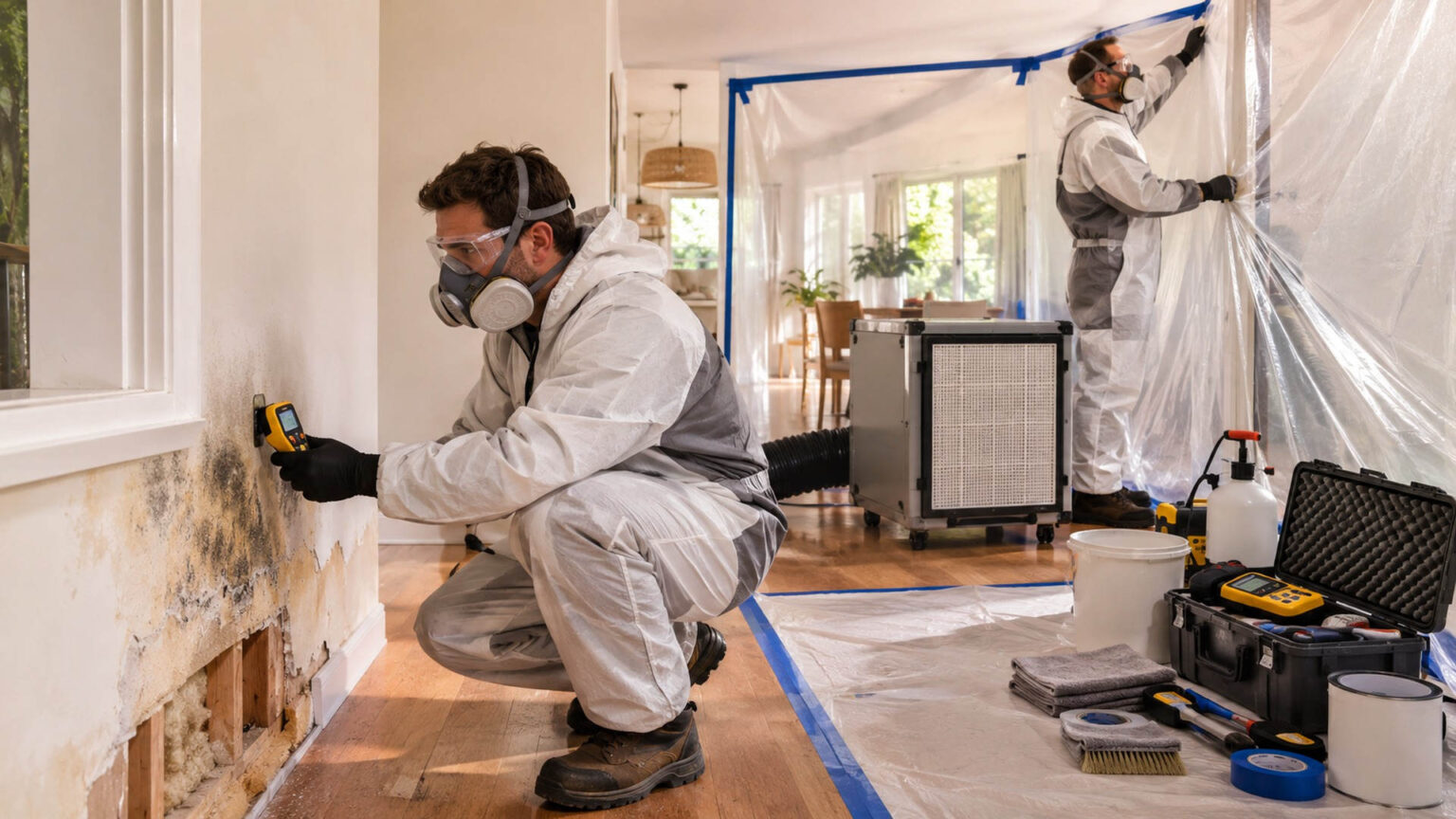
A dark patch on a bedroom wall or a musty smell behind a cupboard can be the first sign of a moisture problem. Professional mould removal services help property owners assess contamination, manage affected materials and identify the water source that allowed growth to develop. The goal is not simply to make a stain disappear. Effective remediation involves safe work practices, suitable cleaning or removal, thorough drying and a plan to prevent the same problem from returning.
Mould can grow wherever moisture persists, including bathrooms, roof spaces, basements and areas damaged by plumbing leaks. Some small patches on washable surfaces can be managed safely by occupants who are not particularly vulnerable to exposure. More extensive contamination, recurring growth and damage involving sewage or hidden building cavities call for a more cautious approach.
This guide explains what professional remediation includes, when to seek specialist help, how pricing is assessed and what to ask before signing a contract. It also shows how to distinguish ordinary cleaning from a lasting solution.
What Are Mould Removal Services?
Mould removal services are specialist cleaning and restoration activities designed to address unwanted mould growth in buildings. A typical project begins with an inspection of visible growth and damp materials. The work may then involve limiting the spread of debris, removing affected porous materials, cleaning suitable hard surfaces and assessing whether the area has dried sufficiently for repairs.
The scope varies with the building and the cause of water damage. A small bathroom issue differs from a flooded ground floor or a roof leak affecting insulated wall cavities. Reputable providers should explain why each proposed task is necessary rather than applying the same treatment everywhere.
Mould Removal Versus Mould Remediation
Removal refers to dealing with the affected growth or contaminated materials. Remediation is broader because it also considers worker and occupant protection, moisture control, verification and restoration. Indoor and outdoor air naturally contain some mould spores, so a promise to eliminate every spore permanently is unrealistic. A reasonable objective is to correct the dampness and remove problematic growth.
What Does a Specialist Actually Do?
Depending on the project, the work may include a moisture survey, inspection of concealed spaces, protective containment, controlled removal of damaged plasterboard, HEPA-filtered cleaning, drying measurements and a completion review. Plumbing, roofing or ventilation repairs may require a separate trade. Ask whether those repairs are included or coordinated as an additional service.
Signs You May Need Professional Mould Removal Services
Visible patches on walls and ceilings are common warning signs, but colour alone cannot tell you what species is present or establish a reliable health risk. Growth may be black, green, grey or another colour. Conditions such as a persistent musty odour, swollen skirting boards, peeling wallpaper or damp carpets can also justify investigation.
Recurring Growth After Cleaning
When mould returns in the same location, moisture is often still present. This is a common reason people seek mould removal services after an earlier cleanup failed. The source might be a leaking pipe, condensation on a cold wall, rain entering around a window or an obstructed ventilation system. Repeatedly cleaning the surface without addressing the cause is unlikely to provide a durable result.
Hidden Dampness and Water Damage
Water can travel behind plasterboard, beneath flooring or through insulation before staining becomes visible. A specialist may use moisture readings and a review of the building’s history to decide whether opening part of a wall is justified. Unnecessary demolition should be avoided, but suspected hidden contamination should not be dismissed simply because the painted surface looks normal.
When the Problem Is More Than a Small Patch
A limited patch on a hard, accessible surface may be manageable with appropriate precautions. Larger areas, contaminated floodwater, affected air handling systems, extensive porous-material damage or risks to vulnerable occupants are reasons to involve professionals. There is no single visible patch size that overrides all those factors.
21 Vital Tips for Choosing and Using Mould Removal Services
1. Find the Moisture Source Before Paying for Cleanup
Ask what caused the dampness and how that conclusion was reached. A leaking roof, pipe or external wall requires a different repair from humidity-driven condensation. Cleaning without correcting water entry invites recurrence. Any quotation for mould removal services should identify the suspected cause and specify who will repair it.
2. Record the Affected Areas and Their History
Take dated photographs and note when staining, odours or leaks first appeared. Record which rooms are affected and whether the problem follows rainfall, showering or cold weather. This information helps a contractor plan the inspection and may be useful for landlords, insurers and later maintenance.
3. Distinguish Condensation From Water Intrusion
Condensation can collect on cold glass, poorly insulated walls and surfaces behind large furniture. Leaks may create localized wet spots or follow rainfall and plumbing use. The symptoms sometimes overlap, so avoid assuming that buying a dehumidifier will fix a defective roof or pipe.
4. Ask How Concealed Moisture Will Be Investigated
Persistent odours or previous flooding may justify checking behind accessible finishes. Moisture meters can support the investigation, but their readings need context. A good professional explains where they will inspect, what any invasive work involves and whether it requires your approval.
5. Consider the Needs of Vulnerable Occupants
People with asthma, significant allergies, chronic lung disease or weakened immune systems should avoid mould cleanup activities and may need to stay away from affected spaces. Children should not participate in cleanup. Discuss occupancy, access and any health concerns before work starts, and seek medical advice for concerning symptoms.
6. Verify Relevant Training and Practical Experience
Choose mould removal services with demonstrable experience handling the type of material and damage present. Ask about remediation training, similar projects, liability insurance and how workers are supervised. Certification or licensing requirements differ by region, so verify any claimed credential rather than relying on a badge alone.
7. Obtain a Written Scope of Work
The proposal should list assessment, containment, removal, cleaning, drying and any restoration tasks. It should also state which rooms and materials are included. Written detail helps you compare providers and reduces the chance of disputes if additional damage is discovered after work begins.
8. Confirm How the Work Area Will Be Contained
Removing contaminated plasterboard can release dust into nearby rooms. Depending on the size and complexity of the project, a contractor may isolate the affected space with sheeting and appropriate air control equipment. Ask how unaffected areas, household possessions and ventilation pathways will be protected.
9. Check Respiratory and Eye Protection Arrangements
Remediation workers need protective equipment selected for the hazards involved. This may include fitted respirators, gloves, eye protection and protective clothing. The correct arrangement depends on work intensity and potential chemical exposure. Protective equipment must be used correctly; its presence in a photograph does not prove safe practice.
10. Avoid Methods That Spread Contaminated Dust
Dry brushing, aggressive scraping and unsuitable fans can spread particles from affected materials. Professional mould removal services should choose controlled cleaning and removal methods suited to the actual material. HEPA-filtered equipment may support dust control but is not a substitute for moisture correction.
11. Assess Porous Materials Individually
Plasterboard, insulation, carpets and absorbent furnishings can retain contamination within their structure. Some may need removal when they cannot be cleaned and dried adequately. Other materials can sometimes be restored. Ask why a particular item is being discarded or retained instead of assuming every stained surface requires demolition.
12. Clean Suitable Hard Surfaces Properly
Hard, nonporous surfaces may often be cleaned with detergent and water and then dried completely. The exact method depends on the surface finish, contamination and surrounding materials. Specialists should avoid damaging coatings or leaving residual moisture. A visibly clean surface is not enough if the wall behind it remains wet.
13. Do Not Accept Paint as a Substitute for Remediation
Painting over visible growth hides the symptom but does not remove the underlying problem. Coatings may fail when moisture persists beneath them. Necessary removal, cleaning and drying should happen before decorative repairs. Be cautious of contractors whose entire plan consists of spraying a product and repainting.
14. Ask Whether Chemical Treatments Are Necessary
A disinfectant or biocide is not automatically required for ordinary mould remediation. Appropriate physical removal and moisture control are central. If chemicals are proposed, request the product name, purpose, compatibility information and safety precautions. Never mix bleach with ammonia or other cleaning products because dangerous gases may form.
15. Set Measurable Drying Goals
After a leak, affected materials need to dry before enclosed finishes are restored. The contractor should explain how drying progress will be checked and which readings or conditions indicate that repairs can proceed. Drying equipment alone does not solve an active water source.
16. Investigate Heating and Ventilation Systems Carefully
Where mould may have entered air handling equipment, ordinary surface cleaning may be insufficient. A qualified specialist should assess the equipment and relevant ductwork. Do not operate a system known or suspected to be contaminated until appropriate advice is obtained, because airflow may spread contamination.
17. Address Electrical and Floodwater Hazards First
Flooded rooms can contain electrical hazards, unstable materials and contaminated water. Never enter water where electricity may be live. Sewage-affected damage needs specialist assessment and controls beyond routine household cleaning. Safety planning should take priority over attempts to salvage furnishings quickly.
18. Request Completion Checks, Not Unnecessary Tests
At the end of mould removal services, the work area should be visibly free of problematic growth and debris, the moisture source should be corrected and affected materials should be appropriately dry. Laboratory sampling is not automatically necessary when visible mould was already confirmed. When complex testing is recommended, ask what decision the results will change and who will interpret them.
19. Keep Before-and-After Documentation
Photographs, moisture readings, work records, material disposal details and invoices help establish what was done. This documentation is valuable if the property is rented, insured or later sold. It also makes recurring dampness easier to investigate because the original source and repair history are recorded.
20. Compare Complete Prices Rather Than Headlines
Mould removal services can involve inspection, protective containment, removal labour, drying equipment, waste disposal and subsequent rebuilding. A low cleanup quote may exclude plumbing repairs or replacement plasterboard. Ask contractors to separate known costs, possible extras and work requiring a revised approval.
21. Create a Prevention Plan Before Closing the Job
The final discussion should cover leaks, extraction fans, humidity, insulation defects and routine checks around previously affected spaces. Schedule repairs that were not part of the remediation contract. Long-term success depends on keeping vulnerable materials dry, not on a promise that mould can never return.
How Professional Mould Remediation Works From Start to Finish
For mould removal services, the first stage is a site assessment. The specialist identifies visible growth, checks the history of dampness, considers possible concealed damage and decides whether the job requires containment or specialist equipment. They should explain uncertainty when a cause cannot be confirmed immediately.
Inspection and Work Planning
A written plan sets out the locations, materials, protective measures and responsibilities. In occupied properties it should also describe access restrictions and how residents will be kept away from affected work areas. Where several trades are needed, the sequence of plumbing, building repairs and remediation should be agreed.
Containment, Removal and Cleaning
The team protects unaffected spaces, removes unsalvageable materials using suitable controls and cleans surfaces that can be restored. Methods vary according to the material and contamination. Proper waste handling and careful equipment use help prevent unnecessary spread into the rest of the property.
Drying, Verification and Reinstatement
Once the source is repaired, drying and inspection establish whether the area is ready for new finishes. Reinstatement may involve plasterboard, insulation, skirting or redecorating. Reliable mould removal services should explain any outstanding maintenance risks rather than treating a fresh coat of paint as proof that the problem has ended.
How Much Do Mould Removal Services Cost?
No single price applies to all homes. Costs depend on the area affected, access, contamination depth, material type, required containment and whether other repairs are needed. A small bathroom wall and a flooded basement are fundamentally different projects, so mould removal services should be estimated for the actual conditions.
Main Factors Affecting the Quote
The number of rooms, removal of porous materials, drying time, working height and waste handling all influence labour and equipment requirements. Some inspections are quoted separately from remediation. Restoration of finishes may also be a separate trade.
Questions to Ask Before Accepting a Price
Request a clear list of included work and possible additional charges. Ask what happens if more damage is found behind a wall, whether repair work needs a new approval and who carries responsibility for fixing the original leak. Comparing mould removal services fairly requires the same scope, not simply the lowest number.
Insurance and Rental Responsibilities
Insurance cover depends on the policy and the cause of water damage; gradual dampness may be treated differently from sudden incidents. Landlord and tenant responsibilities also vary by jurisdiction. Document the issue and check the relevant arrangements before committing to major work where practical.
DIY Cleaning or Professional Mould Removal Services?
A small patch on a washable, accessible surface may sometimes be cleaned by an occupant using suitable precautions, provided the source of moisture is understood. Cleaning hard surfaces with detergent and water, followed by complete drying, may be sufficient for limited situations. This does not apply automatically to porous materials or concealed contamination.
When to Leave the Work to Specialists
Seek professional assistance for extensive growth, recurring contamination, affected air handling systems, sewage-related water damage or a building with vulnerable occupants. Do not try to open damp wall cavities without understanding the hazards. Professionals should also be considered when structural components are deteriorating.
Important Health and Safety Limits
People with significant respiratory conditions or weakened immune systems should avoid cleanup. Anyone experiencing persistent breathing problems should seek healthcare advice rather than assuming a particular mould species caused the symptoms. A musty smell and visible staining justify a building assessment, but appearance alone cannot establish a medical diagnosis.
Preventing Mould After Professional Cleanup
Once mould removal services are complete, moisture management becomes the most important ongoing responsibility. Repair plumbing and roof leaks promptly, maintain effective kitchen and bathroom extraction and investigate persistent condensation on windows or external walls.
Manage Indoor Humidity and Ventilation
A hygrometer can help track indoor humidity. Many homes benefit from maintaining relative humidity below about 60 percent, with a lower comfortable range often preferable where conditions allow. Avoid sealing up rooms without suitable ventilation; moisture produced by cooking, bathing and drying laundry still needs a way out.
Respond Quickly to New Leaks
Drying wet materials within roughly 24 to 48 hours after water damage can reduce the opportunity for mould growth. The timing varies with materials, weather and severity, so do not treat it as a guarantee. Large leaks need assessment even if visible surfaces dry quickly.
Inspect Previous Problem Areas
Look periodically behind movable furniture, near bathroom fittings, under sinks, around window reveals and beneath previous roof leaks. Reappearing stains, peeling finishes or a musty smell deserve investigation. Records from previous mould removal services help you determine whether a repaired defect has returned or a new source of moisture has developed.
Frequently Asked Questions
1. What do mould removal services include?
Mould removal services typically involve inspection, moisture diagnosis, appropriate containment, removal or cleaning of affected materials, drying checks and advice on preventing recurrence.
2. How long does professional mould removal take?
The timeline depends on contamination, access, required material removal and drying. Small projects may be quicker than jobs involving hidden water damage and rebuilding.
3. Can mould return after professional remediation?
Yes. Mould can grow again if moisture remains or a new leak develops. Correcting water sources and maintaining ventilation are essential parts of prevention.
4. Do I need an air test before mould removal?
Usually not when visible growth is already present. Testing can be useful in selected complex situations, but its purpose and interpretation should be explained first.
5. Are mould removal services safe for occupied homes?
Safety depends on the work, containment and occupants’ health. Vulnerable people should stay away from affected areas, and some projects require temporary restrictions or relocation.
6. What should I check before hiring a mould specialist?
Review experience, insurance, the written scope, moisture repair responsibilities, safety measures, completion checks and how unexpected additional costs will be approved.
Conclusion
Choosing mould removal services is ultimately about restoring a dry, usable building rather than covering up visible stains. A sound approach combines investigation, appropriate cleaning or material removal, occupant protection and confirmation that moisture has been controlled. Clear quotations and documented completion checks help property owners understand what they are paying for and what remains to be maintained. By addressing leaks and condensation promptly, households can reduce the risk of recurring contamination and protect building materials over time.
