
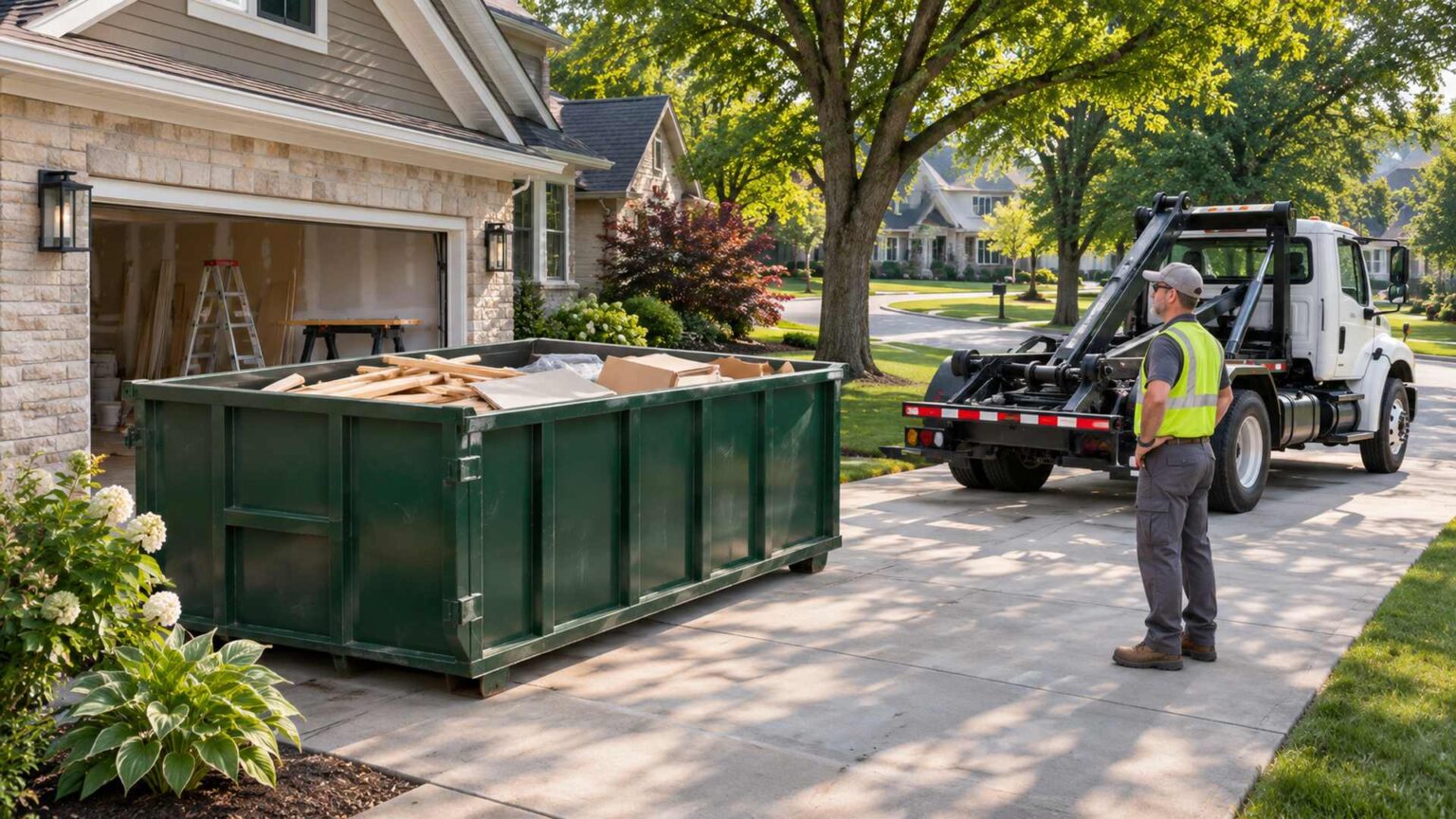
A home cleanout or renovation becomes much easier when waste has a designated place to go. Before choosing a container, however, you need to know whether a company can deliver it to your exact address. Understanding dumpster rental service areas helps homeowners, contractors, and property managers compare local coverage, estimate delivery charges, and schedule a container that suits the job. The nearest advertised provider is not always the one able to reach your driveway, construction site, or commercial property on the date you need.
Service boundaries depend on truck routes, local disposal facilities, container availability, road access, and operating costs. A city name on a rental website may represent broad coverage rather than guaranteed delivery to every neighborhood. Checking dumpster rental service areas before booking helps prevent unexpected transportation fees, permit delays, and rejected waste loads.
This guide explains how coverage works, what to ask a rental company, which dumpster size might suit your project, and how to plan safe delivery and pickup.
What Are Dumpster Rental Service Areas?
Dumpster rental service areas are the cities, towns, neighborhoods, postal zones, or surrounding regions where a waste hauling company offers container delivery and collection. Providers may describe them using a service map, a list of cities, ZIP codes, counties, or a distance from a local yard. Those descriptions are a starting point, not a substitute for address confirmation.
A company might serve the center of a city but limit service to its outer suburbs. Another may deliver outside its normal zone for an additional transportation charge. Coverage can also vary by container size: a smaller dumpster may be available at one location while a larger roll off unit is temporarily unavailable there.
Why Dumpster Coverage Is Not Always Defined by ZIP Code
When researching dumpster rental service areas, ZIP codes are useful search tools, but they do not always match city or county boundaries. A provider may accept some addresses within a ZIP code and decline others because of distance, restricted access, or operating limits. Always submit the complete street address, not only the postal code.
How Local Hauling Networks Set Their Boundaries
Haulers consider how far trucks must travel between their storage yard, the delivery site, and an approved disposal or recycling facility. Driver availability, fuel use, loading time, and traffic conditions influence the practical route. Some companies operate multiple yards or coordinate with regional partners, so service limits can change without a visible change in the website’s coverage map.
What Counts as Confirmed Availability?
Confirmed service means the provider has checked your exact delivery address, intended material, container size, and requested date and has agreed to the relevant terms. A search result saying a company serves your county is useful research, but it is not a reservation or a guaranteed delivery window.
23 Practical Ways to Check Dumpster Rental Service Areas and Book Confidently
1. Start With Your Exact Delivery Address
Enter the full street address whenever the booking system allows it. Include building numbers, unit identifiers where relevant, and the correct ZIP code. Some sites rely on a general coverage map, but the exact address lets dispatch assess the actual route. If you are working at a different property from your home, use the job site address.
2. Check Both the City and the Surrounding County
Rental companies may publish city names while operating throughout selected parts of the county. Search the nearby municipalities and ask whether unincorporated areas are included. When comparing dumpster rental service areas, do not assume countywide coverage simply because one town appears on the provider’s list.
3. Ask About Partial ZIP Code Coverage
A ZIP code can span multiple delivery routes or administrative boundaries. If an online tool rejects your location, call or message the operator to verify whether the address is genuinely outside coverage. Conversely, an accepted ZIP code may still need a physical access review before the delivery is confirmed.
4. Confirm Which Company Will Actually Deliver
Some online rental platforms arrange containers through local hauling partners rather than operating their own trucks. That can be convenient, but it makes clear responsibility essential. Ask who handles dispatch, who will collect the container, and which company to contact if a delivery is missed or a container needs to be moved.
5. Compare Service Radius and Delivery Surcharges
A provider might accept a distant address but add a travel charge. Request the full delivered price rather than interpreting a low online base rate as the final amount. Dumpster rental service areas often affect hauling costs because longer journeys use additional truck time and fuel.
6. Verify Your Requested Delivery Date
Being inside advertised dumpster rental service areas does not mean every container is available immediately. Popular dates, weather, and local demand can restrict scheduling. Ask for the earliest practical delivery and whether the quoted time is a firm appointment or an estimated arrival window. Leave flexibility when a renovation depends on the container arriving first.
7. Check the Container Sizes Available Locally
Different yards carry different numbers of 10, 15, 20, 30, or 40 cubic yard containers. Availability varies by company and location. Before choosing a size, describe the actual waste and estimated volume. A service area search is only useful if the provider can supply a suitable unit for your project.
8. Match the Dumpster to Your Type of Project
House cleanouts, roofing, landscaping, and construction generate different debris. A bulky furniture cleanout may require more volume, while concrete or soil can reach a weight limit quickly. Tell the company what you will load. Proper matching helps avoid an unsuitable container or disposal restrictions at pickup.
9. Confirm Which Waste Materials Are Accepted
Do not assume that all materials can go in a rented dumpster. Acceptance depends on the hauler and receiving facility. Paints, solvents, batteries, pesticides, oils, and certain other hazardous items need separate handling. Ask for a written prohibited materials list before loading, especially when clearing a garage or older building.
10. Review Weight Allowances and Extra Charges
A rental quote may include a particular disposal weight, with additional charges above that threshold. Heavy materials make this detail especially important. When checking dumpster rental service areas, also ask whether disposal costs differ between local facilities and whether the quoted allowance is appropriate for the intended debris.
11. Ask How Long the Rental Period Lasts
A standard rental period may be enough for a weekend cleanout but not for a phased renovation. Confirm the number of included days, the pickup procedure, and any daily extension charge. A delayed contractor or change in project scope can make extra rental time more expensive than expected.
12. Determine Whether Your Driveway Can Accommodate Delivery
Measure the intended placement area and discuss the length, width, and height of the proposed container. The truck also needs room to maneuver and unload safely. A dumpster that fits when parked may still be impossible to deliver because the vehicle requires additional clearance.
13. Look for Low Wires and Overhanging Branches
Trees, utility lines, carports, and building features can interfere with the truck’s lifting mechanism. Do not attempt to move electrical lines or trim around energized equipment yourself. Share photographs of the proposed area and request a safe access assessment if overhead clearance is uncertain.
14. Protect Suitable Driveway Surfaces
A heavy container may mark or damage vulnerable pavement, particularly if the surface is already cracked or unstable. Ask whether the provider recommends suitable boards or other protective measures and who is responsible for supplying them. Protection does not guarantee that every driveway can bear the load, so disclose existing damage before delivery.
15. Check Local Street Placement Permits
Permit requirements differ across dumpster rental service areas. A dumpster placed on a public street, sidewalk, or other right of way may need a municipal permit. Rules differ by city and can include traffic control, visibility, and time limits. Some jurisdictions require the hauling company to apply; others have different procedures. Confirm responsibility before booking rather than assuming street placement is allowed.
16. Review Homeowners Association and Property Rules
Even where a municipal permit is not required, a homeowners association, condominium board, or building manager may restrict container placement. Ask about permitted locations, working hours, and notice requirements. This is particularly important for shared parking areas, apartment complexes, and managed commercial properties.
17. Keep Pedestrian and Vehicle Access Clear
The container must not block emergency access, walkways, fire equipment, or necessary visibility at driveways and intersections. The local authority and hauler may have additional requirements. Confirm a safe placement that leaves suitable access for residents, visitors, delivery workers, and neighboring properties.
18. Account for Weather and Ground Conditions
Rain, snow, ice, and soft ground can affect truck access and container placement. If a driveway is steep or the site is unpaved, describe those conditions in advance. Some haulers may need an alternative location or a revised delivery day. Weather disruptions can affect dumpster rental service areas even when the address is normally served.
19. Plan for Safe Loading From the Start
Place heavier debris low in the container and distribute it as instructed by the hauler. Do not climb into the dumpster or allow children to play near it. Keep debris below the marked loading limit and never load objects that extend dangerously over the top. An overloaded container may be rejected for transport or generate additional charges.
20. Arrange Separate Handling for Special Materials
Refrigerators, mattresses, tires, electronics, asbestos containing materials, and certain demolition wastes may have special rules or charges. Requirements vary widely. Ask whether the hauler accepts each category before the job begins and arrange approved recycling or specialist disposal for anything excluded from the dumpster.
21. Understand What Happens if You Need Another Dumpster
Large projects sometimes fill a container earlier than expected. Ask whether the company offers a swap service, in which a full unit is collected and another is delivered. Confirm the charges, availability, and scheduling. Service coverage for one delivery does not necessarily mean a replacement will be available the same day.
22. Confirm How Pickup Is Requested
Some rental providers schedule collection at booking, while others ask customers to call when the container is ready. Ask how much notice is required. Clear a path for the truck and make sure the loaded material is within the agreed limits. Do not place vehicles or equipment where they could block collection.
23. Get the Complete Agreement in Writing
Before paying, request confirmation of the address, dates, container dimensions, accepted debris, weight allowance, rental period, delivery charges, extension fees, and pickup conditions. Written terms are especially useful when comparing multiple dumpster rental service areas because the apparent rental price may not include the same services everywhere.
Choosing a Dumpster Size for Your Project
Across dumpster rental service areas, roll off dumpsters are commonly described by capacity in cubic yards, but actual dimensions and load limits vary between providers. A 10 cubic yard container may suit a smaller cleanout or certain dense debris, while a 20 cubic yard unit may be appropriate for a moderate renovation. Larger containers can accommodate bulky projects, provided the material and weight remain within limits.
Small Cleanouts and Heavy Debris
For basement sorting, garage clearing, or small remodeling jobs, ask about smaller containers. Concrete, brick, and soil can be unusually heavy, and many haulers require dedicated containers or lower fill levels for these loads. Volume alone does not determine whether a dumpster is safe to transport.
Larger Renovations and Construction Projects
Roof replacement, substantial home renovations, and building projects can generate more debris. Discuss the scope with the rental company, including the type of material, likely loading rate, and whether one container or several collections are more practical. Never treat size estimates as a substitute for the provider’s stated maximum load.
How Dumpster Rental Service Areas Affect Pricing
Dumpster rental service areas influence rental economics, but distance is only one factor. The final quote can include delivery, collection, disposal, a permitted rental period, and a specified weight allowance. It may also include environmental fees, taxes, or optional services, depending on the jurisdiction and company.
Distance, Disposal Facilities, and Operating Costs
Truck travel time, approved disposal facilities, and local tipping fees influence costs. A property outside the standard delivery zone may still be served for an additional charge. Compare fully itemized quotes for the same address and waste type rather than assuming the nearest advertised company is automatically the least expensive.
Common Extra Fees to Clarify
Ask about weight overages, prohibited materials, rental extensions, difficult access, failed delivery, additional pickups, and container relocation. Some providers include certain charges in a bundled price, while others list them separately. The best comparison is the expected total cost for your actual project, not the lowest headline amount.
Permits, Safety, and Responsible Waste Disposal
Rules for dumpster placement and disposal can change between dumpster rental service areas. A container on private property may face different requirements from one on a public street. Depending on the city, permits may be required when the container occupies the public right of way. The local authority can explain the rules, and the hauler should identify any placement restrictions it knows about.
Keep Hazardous Waste Out of Ordinary Dumpsters
Household chemicals, batteries, oils, pesticides, and some paint products may need collection through approved programs. Certain materials are restricted because they pose risks during transport or disposal. Before cleaning out a garage, identify questionable materials and ask the hauler or local waste authority where they belong.
What About Recycling and Mixed Debris?
Separate clean recyclable materials when practical and confirm whether the provider accepts recyclable or mixed construction waste. Some facilities sort certain loads, while others require materials to arrive separately. Never assume that a container marked for construction debris accepts every household material.
What to Do if Your Address Is Outside the Service Area
If advertised dumpster rental service areas exclude your address, do not immediately abandon the project. Verify the complete address, ask whether a different nearby yard serves the property, and check whether another container size is available. Neighboring towns may fall within different dumpster rental service areas even when they share a broader metropolitan region.
Consider Alternative Rental Arrangements
A local hauler may offer a smaller container, bag based removal service, scheduled junk collection, or multiple trips. For very small projects, local waste transfer stations or municipal bulk pickup may be more practical, depending on accepted materials and costs. Choose the option that matches your debris and local rules rather than paying for capacity you will not use.
Frequently Asked Questions
1. How can I find dumpster rental service areas near me?
Enter your complete delivery address or ZIP code on a rental provider’s website, then confirm availability with the company. Coverage maps do not always guarantee service at every address.
2. Do dumpster companies deliver outside their listed service areas?
Some providers extend dumpster rental service areas based on route capacity and distance. Delivery outside the standard zone may involve an additional fee, so request a written quote.
3. How much does dumpster delivery cost in my ZIP code?
Pricing depends on location, container size, debris type, rental duration, weight allowance, and local disposal charges. Compare full quotes for the same job.
4. Do I need a permit for a dumpster in my driveway?
Private driveway placement may not require the same permit as a public street, but local rules and property restrictions vary. Confirm requirements before delivery.
5. What dumpster size should I rent for a home cleanout?
Choose based on debris volume and weight. Smaller containers may fit minor cleanouts, while larger jobs need more capacity or multiple collections. Ask the hauler for guidance.
6. What items cannot go in a rented dumpster?
Restrictions vary, but hazardous chemicals, batteries, oils, and certain appliances or building materials often require special handling. Request the provider’s prohibited items list.
Conclusion
Understanding dumpster rental service areas makes it easier to find a provider that can actually serve your address, supply the right container, and collect it on schedule. The best booking process checks exact location coverage, debris restrictions, site access, permit rules, and the full delivered price before work begins. Comparing written terms and planning safe placement helps avoid preventable delays and extra charges. With these details settled, homeowners and contractors can focus on completing the cleanup rather than managing unexpected waste problems.
