
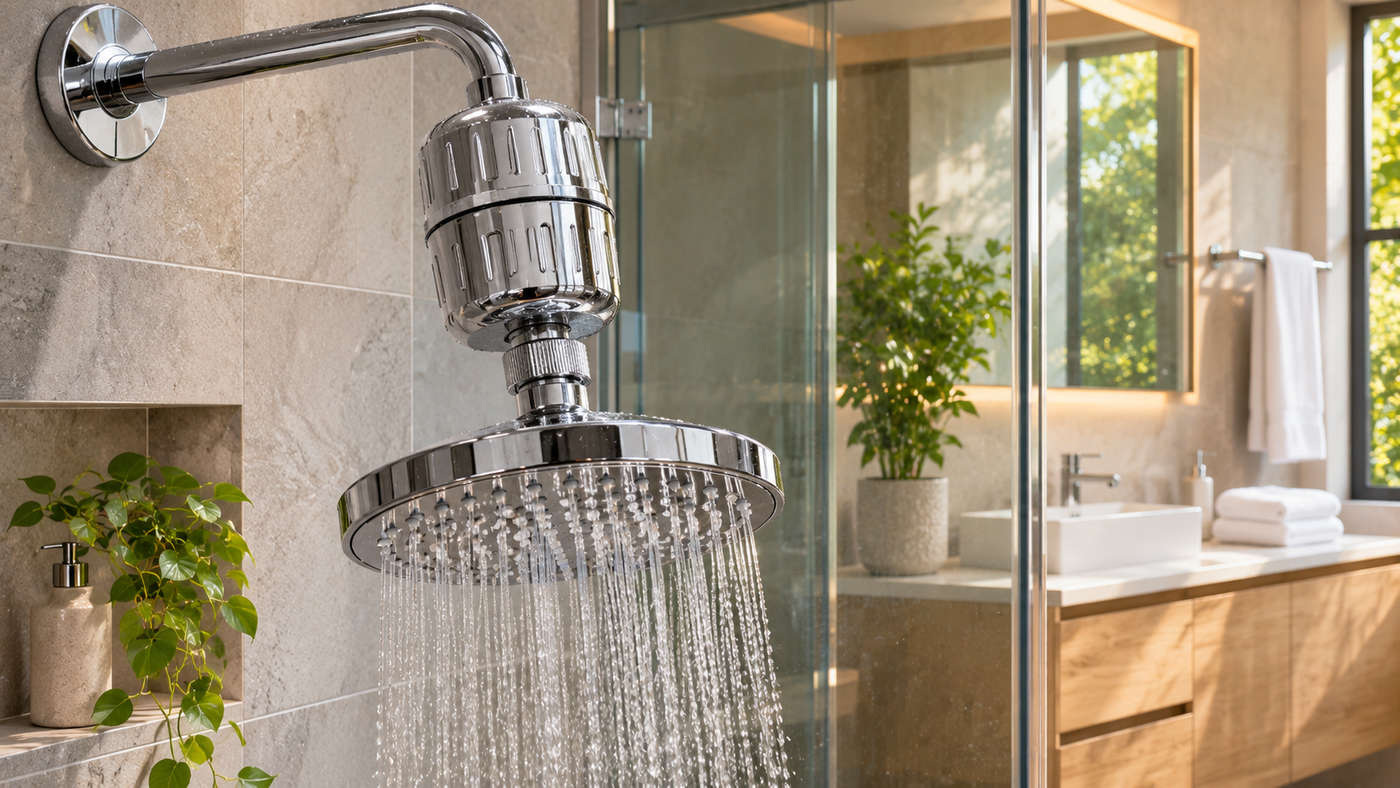
A shower filter may look like a small bathroom accessory, but deciding whether it will help requires understanding the water entering your home. AquaBliss sells inline shower filtration products intended to reduce selected impurities while allowing an existing shower head to remain in place. However, a filter that reduces chlorine does not automatically soften hard water or make an unsafe supply suitable for drinking. This guide examines seven practical questions about model differences, filtration, testing, installation, replacement and long term value. It separates the manufacturer’s published claims from what a homeowner can independently verify, making it easier to choose a suitable solution without expecting a miracle from one small device.
What Is AquaBliss and What Does Its Shower Filter Do?
AquaBliss is a brand offering shower water filters and replacement cartridges. Its inline products attach between a compatible shower arm and the shower head, so many households can retain their existing fixed, handheld or rainfall fixture. The company markets these devices primarily for reducing chlorine, sediment and certain other impurities in shower water. It also offers models that incorporate vitamin C and mineral media as part of the cartridge design.
A shower filter is a point of use device. It treats water flowing to a particular shower, not every faucet, appliance or fixture throughout the house.
Filtration Is Not the Same as Purification
A shower filter may be designed to reduce particular chemicals or particles, but that does not make it a general microbiological purifier. AquaBliss products should not be treated as a substitute for verified potable water treatment.
Start With the Problem You Want to Solve
Write down whether your concern is chlorine smell, visible sediment, mineral scale, weak shower pressure or uncomfortable skin. Those problems are not interchangeable.
1. Understand the Filtration Media Inside the Cartridge
The first question when considering AquaBliss is how the device is meant to work. The brand describes multistage cartridges containing combinations of fine screens, polypropylene cotton, calcium sulfite, redox media and activated carbon. Selected versions also add vitamin C ceramic beads and other mineral media.
Sediment Screens and Fine Filtration Layers
Screens and fiber layers are intended to catch suspended particles such as grit and some debris. They can help prevent larger particles from passing through the shower fixture, although performance depends on particle size and media construction. A layer intended for sediment does not necessarily remove dissolved chemicals or minerals.
Calcium Sulfite and Redox Media
Calcium sulfite is commonly used in shower filtration for its ability to react with free chlorine under appropriate conditions. Redox media, often based on copper and zinc, uses oxidation and reduction reactions. Actual performance can change with water chemistry, temperature and contact time.
Activated Carbon and Vitamin C
Activated carbon can adsorb certain organic compounds, but the efficiency of a small shower cartridge depends on flow and operating conditions. The AquaBliss Revitalize range includes vitamin C media, which is associated with chlorine neutralization.
More Stages Do Not Automatically Mean Better Results
An effective filter needs an appropriate media quantity, proper flow path and validated performance. Counting layers alone cannot establish which product is most suitable.
2. Compare the Four Main Shower Filter Models
AquaBliss currently organizes its familiar inline range into two groups: Essential filters that emphasize impurity reduction, and Revitalize filters that also include vitamin C and mineral media. The main models are SF100, SF220, SF400 and SF500.
SF100 Daily Revitalize
The SF100 uses multistage filtration with additional vitamin C and mineral media. The manufacturer presents it as an everyday option for people interested in the Revitalize formulation. It fits standard compatible shower connections and uses the SFC100 replacement cartridge.
SF220 Daily Essential
The SF220 focuses on filtration without the vitamin and mineral infusion offered in the Revitalize range. The brand identifies it as an option for ordinary household use, including certain well water applications. It is associated with the SFC220 replacement cartridge.
SF400 Daily Revitalize Plus
The SF400 is an upgraded Revitalize design. AquaBliss states that it includes more active filtration media than the SF100, additional vitamin C and tourmaline, and removable sediment guards. It is intended for people seeking the added Revitalize media along with greater sediment handling.
SF500 Daily Essential Plus
The SF500 is positioned as the more substantial Essential filter, with a larger amount of filtration media and removable sediment guards. The company highlights it for heavier sediment and certain well water situations. It does not contain the Revitalize vitamin and mineral infusion.
Check the Specific Water Source
The brand recommends SF220 and SF500 for well water, while its current guidance does not recommend the SF100 and SF400 for that use. A well should be tested for contaminants of concern before treatment is selected. No AquaBliss model should be assumed to disinfect untreated water.
3. Distinguish Chlorine Reduction From Hard Water Softening
One of the most important distinctions in an AquaBliss review is the difference between disinfectant residuals and dissolved hardness minerals. Municipal water systems may use chlorine or chloramine as part of their disinfection process. Hard water, by contrast, is characterized largely by dissolved calcium and magnesium. These are different substances requiring different treatment approaches.
Does a Shower Filter Remove Hardness Minerals?
The company explicitly states that its shower filters do not remove the calcium and magnesium responsible for water hardness. That means a filter should not be expected to prevent all mineral spotting, scale formation or soap interaction caused by hard water. A properly selected water softener uses a different treatment mechanism when actual hardness reduction is the goal.
The phrase hard water shower filter can therefore create confusion. It may refer to a product marketed for shower comfort in a hard water region, not a device that measurably softens the water.
Is Chloramine the Same as Free Chlorine?
No. Chloramine is a different disinfectant chemistry, commonly formed from chlorine and ammonia. AquaBliss says its filters can help reduce chloramine, but results vary with the supply and operating conditions. Homeowners should seek contaminant specific performance evidence if chloramine reduction is a decisive purchasing requirement.
Do Shower Filters Treat Medical Conditions?
There is no sound basis for describing a consumer shower filter as a treatment for eczema, hair loss or another medical condition without appropriate clinical evidence. Persistent skin or scalp symptoms deserve assessment by a qualified healthcare professional.
Test the Water Instead of Guessing
A total dissolved solids meter measures electrical conductivity related to dissolved substances. It cannot tell you how much chlorine a filter removed, nor can a low or high reading independently establish overall water safety. Use an appropriate chlorine test for a chlorine question and a hardness test for mineral hardness.
4. Check Testing Claims and Independent Certification
AquaBliss publishes descriptions of filtration performance, but a careful reader should distinguish a manufacturer’s claim from a certification issued for a particular product. The NSF/ANSI 177 standard concerns free chlorine reduction in shower filters, not certification for every heavy metal, microorganism or possible contaminant.
What NSF/ANSI 177 Actually Means
NSF explains that this standard is specific to shower filtration systems and validates reduction of free available chlorine within the standard’s testing framework. A product certified to that standard is not therefore certified to eliminate hardness minerals, pathogens or all unwanted substances. If a seller mentions NSF, check the specific standard, certified model and certification database entry.
Look for Model Specific Evidence
For AquaBliss or any competing brand, request documentation identifying the exact model, tested contaminant, starting concentration, test flow, capacity and reduction measured. Do not assume that one model’s results apply to every cartridge or version.
Avoid Confusing Customer Feedback With Laboratory Results
Positive reviews can provide insight into installation, leaks, packaging and user satisfaction. They cannot establish chemical removal percentages. Complaints may also reflect poor fitting connections or plumbing problems rather than a faulty filtration medium.
A Practical Evidence Standard
If a particular reduction claim drives your decision, identify the supporting report and verify that it covers the current product under conditions reasonably similar to your shower. Without that evidence, describe the benefit as a manufacturer claim rather than a guaranteed result.
5. Check Installation, Compatibility and Water Pressure
Installing an inline filter is generally less disruptive than replacing bathroom plumbing. AquaBliss describes compatibility with common half inch shower arm connections and most conventional fixed and handheld heads. That does not guarantee that every unusual bracket, recessed fixture or proprietary shower system has enough clearance or matching threads.
Check the Existing Shower Arrangement
Look at the location of the shower arm, the distance to the wall, the head’s mounting bracket and whether the additional housing can fit without interfering with movement. Confirm the exact product dimensions and connection type before installation.
Follow the Manufacturer’s Installation Instructions
The official instructions generally involve removing the shower head, checking the housing and seals, flushing or rinsing as directed, attaching the filter, and reconnecting the head. Use the specified washers and any recommended thread sealing material. Tighten connections appropriately without forcing metal and plastic fittings together. Turn the water on gradually and inspect every connection for leaks.
Does AquaBliss Reduce Water Pressure?
The manufacturer designs its filters to maintain flow, but real installations can differ. If flow weakens, follow the cleaning and troubleshooting guidance for the exact model. A household with already marginal pressure should check its plumbing and shower flow before expecting a filter to improve the situation.
Do Not Ignore a Persistent Leak
If water continues escaping around the housing, stop using the fixture until the seal, washer, thread compatibility and connection are corrected. Repeated overtightening can damage components.
6. Plan Cartridge Changes and Simple Maintenance
The ongoing cost and effort of a shower filter matter more than the first installation. AquaBliss recommends replacing cartridges approximately every three to six months, depending on water quality and frequency of use.
Know Which Cartridges Fit
There are two principal compatibility groups. The SF100 and SF220 housings use cartridges from the SFC100 and SFC220 family. The SF400 and SF500 use the larger SFC400 and SFC500 family. Cartridges from the smaller group are not interchangeable with the larger group. Check the complete model number before ordering replacements.
Sediment Guards Need Attention
The upgraded SF400 and SF500 designs have removable sediment guards that can be rinsed according to the company’s instructions. If shower flow becomes weaker, inspect the specified guards and follow the approved cleaning process.
Treat Maintenance as Part of Water Hygiene
The CDC advises maintaining water filters according to manufacturer directions because neglected devices can create problems, including microbial growth. Handle cartridges hygienically, wash your hands afterward and avoid using components beyond their intended service life. If a household relies on well water, routine water testing remains important regardless of the shower filter installed.
Calculate the Yearly Cartridge Requirement
A three month replacement interval means roughly four cartridges per year, while a six month interval means roughly two. The actual schedule depends on conditions. Estimate the total expense using current replacement prices and shipping terms, not just the initial housing cost.
7. Decide Whether the Upgrade Offers Real Value
AquaBliss may suit a homeowner who has identified a relevant water concern, wants to preserve an existing shower head and is comfortable replacing cartridges. It may be less suitable for someone whose main problem is hard water scale, a contaminated water source needing disinfection, or poor plumbing pressure. A useful purchasing decision begins with the problem and works backward to the treatment method.
Compare Total Cost Rather Than Marketing Claims
Include the initial unit, compatible replacement cartridges, expected replacement frequency, and any adapters or plumbing work. Compare those amounts with alternatives such as a different certified shower filter or a treatment system addressing the complete home’s water supply. If one bathroom is the only area of concern, point of use filtration may be practical. If the problem occurs throughout the property, a broader solution may deserve investigation.
Who Is Likely to Benefit Most?
Someone who dislikes a noticeable chlorine smell and whose water testing supports that concern may find a shower chlorine filter worth considering. A household with visible sediment might value a model with serviceable guards, provided the cause is also addressed. Someone looking for a cure for a diagnosed skin condition or true removal of hardness minerals should not expect these results from a general inline filter.
What About Manufacturer Guarantees?
AquaBliss currently advertises a thirty day money back guarantee, subject to its stated terms and purchase channel. Policies and retail offers can change, so check the applicable conditions before purchasing. A return window can reduce some purchase risk, but it does not prove the filter’s performance.
Use an Outcome You Can Actually Assess
For AquaBliss, evaluate fit, leaks, flow, ease of changing cartridges and appropriately tested contaminant reduction. These are more useful benchmarks than an undefined promise of a perfect shower.
Common Mistakes to Avoid With Shower Filtration
One frequent mistake is purchasing a filter because a page mentions hard water without checking whether it removes calcium and magnesium. Another is confusing free chlorine testing with chloramine reduction. Some buyers assume a long list of media automatically means independent certification, while others expect a filter to treat health conditions or make untreated well water safe.
When comparing AquaBliss with other products, also consider practical errors: choosing an incompatible cartridge, overlooking the clearance around an unusual shower head, ignoring persistent leaks, or leaving a clogged filter installed beyond its recommended life.
Practical Shower Filter Checklist
- Identify whether the concern is disinfectant residual, sediment, hardness, pressure or plumbing condition.
- Verify the specific model, cartridge group, dimensions and connection type.
- Separate the manufacturer’s reduction claims from documented independent testing.
- Check installation requirements, replacement intervals and likely annual costs.
- Review the water supply’s quality, especially where a private well is involved.
- Stop using leaking or damaged connections until the problem is resolved.
- Assess comfort without interpreting personal impressions as medical proof.
Frequently Asked Questions
What is AquaBliss used for?
AquaBliss sells inline shower filters intended to reduce selected contaminants such as chlorine and sediment while retaining a compatible existing shower head.
Does AquaBliss soften hard water?
No. The brand states that its shower filters do not remove the calcium and magnesium responsible for water hardness, so they do not replace a true softener.
What is the difference between SF100 and SF220?
SF100 includes vitamin C and mineral media in its Revitalize formulation. SF220 focuses on impurity reduction without that additional infusion.
How often should AquaBliss cartridges be changed?
The company generally recommends replacement every three to six months, depending on incoming water quality and frequency of shower use.
Are all AquaBliss replacement cartridges interchangeable?
No. SF100 and SF220 share one cartridge compatibility family, while SF400 and SF500 share another. Check the exact model before replacing a cartridge.
Can a shower filter eliminate skin problems?
No filter should be treated as a proven cure for eczema, irritation or hair loss. Persistent symptoms require appropriate professional advice.
Conclusion
AquaBliss offers several inline shower filter designs with different media and maintenance features, but the right choice depends on the water problem being addressed. The most important distinction is that chlorine reduction is not the same as hard water softening or water disinfection. Compare the model, evidence, fit and long term cartridge costs before deciding. Realistic expectations and proper upkeep make a bathroom upgrade more useful than broad marketing promises.
