
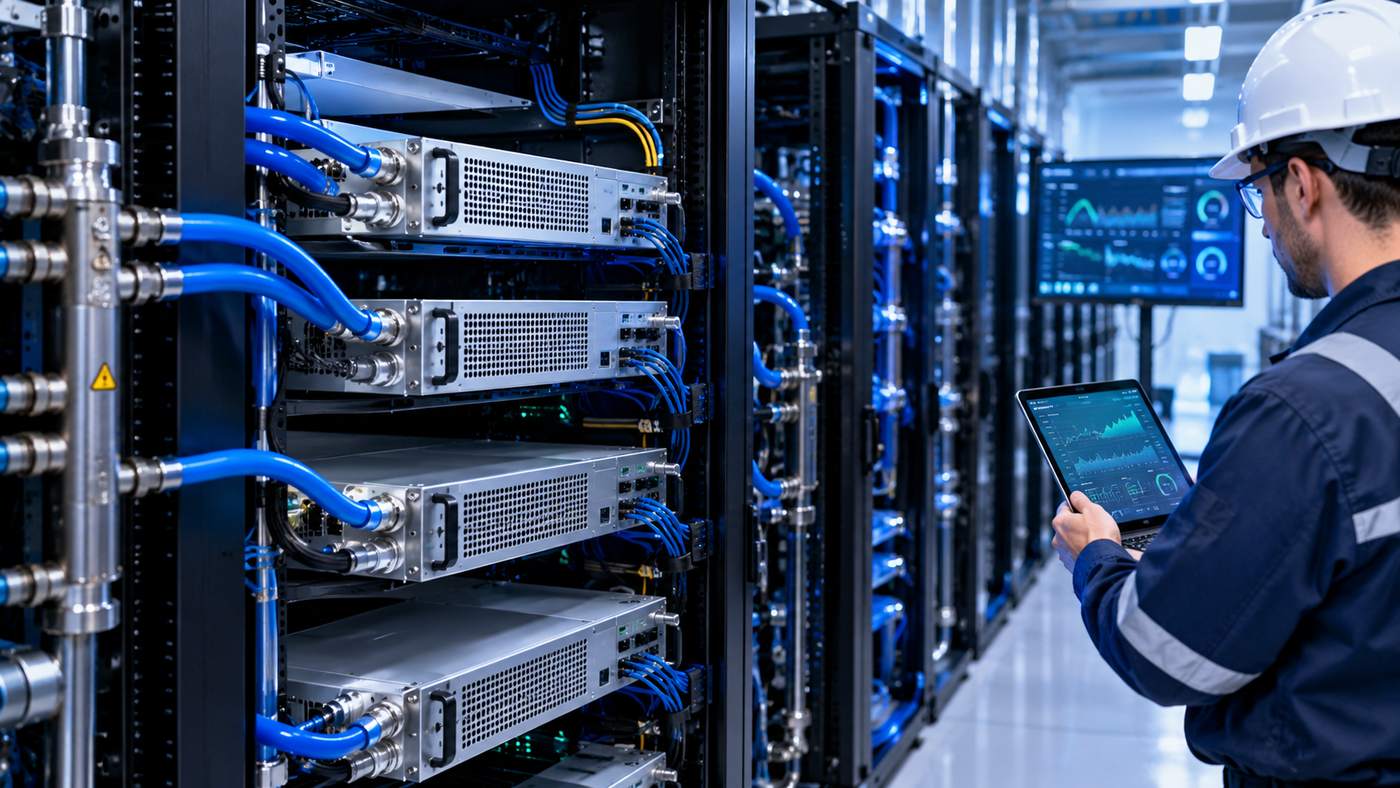
An industrial Bitcoin miner can look impressive on a specification sheet while remaining unsuitable for the facility expected to run it. The A4 Ultra Hydro is Bitdeer’s high performance SEALMINER model designed for SHA 256 mining with liquid based heat removal. Its published hashrate and energy efficiency are significant, but they are only the beginning of a responsible equipment assessment. This guide explains seven important checks for evaluating the hardware, comparing the SEALMINER range, and planning a mining deployment without confusing theoretical computational performance with guaranteed financial returns.
What Is the Bitdeer SEALMINER A4 Ultra Hydro?
The A4 Ultra Hydro is an application specific integrated circuit miner designed to perform SHA 256 hashing. Bitdeer announced the SEALMINER A4 family on April 7, 2026, introducing its SEAL04 chip architecture across three models. The lineup includes the air cooled A4 Pro Air, the liquid cooled A4 Pro Hydro, and the more powerful liquid cooled flagship. The manufacturer lists Bitcoin, Bitcoin Cash, and Bitcoin SV among the compatible SHA 256 networks.
The stated performance of the A4 Ultra Hydro is 886 terahashes per second, with power consumption of 8,372.7 watts and an efficiency of 9.45 joules per terahash. These are nominal manufacturer figures, not independently guaranteed results for every operating environment. Bitdeer notes that hashrate can vary by approximately 10 percent and efficiency by approximately 5 percent, with delivered unit specifications controlling.
Why This Is Industrial Hardware
The miner uses a low profile 2U design intended for professional rack environments and a 380 to 480 volt three phase supply. It is not an ordinary domestic appliance that can be connected to a household wall socket. Its high electrical demand and dependence on a maintained coolant loop make it most appropriate for facilities with suitable engineering and operational support.
Keep Launch Status Separate From Delivery
Bitdeer’s product page was still displaying a stay tuned message when checked in November 2026. The April announcement confirms the model and target specifications, not a guaranteed retail shipment date, available inventory, or price.
1. Read Hashrate and Power Efficiency Together
The first step in assessing the A4 Ultra Hydro is understanding what its headline numbers measure. Hashrate describes how many hashing attempts a miner can perform per second. Higher hashrate increases a miner’s proportional contribution to a proof of work network, but rewards also depend on total competing network power, pool payout methods, and other changing conditions.
Understand Joules per Terahash
An efficiency rating of 9.45 J/TH means the nominal machine uses about 9.45 joules for each terahash of computation. The power figure follows from multiplying 886 TH/s by 9.45 J/TH, which gives approximately 8,372.7 joules each second, or watts.
Energy efficiency matters greatly when electricity is expensive, but even an efficient device can lose money if mining revenue declines or operating costs exceed earnings.
Consider Operating Profiles and Tolerances
For an A4 Ultra Hydro deployment, request a current specification sheet covering the delivered batch, intended operating profile, permitted coolant conditions, and performance tolerances. Do not assume that every unofficial reseller statement about alternate hashrates, noise, or overclocking represents a supported manufacturer setting. Sustained results should be verified by monitoring accepted pool shares as well as local hardware readings.
Test Effective Rather Than Displayed Hashrate
A miner interface may display a temporary hashrate that differs from its longer term contribution to the pool. Inspect average accepted work, rejected shares, interruptions, and actual power draw over a meaningful period.
2. Design the Hydro Cooling System Before Ordering
Liquid cooling is central to the A4 Ultra Hydro. Heat generated by the computing chips must move into a controlled fluid circuit and then leave the facility through an appropriate heat exchanger, dry cooler, cooling tower, or other engineered heat rejection system. A compatible miner does not by itself create a complete cooling installation.
Assess the Full Heat Load
A device consuming about 8.37 kilowatts ultimately releases nearly that amount of energy as heat within or around the facility, apart from small energy flows leaving elsewhere. For ten nominal units, the combined miner electrical demand would be roughly 83.7 kilowatts before auxiliary equipment. Engineers must account for the cooling system’s own electrical consumption, local weather, redundancy requirements, and realistic operating margins.
The A4 Ultra Hydro may be attractive in high density racks because liquid cooling moves heat away from components without requiring the same direct air volume as conventional air cooling. Nevertheless, pumps, hoses, piping and external heat rejection equipment still require design, power and maintenance.
Verify Flow, Quality and Connections
The approved fluid specification is as important as the heat exchanger rating. Ask Bitdeer or the authorized supplier for the approved coolant chemistry, inlet temperature, pressure, minimum flow, fittings, filtration, and leak detection specifications for the particular hardware revision. Values copied from an unrelated mining model could damage equipment or invalidate support. Include provisions for controlled filling, air removal, isolation and safe service access.
Build a Response Plan for Cooling Faults
Loss of flow, contamination, a blocked filter, or a pump failure can threaten multiple machines. An industrial installation should have monitoring, protective shutdown behavior, and an escalation process.
3. Confirm Electrical Infrastructure and Facility Capacity
The published power requirement makes an A4 Ultra Hydro a substantial electrical load. Bitdeer describes the hydro models as using 380 to 480 volt three phase AC input.
Plan for Continuous Operation
Bitcoin mining equipment may run for long periods at high load. A qualified electrical engineer should evaluate distribution equipment, conductors, overcurrent protection, grounding, switching, power quality, and the applicable continuous load rules. A facility designed for smaller machines cannot be assumed to support a new fleet merely because there is physical rack space.
For illustration, the nominal 8.3727 kilowatt miner consumes approximately 200.94 kilowatt hours over 24 hours of uninterrupted operation. Thirty such days would amount to roughly 6,028 kilowatt hours for one miner before the electricity used by pumps and cooling equipment. Actual consumption depends on operating profile and downtime.
Account for the Full Electricity Bill
The A4 Ultra Hydro at an illustrative energy rate of $0.10 per kilowatt hour would incur approximately $20.09 per day in direct miner energy charges, assuming continuous operation at nominal power. That figure excludes demand charges, taxes, distribution fees, cooling infrastructure, networking and facility overhead.
Prioritize Qualified Installation
Do not adapt household outlets, bypass protective devices, or improvise high voltage connections to run mining hardware. Facility operators should rely on appropriately qualified professionals and documented commissioning before the equipment is energized.
4. Calculate Mining Economics Without Assuming Profit
A high hashrate does not tell an operator how much Bitcoin will be earned tomorrow. Mining revenue depends on the miner’s share of the network, block subsidies, transaction fees, pool rules, availability and Bitcoin’s price. The fixed block subsidy has been 3.125 BTC since the April 2024 halving, but that subsidy is awarded for a successfully mined block, not for running each individual machine.
Build a Revenue Model With Clear Assumptions
For an A4 Ultra Hydro assessment, begin with a current network hashrate or difficulty estimate and calculate the expected share contributed by 886 TH/s. Incorporate pool fees, rejected work, uptime, and the chosen payout approach. Then express the expected Bitcoin receipts in a chosen currency using a clearly stated exchange rate. Recalculate the model under higher network difficulty and lower asset prices, because both can reduce returns.
Solo mining involves highly unpredictable timing of payouts for a small share of the network. A mining pool can distribute rewards more regularly, but it cannot eliminate market or operating risk.
Calculate Operating Margin and Capital Recovery
Subtract all recurring expenses from the expected revenue: miner energy, cooling and pumping, hosting, pool fees, repairs, networking, staff, insurance, and other facility charges. Then compare the remaining amount with the complete acquisition cost, including freight, duties, installation and infrastructure upgrades. Depreciation, financing and tax treatment can further affect the economic result.
For the A4 Ultra Hydro, an advertised return on investment period from a reseller should not be treated as a promise. A calculator using yesterday’s Bitcoin price or difficulty may produce a dramatically different result next month. Test optimistic, base and adverse scenarios before committing capital.
Decide When Shutdown Makes Financial Sense
If the expected marginal revenue falls below the avoidable cost of operating, temporary curtailment may be worth considering. Whether this is practical depends on hosting contracts, demand charges, restart reliability, cooling requirements and contractual obligations.
5. Check Rack Integration, Networking and Maintenance
The physical installation of an A4 Ultra Hydro requires more than enough space for a metal chassis. Bitdeer lists a 2U hydro form factor measuring 482 by 665 by 86 millimeters. The rack must accommodate its depth, weight, rail or mounting arrangement, fluid connections, electrical cables and service clearances.
Consider Density at the Rack Level
High rack density can improve space utilization but concentrates power and heat removal requirements. Plan the distribution of coolant and electrical loads across cabinets and account for access to serviceable components. A rack with room for several units may still exceed the permitted power or cooling capacity.
Establish Secure Network Management
ASIC miners generally connect to the facility network and a chosen mining pool through an appropriate management interface. Use trusted firmware, unique credentials, restricted administrative access and documented changes. Isolate mining equipment from unrelated business systems where practical. Verify pool destination addresses and monitor connection failures; misconfiguration or compromised credentials can redirect work or interrupt production.
Maintain a Useful Equipment Record
For every A4 Ultra Hydro unit, record its serial number, supplier, firmware version, installation date, commissioning results, electrical circuit, coolant connection and warranty terms. Track repeated faults and identify whether they come from a miner, rack, pump or network segment.
6. Compare A4 Series Models on Relevant Measures
The SEALMINER series offers different performance and cooling formats. Bitdeer’s April 2026 announcement gives the A4 Pro Hydro a nominal 680 TH/s, 7,412 watts and 10.9 J/TH. The A4 Pro Air is rated at 336 TH/s, 3,662.4 watts and 10.9 J/TH. The A4 Ultra Hydro leads the published trio with 886 TH/s and 9.45 J/TH.
See What the Efficiency Difference Means
Compared with the A4 Pro Hydro, the A4 Ultra Hydro provides about 30 percent more nominal hashrate while consuming about 13 percent more miner power. Its energy per terahash is approximately 13 percent lower.
An A4 Pro Air can be more suitable where a reliable hydro cooling system is unavailable and the required power capacity is smaller. The A4 Pro Hydro may suit facilities expanding existing liquid cooled capacity in smaller increments. The most efficient nominal miner is not automatically the best purchase if acquiring or hosting it costs disproportionately more.
Distinguish Cooling Systems From Mining Capability
These machines perform the same underlying algorithm, but their heat removal infrastructure differs. Do not compare a hydro machine’s electrical rating with an air cooled model while excluding the pumps and heat rejection equipment used by the hydro installation.
Compare Lifetime Cost per Effective Terahash
For an A4 Ultra Hydro purchase decision, consider actual delivered hardware cost, stable accepted hashrate, electricity, downtime and any capital upgrades. A lower initial price per terahash may be less valuable than dependable output under the facility’s actual conditions.
7. Verify Availability, Supplier Terms and Long Term Support
Before buying an A4 Ultra Hydro, verify the specific seller’s identity and whether the machine is genuinely available. As of the official product page checked in November 2026, Bitdeer’s listing showed a stay tuned status rather than a confirmed published purchase price. Third party offers may advertise different prices, batch dates and inventory conditions; those claims require separate confirmation.
Request a Complete Written Offer
Ask for the model and batch, hashrate specification, unit condition, payment terms, currency, delivery schedule, taxes, customs responsibilities, freight arrangements, and the warranty starting date. Do not infer an official warranty from a reseller’s promotional headline.
Verify Firmware and Service Options
Authorized software updates, replacement parts, technical support and repair logistics influence the productive life of an ASIC fleet. Confirm the required firmware procedure and how warranty claims are handled across borders.
Avoid Risky Payment Assumptions
Large equipment purchases can attract fraudulent listings and payment instructions. Check beneficiary details through a trusted independent channel, review the contract and consider appropriate purchase protections.
Common Mistakes When Evaluating Hydro ASIC Miners
The most common mistake is treating nominal hashrate as income. Buyers may also underestimate three phase power requirements, accept unverified reseller availability, or plan rack density using only the physical height of the machine.
A careful A4 Ultra Hydro assessment combines manufacturer documentation, qualified engineering, a realistic economic model and practical maintenance planning. Separate confirmed technical specifications from assumptions about rewards, prices and future performance.
Practical Deployment Checklist
- Verify the delivered model, nominal hashrate, power rating and stated tolerances.
- Confirm three phase electrical capacity, circuit protection and operating costs.
- Design the approved coolant loop, heat rejection, monitoring and fault response.
- Measure actual accepted pool work and total facility electricity use.
- Test profitability against higher difficulty, lower Bitcoin prices and downtime.
- Confirm rack fit, safe service access, network controls and support arrangements.
- Review the complete purchase contract, delivery status and warranty conditions.
Frequently Asked Questions
What is the A4 Ultra Hydro used for?
It is a Bitdeer SEALMINER ASIC device intended for SHA 256 cryptocurrency mining, including supported Bitcoin family networks, using industrial liquid cooling.
What is the A4 Ultra Hydro hashrate?
Bitdeer publishes a nominal 886 TH/s rating. Real operation can differ, and the manufacturer states performance tolerances for the A4 series.
How much electricity does the A4 Ultra Hydro consume?
Its advertised consumption is 8,372.7 watts, equivalent to about 200.94 kilowatt hours in 24 hours at constant nominal load, excluding cooling overhead.
Does the A4 Ultra Hydro require liquid cooling?
Yes. Its hydro design requires a compatible engineered coolant circuit and external heat rejection system rather than ordinary standalone air cooling.
Is the A4 Ultra Hydro profitable for Bitcoin mining?
Profitability is not guaranteed. Revenue depends on network competition, Bitcoin prices, accepted work and pool terms, while energy and operating costs vary by site.
Is the A4 Ultra Hydro available to buy directly?
Bitdeer’s official product page displayed a stay tuned status when checked in November 2026. Confirm current stock, price and shipping with the manufacturer or a verified supplier.
Conclusion
The A4 Ultra Hydro offers a notable published combination of 886 TH/s and 9.45 J/TH, making it an important model to examine for professional hydro cooled mining operations. Its real value depends on reliable cooling, adequate electrical infrastructure, verified delivered performance and realistic operating economics. Comparing total facility costs and supplier terms is more useful than accepting a speculative payback figure. A disciplined engineering and financial assessment provides the strongest basis for any deployment decision.
