
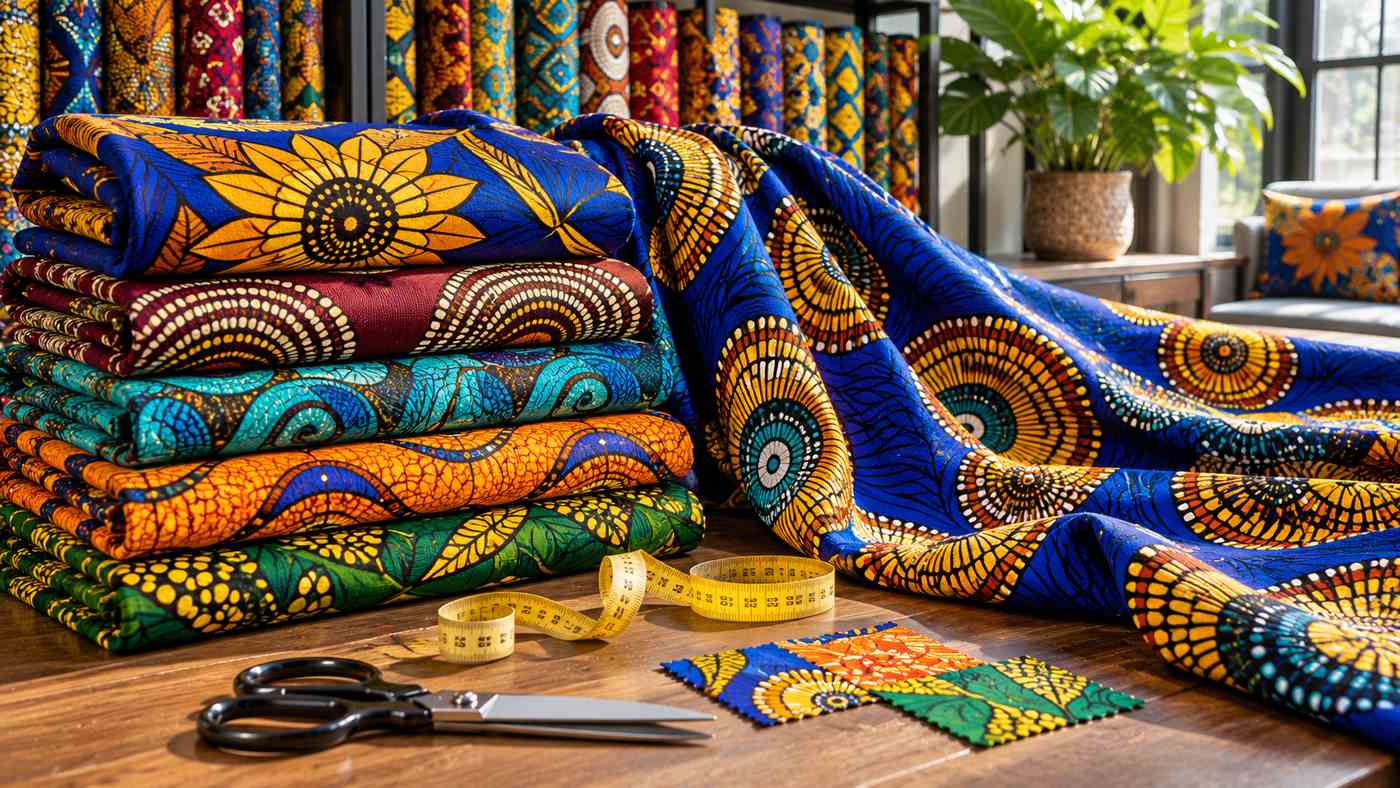
Fashion becomes more expressive when color, pattern, and personal identity come together. African print fabric is widely associated with striking motifs, distinctive color combinations, and versatile garments that range from everyday separates to formal celebration outfits. Yet choosing a beautiful print is only the beginning. The best results also depend on fiber content, pattern placement, garment construction, and the meaning a textile may hold in a particular community.
Whether you are buying material for a tailored dress, making gifts, or exploring textile traditions, a little practical knowledge makes a noticeable difference. This guide explains how to recognize common print types, select suitable material for your project, and enjoy bold designs without treating Africa’s many textile traditions as a single style.
What Is African Print Fabric?
African print fabric is a broad retail term often used for patterned textiles associated with African fashion, especially the cotton prints commonly called Ankara or wax prints. These materials appear in dresses, shirts, skirts, headwraps, and accessories. They are recognized for repeated patterns that can be geometric, botanical, symbolic, or abstract.
The phrase does not describe one legally defined composition, manufacturing process, or country of origin. A fabric sold under this label might be cotton, a blend, or a synthetic material. It might be produced through a resist printing method, conventional textile printing, or another process. The product description matters more than the name alone.
Understanding Ankara and Dutch Wax Prints
Ankara is often used for colorful printed cotton associated with West African dress. Dutch wax print refers to a particular commercial history and printing tradition influenced by Indonesian batik. Historically, European manufacturers developed industrial approaches to imitate the resist effects of batik and sold the resulting fabrics in African markets.
Today’s African print fabric may imitate the characteristic crackled or layered appearance without necessarily using actual wax in production. Therefore, a wax print label does not guarantee that natural wax was applied to every piece. Look for the stated manufacturing details if the process matters to your purchase.
Not All African Textiles Are the Same
Kente, Adire, Aso Oke, and kanga have their own histories and construction methods. Traditional kente is associated with woven strips and particular Ghanaian cultural contexts; Yoruba Adire refers to resist dyed cloth traditions in Nigeria. These are not simply alternative names for industrial Ankara prints.
Recognizing these distinctions improves both shopping accuracy and cultural understanding. A designer can appreciate several traditions without incorrectly suggesting they are interchangeable.
The Cultural Story Behind Bold Textile Prints
The history of African print fabric includes trade, migration, manufacturing, and creative choices made by African consumers, merchants, and designers. Museum collections document the arrival of factory printed cloth from Europe during the nineteenth century and its development into locally meaningful fashion across parts of Africa.
Patterns sometimes acquire popular names, associations, and stories in specific markets. These interpretations may vary by country, language, generation, and seller. A motif that represents something to one community should not automatically be described as having the same meaning everywhere.
Why Provenance Matters
Some textile businesses design and manufacture within African countries, while others import products from Europe or Asia. There is no single origin that accurately describes every item marketed as African print fabric. If the place of design or manufacturing is important to you, seek clear information from the seller rather than inferring it from bright colors or a familiar design.
Understanding provenance allows buyers to support makers and businesses deliberately. It also gives home sewists and fashion designers a more accurate story to share about the materials they use.
7 Beautiful Ways to Choose and Style African Print Fabric
A strong garment begins with decisions that suit the fabric and the person who will wear it. These seven approaches combine fashion ideas with practical sewing and buying advice.
1. Choose the Fiber and Weight for Your Project
Before selecting a print, identify what the fabric is made from. Many traditional style wax prints are cotton, valued for structure and suitability for tailored garments. However, African print fabric may also contain polyester or other fibers, which can change its drape, breathability, care requirements, and response to heat.
Hold the material or request a swatch if shopping online. Does it stand away from the body, fold softly, or feel particularly stiff? A structured cotton can work well for a fitted skirt or sharply shaped sleeve. A softer material may suit gathered pieces where movement is the priority.
Match Material Behavior to Garment Design
The same sewing pattern can look quite different when made in crisp cloth rather than fluid cloth. Consider whether the design needs volume, a smooth fall, or stretch. Most woven cotton wax prints have little natural stretch, so fitted garments may require suitable closures and enough ease for comfortable movement.
Do not assume a product described as premium will automatically suit your design. The intended end use determines which characteristics are valuable.
2. Select a Pattern Scale That Flatters the Finished Piece
A large circular motif may look dramatic across a flowing skirt but become difficult to recognize on a narrow belt or small sleeve. Tiny repeated shapes can create intricate texture on a shirt or blouse while becoming visually busy in a heavily gathered garment.
When choosing African print fabric, evaluate the pattern at full scale. Online product photographs sometimes show folded cloth that conceals the actual repeat. Ask for a flat photograph with measurements or a ruler beside the design when necessary.
Consider Pattern Placement Before Cutting
Lay the pattern pieces over the cloth before using scissors. Check whether a prominent motif will sit at the center of the bodice, across a seam, or in an unintended position. Directional designs may require all pieces to face the same way, increasing the amount of cloth needed.
If you are working with a limited length, prioritize consistent placement on the most visible garment sections rather than promising perfect alignment at every seam.
3. Build a Color Palette Around One Statement Print
Bright combinations are part of the appeal of African print fabric, but an outfit does not need multiple competing prints to look expressive. Study the existing colors and choose one as the foundation for shoes, a bag, or an additional layer.
For example, a blue, gold, and cream print could be paired with a plain cream blouse or deep blue trousers. Earthy rust, olive, and brown motifs can complement warm neutral accessories. These are styling possibilities, not rules about which colors belong to particular cultures.
A balanced approach gives the print room to be noticed. When combining two patterns, repeat at least one color and vary their scale. A large botanical design might work beside a much smaller geometric pattern if the overall outfit remains visually organized.
4. Create Statement Dresses and Occasion Outfits
African print fabric can make elegant event clothing when the silhouette and pattern are planned together. A fitted midi dress emphasizes structure; a gathered maxi dress shows more of a large repeat; and a coordinated jacket and skirt set offers several ways to restyle the same material.
For formal wear, consider how the print will photograph and whether decorative seams interrupt key motifs. A simple neckline can keep attention on intricate cloth, while shaped sleeves or a defined waist can add interest without requiring excessive embellishment.
Tailoring Details That Improve the Finish
Test the fit using an inexpensive fabric if the pattern is unfamiliar. Press seams according to the textile’s care instructions and use interfacing appropriate to its weight. For lined garments, choose a lining that feels comfortable and does not distort the outer fabric.
A skilled tailor can help adjust pattern placement around darts, pleats, and closures. These small construction decisions can make African print fabric look intentional rather than simply colorful.
5. Add Personality to Everyday Clothing
Bold textiles do not need to be reserved for weddings or formal celebrations. Everyday garments are a useful way to explore color without committing to an entire matching ensemble.
A casual shirt made from African print fabric can sit comfortably within a wardrobe of plain jeans and trousers. A printed skirt works with a simple knit top, while a lightweight outer layer can add character to otherwise neutral clothing. The practical goal is to balance visual interest with comfort, laundering needs, and the activities of daily life.
Start with one piece you know you will wear. Check that it has room for movement and appropriate closures. If the cloth is stiff when new, ask whether the manufacturer expects it to soften after washing, and test a swatch before assuming the finished garment will change significantly.
6. Use Fabric Remnants for Accessories and Interiors
Smaller sewing projects offer a way to enjoy African print fabric without purchasing enough for a full outfit. Tote bags, headbands, fabric covered notebooks, and cushion covers can highlight attractive parts of a print. Matching accessories can also make use of pieces left over after cutting a larger garment.
Home decor benefits from the same design principles as clothing. Choose motifs that coordinate with the room’s existing colors, and decide whether the textile should be the main focal point or a smaller accent. A pair of patterned cushion covers may have more impact than introducing different prints onto every visible surface.
Consider Durability and Cleaning Needs
For heavily used accessories, think about abrasion resistance, reinforcement, and whether the item will need frequent cleaning. A decorative pillow and a market tote experience different wear. Not every African print fabric is suitable for upholstery or commercial use, so check relevant performance requirements before selecting it for demanding applications.
7. Buy for Quality, Transparency, and Long Term Value
A beautiful photograph cannot tell you everything about textile quality. Inspect the weave, consistency of printing, fabric width, fiber content, and seller’s return policy. Check whether both sides of the cloth are pictured, especially when the reverse appearance matters for your project.
If buying African print fabric online, verify whether the price covers one yard, one meter, a precut panel, or a full bundle. Six yard pieces are offered by some retailers, but they are not a universal purchasing unit. Calculate your requirements using the actual width and the cutting layout for your sewing pattern.
Ask about shrinkage, colorfastness, and care instructions. Unclear claims such as genuine, authentic, or luxury should not replace useful product details. A trusted seller can explain where the material comes from and what is known about its composition, without inventing a cultural story or promising performance it cannot support.
How to Calculate the Right Amount of Fabric
Buying too little creates matching problems, especially when a large motif is discontinued. Buying far too much increases expense and unwanted offcuts. Start with the recommended yardage in your sewing pattern, then adjust for the actual fabric width, garment size, directional designs, and desired pattern matching.
African print fabric is sold in different widths, so do not rely on an assumed standard. A pattern drafted for wider cloth may require more length when using a narrower piece. Large repeats and symmetrical placement can also increase consumption.
Plan Your Cutting Layout
Make a rough diagram or place paper pattern pieces on a measured surface before ordering. Include seam allowances if your pattern does not already provide them. If coordinating multiple garments, calculate each separately and then see whether offcuts from larger pieces can be used for smaller accessories.
For uncertain quantities, ask a dressmaker or fabric specialist to review your layout. This is particularly useful for wedding party sets, large gowns, or custom tailoring where matching dye lots matters.
Sewing Techniques That Protect Color and Shape
Successful results with African print fabric begin before the first seam. Review care instructions and test a small piece for shrinkage and dye transfer. Where the manufacturer permits, prewash the material using the method you expect to use for the finished garment. Let it dry fully, then press it with an appropriate temperature before cutting.
Use needles and thread suited to the fabric’s weight. Test stitching on a scrap to check tension, seam appearance, and whether the needle leaves visible holes. Finish raw edges with a suitable method, especially if the weave frays easily. For prints with a clear direction, mark the top of each pattern piece so a design does not appear upside down after assembly.
Why a Test Swatch Is Worth the Time
A swatch reveals more than color. You can check how the fabric behaves after washing, whether pressing causes shine or distortion, and how seams affect its drape. Testing reduces avoidable mistakes when working with limited or expensive material.
How to Wash and Store African Print Fabric
Care depends on the specific textile, not on its appearance alone. Many makers of cotton wax print garments recommend gentle washing in cool water, mild detergent, washing with similar colors, and drying away from strong direct sunlight. However, follow the supplier’s care label when it provides more precise instructions.
Before washing a new African print fabric garment, test for possible color transfer and consider whether the piece has been pretreated. Avoid harsh bleaching products unless the manufacturer specifically allows them. Turn finished garments inside out when appropriate to reduce friction on printed surfaces.
Protecting the Print During Ironing
Check the fiber content before selecting an iron setting. Cotton may tolerate temperatures that would damage synthetic blends or decorative finishes. When uncertain, begin with a low setting and test a concealed area. Ironing from the reverse side and using a pressing cloth may help protect sensitive surfaces.
Store clean, thoroughly dry cloth in a cool place away from prolonged direct sunlight. Fold carefully or hang finished garments according to their structure, and avoid tightly compressing embellished pieces. Correct care can help African print fabric remain attractive for repeated wear, though no textile is entirely immune to fading or wear.
Buying and Wearing Prints With Cultural Awareness
African textile traditions are diverse, and specific cloths may carry ceremonial, political, or community significance. Before presenting a pattern as representing a particular ethnic group or spiritual idea, verify that interpretation through reliable cultural and maker information. Avoid describing every bright geometric print as tribal, since that generic label can obscure the textile’s actual background.
Buying African print fabric from a clearly identified designer, manufacturer, or specialist retailer can make provenance easier to understand. Supporting local makers, learning a design’s documented history, and crediting creative work are more meaningful than assuming that a color palette alone guarantees authenticity.
Cultural appreciation is strongest when personal style is accompanied by curiosity and respect. People can wear beautiful textiles while recognizing the artisans, markets, and communities that shape their significance.
Frequently Asked Questions
1. What is African print fabric made from?
Many Ankara and wax print textiles are made from cotton, but some products contain blends or synthetic fibers. Always check the specific product’s composition and care label.
2. Is African print fabric the same as Ankara?
Ankara is a common name for a widely recognized category of colorful printed cloth. African print fabric is a broader retail phrase and may describe materials beyond Ankara or traditional wax print.
3. Can African print fabric be used for everyday clothing?
Yes. It can work for shirts, skirts, dresses, trousers, and accessories when the material’s weight, comfort, and care needs suit the intended design.
4. Does African print fabric shrink after washing?
Some cotton fabrics may shrink, especially if they have not been pretreated. Check the care instructions and test or prewash a swatch before cutting a garment.
5. How do I choose a good quality African wax print?
Review stated fiber content, print consistency, weave, fabric width, care guidance, and seller transparency. A clear product specification is more useful than an unsupported premium label.
6. Is every African print made in Africa?
No. These fabrics are designed and manufactured in several regions, including Africa, Europe, and Asia. Ask the seller about the specific product’s origin rather than assuming it from the pattern.
Conclusion
African print fabric brings color, design versatility, and rich textile histories to contemporary wardrobes and creative projects. The strongest choices begin with understanding material composition, motif scale, construction needs, and the origin of the design. Careful purchasing and sensible maintenance help preserve the appearance and usefulness of finished pieces. Above all, enjoying these textiles becomes more rewarding when confident personal style is matched with respect for the distinct traditions behind them.
