
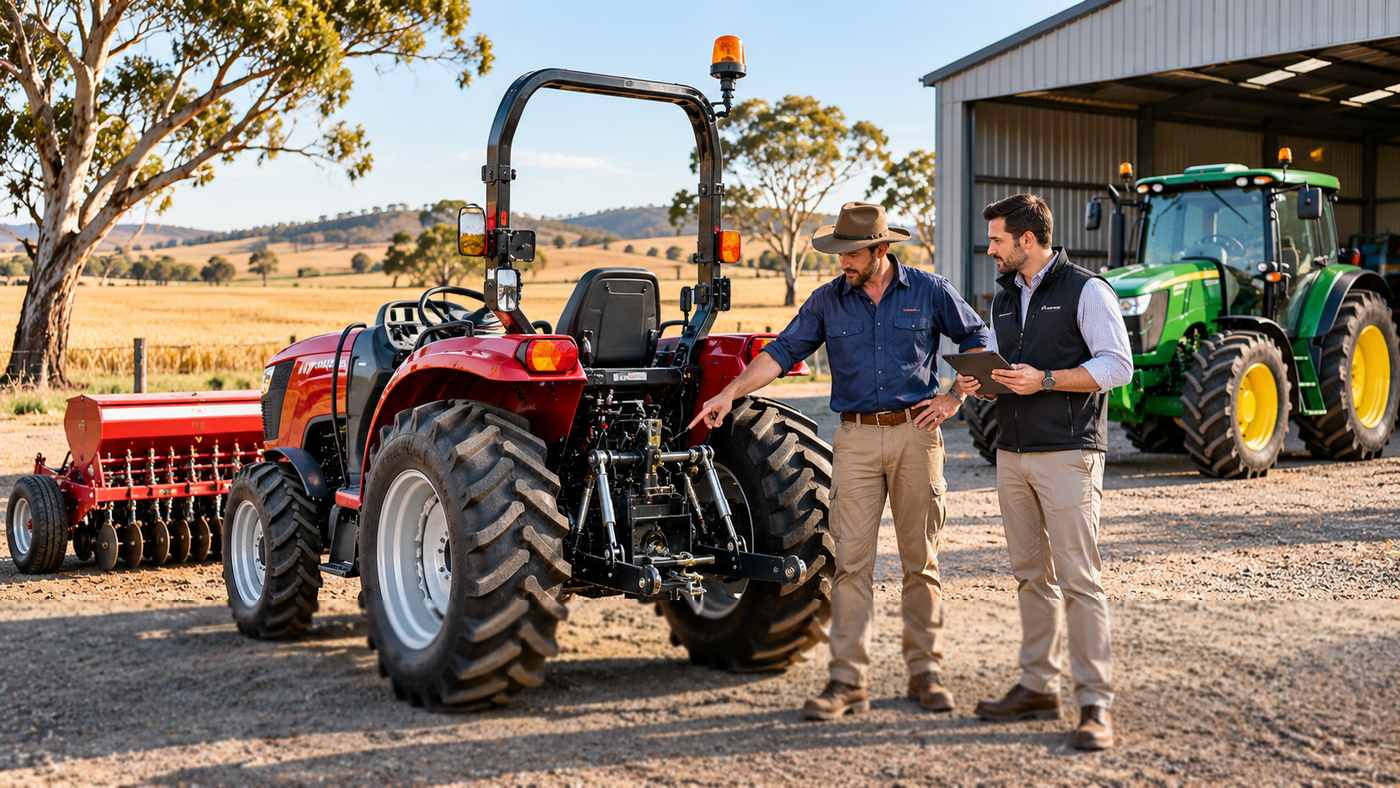
Finding the right agricultural equipment for sale is an important investment decision for Australian farmers, agricultural contractors, horticultural businesses, and rural property owners. Whether you need a powerful tractor for broadacre farming, compact equipment for an orchard, or reliable implements for maintaining farmland, choosing suitable machinery can affect productivity, operating costs, and workplace safety. Australia’s farming conditions vary considerably, making it essential to consider soil types, property size, climate, equipment compatibility, and maintenance requirements before purchasing. Both new and used machinery can provide value when selected carefully. This comprehensive guide explains nine essential buying tips, common machinery categories, practical inspection methods, and how to choose a dependable agricultural equipment dealer in Australia in 2026.
Why Choosing the Right Agricultural Machinery Matters
Modern farming depends on machinery capable of performing demanding tasks efficiently and reliably.
Tractors, cultivation equipment, seeders, sprayers, mowers, and other implements help agricultural businesses manage land and complete important seasonal work.
However, purchasing machinery that does not suit the intended operation can create unnecessary expenses.
A tractor with insufficient lifting capacity may struggle with particular implements, while an oversized machine may be impractical for narrow orchard rows or smaller properties.
Reliability is another important consideration.
Unexpected equipment failures during planting, harvesting, or other time-sensitive operations can interrupt work and increase operating costs.
When researching agricultural equipment for sale, buyers should consider the complete ownership experience rather than focusing only on the purchase price.
The Tractor and Machinery Association of Australia recommends understanding essential tractor specifications, inspecting machinery before purchase, and confirming servicing and warranty arrangements. Tractor and Machinery Association of Australia
9 Essential Tips for Buying Agricultural Equipment in Australia
1. Identify Your Farming Needs Before Choosing Machinery
The first step is understanding exactly what the equipment must accomplish.
Different agricultural operations require different machinery capabilities.
A vineyard may need a compact tractor suitable for narrow working spaces, while a larger cropping operation may need equipment designed for substantial towing loads and extensive fieldwork.
Consider Your Property and Daily Tasks
Begin by evaluating the size of your property, terrain, soil conditions, crop types, and frequency of use.
Identify the most demanding tasks the machine will perform.
For example, a horticultural business might need mowing, spraying, material handling, and cultivation capabilities.
A livestock property may prioritize feeding operations, pasture maintenance, and moving materials.
Create a list of essential functions before comparing machinery models.
When evaluating agricultural equipment for sale, this preparation helps prevent unnecessary spending on features that may rarely be used.
It also makes conversations with equipment dealers more productive because you can describe your actual operational requirements.
2. Select the Correct Tractor Size and Specifications
Tractors are among the most versatile machines used in Australian agriculture.
However, their usefulness depends on the relationship between engine performance, traction, lifting capacity, dimensions, and compatible implements.
Horsepower is important, but it should not be the only factor in your decision.
A tractor’s weight, transmission, hydraulic capacity, wheel configuration, and power take-off system can significantly affect its suitability.
Match the Tractor to Your Workload
Compact tractors may be suitable for landscaping, lifestyle properties, and certain horticultural applications.
Larger agricultural tractors can support more demanding field operations.
Consider whether four-wheel drive is necessary for your terrain and operating conditions.
Review the manufacturer’s rated capacities instead of relying on general descriptions such as “heavy-duty” or “powerful”.
The Tractor and Machinery Association emphasizes evaluating towing and lifting capabilities alongside other specifications before purchasing. Tractor and Machinery Association of Australia
Agricultural equipment for sale should be assessed against the implements you expect to use, not simply the maximum engine output advertised.
3. Compare New and Used Farming Equipment
Buying new machinery provides access to current models, available manufacturer support, and applicable warranty arrangements.
Used equipment may offer a lower initial purchase price, making it attractive to smaller businesses or farmers expanding their machinery fleet.
Neither option is automatically better.
The correct choice depends on the machine’s condition, expected workload, availability of parts, and total ownership costs.
Advantages of New Equipment
New machinery may provide updated operating features, fewer accumulated working hours, and clearer maintenance histories.
However, it usually requires a higher initial investment.
Advantages of Used Equipment
Second-hand machinery can offer access to established models at a lower purchase price.
It may be suitable for occasional tasks or operations that do not justify purchasing a new machine.
Nevertheless, wear, previous maintenance, and component condition deserve careful attention.
When reviewing used agricultural equipment for sale, compare the asking price with the likely cost of repairs, transportation, and any necessary safety improvements.
A cheaper machine is not a bargain when it requires extensive repairs shortly after purchase.
4. Inspect Second-Hand Machinery Before Purchasing
A thorough inspection is essential when considering used tractors, mowers, and agricultural implements.
Even equipment that looks clean can have hidden mechanical problems or a history of inadequate maintenance.
Whenever possible, arrange for a competent mechanic or experienced machinery inspector to assess the equipment.
Important Inspection Areas
Check the engine for visible leaks, unusual noises, and signs of poor maintenance.
Review the condition of tyres, hydraulic connections, brakes, steering components, and accessible structural parts.
Examine maintenance records and confirm whether major repairs have been completed.
Ask the seller about the machine’s operating hours, previous applications, and any known faults.
Do not operate unfamiliar or potentially unsafe machinery simply to test it. Any demonstration should be conducted by a competent operator following appropriate safety procedures.
Western Australia’s WorkSafe guidance recommends checking second-hand machinery for missing or damaged guards and requesting operating instructions and maintenance records. WorkSafe – LGIRS
A careful inspection makes it easier to compare used agricultural equipment for sale and avoid unexpected repair costs.
5. Check Compatibility With Farm Implements
Tractors often perform multiple jobs by operating different attachments.
These may include rotary mowers, cultivation implements, seeders, sprayers, and material-handling equipment.
However, not every attachment is suitable for every tractor.
Compatibility depends on factors such as power requirements, hydraulic capacity, hitch specifications, machine weight, and manufacturer limitations.
Review Attachment Requirements
Before purchasing, identify the implements you already own and any additional attachments you expect to use.
Check the relevant manufacturer’s specifications.
A tractor with sufficient engine horsepower may still lack the hydraulic capacity or lifting ability required for a particular attachment.
Incorrectly matched machinery can affect performance and create safety hazards.
When comparing agricultural equipment for sale, ask the supplier to confirm compatibility using the actual models and specifications.
Rosher’s published product categories include agricultural implements intended for farming and horticultural applications across Western Australia. Rosher
Choosing compatible equipment helps reduce unnecessary purchases and supports efficient farm operations.
6. Prioritise Operator Safety and Machinery Protection
Farm machinery can create serious hazards when equipment is incorrectly operated, poorly maintained, or missing appropriate safety features.
Common risks include rollovers, entanglement, crushing injuries, and contact with moving components.
Safety should therefore be part of every purchasing decision.
Inspect Essential Safety Features
For tractors, check the condition and suitability of rollover protective structures and operator restraints.
Inspect protective guards, warning indicators, access steps, and relevant safety controls.
Machines with power take-off systems require appropriate guarding and safe operating procedures.
Never bypass safety interlocks or operate equipment with missing protective components.
Australia’s National Centre for Farmer Health emphasizes tractor safety, including rollover protection and appropriate operator training. National Centre for Farmer Health
Before using agricultural equipment for sale that you have recently purchased, ensure operators understand the manufacturer’s instructions and receive any training required for the intended work.
Safety improvements should be considered part of the purchase budget rather than optional extras.
7. Evaluate Dealer Support and Spare Parts Availability
The relationship with an agricultural equipment dealer should not necessarily end when the machine is delivered.
Over time, tractors and implements require servicing, replacement parts, and technical assistance.
Poor access to these services can increase downtime during important farming periods.
Ask About After-Sales Services
Before purchasing, confirm whether the supplier can provide suitable spare parts, servicing arrangements, and technical support.
Ask about the availability of common replacement components and the process for obtaining specialized parts.
Consider the distance between your property and the nearest suitable service provider.
For Western Australian farmers, equipment suppliers with regional experience may better understand local operating conditions and logistical challenges.
When reviewing agricultural equipment for sale, compare after-sales support alongside machinery specifications.
A well-supported machine can offer better long-term value than equipment with a lower purchase price but limited maintenance options.
8. Calculate the Total Cost of Ownership
The advertised purchase price represents only part of the financial commitment.
Owners may also incur expenses for fuel, servicing, tyres, replacement components, insurance, finance, transportation, and storage.
These costs can vary significantly depending on machinery type and operating conditions.
Evaluate Long-Term Expenses
Estimate how many hours the equipment will operate annually and identify its expected maintenance requirements.
Compare the costs of purchasing, financing, leasing, or hiring suitable machinery, where these options are available.
For equipment used only occasionally, hiring may deserve consideration.
Review warranty conditions carefully.
The Australian Competition and Consumer Commission advises agricultural machinery purchasers to understand warranty exclusions, servicing expenses, and the circumstances in which Australian Consumer Law guarantees apply. ACCC
When comparing agricultural equipment for sale, total ownership costs provide a more useful basis for decision-making than the upfront price alone.
9. Verify Documentation, Ownership, and Delivery Arrangements
Before completing a machinery purchase, confirm the seller’s authority to sell the equipment.
For second-hand machinery, request identifying details, available ownership documentation, and maintenance records.
Australia’s Personal Property Securities Register (PPSR) allows relevant searches for registered security interests in personal property, including farming equipment.
The PPSR recommends checking valuable second-hand machinery before purchase to identify potential financing interests. Personal Property Securities Register
Plan Transportation and Delivery
Large equipment may require specialist transportation.
Confirm the delivery arrangements, unloading responsibilities, and any applicable transport restrictions.
If purchasing machinery from another Australian state, check whether agricultural biosecurity requirements apply.
For example, Victoria has specific requirements for certain used agricultural machinery entering from interstate, including cleaning and certification obligations. Agriculture Victoria
Before accepting delivery, verify the machine’s condition against the agreed description.
Keep purchase documents, manuals, warranties, and inspection records in a secure location.
These checks help protect your investment and make ownership responsibilities clearer.
Where to Find Agricultural Equipment for Sale in Western Australia
Choosing a supplier with relevant industry experience can simplify the purchasing process.
Australian buyers researching agricultural equipment for sale can explore the machinery ranges offered by E & MJ Rosher.
Rosher is a Western Australian machinery supplier with a showroom in Kenwick, Perth. Its official company information states that the business has served agricultural, horticultural, and industrial customers since 1960. rosher.com.au
The company advertises equipment categories that include:
- Kubota tractors and machinery
- Antonio Carraro specialist tractors
- Agricultural and horticultural implements
- New and used farm machinery
- Selected industrial and construction equipment
- Spare parts and servicing support
Rosher also describes an established relationship with Kubota and supplies equipment intended for different farming and property maintenance applications. rosher.com.au+2
Buyers should confirm current stock, specifications, pricing, service coverage, and delivery availability directly with the supplier before making a purchase decision.
What Types of Agricultural Equipment Should Farmers Consider?
The most appropriate machinery depends on the agricultural operation.
Tractors are versatile machines used for towing, operating implements, and completing general farm tasks.
Cultivation equipment helps prepare land for planting and other agricultural operations.
Seeders and planting machinery assist with placing seeds according to the requirements of particular cropping systems.
Sprayers are used for appropriate agricultural chemical applications and require careful attention to equipment suitability, operator competency, and applicable regulations.
Mowers and slashing equipment support vegetation management, pasture maintenance, and certain horticultural applications.
Farmers should compare machinery capabilities against actual operating conditions rather than assuming that the same equipment will suit every property.
Common Mistakes When Buying Farm Machinery
One common mistake is purchasing equipment based primarily on price.
A low-cost tractor may become expensive if it requires significant repairs or cannot operate existing implements.
Another mistake is choosing machinery that is unnecessarily large or powerful for the intended tasks.
Buyers should also avoid relying exclusively on photographs when evaluating second-hand equipment.
Incomplete service records, missing guards, unclear ownership, and unsuitable attachments deserve careful investigation.
Finally, do not overlook after-sales support.
Reliable servicing arrangements and parts availability can be particularly important when agricultural work must be completed within a limited seasonal window.
Frequently Asked Questions
1. What should I check before buying agricultural equipment in Australia?
Check the machine’s suitability, specifications, condition, safety features, maintenance history, ownership documentation, warranty terms, and access to replacement parts.
2. Is buying used agricultural machinery a good investment?
Used machinery can provide good value when it is appropriately priced, mechanically sound, safe, and suitable for the intended work. An independent inspection can help identify potential problems.
3. Which tractor size is best for a small farm?
The appropriate size depends on property conditions, required implements, towing capacity, and workload. A compact tractor may suit some smaller properties, but specifications should be evaluated individually.
4. Where can I find agricultural equipment for sale in Perth?
Perth-area suppliers such as E & MJ Rosher in Kenwick offer agricultural machinery, tractors, implements, and related services. Availability should be confirmed directly.
5. Do agricultural machines come with warranties in Australia?
Warranty arrangements vary by manufacturer, dealer, and machinery type. Australian Consumer Law protections may also apply in certain circumstances, depending on the transaction.
6. Why is after-sales support important when purchasing farm equipment?
Accessible spare parts, qualified servicing, and technical assistance can reduce repair delays and help keep machinery operational during important farming periods.
Conclusion
Choosing agricultural equipment for sale in Australia requires careful consideration of farming requirements, machinery specifications, safety, and long-term operating costs. Both new and used equipment can provide value when buyers conduct proper inspections and confirm compatibility with their existing operations. Working with an experienced supplier and understanding warranty, servicing, and ownership arrangements can make the purchasing process more reliable. By following these nine practical tips, Australian farmers can make better-informed machinery investments and support efficient agricultural operations.
