
Most investors researching where to buy an American Gold Eagle today end up with three browser tabs open and an AI chat window running at the same time. The AI usually answers first, and that is exactly the issue. Speed feels like progress. It is not the same as actually knowing what you are buying.
What AI does well is screening. It can summarize gold spot price movements, compare dealer premiums across product types, flag liquidity differences between coin sizes, and explain why the U.S. Mint’s production figures affect secondary market supply. For a buyer approaching the gold bullion coin market without deep prior knowledge, that is a genuinely useful starting point.
What AI cannot do is replace the verification steps that actually protect a purchase. Live spreads are not something it can see. A specific seller’s reputation is not something it can check. Whether a coin is authentic is not something any chat model can confirm, no matter how confident the answer sounds. The sections below get into where AI actually helps and where it runs out of road.
What AI Can and Cannot Tell You Fast
Think of AI as a first filter rather than a final answer. It is decent at surfacing gold spot price trends and pulling together quick comparisons across major bullion coins, which gives someone new to the American Gold Eagle market a fast way to get oriented before doing the real work.
The real work is everything AI cannot touch. Authenticity, a seller’s actual reputation, live bid-ask spreads from authorized dealers, none of that exists inside a chat window. It also cannot account for the coin-specific details that determine whether a purchase is sound. Treating AI output as a buy signal rather than a starting point for research is where a lot of buyers go sideways. Use it to screen, then run the verification steps that actually matter.
What to Verify Before You Buy an Eagle
Two things matter before any purchase decision. What the coin actually is. What it will actually cost. AI can help organize that information once you have it, but the facts have to come from somewhere more reliable than a model’s training data.
Specs That Matter to Buyers
The American Gold Eagle comes from the U.S. Mint, which is where its legal tender status in the United States comes from. There is a $50 face value stamped on it too, and that number is basically decorative. What the coin is actually worth tracks the gold market, full stop, not whatever denomination got printed on the metal.
The Eagle runs 22-karat, so there is copper and silver mixed in alongside the gold. That mix is part of why it holds up against handling wear better than a pure 24-karat piece would, though none of it changes the bullion value. Worth still comes down to spot price no matter what alloy is sitting in there with the gold, which trips up more first-time buyers than you would think.
Here is a question that comes up a lot: does the alloy in a 1 oz Eagle eat into the actual gold content? No. One troy ounce of fine gold, every time, regardless of what else is mixed in around it. The U.S. Mint specs confirm this down to the decimal. Smaller coins work the same way proportionally, so a 1/10 oz Eagle has a tenth of that, not some discounted version of it because the coin happens to be tiny. The confusion usually comes from people mixing up total coin weight with gold content weight, which are two different numbers printed in two different places on the spec sheet.
Premiums, Spreads, and Real Purchase Cost
Knowing what an Eagle is only gets a buyer halfway there. The actual cost of ownership comes down to the dealer premium over spot, and that premium is not the same across every format.
Fractional coins carry a noticeably higher premium per ounce than the full 1 oz Eagle. That gap shows up twice at resale, once when you bought in at the higher premium and again if you need to sell fast and the buyer pool is thinner. People who actually care about getting in and out quickly tend to stick with the full ounce for that reason.
The bid-ask spread matters just as much as the purchase premium. A coin bought at a wide spread requires more price appreciation before a seller breaks even. Comparing this spread across formats, including a long-standing U.S. bullion staple, helps buyers understand where the Eagle sits within the broader market for U.S. gold coins. Some investors weigh the Eagle against other recognizable pieces based on design legacy, premium structure, and long-term ownership goals rather than treating them as interchangeable options.
How AI Improves Price Research and Timing
AI tools earn their keep in this process when they stick to historical context instead of trying to predict what comes next. That distinction changes how a buyer should read any pricing output a model spits out.
Patterns Worth Tracking
The most useful applications track gold spot price history and flag periods where premiums compressed or expanded relative to broader market volatility. When spreads between bullion coins narrow or widen, that usually reflects inventory conditions at the dealer level, and AI can scan a longer time window for that pattern than most buyers would bother reviewing by hand.
Dealer pricing changes over rolling periods, paired with volume signals, give a cleaner read on whether current premiums are running hot or sitting at a typical level.
Signals That Can Mislead You
Where this goes wrong is the gap between recognizing a trend and predicting a market. Noticing that premiums compressed during some past liquidity event does not mean the same setup is forming right now, and a model will sometimes present that pattern with more confidence than it deserves.
Data feeding these tools is frequently delayed or pulled from aggregated sources that do not reflect live dealer inventory. Acting on that output as though it were current pricing means working from an incomplete picture, and that gap gets dangerous fast when spot price is moving quickly.
Use Tech to Check Authenticity and Grading
Counterfeit detection has genuinely improved with digital tools in the mix. No app and no AI model should be the last word on whether a coin is real, though. They help. They do not decide.
Both PCGS and NGC keep online registries where a slab’s serial number gets checked against the actual certification record. Mismatches happen. A buyer pulls up the registry, the details on the label do not line up with what comes back, and that is the whole transaction right there. Do not buy the coin. Identifying coins with digital tools can help earlier in the process too, catching inconsistencies in design details before things even get to the certification step.
Authentication works best as a layered process rather than a single screen. Weight and dimensions are the most reliable physical checks for any gold bullion coin, since fakes tend to fail one or both of those measurements even when the surface looks convincing. Packaging integrity, seller documentation, and whether the sale runs through an authorized dealer all factor into the bigger picture.
No technology covers all of that at once. AI screening and registry lookups speed up the process of catching obvious red flags. The final call, though, comes down to a buyer actually matching what the screen says against what is sitting in their hands and who is selling it.
How American Eagles Compare with Rivals
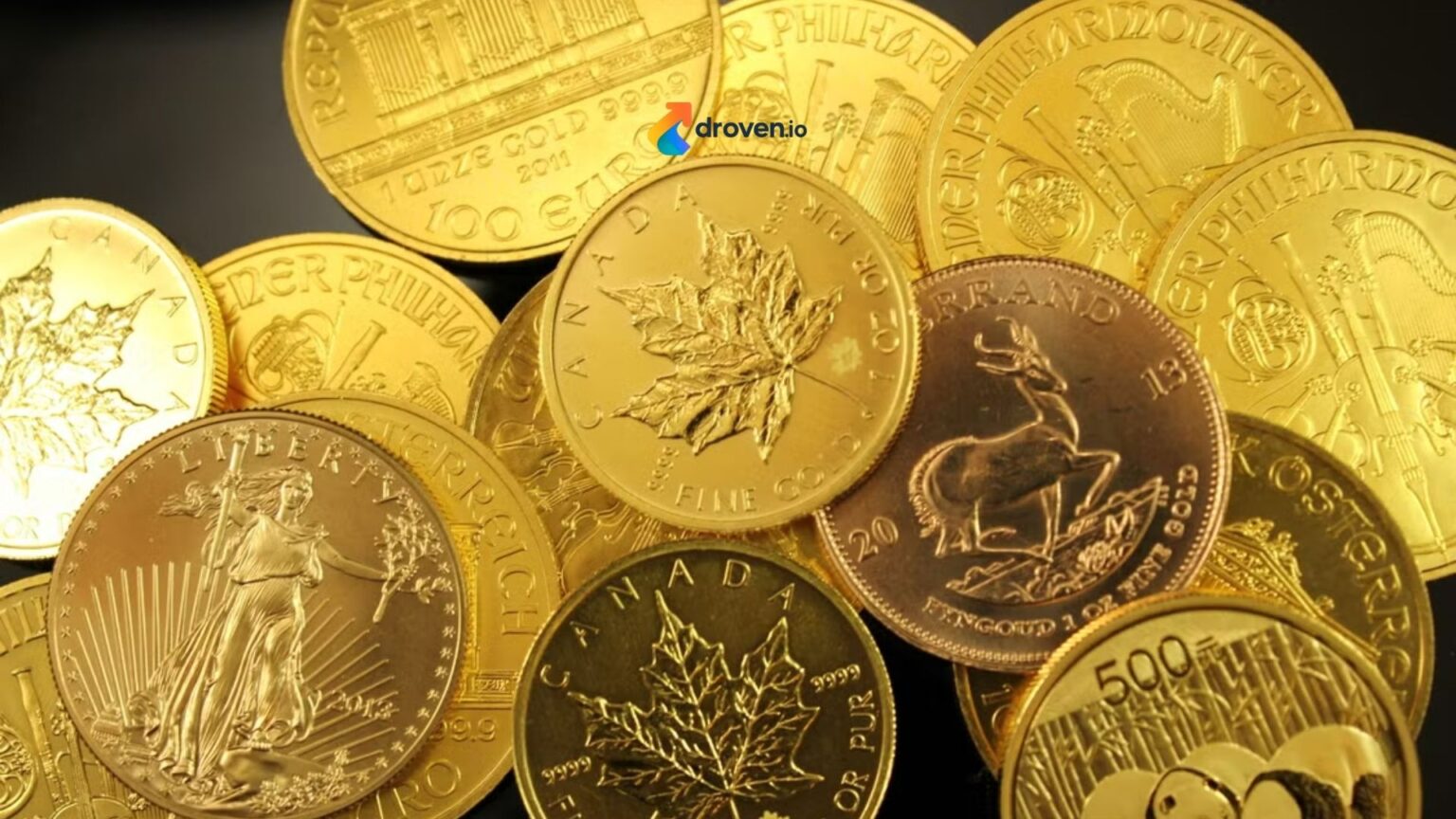
The Eagle has competition, mainly the Gold Buffalo and the Canadian Maple Leaf, and putting all three side by side does more to clarify the tradeoffs than reading any single spec sheet ever will.
On paper, both rivals beat the Eagle on purity since they run 24-karat against its 22-karat mix. Durability is where that advantage gets complicated. Pure gold scratches and dents more easily than the Eagle’s copper-alloy version, and anyone who actually handles their coins instead of leaving them sealed in a vault notices that difference pretty fast.
Resale behavior splits along similar lines. In the U.S., the Eagle tends to edge out the Maple Leaf slightly, riding on home-court recognition and legal tender status more than anything technical. The Buffalo pulls in its own crowd of collectors chasing that 24-karat purity specifically, and that group is generally fine paying more to get it.
All three qualify for Gold IRA eligibility, though it is worth double-checking which exact formats a given custodian will actually accept before assuming. Liquidity tilts toward the Eagle if you are transacting inside the U.S. Outside the U.S., the Maple Leaf tends to carry more weight with dealers and buyers. Buyers weighing alternative investment options beyond stocks should match the coin to what they are actually trying to accomplish rather than defaulting to whichever one shows up first in search results.
What Smart Buyers Avoid Before Checkout
Experienced buyers run through a short mental filter before committing to any purchase. Treating AI summaries as investment advice is near the top of the list of things to avoid, since that output reflects aggregated data rather than what is actually happening in the market right now.
Overlooking premiums, spreads, and a seller’s return policy is another common mistake, and together those three things determine the real cost far more than the sticker price does. Skipping counterfeit checks when the tools to run them are right there is a needless risk. So is buying fractional coins without accounting for the higher premium they carry relative to spot. Sourcing through a verified authorized dealer handles a good chunk of this risk on its own.
What Every Gold Coin Buyer Should Remember
AI is a research assistant. It is not a substitute for actually knowing the coin and running the verification steps yourself. It is genuinely good at pulling spot price context and dealer premium comparisons together fast. None of that replaces authentication, and none of it replaces knowing who you are buying from.
The American Gold Eagle has earned its place as a well-established bullion coin over decades. Buyers who pay attention to the specs, the pricing context, and the verification side all at once end up with a much clearer picture than anyone relying on a single tool, AI or otherwise, ever will.
