
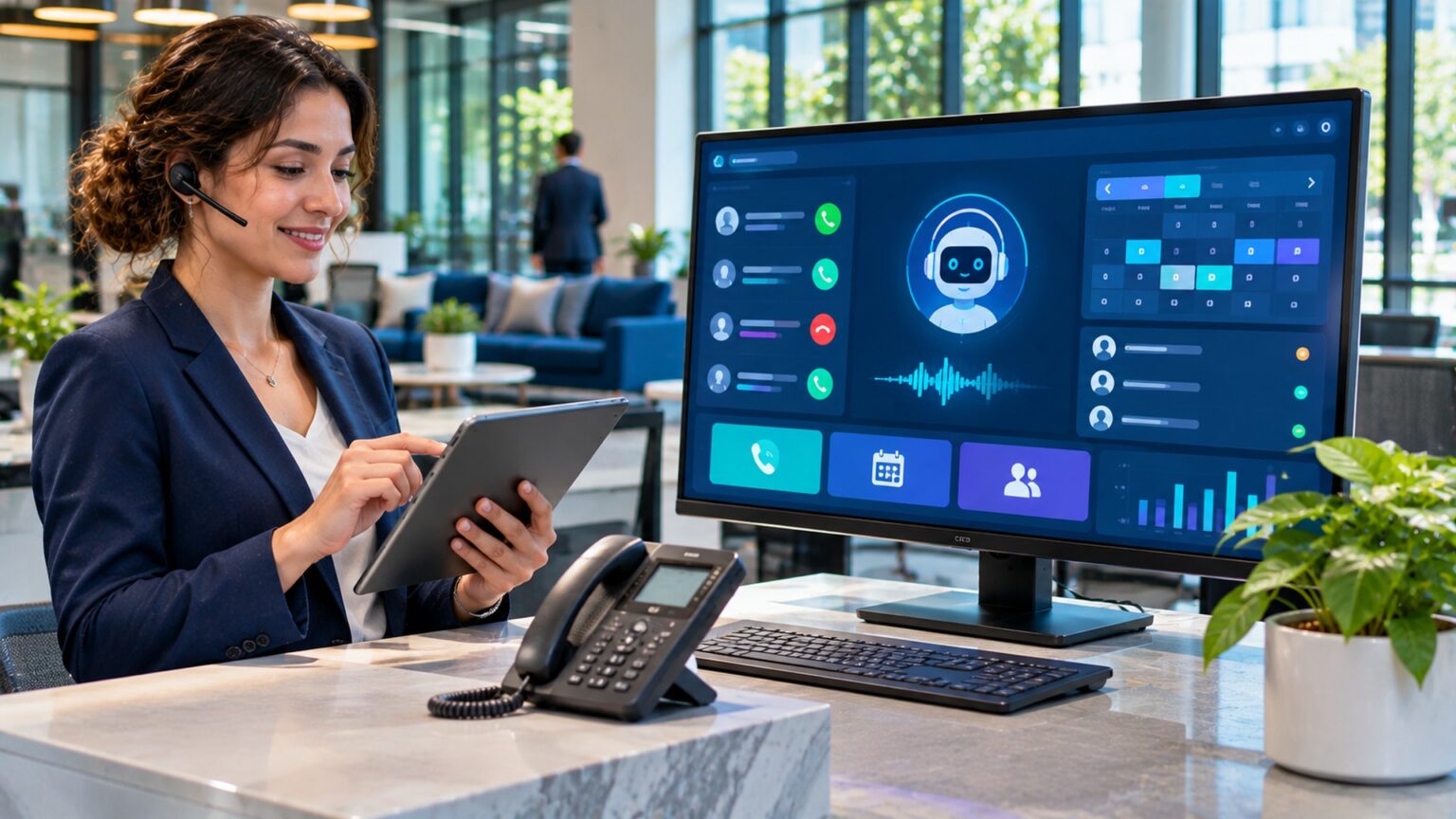
Modern businesses need reliable communication systems to manage customer inquiries, schedule appointments, and maintain professional relationships. An AI receptionist provides an intelligent solution by automating routine phone answering, appointment management, and customer support. This technology allows organizations to remain accessible beyond traditional business hours while reducing the administrative workload placed on employees.
From healthcare practices and real estate agencies to service providers and small businesses, artificial intelligence is changing how companies handle everyday communication. Unlike conventional voicemail systems, intelligent reception software can understand spoken requests, provide relevant responses, and direct customers toward appropriate services.
As customer expectations continue to evolve, businesses can use automated reception technology to improve accessibility, streamline operations, and deliver more consistent customer experiences.
What Is an AI Receptionist?
An AI receptionist is a virtual communication assistant that uses artificial intelligence to answer business calls, respond to customer inquiries, schedule appointments, and transfer conversations to appropriate employees.
The technology combines natural language processing, speech recognition, machine learning, and automated communication systems. These capabilities allow customers to interact with software through spoken conversations rather than relying entirely on traditional telephone menus.
Depending on its configuration, a virtual receptionist can perform several administrative responsibilities without requiring continuous human supervision.
Common responsibilities include:
- Answering incoming business calls
- Scheduling and rescheduling appointments
- Providing business hours and service information
- Collecting customer contact details
- Recording messages
- Transferring calls to relevant departments
- Managing inquiries outside regular business hours
- Supporting customer relationship management
These capabilities make intelligent reception systems particularly useful for organizations that regularly receive routine customer inquiries.
How Does an AI Receptionist Work?
Artificial intelligence reception systems operate through several connected technologies that interpret customer requests and perform predefined business actions.
The process begins when a customer calls a business telephone number connected to the automated communication platform.
Speech Recognition
Speech recognition technology converts spoken words into information that software can process.
When a caller asks a question, the system analyzes the audio input and identifies relevant words and phrases. Modern speech recognition models can accommodate different speaking styles, although performance may vary depending on accents, background noise, and connection quality.
Natural Language Processing
Natural language processing helps the software interpret the meaning behind customer requests.
Instead of requiring callers to select numbered menu options, conversational systems can recognize common intentions such as appointment booking, pricing inquiries, service requests, or requests to speak with an employee.
Intelligent Response Generation
Once the system identifies the caller’s request, it retrieves relevant information from approved business resources.
Responses may come from company knowledge bases, configured instructions, integrated databases, or scheduling applications.
Businesses should regularly review these information sources to prevent outdated or inaccurate responses.
Automated Task Completion
Advanced virtual reception systems can connect with business applications to perform specific actions.
For example, when a customer requests an appointment, the software may check available calendar slots, offer suitable times, and create a booking after receiving confirmation.
Human Assistance and Escalation
When an inquiry requires specialized knowledge, sensitive handling, or complex decision making, the system should transfer the caller to an authorized employee.
Effective escalation procedures help businesses maintain service quality while benefiting from automation.
7 Powerful Benefits of Using an AI Receptionist
Artificial intelligence reception technology offers practical advantages for businesses looking to improve customer communication and administrative efficiency.
1. Improved Customer Availability
Traditional reception services generally depend on employee schedules and business operating hours.
An AI receptionist can provide automated assistance outside normal working hours when the service is operational.
Customers may receive information, submit inquiries, or schedule appointments during evenings, weekends, and holidays without waiting for employees to return.
This extended availability can be particularly valuable for organizations serving customers across multiple time zones.
2. Reduced Missed Business Calls
Missed telephone calls can create communication gaps and potential sales opportunities that go unaddressed.
Automated reception software can help manage incoming inquiries when employees are unavailable or handling other responsibilities.
Businesses can configure overflow call handling to ensure customers have an opportunity to receive assistance or leave relevant information.
Although no system can guarantee uninterrupted availability, intelligent call management can improve communication coverage.
3. Efficient Appointment Scheduling
Appointment management often requires employees to check availability, confirm customer preferences, and update business calendars.
Artificial intelligence can automate many of these routine processes through calendar integrations.
Customers can request available appointment times, confirm bookings, or reschedule existing appointments according to established business policies.
This functionality may reduce administrative work and help prevent scheduling errors when properly configured.
4. Lower Administrative Workload
Reception employees frequently manage repetitive inquiries regarding operating hours, service availability, pricing policies, and appointment procedures.
Automating routine questions allows staff to focus more attention on responsibilities requiring personal interaction and professional judgment.
An AI receptionist can complement existing employees rather than replacing every aspect of human reception services.
Organizations should evaluate actual workload reductions before making staffing decisions.
5. Consistent Customer Communication
Providing accurate and consistent information is important for maintaining customer trust.
Automated systems can use approved business information to deliver standardized responses across common inquiries.
For example, customers asking about cancellation policies or service locations can receive responses based on the same information source.
Regular updates and quality monitoring remain necessary to maintain accuracy.
6. Improved Lead Management
Potential customers often contact businesses to ask questions before purchasing products or scheduling services.
Virtual reception systems can collect relevant contact information, document customer requirements, and direct qualified inquiries toward sales representatives.
This process helps businesses organize potential opportunities and establish more structured follow up procedures.
When integrated with customer relationship management software, authorized information may be transferred automatically into existing business workflows.
7. Greater Operational Flexibility
Businesses frequently experience changing communication demands during seasonal promotions, expansion periods, or unexpected increases in customer inquiries.
Automated reception systems can provide additional communication capacity without requiring businesses to immediately expand their reception teams.
However, scalability depends on the provider’s technical infrastructure, subscription conditions, and simultaneous call handling capabilities.
Businesses should confirm these limitations before implementing a solution.
Essential Features of an AI Receptionist
Choosing suitable reception software requires understanding the features that support reliable customer communication.
Different platforms offer different capabilities, making it important to compare available functionality against business requirements.
Conversational Voice Technology
Conversational voice technology allows customers to interact with software using spoken language.
A suitable system should understand common questions, provide clear responses, and manage natural pauses without creating unnecessary confusion.
Businesses should test conversation quality using realistic customer scenarios.
Automated Call Routing
Call routing directs customers toward relevant employees, departments, or support channels.
Intelligent routing may identify the purpose of a call and determine the appropriate destination based on configured business rules.
This feature can help reduce unnecessary transfers and improve communication efficiency.
Calendar and Booking Integration
Calendar integration enables automated reception software to retrieve available appointment times and record confirmed bookings.
Businesses should verify whether the platform supports their existing scheduling applications, appointment durations, availability rules, and cancellation procedures.
Customer Relationship Management Integration
CRM integration helps organizations maintain organized customer records.
An AI receptionist may collect approved customer information and transfer relevant details into a connected management system.
This functionality can support sales coordination, service requests, and customer follow up activities.
Multilingual Communication
Some virtual reception platforms support conversations in multiple languages.
This capability can help organizations serve customers from different linguistic backgrounds.
However, language availability, pronunciation quality, and recognition accuracy vary between providers.
Reporting and Performance Analytics
Reporting features may provide information about call volumes, response patterns, completed bookings, escalation rates, and unresolved inquiries.
Managers can use these insights to evaluate system performance and identify areas requiring improvement.
Industries That Can Benefit From AI Reception Technology
Artificial intelligence reception systems can support many industries, particularly those that depend on regular telephone communication and appointment management.
Healthcare and Dental Practices
Medical clinics and dental offices frequently receive calls concerning appointment availability, opening hours, and administrative procedures.
Automated reception systems can help manage these routine responsibilities while allowing medical staff to focus on patient care.
Healthcare organizations must implement appropriate privacy protections and ensure that automated assistants do not provide unauthorized medical advice.
Real Estate Agencies
Real estate professionals often manage property inquiries while attending meetings or conducting property inspections.
An intelligent receptionist can collect prospective buyer information, record property inquiries, and help coordinate viewing appointments.
These capabilities may support more organized communication between agents and potential clients.
Home Service Businesses
Plumbers, electricians, cleaning companies, and maintenance providers frequently receive customer calls while employees are working at different locations.
An AI receptionist can collect service requirements, customer locations, and preferred appointment times.
Urgent situations should follow clearly established escalation procedures.
Legal and Professional Services
Law firms, accounting practices, and consulting businesses can use automated assistants to manage initial inquiries and consultation bookings.
However, sensitive discussions and requests requiring professional advice should be handled by qualified personnel.
Restaurants and Hospitality Businesses
Restaurants, hotels, and hospitality providers receive inquiries about reservations, operating hours, facilities, and service availability.
Automated reception technology can help respond to common questions and manage supported reservation processes.
Accurate availability information and appropriate human assistance remain essential.
Small Businesses and Startups
Smaller organizations may have limited resources for maintaining dedicated reception services throughout the day.
Artificial intelligence offers an additional communication channel for managing routine inquiries while business owners focus on operational responsibilities.
The suitability of automation depends on customer preferences, communication volume, and available resources.
AI Receptionist Versus Traditional Reception Services
Both artificial intelligence and human reception services offer valuable capabilities.
Understanding their differences helps businesses determine which approach is most appropriate for their customers.
Automated Reception Systems
Automated reception services are particularly suitable for repetitive administrative responsibilities.
They can provide extended communication coverage, consistent responses, and integration with digital business applications.
Their limitations may include difficulties interpreting unusual requests, responding to emotional situations, or resolving complex problems.
Human Receptionists
Human employees provide interpersonal communication, contextual understanding, empathy, and professional judgment.
These qualities are especially important when customers experience difficulties, require specialized guidance, or discuss sensitive matters.
Human receptionists can also adapt to unexpected circumstances that automated systems may struggle to interpret.
Hybrid Reception Models
A hybrid reception model combines artificial intelligence with human assistance.
Automated software manages routine communication while employees handle complex inquiries and personalized customer interactions.
This approach allows organizations to benefit from automation without eliminating access to human support.
How to Implement an AI Receptionist Successfully
Introducing artificial intelligence into business communication requires careful planning and ongoing evaluation.
Identify Communication Requirements
Begin by reviewing existing customer communication patterns.
Identify common inquiries, periods of high call volume, frequently missed calls, and administrative responsibilities that consume significant employee time.
This information helps determine which processes are suitable for automation.
Select an Appropriate Technology Provider
Compare available platforms based on functionality, security practices, integration capabilities, technical support, and subscription conditions.
Avoid choosing software solely because of attractive promotional claims or inexpensive introductory pricing.
Evaluate whether the provider can support your organization’s practical requirements.
Prepare an Accurate Business Knowledge Base
Virtual reception software depends on reliable information to answer customer questions.
Prepare approved information covering business hours, service descriptions, appointment procedures, contact details, and relevant company policies.
Assign responsibility for maintaining and updating these resources.
Configure Communication and Escalation Rules
Establish clear instructions regarding how the software should respond to different types of inquiries.
Define situations that require immediate transfer to an employee, message collection, or scheduled follow up.
Customers should have a practical way to request human assistance.
Conduct Realistic Performance Testing
Test the AI receptionist before making it available to all customers.
Use different accents, background noise conditions, unusual requests, interrupted conversations, and appointment scenarios.
Evaluate whether the system responds accurately and transfers unresolved inquiries appropriately.
Start With a Controlled Deployment
Consider introducing automation during selected hours or for specific call categories.
A controlled deployment allows businesses to identify problems, refine instructions, and measure customer experiences before expanding implementation.
Understanding the Cost of AI Reception Services
The cost of automated reception technology varies depending on the provider, available features, communication volume, and business requirements.
Common Pricing Models
Technology providers may use different subscription structures, including:
- Fixed monthly subscription fees
- Charges based on call duration
- Packages containing allocated communication minutes
- Additional charges for advanced integrations
- Custom pricing for larger organizations
- Fees for exceeding included usage allowances
Businesses should review the complete pricing structure rather than evaluating only the advertised starting price.
Evaluating Business Value
The financial value of an AI receptionist depends on measurable improvements rather than promotional estimates.
Organizations can compare software expenses against administrative workload, completed appointments, customer response times, and missed inquiry rates.
Additional expenses may include configuration, employee training, integration maintenance, and ongoing supervision.
An informed investment decision should consider both operational benefits and the total cost of implementation.
Privacy and Security Considerations
Automated reception systems may process customer names, telephone numbers, appointment details, and other personal information.
Protecting this information is essential for maintaining customer trust.
Protect Customer Information
Businesses should investigate how technology providers collect, store, process, and delete customer data.
Access to conversation recordings and customer information should be restricted to authorized personnel.
Organizations should avoid collecting information that is unnecessary for completing the requested service.
Maintain Transparency
Customers should receive clear information about their interaction with automated communication technology.
Where conversations are recorded or transcribed, businesses must consider applicable notification and consent requirements.
These obligations may vary depending on location and industry.
Establish Appropriate Security Controls
Security measures may include encryption, access permissions, activity monitoring, secure integrations, and documented data retention procedures.
Businesses should verify which protections are available rather than assuming that every provider implements the same security standards.
Prevent Unauthorized Actions
Automated reception software should operate within defined permissions.
The system should not independently authorize financial transactions, disclose confidential information, or perform sensitive account changes without appropriate verification procedures.
Human oversight remains important for higher risk activities.
Measuring AI Receptionist Performance
Organizations should evaluate automated communication systems using practical performance indicators.
Useful measurements include:
- Percentage of incoming calls answered
- Appointment booking completion rates
- Average response times
- Accuracy of customer information
- Successful transfers to employees
- Customer satisfaction feedback
- Unresolved inquiry rates
- Operating expenses
Reviewing these indicators helps businesses understand whether the technology is meeting established objectives.
Regular performance assessments can also identify recurring communication problems and opportunities for improvement.
Customer feedback should be considered alongside technical measurements because successful automation depends on the quality of the overall experience.
Common Challenges of AI Reception Technology
Despite its advantages, artificial intelligence reception software has limitations that businesses should understand.
Incorrect Interpretation of Customer Requests
The software may misunderstand unfamiliar terminology, unclear speech, or complex questions.
Regular testing and human escalation procedures help manage these situations.
Outdated Business Information
Incorrect operating hours, discontinued services, or outdated appointment policies can result in inaccurate responses.
Maintaining an updated knowledge base reduces this risk.
Technology and Connectivity Issues
Cloud communication platforms depend on technical infrastructure, internet connectivity, and telephone networks.
Businesses should establish backup communication procedures for service interruptions.
Limited Emotional Understanding
Artificial intelligence may struggle to interpret frustration, distress, or sensitive personal circumstances.
Employees should remain available to manage conversations requiring empathy and professional judgment.
The Future of AI Receptionists in Business Communication
Artificial intelligence is expected to remain an important part of business communication technology as conversational systems continue developing.
Improvements in speech recognition, language understanding, software integration, and workflow automation may expand the responsibilities virtual assistants can perform.
Businesses may increasingly adopt communication systems that connect telephone calls, scheduling software, customer databases, and digital support channels within coordinated workflows.
However, successful implementation will continue to depend on accurate information, responsible data handling, reliable technology, and appropriate human supervision.
Organizations that balance automation with personalized customer service will be better positioned to evaluate and benefit from these developments.
Frequently Asked Questions
What does an AI receptionist do?
An AI receptionist answers business calls, responds to common questions, schedules appointments, collects customer information, and transfers inquiries to appropriate employees.
Can an AI receptionist answer calls 24 hours a day?
Yes, many platforms offer around the clock automated call answering, subject to service availability, subscription conditions, and system configuration.
Is an AI receptionist suitable for small businesses?
Yes, small businesses can use automated reception technology to manage routine inquiries, organize appointments, and improve communication coverage.
Can an AI receptionist integrate with existing business software?
Many platforms support calendar applications, CRM systems, telephone services, and scheduling software. Integration availability depends on the selected provider.
Can an AI receptionist replace a human receptionist?
It can automate routine administrative tasks, but human employees remain important for complex requests, sensitive conversations, and personalized assistance.
How much does an AI receptionist cost?
Pricing varies according to the provider, monthly call volume, included features, integration requirements, and subscription structure.
Conclusion
An AI receptionist offers businesses a practical way to improve communication, automate routine administrative responsibilities, and provide more accessible customer support. Selecting reliable software with appropriate integrations, privacy protections, and human escalation capabilities is essential for successful implementation. By combining intelligent automation with personalized assistance, organizations can build more efficient and dependable customer communication systems.
