AI Receptionist Reviews: What Businesses Should Know Before Choosing an AI Phone Assistant Every missed phone call can represent a missed opportunity for a business. Whether someone is calling to schedule an appointment, request a quote, ask about services, or speak with customer support, people generally expect a timely and helpful response. Unfortunately, maintaining consistent telephone coverage can be challenging for small businesses and growing organizations. AI Receptionist Reviews provide useful insights into how automated phone assistants perform in real business environments. These reviews help organizations understand the advantages, limitations, pricing considerations, and customer experiences associated with AI-powered call management software. Modern AI receptionists can answer incoming calls, respond to common questions, schedule appointments, qualify potential customers, and transfer complicated conversations to human employees. Some platforms also connect with customer relationship management systems, calendars, and communication tools. However, not every AI receptionist delivers the same level of performance. Voice quality, conversation accuracy, integration capabilities, privacy controls, and customer support vary between providers. Choosing a suitable platform requires looking beyond promotional demonstrations and examining how the technology performs in everyday situations. This comprehensive guide explores seven essential factors businesses should evaluate when reading AI receptionist reviews, comparing software providers, and implementing automated customer communication. What Is an AI Receptionist? An AI receptionist is a software-based voice assistant designed to answer telephone calls and perform certain administrative tasks using artificial intelligence. Unlike traditional automated phone menus that require callers to press specific numbers, conversational AI receptionists can interpret spoken requests and respond using natural-language technology. These systems typically combine speech recognition, language processing, business information, and voice synthesis. The objective is to help callers obtain relevant information or complete straightforward tasks without requiring a human receptionist for every interaction. How Does an AI Receptionist Work? When a customer calls a business, the AI system answers through an integrated telephone service. The caller speaks naturally, and speech recognition converts the conversation into information that the system can process. The AI determines the caller's request and uses available business information or approved integrations to generate a response. For example, a customer might ask whether appointments are available on Friday afternoon. If the receptionist is connected to an authorized booking calendar, it can check availability and offer an appropriate appointment. The platform may then confirm the booking and update the business's records. For complicated questions, the system can transfer the conversation or create a follow-up request when configured to do so. AI Receptionist vs. Traditional Receptionist A human receptionist can interpret complex situations, use professional judgment, and respond to emotional or unusual conversations. An AI receptionist can handle many repetitive tasks automatically and provide service outside normal business hours. The two approaches are not necessarily competing solutions. Many businesses benefit from combining automated call handling with human support for situations requiring greater care or expertise. Why AI Receptionist Reviews Matter Product demonstrations are useful for understanding software capabilities, but they often show carefully prepared scenarios. Real customers behave differently. They may speak quickly, interrupt responses, use unfamiliar terminology, change their minds, or ask complicated questions. A reliable review should explain how software performs under these everyday conditions. Understand Real Customer Experiences Customer feedback can reveal whether a platform meets expectations after initial setup. Reviews may discuss booking accuracy, call quality, customer support, pricing transparency, or integration reliability. However, individual experiences should not automatically be treated as representative of every customer. Identify Common Technical Problems Some users may experience delayed responses, inaccurate answers, or difficulties connecting business applications. These problems are worth investigating before purchasing a subscription. Compare Features That Actually Matter A large feature list does not necessarily mean a platform will suit your operations. Businesses should prioritize capabilities that directly address their communication needs. Evaluate Long-Term Value AI receptionist reviews may provide information about ongoing costs, staff workload, customer satisfaction, and administrative efficiency. These factors often matter more than the initial appearance of a software dashboard. 7 Essential Factors to Evaluate in AI Receptionist Reviews Businesses should approach AI receptionist comparisons systematically. The following seven factors provide a practical framework for assessing real-world performance. 1. Call Answering Reliability and Availability One of the primary reasons businesses consider AI receptionists is the ability to answer calls outside normal working hours. Traditional reception desks usually operate during defined shifts. An automated system may provide continuous coverage when its infrastructure and telephone integrations remain available. Why 24/7 Availability Matters Customers may contact businesses during evenings, weekends, or public holidays. For example, someone looking for an emergency plumbing appointment may call several service providers until one responds. An AI receptionist can provide an immediate automated response when configured correctly. This may reduce reliance on voicemail and help capture important customer requests. Handling Simultaneous Calls A human receptionist can generally manage only a limited number of active conversations. Some AI platforms support multiple concurrent calls. However, actual capacity depends on software plans, telecommunications infrastructure, and system configuration. Businesses should confirm the number of simultaneous calls supported by their subscription. What Reviews Should Reveal Useful customer feedback should address whether calls connect reliably, whether the system handles busy periods, and what happens when technical services become unavailable. Ask whether unanswered calls are logged and whether fallback routing is available. A platform claiming continuous availability should still have procedures for handling outages. 2. Voice Quality and Conversation Accuracy Natural voice quality is an important feature of AI receptionist technology. Customers should be able to understand the assistant without unnecessary repetition or confusion. However, sounding human is not the same as providing accurate information. Evaluate Speech Recognition A receptionist should understand common customer questions and relevant business terminology. Speech recognition performance can vary because of accents, background noise, telephone connection quality, and unfamiliar names. Testing should include realistic conversations rather than only carefully scripted examples. Response Speed Long pauses can make automated conversations uncomfortable. Customers may interrupt the assistant or assume the call has disconnected. Low response latency can improve conversational flow. However, advertised response times should be verified through practical testing under representative conditions. Interruptions and Corrections A customer may begin requesting one appointment and then change the preferred time. A capable AI receptionist should recognize the correction rather than continue following an outdated instruction. Avoiding Inaccurate Answers AI systems sometimes generate incorrect or unsupported information. For instance, an assistant might mistakenly quote an outdated service price. Businesses should restrict important responses to approved information and establish clear rules for situations where the answer is uncertain. What to Look for in Reviews Pay particular attention to comments about misunderstanding customer requests, unnatural pauses, incorrect bookings, and the ability to manage interruptions. A high voice-quality rating is less meaningful if the assistant frequently provides incorrect information. 3. Appointment Scheduling and Calendar Integration Appointment management is one of the most practical uses of AI receptionists. Many service businesses spend substantial time answering scheduling questions, confirming availability, and responding to cancellations. Automating appropriate parts of this process can reduce administrative work. Real-Time Appointment Booking A connected AI receptionist may check available calendar slots and offer suitable times during a conversation. For example, a dental clinic might allow callers to schedule routine consultations through approved workflows. The system should verify availability before confirming an appointment. Rescheduling and Cancellations Customers may need to change appointments because of unexpected commitments. An AI receptionist can potentially process these requests when the booking system supports the required actions. Calendar Synchronization Integration with platforms such as Google Calendar, Microsoft Outlook, or specialized booking software can help synchronize schedules. Businesses should verify that the relevant integration is supported and configured correctly. Preventing Double Bookings A reliable scheduling system must account for simultaneous requests, calendar changes, and appointment restrictions. Businesses should test what happens when two callers request the same available time. Confirmation Messages Some AI receptionists can send appointment confirmations through approved email or messaging workflows. These messages should accurately reflect completed bookings. The system must distinguish between a confirmed reservation and a request awaiting staff approval. Why Scheduling Reviews Matter A receptionist that answers calls correctly but creates scheduling errors can generate additional administrative problems. Customer reviews should ideally discuss completed bookings, calendar accuracy, and integration reliability. 4. Lead Qualification and Customer Information Collection Many businesses use telephone calls to identify potential customers. A qualified lead may need a consultation, estimate, demonstration, or follow-up from a specialist. AI receptionists can collect selected information before transferring the conversation to the appropriate person. Capture Basic Customer Details An assistant may request a caller's name, contact information, preferred service, and reason for calling. The information collected should be relevant to the business purpose. Ask Useful Qualification Questions A property agency might ask about the desired location, property type, and approximate budget. A home services business might ask for the type of repair, service area, and preferred appointment time. These questions help employees prepare for follow-up conversations. Integrate With CRM Software Customer relationship management systems organize customer information and sales activities. Some AI receptionists can create or update records in platforms such as Salesforce, HubSpot, or Zoho. However, integrations should be tested to ensure information reaches the correct customer record. Improve Lead Follow-Up An assistant may provide an organized summary of the conversation and notify the relevant employee. This can reduce the need for staff to repeatedly ask customers for the same information. Avoid Collecting Excessive Information Businesses should not ask callers for sensitive personal details unless the information is necessary and appropriate safeguards are in place. AI receptionist reviews are particularly valuable when they explain whether automated intake is accurate, easy to customize, and reliable. 5. Human Call Transfers and Escalation Procedures AI automation works best when it recognizes its limitations. Some customer conversations involve complicated complaints, sensitive information, emergencies, or decisions requiring professional judgment. These situations may need human assistance. Understand Human Handoff Human handoff occurs when an AI receptionist transfers a caller to a staff member. A successful transfer should preserve relevant context where appropriate. For example, a customer who has already described a complicated service problem should not necessarily need to repeat every detail. Identify Urgent Requests Businesses can establish rules for situations requiring priority attention. A legal practice may want urgent case inquiries directed to an appropriate employee. A healthcare organization may need clearly defined procedures for directing urgent clinical concerns to qualified personnel or emergency services. Handle Unavailable Staff A human transfer is not useful if the destination employee cannot answer. The system should have a fallback procedure, such as collecting a callback request or directing the caller to an appropriate alternative. Avoid Misleading Callers Businesses should clearly communicate when customers are interacting with an automated system. An AI receptionist should not falsely claim to be a licensed professional or imply capabilities it does not possess. What Reviews Should Evaluate Look for evidence about whether transfers work, whether important context is preserved, and how frustrated callers are handled. Reliable escalation may be more valuable than an especially realistic synthetic voice. 6. Pricing Transparency and Return on Investment Cost is a major factor in choosing AI receptionist software. However, comparing advertised monthly subscription prices alone can be misleading. Different providers may charge according to call minutes, concurrent lines, phone numbers, features, or usage allowances. Common Pricing Models Monthly subscriptions: Customers pay a recurring amount for a defined package. Per-minute pricing: Charges depend on the duration of eligible conversations. Usage-based billing: Customers pay for specific services or consumption. Enterprise agreements: Larger organizations may negotiate custom packages. Understand Included Minutes A subscription may include a limited number of conversation minutes. Additional calls may create overage charges. Businesses should estimate actual usage before selecting a plan. Evaluate Extra Costs Potential expenses may include phone numbers, additional minutes, premium integrations, implementation, support, and other optional services. Always review the provider's current pricing terms. Calculate an Estimated Monthly Cost Consider a hypothetical company receiving 300 calls per month. If the average conversation lasts three minutes, the estimated usage would be: 300 calls × 3 minutes = 900 conversation minutes. The business can compare this expected usage with the included allowances and additional charges of different platforms. Measure Business Value Potential benefits may include reduced missed calls, less administrative work, improved appointment handling, and faster follow-up. However, these benefits should be measured rather than assumed. A business should compare actual expenses with demonstrable improvements in operations and customer service. Why Reviews About Pricing Matter Customer feedback may reveal whether bills are predictable and whether the advertised package meets ordinary business needs. Transparent pricing and reliable performance are more valuable than a low introductory price that does not reflect actual usage. 7. Security, Privacy, and Business Compliance AI receptionists process customer conversations and may access information stored in connected business systems. These activities create important data protection responsibilities. Protect Call Recordings Some platforms record or transcribe conversations. Businesses should understand whether recording is enabled, how callers are informed, and which consent requirements apply. Rules differ by jurisdiction. Secure Customer Information Contact details, booking information, and call transcripts may contain personal information. Appropriate safeguards include access restrictions, encryption, controlled retention, and documented deletion procedures. Review Third-Party Integrations Connecting an AI receptionist with a CRM, calendar, or messaging platform creates additional data flows. Businesses should understand which information is shared and who can access it. Understand Industry Requirements Healthcare, legal, financial, and insurance organizations may have additional confidentiality or regulatory obligations. A vendor advertising compliance-ready features does not automatically establish that every customer deployment meets applicable requirements. Consider Outbound Call Regulations Outbound automated calls may be subject to specific consent, disclosure, identification, and marketing rules. For example, the US Federal Communications Commission has clarified that AI-generated voice calls fall within relevant Telephone Consumer Protection Act restrictions. Businesses should obtain jurisdiction-specific guidance before operating automated outbound campaigns. What Security Reviews Should Include A meaningful assessment should examine privacy documentation, contractual safeguards, data retention, incident procedures, and access controls. Security claims should be supported by appropriate documentation rather than accepted solely from marketing materials. AI Receptionist Reviews: What Real Users Appreciate Public customer feedback can reveal useful experiences, but review volume and context matter. Not every product has enough independent feedback to support broad conclusions. More Consistent Call Coverage Some businesses report that automated answering helps them manage inquiries outside ordinary working hours. This can be particularly useful when missed calls previously went to voicemail. Reduced Repetitive Work Routine scheduling, business-hour questions, and basic customer inquiries can consume substantial staff time. Automated workflows may reduce this burden when they perform reliably. Improved Lead Organization CRM integrations and structured call summaries can help sales teams organize incoming requests. This may make follow-up activities more consistent. Customer Feedback About Botphonic Botphonic has received positive comments on public software review platforms. Reviews available on G2 discuss automated scheduling, call handling, customer engagement, and time savings. Some reviewers also mention difficulties involving initial setup and workflow customization. Trustpilot feedback includes favorable experiences involving appointment booking and lead management. However, the visible review samples on these platforms are small. Individual comments should therefore be treated as limited customer experiences rather than definitive proof of overall product performance. Common Complaints in AI Receptionist Reviews Automated reception systems can introduce problems when expectations or implementations are unrealistic. Inaccurate Business Information An AI receptionist depends on the information and instructions provided to it. Outdated service descriptions, incorrect prices, and incomplete business hours can lead to poor responses. Unnatural Conversation Delays Slow responses can make interactions frustrating. Latency may depend on speech processing, model performance, integrations, and telephone connectivity. Difficulty With Complex Questions AI systems may struggle with unusual requests or emotionally sensitive conversations. Human escalation procedures remain important. Integration Problems Calendar and CRM connections may require configuration or ongoing maintenance. A claimed integration should be tested with the business's actual workflow. Setup and Training Requirements Customization may involve more work than expected. Businesses should account for testing, knowledge-base updates, and employee training. Overreliance on Automation AI receptionists should not be expected to make every customer service decision independently. Organizations need clear rules for when staff should intervene. Botphonic AI Receptionist: Features and Pricing Overview Botphonic is an AI voice agent platform designed to help businesses automate incoming and outgoing telephone interactions. Its published features include AI call answering, appointment scheduling, lead qualification, CRM updates, conversation summaries, and multilingual support. Automated Call Handling Botphonic describes an AI receptionist that can answer incoming calls, identify caller requests, and manage routine conversations. The platform supports configurable business information and conversation flows. Appointment Booking The company advertises integrations with scheduling tools that allow its assistant to book and reschedule appointments. Businesses should test actual calendar synchronization before relying on it. Multilingual Communication Botphonic advertises support for more than 50 languages across its broader voice platform. Language availability, speech recognition accuracy, and voice quality should be tested for the intended customers. CRM and Business Integrations The platform lists integrations involving Salesforce, HubSpot, Zoho, Google Calendar, Outlook, and other supported services. The availability of specific workflows may depend on account configuration and integration requirements. Call Summaries and Analytics Botphonic describes tools for recording, transcribing, summarizing, and analyzing customer interactions. Organizations should verify the privacy settings and retention controls appropriate to their business. Botphonic Pricing According to Botphonic's published pricing information, its Starter plan is advertised at approximately $22 monthly or $20 per month when billed annually, with 50 included conversation minutes. The Pro plan is advertised at approximately $60 monthly or $55 per month when billed annually, with 120 included minutes. The company also offers usage-based and custom enterprise arrangements. These are advertised rates, not independently verified transaction prices. Plans, included allowances, and overage charges may change, so businesses should review the current pricing page before subscribing. Is Botphonic Suitable for Every Business? Botphonic may be worth evaluating for businesses that need automated telephone answering, appointment scheduling, and customer intake. However, suitability depends on actual call volume, supported integrations, security requirements, available staff, and the complexity of customer conversations. A controlled trial is more informative than relying exclusively on advertised features. AI Receptionist vs. Human Receptionist: A Practical Comparison Both approaches offer different strengths. Feature AI Receptionist Human Receptionist Working hours Can provide 24/7 coverage Usually works scheduled shifts Simultaneous calls Depends on platform limits Limited by staff capacity Routine questions Can automate approved responses Handles manually Emotional situations May require human escalation Can apply personal judgment Appointment scheduling Can integrate with calendars Can coordinate directly Setup requirements Technical configuration and testing Hiring and staff training Operational costs Subscription and usage charges Salary and employment costs Complex decisions Requires defined restrictions Can exercise appropriate judgment An AI receptionist may be especially helpful for repetitive, high-volume tasks. Human employees remain important when customers need empathy, judgment, specialized expertise, or relationship-based service. A hybrid approach can combine the strengths of both. Which Businesses Can Benefit From AI Receptionists? The usefulness of automated reception depends on the nature of customer calls. Healthcare Practices Medical practices receive appointment requests, routine administrative questions, and scheduling changes. AI assistants may help manage approved nonclinical workflows. Clinical questions and urgent concerns should be directed according to appropriate healthcare procedures. Law Firms Legal practices may use AI receptionists for basic intake, consultation scheduling, and collecting initial contact details. However, automated systems should not provide individualized legal advice or compromise confidentiality. Real Estate Agencies Real estate businesses receive inquiries about listings, availability, property viewings, and agent appointments. An AI receptionist may assist with scheduling and lead organization. Home Service Companies Plumbing, electrical, HVAC, and repair businesses often receive calls while technicians are working onsite. Automated answering can help capture requests and arrange follow-up. Consulting and Professional Services Consultants may use AI receptionists to handle meeting requests, explain service categories, and organize inquiries. Small Businesses Smaller companies without full-time reception staff may benefit from an automated system handling routine calls. However, businesses with very low call volumes should compare the subscription cost with their actual needs. How to Choose the Right AI Receptionist Software Selecting a platform should involve practical testing and a clear understanding of business requirements. Define the Main Problem Determine whether the business primarily needs after-hours answering, appointment scheduling, lead qualification, or general customer support. This helps identify the most relevant features. Test Real Conversations Use realistic customer scenarios during a trial. Include interruptions, changing requests, unusual questions, background noise, and different accents. Verify Integrations Test whether the system creates accurate calendar appointments and properly updates customer records. Do not rely only on a provider's integration list. Evaluate Human Escalation Check what happens when the AI cannot answer a question or a caller requests a person. Compare Actual Costs Estimate monthly conversation minutes and review overage charges, phone-number fees, and support arrangements. Review Privacy Controls Ask about data storage, recording consent, security documentation, retention policies, and access permissions. Examine Customer Reviews Carefully Look for detailed feedback from businesses with similar requirements. A small collection of positive testimonials may be encouraging but cannot establish reliability across all use cases. How to Implement an AI Receptionist Successfully A thoughtful rollout can reduce customer frustration and improve business outcomes. Step 1: Prepare Accurate Business Information Document service descriptions, opening hours, appointment procedures, locations, and frequently asked questions. This information should be reviewed before being supplied to the AI system. Step 2: Define Call Handling Rules Decide which requests the assistant can complete independently. Specify when calls must be transferred or escalated. Step 3: Connect Essential Systems Configure calendar, CRM, telephone, and messaging integrations. Use appropriate security permissions and test data handling. Step 4: Test Before Launching Run representative calls covering ordinary requests and difficult scenarios. Check booking accuracy, call summaries, and fallback behavior. Step 5: Introduce the System Gradually Consider starting with after-hours answering or a limited group of routine calls. This creates an opportunity to identify problems before expanding automation. Step 6: Review Real Performance Monitor missed calls, successful bookings, transfer failures, customer complaints, and other relevant outcomes. Evaluate whether the system is helping customers rather than merely processing more calls. Step 7: Improve Continuously Update business information, review recurring errors, and adjust escalation rules. AI receptionist software requires ongoing supervision and optimization. How to Measure AI Receptionist ROI Return on investment should be based on measurable improvements and actual costs. Important Performance Metrics Businesses may monitor: Total incoming calls Percentage of calls answered Successful appointment bookings Booking errors and cancellations Calls transferred to staff Qualified customer inquiries Customer complaints Average call duration Monthly software expenditure Employee administrative time saved Example ROI Calculation Consider a hypothetical business that previously missed 100 calls per month. After implementing an AI receptionist, suppose 60 of those calls are successfully handled and 12 produce confirmed appointments. If the business earns an average contribution margin of $80 from each completed appointment, the potential contribution would be: 12 × $80 = $960. This figure is illustrative, not guaranteed revenue or profit. The business must account for appointment attendance, customer acquisition costs, subscription fees, usage charges, and other expenses before calculating an actual return. Evaluate Customer Experience Financial results are important, but they do not tell the entire story. A platform that saves administrative time while frustrating customers may create long-term problems. Customer satisfaction, escalation quality, and reliable information should also influence the evaluation. Common Mistakes When Choosing an AI Receptionist Businesses can avoid several problems by making informed purchasing decisions. Selecting software based only on advertised voice quality: Accurate responses and reliable workflows are equally important. Ignoring usage limits: Included minutes and concurrent call allowances can affect both capacity and costs. Skipping integration tests: Calendar and CRM errors can create unnecessary administrative work. Failing to configure human handoff: Customers need an appropriate alternative when automation cannot resolve their concerns. Using outdated business information: Incorrect knowledge-base content can produce misleading responses. Overlooking data protection: Call recordings and customer information require appropriate safeguards. Assuming every review is representative: Small review samples and marketing testimonials have limitations. Expecting immediate perfection: Successful automation usually requires testing, staff oversight, and ongoing improvements. The Future of AI Receptionist Technology AI voice technology continues to evolve as speech recognition, language models, and business automation tools improve. More Natural Conversations Developers are working to improve response timing, interruption handling, and speech quality. However, natural-sounding speech must be accompanied by factual accuracy. Improved Workflow Automation AI receptionists may increasingly handle connected tasks such as appointment changes, customer record updates, and follow-up messages. Appropriate authorization will remain important. More Personalized Customer Experiences With suitable permission and data safeguards, automated assistants may use relevant customer information to provide more useful responses. Better Business Analytics Call summaries and structured interaction data may help businesses understand common questions and operational bottlenecks. Human and AI Collaboration Hybrid service models may become increasingly practical as businesses combine automated routine handling with knowledgeable human employees. The most useful innovation will improve customer outcomes while preserving transparency, security, and accountability. Frequently Asked Questions 1. Are AI Receptionist Reviews reliable? AI receptionist reviews can provide useful insights into software performance, customer support, and usability. However, businesses should examine the number of reviews, reviewer context, publication dates, and specific experiences rather than relying only on overall ratings. 2. What are the main benefits of AI receptionist software? Potential benefits include 24/7 call answering, automated appointment scheduling, lead qualification, reduced administrative work, and improved handling of routine customer inquiries. Results depend on the software and its implementation. 3. Can AI receptionists replace human receptionists? AI receptionists can automate many repetitive tasks, but they may struggle with complex, emotional, or specialized conversations. A hybrid system combining AI automation and human support is often more appropriate. 4. How much does an AI receptionist cost? Pricing varies by provider, subscription plan, conversation minutes, integrations, and additional services. Businesses should calculate expected monthly usage and compare total costs rather than focusing only on the advertised starting price. 5. Is Botphonic a good AI receptionist for businesses? Botphonic advertises capabilities such as automated call answering, appointment scheduling, CRM integration, and multilingual support. Whether it is suitable depends on a business's specific needs, call volume, budget, and results from practical testing. 6. What should I check before buying AI receptionist software? Evaluate call reliability, voice accuracy, appointment booking, CRM integrations, human escalation, privacy controls, customer feedback, and complete pricing. Test realistic scenarios before committing to a long-term arrangement. Conclusion AI Receptionist Reviews can help businesses understand the advantages and limitations of automated telephone answering systems. The most useful evaluations consider real customer experiences, call reliability, accurate appointment scheduling, security, and overall operating costs. Businesses should compare multiple sources of feedback and test relevant workflows before choosing a provider. With appropriate configuration and human oversight, AI receptionist technology can improve customer communication and reduce repetitive administrative work.

AI Receptionist Reviews: What Businesses Should Know Before Choosing an AI Phone Assistant

Every missed phone call can represent a missed opportunity for a business. Whether someone is calling to schedule an appointment, request a quote, ask about services, or speak with customer support, people generally expect a timely and helpful response. Unfortunately, maintaining consistent telephone coverage can be challenging for small businesses and growing organizations.

AI Receptionist Reviews provide useful insights into how automated phone assistants perform in real business environments. These reviews help organizations understand the advantages, limitations, pricing considerations, and customer experiences associated with AI-powered call management software.

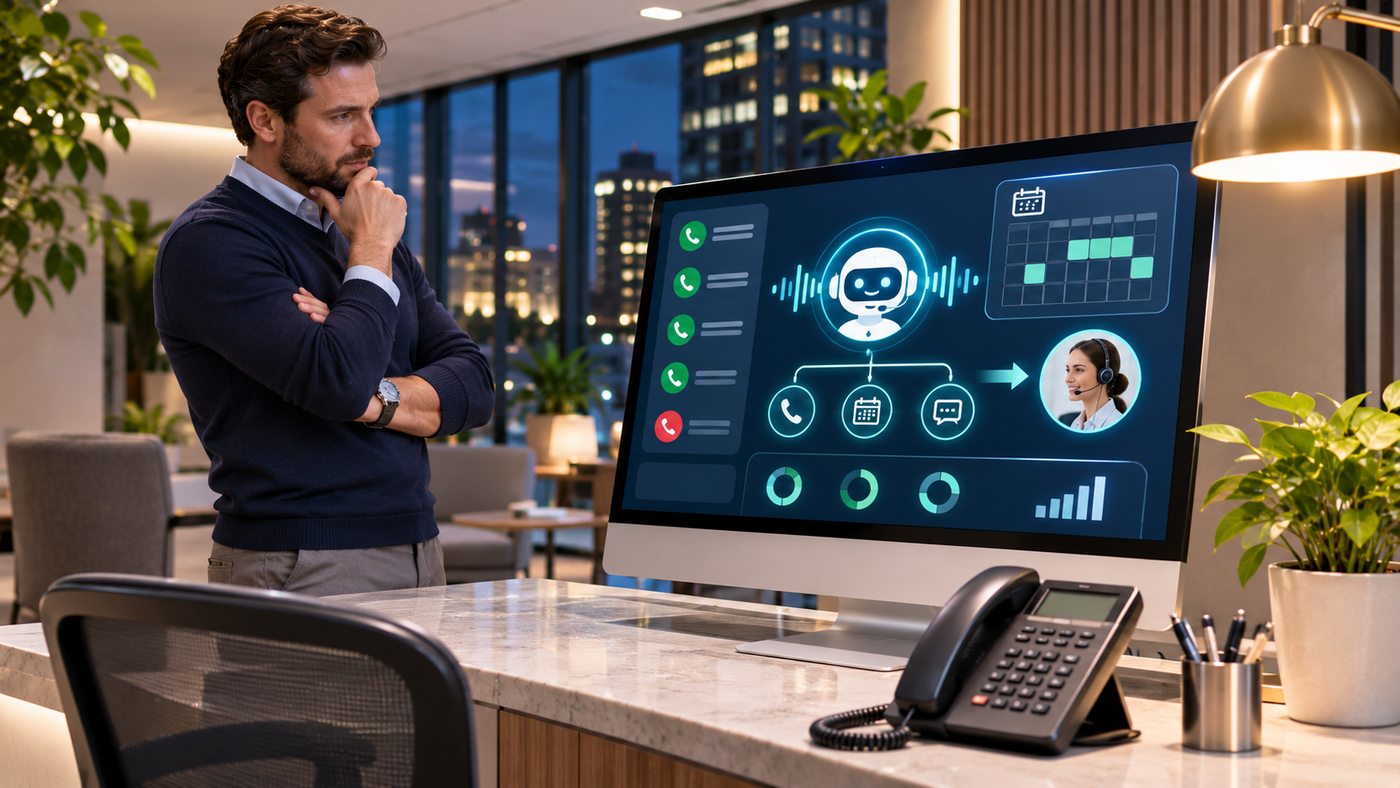
Modern AI receptionists can answer incoming calls, respond to common questions, schedule appointments, qualify potential customers, and transfer complicated conversations to human employees. Some platforms also connect with customer relationship management systems, calendars, and communication tools.

However, not every AI receptionist delivers the same level of performance. Voice quality, conversation accuracy, integration capabilities, privacy controls, and customer support vary between providers.

Choosing a suitable platform requires looking beyond promotional demonstrations and examining how the technology performs in everyday situations.

This comprehensive guide explores seven essential factors businesses should evaluate when reading AI receptionist reviews, comparing software providers, and implementing automated customer communication.

What Is an AI Receptionist?

An AI receptionist is a software-based voice assistant designed to answer telephone calls and perform certain administrative tasks using artificial intelligence.

Unlike traditional automated phone menus that require callers to press specific numbers, conversational AI receptionists can interpret spoken requests and respond using natural-language technology.

These systems typically combine speech recognition, language processing, business information, and voice synthesis.

The objective is to help callers obtain relevant information or complete straightforward tasks without requiring a human receptionist for every interaction.

How Does an AI Receptionist Work?

When a customer calls a business, the AI system answers through an integrated telephone service.

The caller speaks naturally, and speech recognition converts the conversation into information that the system can process.

The AI determines the caller’s request and uses available business information or approved integrations to generate a response.

For example, a customer might ask whether appointments are available on Friday afternoon.

If the receptionist is connected to an authorized booking calendar, it can check availability and offer an appropriate appointment.

The platform may then confirm the booking and update the business’s records.

For complicated questions, the system can transfer the conversation or create a follow-up request when configured to do so.

AI Receptionist vs. Traditional Receptionist

A human receptionist can interpret complex situations, use professional judgment, and respond to emotional or unusual conversations.

An AI receptionist can handle many repetitive tasks automatically and provide service outside normal business hours.

The two approaches are not necessarily competing solutions.

Many businesses benefit from combining automated call handling with human support for situations requiring greater care or expertise.

Why AI Receptionist Reviews Matter

Product demonstrations are useful for understanding software capabilities, but they often show carefully prepared scenarios.

Real customers behave differently.

They may speak quickly, interrupt responses, use unfamiliar terminology, change their minds, or ask complicated questions.

A reliable review should explain how software performs under these everyday conditions.

Understand Real Customer Experiences

Customer feedback can reveal whether a platform meets expectations after initial setup.

Reviews may discuss booking accuracy, call quality, customer support, pricing transparency, or integration reliability.

However, individual experiences should not automatically be treated as representative of every customer.

Identify Common Technical Problems

Some users may experience delayed responses, inaccurate answers, or difficulties connecting business applications.

These problems are worth investigating before purchasing a subscription.

Compare Features That Actually Matter

A large feature list does not necessarily mean a platform will suit your operations.

Businesses should prioritize capabilities that directly address their communication needs.

Evaluate Long-Term Value

AI receptionist reviews may provide information about ongoing costs, staff workload, customer satisfaction, and administrative efficiency.

These factors often matter more than the initial appearance of a software dashboard.

7 Essential Factors to Evaluate in AI Receptionist Reviews

Businesses should approach AI receptionist comparisons systematically.

The following seven factors provide a practical framework for assessing real-world performance.

1. Call Answering Reliability and Availability

One of the primary reasons businesses consider AI receptionists is the ability to answer calls outside normal working hours.

Traditional reception desks usually operate during defined shifts.

An automated system may provide continuous coverage when its infrastructure and telephone integrations remain available.

Why 24/7 Availability Matters

Customers may contact businesses during evenings, weekends, or public holidays.

For example, someone looking for an emergency plumbing appointment may call several service providers until one responds.

An AI receptionist can provide an immediate automated response when configured correctly.

This may reduce reliance on voicemail and help capture important customer requests.

Handling Simultaneous Calls

A human receptionist can generally manage only a limited number of active conversations.

Some AI platforms support multiple concurrent calls.

However, actual capacity depends on software plans, telecommunications infrastructure, and system configuration.

Businesses should confirm the number of simultaneous calls supported by their subscription.

What Reviews Should Reveal

Useful customer feedback should address whether calls connect reliably, whether the system handles busy periods, and what happens when technical services become unavailable.

Ask whether unanswered calls are logged and whether fallback routing is available.

A platform claiming continuous availability should still have procedures for handling outages.

2. Voice Quality and Conversation Accuracy

Natural voice quality is an important feature of AI receptionist technology.

Customers should be able to understand the assistant without unnecessary repetition or confusion.

However, sounding human is not the same as providing accurate information.

Evaluate Speech Recognition

A receptionist should understand common customer questions and relevant business terminology.

Speech recognition performance can vary because of accents, background noise, telephone connection quality, and unfamiliar names.

Testing should include realistic conversations rather than only carefully scripted examples.

Response Speed

Long pauses can make automated conversations uncomfortable.

Customers may interrupt the assistant or assume the call has disconnected.

Low response latency can improve conversational flow.

However, advertised response times should be verified through practical testing under representative conditions.

Interruptions and Corrections

A customer may begin requesting one appointment and then change the preferred time.

A capable AI receptionist should recognize the correction rather than continue following an outdated instruction.

Avoiding Inaccurate Answers

AI systems sometimes generate incorrect or unsupported information.

For instance, an assistant might mistakenly quote an outdated service price.

Businesses should restrict important responses to approved information and establish clear rules for situations where the answer is uncertain.

What to Look for in Reviews

Pay particular attention to comments about misunderstanding customer requests, unnatural pauses, incorrect bookings, and the ability to manage interruptions.

A high voice-quality rating is less meaningful if the assistant frequently provides incorrect information.

3. Appointment Scheduling and Calendar Integration

Appointment management is one of the most practical uses of AI receptionists.

Many service businesses spend substantial time answering scheduling questions, confirming availability, and responding to cancellations.

Automating appropriate parts of this process can reduce administrative work.

Real-Time Appointment Booking

A connected AI receptionist may check available calendar slots and offer suitable times during a conversation.

For example, a dental clinic might allow callers to schedule routine consultations through approved workflows.

The system should verify availability before confirming an appointment.

Rescheduling and Cancellations

Customers may need to change appointments because of unexpected commitments.

An AI receptionist can potentially process these requests when the booking system supports the required actions.

Calendar Synchronization

Integration with platforms such as Google Calendar, Microsoft Outlook, or specialized booking software can help synchronize schedules.

Businesses should verify that the relevant integration is supported and configured correctly.

Preventing Double Bookings

A reliable scheduling system must account for simultaneous requests, calendar changes, and appointment restrictions.

Businesses should test what happens when two callers request the same available time.

Confirmation Messages

Some AI receptionists can send appointment confirmations through approved email or messaging workflows.

These messages should accurately reflect completed bookings.

The system must distinguish between a confirmed reservation and a request awaiting staff approval.

Why Scheduling Reviews Matter

A receptionist that answers calls correctly but creates scheduling errors can generate additional administrative problems.

Customer reviews should ideally discuss completed bookings, calendar accuracy, and integration reliability.

4. Lead Qualification and Customer Information Collection

Many businesses use telephone calls to identify potential customers.

A qualified lead may need a consultation, estimate, demonstration, or follow-up from a specialist.

AI receptionists can collect selected information before transferring the conversation to the appropriate person.

Capture Basic Customer Details

An assistant may request a caller’s name, contact information, preferred service, and reason for calling.

The information collected should be relevant to the business purpose.

Ask Useful Qualification Questions

A property agency might ask about the desired location, property type, and approximate budget.

A home services business might ask for the type of repair, service area, and preferred appointment time.

These questions help employees prepare for follow-up conversations.

Integrate With CRM Software

Customer relationship management systems organize customer information and sales activities.

Some AI receptionists can create or update records in platforms such as Salesforce, HubSpot, or Zoho.

However, integrations should be tested to ensure information reaches the correct customer record.

Improve Lead Follow-Up

An assistant may provide an organized summary of the conversation and notify the relevant employee.

This can reduce the need for staff to repeatedly ask customers for the same information.

Avoid Collecting Excessive Information

Businesses should not ask callers for sensitive personal details unless the information is necessary and appropriate safeguards are in place.

AI receptionist reviews are particularly valuable when they explain whether automated intake is accurate, easy to customize, and reliable.

5. Human Call Transfers and Escalation Procedures

AI automation works best when it recognizes its limitations.

Some customer conversations involve complicated complaints, sensitive information, emergencies, or decisions requiring professional judgment.

These situations may need human assistance.

Understand Human Handoff

Human handoff occurs when an AI receptionist transfers a caller to a staff member.

A successful transfer should preserve relevant context where appropriate.

For example, a customer who has already described a complicated service problem should not necessarily need to repeat every detail.

Identify Urgent Requests

Businesses can establish rules for situations requiring priority attention.

A legal practice may want urgent case inquiries directed to an appropriate employee.

A healthcare organization may need clearly defined procedures for directing urgent clinical concerns to qualified personnel or emergency services.

Handle Unavailable Staff

A human transfer is not useful if the destination employee cannot answer.

The system should have a fallback procedure, such as collecting a callback request or directing the caller to an appropriate alternative.

Avoid Misleading Callers

Businesses should clearly communicate when customers are interacting with an automated system.

An AI receptionist should not falsely claim to be a licensed professional or imply capabilities it does not possess.

What Reviews Should Evaluate

Look for evidence about whether transfers work, whether important context is preserved, and how frustrated callers are handled.

Reliable escalation may be more valuable than an especially realistic synthetic voice.

6. Pricing Transparency and Return on Investment

Cost is a major factor in choosing AI receptionist software.

However, comparing advertised monthly subscription prices alone can be misleading.

Different providers may charge according to call minutes, concurrent lines, phone numbers, features, or usage allowances.

Common Pricing Models

Monthly subscriptions: Customers pay a recurring amount for a defined package.

Per-minute pricing: Charges depend on the duration of eligible conversations.

Usage-based billing: Customers pay for specific services or consumption.

Enterprise agreements: Larger organizations may negotiate custom packages.

Understand Included Minutes

A subscription may include a limited number of conversation minutes.

Additional calls may create overage charges.

Businesses should estimate actual usage before selecting a plan.

Evaluate Extra Costs

Potential expenses may include phone numbers, additional minutes, premium integrations, implementation, support, and other optional services.

Always review the provider’s current pricing terms.

Calculate an Estimated Monthly Cost

Consider a hypothetical company receiving 300 calls per month.

If the average conversation lasts three minutes, the estimated usage would be:

300 calls × 3 minutes = 900 conversation minutes.

The business can compare this expected usage with the included allowances and additional charges of different platforms.

Measure Business Value

Potential benefits may include reduced missed calls, less administrative work, improved appointment handling, and faster follow-up.

However, these benefits should be measured rather than assumed.

A business should compare actual expenses with demonstrable improvements in operations and customer service.

Why Reviews About Pricing Matter

Customer feedback may reveal whether bills are predictable and whether the advertised package meets ordinary business needs.

Transparent pricing and reliable performance are more valuable than a low introductory price that does not reflect actual usage.

7. Security, Privacy, and Business Compliance

AI receptionists process customer conversations and may access information stored in connected business systems.

These activities create important data protection responsibilities.

Protect Call Recordings

Some platforms record or transcribe conversations.

Businesses should understand whether recording is enabled, how callers are informed, and which consent requirements apply.

Rules differ by jurisdiction.

Secure Customer Information

Contact details, booking information, and call transcripts may contain personal information.

Appropriate safeguards include access restrictions, encryption, controlled retention, and documented deletion procedures.

Review Third-Party Integrations

Connecting an AI receptionist with a CRM, calendar, or messaging platform creates additional data flows.

Businesses should understand which information is shared and who can access it.

Understand Industry Requirements

Healthcare, legal, financial, and insurance organizations may have additional confidentiality or regulatory obligations.

A vendor advertising compliance-ready features does not automatically establish that every customer deployment meets applicable requirements.

Consider Outbound Call Regulations

Outbound automated calls may be subject to specific consent, disclosure, identification, and marketing rules.

For example, the US Federal Communications Commission has clarified that AI-generated voice calls fall within relevant Telephone Consumer Protection Act restrictions.

Businesses should obtain jurisdiction-specific guidance before operating automated outbound campaigns.

What Security Reviews Should Include

A meaningful assessment should examine privacy documentation, contractual safeguards, data retention, incident procedures, and access controls.

Security claims should be supported by appropriate documentation rather than accepted solely from marketing materials.

AI Receptionist Reviews: What Real Users Appreciate

Public customer feedback can reveal useful experiences, but review volume and context matter.

Not every product has enough independent feedback to support broad conclusions.

More Consistent Call Coverage

Some businesses report that automated answering helps them manage inquiries outside ordinary working hours.

This can be particularly useful when missed calls previously went to voicemail.

Reduced Repetitive Work

Routine scheduling, business-hour questions, and basic customer inquiries can consume substantial staff time.

Automated workflows may reduce this burden when they perform reliably.

Improved Lead Organization

CRM integrations and structured call summaries can help sales teams organize incoming requests.

This may make follow-up activities more consistent.

Customer Feedback About Botphonic

Botphonic has received positive comments on public software review platforms.

Reviews available on G2 discuss automated scheduling, call handling, customer engagement, and time savings.

Some reviewers also mention difficulties involving initial setup and workflow customization.

Trustpilot feedback includes favorable experiences involving appointment booking and lead management.

However, the visible review samples on these platforms are small. Individual comments should therefore be treated as limited customer experiences rather than definitive proof of overall product performance.

Common Complaints in AI Receptionist Reviews

Automated reception systems can introduce problems when expectations or implementations are unrealistic.

Inaccurate Business Information

An AI receptionist depends on the information and instructions provided to it.

Outdated service descriptions, incorrect prices, and incomplete business hours can lead to poor responses.

Unnatural Conversation Delays

Slow responses can make interactions frustrating.

Latency may depend on speech processing, model performance, integrations, and telephone connectivity.

Difficulty With Complex Questions

AI systems may struggle with unusual requests or emotionally sensitive conversations.

Human escalation procedures remain important.

Integration Problems

Calendar and CRM connections may require configuration or ongoing maintenance.

A claimed integration should be tested with the business’s actual workflow.

Setup and Training Requirements

Customization may involve more work than expected.

Businesses should account for testing, knowledge-base updates, and employee training.

Overreliance on Automation

AI receptionists should not be expected to make every customer service decision independently.

Organizations need clear rules for when staff should intervene.

Botphonic AI Receptionist: Features and Pricing Overview

Botphonic is an AI voice agent platform designed to help businesses automate incoming and outgoing telephone interactions.

Its published features include AI call answering, appointment scheduling, lead qualification, CRM updates, conversation summaries, and multilingual support.

Automated Call Handling

Botphonic describes an AI receptionist that can answer incoming calls, identify caller requests, and manage routine conversations.

The platform supports configurable business information and conversation flows.

Appointment Booking

The company advertises integrations with scheduling tools that allow its assistant to book and reschedule appointments.

Businesses should test actual calendar synchronization before relying on it.

Multilingual Communication

Botphonic advertises support for more than 50 languages across its broader voice platform.

Language availability, speech recognition accuracy, and voice quality should be tested for the intended customers.

CRM and Business Integrations

The platform lists integrations involving Salesforce, HubSpot, Zoho, Google Calendar, Outlook, and other supported services.

The availability of specific workflows may depend on account configuration and integration requirements.

Call Summaries and Analytics

Botphonic describes tools for recording, transcribing, summarizing, and analyzing customer interactions.

Organizations should verify the privacy settings and retention controls appropriate to their business.

Botphonic Pricing

According to Botphonic’s published pricing information, its Starter plan is advertised at approximately $22 monthly or $20 per month when billed annually, with 50 included conversation minutes.

The Pro plan is advertised at approximately $60 monthly or $55 per month when billed annually, with 120 included minutes.

The company also offers usage-based and custom enterprise arrangements.

These are advertised rates, not independently verified transaction prices. Plans, included allowances, and overage charges may change, so businesses should review the current pricing page before subscribing.

Is Botphonic Suitable for Every Business?

Botphonic may be worth evaluating for businesses that need automated telephone answering, appointment scheduling, and customer intake.

However, suitability depends on actual call volume, supported integrations, security requirements, available staff, and the complexity of customer conversations.

A controlled trial is more informative than relying exclusively on advertised features.

AI Receptionist vs. Human Receptionist: A Practical Comparison

Both approaches offer different strengths.

FeatureAI ReceptionistHuman Receptionist
Working hoursCan provide 24/7 coverageUsually works scheduled shifts
Simultaneous callsDepends on platform limitsLimited by staff capacity
Routine questionsCan automate approved responsesHandles manually
Emotional situationsMay require human escalationCan apply personal judgment
Appointment schedulingCan integrate with calendarsCan coordinate directly
Setup requirementsTechnical configuration and testingHiring and staff training
Operational costsSubscription and usage chargesSalary and employment costs
Complex decisionsRequires defined restrictionsCan exercise appropriate judgment

An AI receptionist may be especially helpful for repetitive, high-volume tasks.

Human employees remain important when customers need empathy, judgment, specialized expertise, or relationship-based service.

A hybrid approach can combine the strengths of both.

Which Businesses Can Benefit From AI Receptionists?

The usefulness of automated reception depends on the nature of customer calls.

Healthcare Practices

Medical practices receive appointment requests, routine administrative questions, and scheduling changes.

AI assistants may help manage approved nonclinical workflows.

Clinical questions and urgent concerns should be directed according to appropriate healthcare procedures.

Law Firms

Legal practices may use AI receptionists for basic intake, consultation scheduling, and collecting initial contact details.

However, automated systems should not provide individualized legal advice or compromise confidentiality.

Real Estate Agencies

Real estate businesses receive inquiries about listings, availability, property viewings, and agent appointments.

An AI receptionist may assist with scheduling and lead organization.

Home Service Companies

Plumbing, electrical, HVAC, and repair businesses often receive calls while technicians are working onsite.

Automated answering can help capture requests and arrange follow-up.

Consulting and Professional Services

Consultants may use AI receptionists to handle meeting requests, explain service categories, and organize inquiries.

Small Businesses

Smaller companies without full-time reception staff may benefit from an automated system handling routine calls.

However, businesses with very low call volumes should compare the subscription cost with their actual needs.

How to Choose the Right AI Receptionist Software

Selecting a platform should involve practical testing and a clear understanding of business requirements.

Define the Main Problem

Determine whether the business primarily needs after-hours answering, appointment scheduling, lead qualification, or general customer support.

This helps identify the most relevant features.

Test Real Conversations

Use realistic customer scenarios during a trial.

Include interruptions, changing requests, unusual questions, background noise, and different accents.

Verify Integrations

Test whether the system creates accurate calendar appointments and properly updates customer records.

Do not rely only on a provider’s integration list.

Evaluate Human Escalation

Check what happens when the AI cannot answer a question or a caller requests a person.

Compare Actual Costs

Estimate monthly conversation minutes and review overage charges, phone-number fees, and support arrangements.

Review Privacy Controls

Ask about data storage, recording consent, security documentation, retention policies, and access permissions.

Examine Customer Reviews Carefully

Look for detailed feedback from businesses with similar requirements.

A small collection of positive testimonials may be encouraging but cannot establish reliability across all use cases.

How to Implement an AI Receptionist Successfully

A thoughtful rollout can reduce customer frustration and improve business outcomes.

Step 1: Prepare Accurate Business Information

Document service descriptions, opening hours, appointment procedures, locations, and frequently asked questions.

This information should be reviewed before being supplied to the AI system.

Step 2: Define Call Handling Rules

Decide which requests the assistant can complete independently.

Specify when calls must be transferred or escalated.

Step 3: Connect Essential Systems

Configure calendar, CRM, telephone, and messaging integrations.

Use appropriate security permissions and test data handling.

Step 4: Test Before Launching

Run representative calls covering ordinary requests and difficult scenarios.

Check booking accuracy, call summaries, and fallback behavior.

Step 5: Introduce the System Gradually

Consider starting with after-hours answering or a limited group of routine calls.

This creates an opportunity to identify problems before expanding automation.

Step 6: Review Real Performance

Monitor missed calls, successful bookings, transfer failures, customer complaints, and other relevant outcomes.

Evaluate whether the system is helping customers rather than merely processing more calls.

Step 7: Improve Continuously

Update business information, review recurring errors, and adjust escalation rules.

AI receptionist software requires ongoing supervision and optimization.

How to Measure AI Receptionist ROI

Return on investment should be based on measurable improvements and actual costs.

Important Performance Metrics

Businesses may monitor:

  • Total incoming calls
  • Percentage of calls answered
  • Successful appointment bookings
  • Booking errors and cancellations
  • Calls transferred to staff
  • Qualified customer inquiries
  • Customer complaints
  • Average call duration
  • Monthly software expenditure
  • Employee administrative time saved

Example ROI Calculation

Consider a hypothetical business that previously missed 100 calls per month.

After implementing an AI receptionist, suppose 60 of those calls are successfully handled and 12 produce confirmed appointments.

If the business earns an average contribution margin of $80 from each completed appointment, the potential contribution would be:

12 × $80 = $960.

This figure is illustrative, not guaranteed revenue or profit.

The business must account for appointment attendance, customer acquisition costs, subscription fees, usage charges, and other expenses before calculating an actual return.

Evaluate Customer Experience

Financial results are important, but they do not tell the entire story.

A platform that saves administrative time while frustrating customers may create long-term problems.

Customer satisfaction, escalation quality, and reliable information should also influence the evaluation.

Common Mistakes When Choosing an AI Receptionist

Businesses can avoid several problems by making informed purchasing decisions.

Selecting software based only on advertised voice quality: Accurate responses and reliable workflows are equally important.

Ignoring usage limits: Included minutes and concurrent call allowances can affect both capacity and costs.

Skipping integration tests: Calendar and CRM errors can create unnecessary administrative work.

Failing to configure human handoff: Customers need an appropriate alternative when automation cannot resolve their concerns.

Using outdated business information: Incorrect knowledge-base content can produce misleading responses.

Overlooking data protection: Call recordings and customer information require appropriate safeguards.

Assuming every review is representative: Small review samples and marketing testimonials have limitations.

Expecting immediate perfection: Successful automation usually requires testing, staff oversight, and ongoing improvements.

The Future of AI Receptionist Technology

AI voice technology continues to evolve as speech recognition, language models, and business automation tools improve.

More Natural Conversations

Developers are working to improve response timing, interruption handling, and speech quality.

However, natural-sounding speech must be accompanied by factual accuracy.

Improved Workflow Automation

AI receptionists may increasingly handle connected tasks such as appointment changes, customer record updates, and follow-up messages.

Appropriate authorization will remain important.

More Personalized Customer Experiences

With suitable permission and data safeguards, automated assistants may use relevant customer information to provide more useful responses.

Better Business Analytics

Call summaries and structured interaction data may help businesses understand common questions and operational bottlenecks.

Human and AI Collaboration

Hybrid service models may become increasingly practical as businesses combine automated routine handling with knowledgeable human employees.

The most useful innovation will improve customer outcomes while preserving transparency, security, and accountability.

Frequently Asked Questions

1. Are AI Receptionist Reviews reliable?

AI receptionist reviews can provide useful insights into software performance, customer support, and usability. However, businesses should examine the number of reviews, reviewer context, publication dates, and specific experiences rather than relying only on overall ratings.

2. What are the main benefits of AI receptionist software?

Potential benefits include 24/7 call answering, automated appointment scheduling, lead qualification, reduced administrative work, and improved handling of routine customer inquiries. Results depend on the software and its implementation.

3. Can AI receptionists replace human receptionists?

AI receptionists can automate many repetitive tasks, but they may struggle with complex, emotional, or specialized conversations. A hybrid system combining AI automation and human support is often more appropriate.

4. How much does an AI receptionist cost?

Pricing varies by provider, subscription plan, conversation minutes, integrations, and additional services. Businesses should calculate expected monthly usage and compare total costs rather than focusing only on the advertised starting price.

5. Is Botphonic a good AI receptionist for businesses?

Botphonic advertises capabilities such as automated call answering, appointment scheduling, CRM integration, and multilingual support. Whether it is suitable depends on a business’s specific needs, call volume, budget, and results from practical testing.

6. What should I check before buying AI receptionist software?

Evaluate call reliability, voice accuracy, appointment booking, CRM integrations, human escalation, privacy controls, customer feedback, and complete pricing. Test realistic scenarios before committing to a long-term arrangement.

Conclusion

AI Receptionist Reviews can help businesses understand the advantages and limitations of automated telephone answering systems. The most useful evaluations consider real customer experiences, call reliability, accurate appointment scheduling, security, and overall operating costs. Businesses should compare multiple sources of feedback and test relevant workflows before choosing a provider. With appropriate configuration and human oversight, AI receptionist technology can improve customer communication and reduce repetitive administrative work.

Leave a Comment

Your email address will not be published. Required fields are marked *

Scroll to Top