
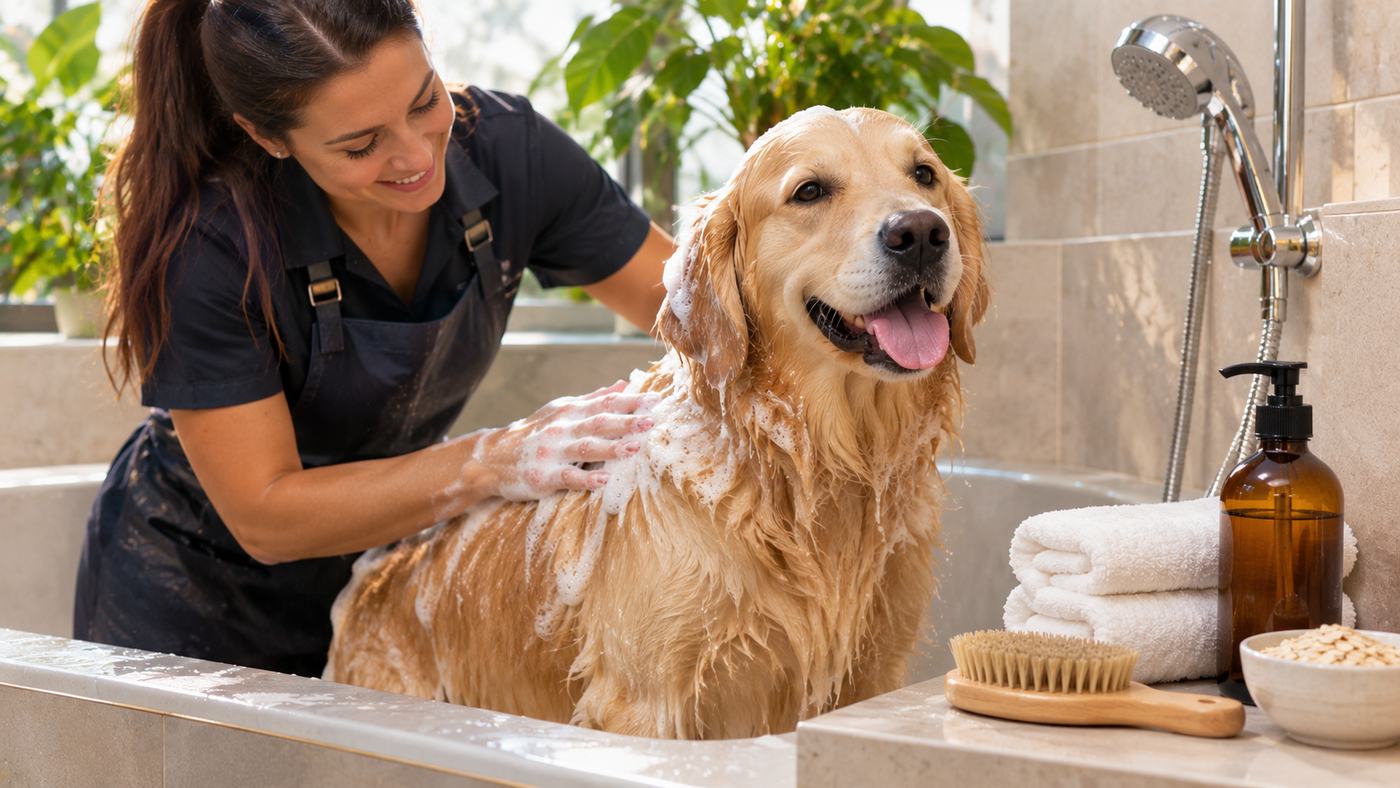
A clean coat feels wonderful, but the best bath is one that respects a dog’s skin as well as its fur. Choosing all natural dog shampoo can seem straightforward until you compare labels promising botanical extracts, soothing ingredients, fragrance, and special skin benefits. Natural ingredients are not automatically harmless, and a gentle cleanser is not a substitute for treatment when a dog has an infection, parasites, or an allergy. What matters is the complete formula, its suitability for dogs, and how the product is used. This guide explains seven practical ways to evaluate ingredients, match shampoo to coat type, avoid common hazards, and establish a bathing routine that supports comfort without exaggerating what any cosmetic product can do.
What Does All Natural Dog Shampoo Actually Mean?
The phrase all natural dog shampoo usually describes a cleanser marketed around ingredients derived from plants or other natural sources. It does not provide a standard definition of safety, effectiveness, or ingredient purity. Terms such as botanical, organic, clean, and hypoallergenic may appear on packaging, but they answer different questions and should not be treated as interchangeable certifications.
A shampoo is a formulated mixture, not simply an herb or a single oil. Cleansing agents remove dirt and oil; other components may help with texture, moisture, stability, preservation, or scent. Even ingredients that begin in a plant may be processed before they become usable in a rinse off product. A responsible purchase therefore starts with the complete ingredient list and clear directions rather than the front label alone.
Natural Origins Do Not Guarantee Skin Compatibility
An ingredient can be natural yet cause contact irritation or trigger a reaction in a particular animal. Concentrated essential oils are a notable concern, especially when added directly to fur or skin. Conversely, a thoughtfully formulated ingredient with a less familiar technical name is not necessarily unsafe. Concentration, exposure, formulation, and the individual dog all matter.
Focus on the Dog, Not the Marketing Phrase
For everyday grooming, prefer a product expressly formulated for dogs and suitable for their age and skin condition. If allergies or chronic irritation are involved, ask a veterinarian to guide the selection. The most useful label is one that explains what the shampoo does and how to use it safely.
1. Choose All Natural Dog Shampoo Ingredients for Comfort
A bottle labelled all natural dog shampoo may highlight one botanical ingredient while providing little information about the remainder of the formula. Turn to the ingredient declaration and manufacturer instructions. Look for an identifiable cleanser, details about fragrance, any listed moisturising ingredients, and directions for dilution or contact time. Ask the manufacturer for clarification when labels are incomplete or vague.
Understand Cleansers and Supporting Ingredients
A shampoo must remove soil without creating unnecessary skin irritation. Cleansing agents, often called surfactants, help water lift oil and debris from fur. Some come from plant derived starting materials, but origin does not tell you whether the final blend is mild. Formula design, amount used, and rinsing are more relevant than a claim that an ingredient is coconut based.
Other components may support the texture or shelf life of the shampoo. Preservatives can be important in water containing products because microbial contamination is itself a safety issue. Do not assume preservative free always means safer, especially for a product stored in a humid bathroom.
Be Cautious About Long Ingredient Exclusion Lists
Packaging sometimes claims that a shampoo is free from a collection of substances without explaining why those exclusions matter. Evaluate the ingredients actually present, their intended role, and the dog’s response. A short label can be helpful, but short does not equal gentle and long does not equal dangerous.
2. Choose Ingredients for Comfort Rather Than Hype
Some all natural dog shampoo formulas include colloidal oatmeal, aloe, glycerin, or conditioning ingredients. These may be used to support hydration or produce a comfortable bathing experience in appropriately formulated products. However, a label that says soothing does not establish a veterinary treatment or mean that every dog with itchy skin will improve.
Colloidal Oatmeal and Moisture Support
Colloidal oatmeal is finely processed oat material used in some pet skin care formulations. It can contribute to moisture retention and gentle skin care, although the overall formula still matters. Glycerin is a humectant that attracts water, while some conditioners are designed to reduce dryness and help with combing. Dogs can be sensitive to specific ingredients, including botanical ones, so monitor their individual response.
What About Aloe and Plant Oils?
Aloe appears in some dog grooming products, but this should not be confused with applying unverified household aloe preparations or allowing a pet to ingest plant material. Similarly, a formulated rinse off product is different from spreading concentrated oils directly onto the coat. Always use products intended for canine bathing and follow their instructions.
Avoid Treating a Shampoo Like Medication
If the dog has persistent redness, scabs, a strong unusual odour, hair loss, or recurring ear problems, arrange a veterinary assessment. A cosmetic all natural dog shampoo cannot reliably diagnose or treat bacterial or yeast infections. A clinician may recommend a prescribed medicated product or a different care plan.
3. Treat Fragrance and Essential Oils as Safety Decisions
A pleasant smell is not evidence of healthy skin. Dogs have a keen sense of smell, and strong fragrance can be unnecessary for a cleaning task. For an animal with sensitive or frequently irritated skin, a fragrance free dog formula is often a sensible starting point. All natural dog shampoo with a botanical perfume should still be examined for possible irritants.
Understand Why Essential Oils Need Caution
Tea tree, peppermint, citrus, and other essential oils are concentrated extracts, not ordinary kitchen herbs. Certain essential oils can harm pets when swallowed, inhaled, or absorbed through skin, depending on the substance, concentration, and circumstances. Applying concentrated tea tree oil to a dog is particularly risky. Do not create a homemade shampoo by adding undiluted essential oils to an existing bottle.
Commercial pet products may contain carefully controlled low concentrations of particular ingredients, so an ingredient name alone cannot establish that every finished product is toxic. The safer rule is to use a reputable dog specific formula as directed and ask a veterinarian about questionable additives.
Watch for Signs of a Reaction
During or after bathing, pay attention to worsening redness, excessive scratching, hives, vomiting, weakness, or unusual behaviour. Stop using a product if it appears to irritate the dog, rinse off remaining shampoo, and obtain veterinary advice. Suspected poisoning or severe symptoms require urgent veterinary attention. Keep the bottle available so the clinician can review the ingredients.
4. Match All Natural Dog Shampoo to Coat Type and Lifestyle
A short coated dog that spends most of its time indoors has different grooming needs from a long coated dog that frequently plays in mud. The best all natural dog shampoo is one that suits the dog’s coat and skin, cleans effectively, and rinses without leaving heavy residue. Breed labels can guide shopping, but coat density, grooming habits, and health history are more informative than breed name alone.
Short Coats and Active Outdoor Dogs
Short coats may be easier to rinse, but they can still collect dust, oil, pollen, or environmental irritants. Select a mild cleanser and avoid using stronger products simply because the dog enjoys outdoor activities. When only the paws or lower legs are dirty, local rinsing or wiping may be sufficient rather than bathing the whole animal.
Long, Curly, or Double Coats
Dense coats need thorough wetting, patient rinsing, and careful drying. A dog may appear dry at the surface while moisture remains trapped close to the skin. Brush gently to remove tangles before washing when suitable for the coat type. Ask a groomer about safe handling of matting rather than pulling knots aggressively during bathing.
Puppies, Seniors, and Dogs With Special Needs
Puppies may require an age appropriate product, calm handling, and extra warmth after bathing. Older dogs or animals with mobility limitations benefit from stable footing and short, low stress sessions. A veterinary recommendation takes priority when a dog has a diagnosed skin condition or receives topical parasite treatment.
5. Bathe Your Dog With a Calm, Thorough Method
Even a suitable all natural dog shampoo may cause problems if it is left on the skin or used incorrectly. Prepare everything before bringing your dog into the bathing area: towels, the approved product, a cup or gentle sprayer, and a secure nonslip surface. Water should feel comfortably lukewarm, not hot. Keep the room calm and avoid forcing a frightened dog through an overwhelming session. A thoughtful introduction to all natural dog shampoo also means letting your dog become comfortable with water and handling.
Start With Brushing and Gentle Wetting
Brush out loose fur and manageable tangles before washing, then wet the coat gradually. Keep water and lather out of the eyes, nose, mouth, and ear canals. Work from the neck down, using only the amount of all natural dog shampoo directed on the label. Applying extra cleanser will not necessarily improve the result and may make rinsing harder.
Massage and Rinse According to the Instructions
Massage the lather gently through the coat so the cleanser reaches areas that need washing. Do not assume every shampoo should sit for ten minutes. Ordinary cleansing formulas and prescription medicated shampoos can have different contact times. Follow the specific product directions; a prescribed treatment should be used exactly as the veterinarian instructs.
Finish With Patient Drying
Rinse until the fur and skin no longer feel slippery with shampoo. Check beneath the chest, between legs, around skin folds, and near the tail. Press clean towels gently against the coat. If the dog tolerates a dryer, use an appropriate cool or low setting and keep it moving. Avoid hot air, and ensure thick coats dry fully without chilling the animal.
6. Set Bathing Frequency Around Individual Needs
There is no single ideal bathing schedule for every dog. A healthy dog living mainly indoors may need fewer baths than an active dog that routinely gets dirty. Veterinary prescribed bathing for a skin condition may be needed more often than ordinary grooming. The right schedule depends on coat condition, skin health, activities, and the product used.
A mild all natural dog shampoo can be part of regular grooming, but overusing even a gentle cleanser may leave some dogs dry or irritated. On the other hand, postponing necessary cleaning can leave dirt or allergens on the skin. Discuss frequent baths with a veterinarian, particularly if the animal has an allergy, recurrent irritation, or prescribed flea treatment.
Use Brushing and Targeted Cleaning Between Baths
Brushing removes loose hair and debris while helping you notice changes in the skin. Wiping muddy paws with a damp cloth can reduce the need for a complete bath. Keep bedding clean and maintain an appropriate flea prevention programme as advised by your veterinarian. These habits address different sources of discomfort without constantly adding cleansing products.
Know When the Routine Needs Reassessment
A sudden change in odour, excessive flaking, persistent scratching, or recurrent greasy patches should not be explained away as a need for stronger shampoo. These signs can have several causes, including parasites, infection, or allergies. A veterinary examination is more useful than repeatedly switching among different all natural dog shampoo bottles without identifying the problem.
7. Compare Quality, Value, and Label Transparency
The price of all natural dog shampoo reflects factors such as ingredients, packaging, production scale, and marketing. It does not independently measure safety or effectiveness. Comparing the cost per usable bath may be more informative than comparing bottle prices, especially when one formula is concentrated and another is ready to use.
What a Responsible Product Listing Should Explain
Look for clear instructions, an ingredient declaration, age guidance, warnings, product contact details, and any stated storage requirements. A trustworthy maker should be able to answer basic questions about use and suitability. If a claim sounds medical, ask what evidence supports it, rather than assuming a plant inspired label proves therapeutic benefit.
When comparing all natural dog shampoo options, consider ease of rinsing, whether the fragrance bothers the dog, and how the coat looks and feels afterward. Customer reviews can reveal common practical complaints, but they cannot establish that a product treats a disease or is safe for every animal.
Consider Packaging Without Making Broad Claims
Refillable containers, recyclable materials, and concentrated formulas may reduce some packaging needs, but environmental benefits depend on the entire supply chain and actual disposal practices. Avoid assuming botanical ingredients automatically make a shampoo environmentally superior. Choose verifiable features that matter to your household.
Common Mistakes When Choosing All Natural Dog Shampoo
The most common mistake is equating natural with harmless. Another is choosing a heavily scented shampoo to cover an odour that may indicate a skin problem. Some owners use human shampoo because it is convenient, but canine skin and human skin differ. A shampoo designed for people, including baby shampoo, is not an appropriate routine substitute for a product formulated for dogs.
Other errors include applying concentrated essential oils, using excessive product, skipping complete rinsing, bathing too frequently without professional guidance, and putting a dense coated dog outdoors while still wet in cool conditions. None of these errors is corrected by buying a more expensive all natural dog shampoo.
A Short Shopping Checklist
Before buying all natural dog shampoo, check the following:
- The label confirms that the product is intended for dogs and appropriate for your dog’s age.
- Ingredients and instructions are sufficiently clear to evaluate how the cleanser should be used.
- Fragrance and essential oils are not being relied on as evidence of safety or treatment.
- The formula suits the dog’s coat and any veterinary advice already received.
- The producer explains how to store the product and whom to contact with questions.
The Most Useful Result Is a Comfortable Dog
A successful bath leaves the coat clean, the dog comfortable, and no obvious residue or increased skin irritation. A glossy appearance alone does not prove that skin is healthy. Continue to observe the animal between baths rather than judging a shampoo only by its scent or lather.
Frequently Asked Questions
Is all natural dog shampoo always safe for sensitive skin?
No. Natural ingredients may still cause irritation or allergic reactions. Choose a mild dog specific formula and consult a veterinarian if the dog has persistent skin problems.
Can all natural dog shampoo help with itching?
Gentle bathing may remove surface irritants and make some dogs more comfortable, but itching has many possible causes. Persistent symptoms need veterinary assessment.
How often should I use all natural dog shampoo?
Frequency depends on coat, activity, skin condition, and veterinary guidance. Bathe when appropriate, and seek advice if frequent washing seems necessary.
Is oatmeal a useful ingredient in dog shampoo?
Colloidal oatmeal is included in some moisturising pet formulations. Its suitability depends on the complete product and the individual dog’s response.
Can I add tea tree oil to a natural dog shampoo?
Do not add concentrated tea tree oil or other essential oils yourself. Certain oils can poison dogs, and a veterinarian should advise on questionable ingredients.
Can I use human shampoo instead of a dog shampoo?
Human products are not formulated for the same skin conditions as dog shampoos and may irritate canine skin. Use a product made for dogs unless your veterinarian directs otherwise.
Conclusion
Choosing all natural dog shampoo is less about attractive botanical claims and more about a well formulated product that suits your dog. Read the entire label, avoid risky do it yourself additives, and bathe with gentle technique and thorough rinsing. Adjust grooming to the coat, lifestyle, and any veterinary recommendations rather than following a rigid calendar. A comfortable dog with healthy skin is a better measure of success than fragrance or foam.
