
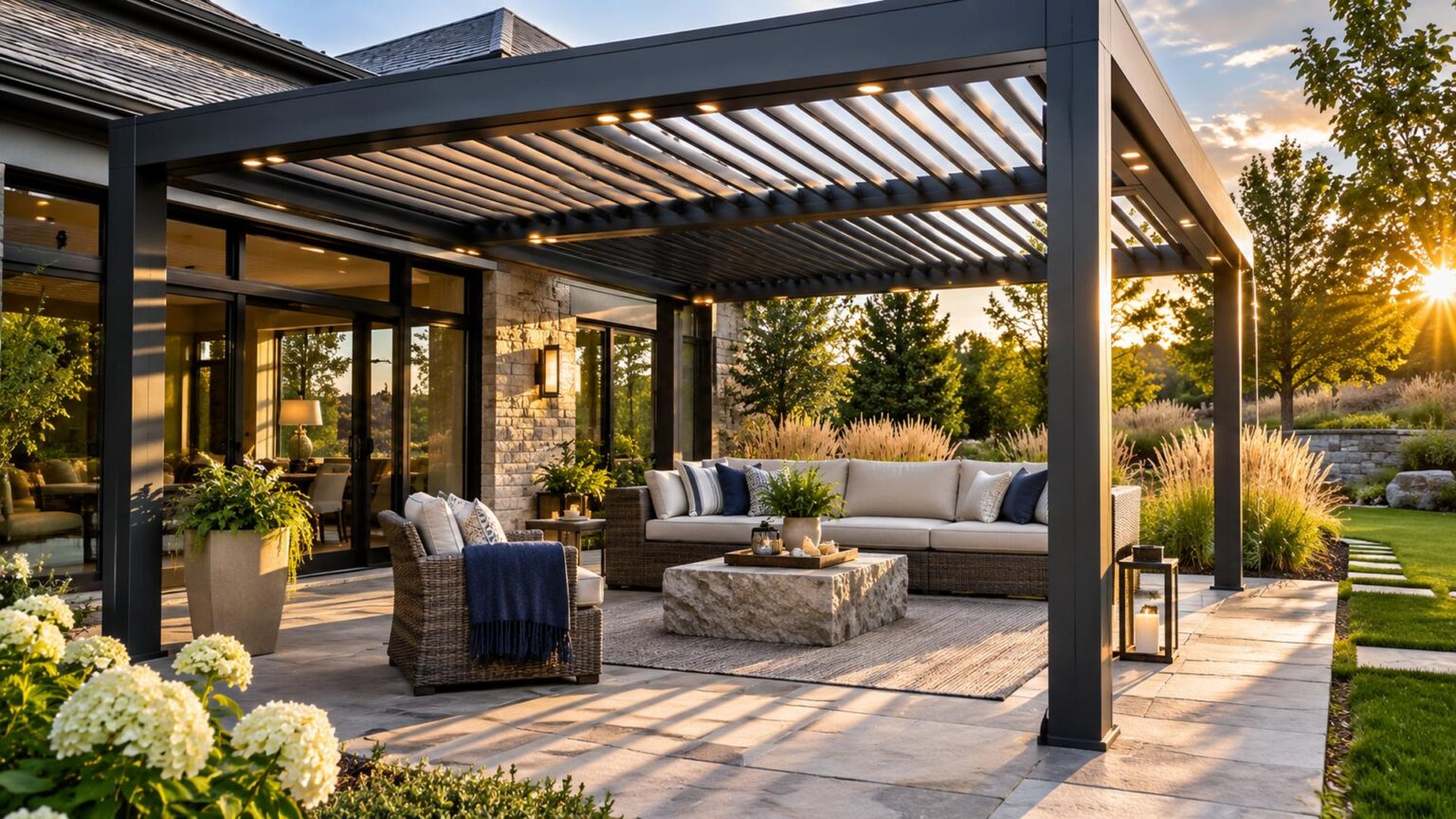
Aluminum pergolas offer a practical way to add shade, define an outdoor room, and give a patio a cleaner architectural look. They are available with simple open slats, fixed covers, or adjustable louvers that change how much sunlight enters the space. Their relatively light frames and durable finishes appeal to homeowners who want less routine upkeep than many traditional wood structures. Still, the best choice depends on your climate, site, budget, and local building requirements. This guide explains the options and the decisions that matter before installation.
A pergola should solve a real outdoor problem. Perhaps afternoon sun makes the deck uncomfortable, or a large patio needs a defined seating area. Establish that goal first. A beautiful structure that blocks the wrong side of the sun or drains toward the house will not serve you well.
What Makes Aluminum Pergolas Worth Considering?
A pergola is an outdoor framework supported by posts or attached to a building. Its overhead elements may remain open or incorporate an adjustable covering. Aluminum is a common material because it can be fabricated into consistent shapes and finished in many colors.
Unlike untreated steel, aluminum forms a protective oxide layer when exposed to air. That helps resist ordinary atmospheric corrosion. It does not make every finish, fastener, or installation immune to damage, especially near saltwater or aggressive cleaning chemicals.
Benefits Beyond Appearance
Factory finished components can create straight lines and a coordinated look with modern doors, windows, and outdoor furniture. Many models need periodic washing rather than regular sanding and repainting. Some also support screens, lighting, or rain management accessories designed for that exact frame.
Limits Every Homeowner Should Understand
Aluminum is not automatically stronger than every alternative. Structural performance depends on the alloy, profile dimensions, span, anchoring, and engineering. A lightweight kit made for calm weather cannot be assumed suitable for a coastal storm or heavy snow.
Aluminum Pergolas: Seven Design Choices for Better Outdoor Living
The most useful designs begin with how you plan to use the patio. Think about shade, rain, privacy, and the amount of control you want over the roof. Each choice affects the structure, installation, and ongoing maintenance.
1. Choose an Open Roof for Airflow and Filtered Light
A traditional open roof uses spaced rafters or slats to cast patterned shade. It can make a garden seating area feel defined without turning it into a fully covered room. Open designs also allow warmth and rain through, which may be an advantage or a drawback.
Check the direction of the slats relative to the sun. A narrow gap may provide shade at one hour and leave the seats exposed later. Ask for a layout drawing or shade study based on your home’s orientation.
2. Consider Adjustable Louvers for Flexible Shade
A louvered roof uses rotating blades to change the amount of light and ventilation. Partially open louvers may reduce glare while allowing warmer air to escape. Fully closed louvers can provide rain protection on models engineered with seals and drainage.
Not every louvered pergola is completely watertight. Wind driven rain can enter from the sides, and heavy weather may exceed the manufacturer’s operating limits. Ask for specific performance information instead of relying on a broad waterproof claim.
3. Compare Manual and Motorized Controls
Manual roof adjustment may suit a smaller seating area and avoid electrical components. Motorized aluminum pergolas can offer easier operation for larger roofs or frequent adjustments. Some systems include rain or wind sensors, phone controls, and preset positions.
Automation adds cost and maintenance responsibilities. Ask how the louvers operate during a power outage, whether manual override is available, and how sensors should respond to severe weather. A sensor does not replace the need to follow the product’s wind instructions.
4. Decide Between Freestanding and Attached Designs
A freestanding pergola can define a dining area beside a pool or farther into the garden. It typically needs its own properly designed posts, footings, and lateral support. This arrangement offers flexibility but may require more foundations and site preparation.
An attached pergola can make a patio feel connected to the house. However, its ledger, flashing, connections, and drainage require careful attention. Attachment must be suitable for the existing wall structure, not simply fastened through siding.
Check the Building Before Attaching Anything
A decorative exterior surface may conceal insulation, drainage layers, or framing that is unsuitable for a direct connection. Have the structure and attachment method assessed before ordering. Preventing water intrusion is as important as holding the pergola in place.
5. Plan Where Rainwater Will Go
Many covered aluminum pergolas use integrated gutters that direct water toward a downspout or through a column. That is convenient only when water has a safe place to discharge. The surrounding paving also needs a sensible slope away from the house.
Request a drawing of the drainage path. Ask how leaves are removed from channels, whether the gutters are accessible, and what happens during intense rainfall. A drainage system that looks hidden in photographs still needs maintenance access.
6. Add Privacy Without Blocking the Breeze
Side screens, curtains, and sliding panels can make a patio more comfortable near neighboring properties. They may also help reduce low angle sunlight. However, enclosed sides can change wind forces on the frame and affect how air moves through the space.
Use only accessories approved for the pergola model and the site’s conditions. Avoid adding heavy planters, swings, or unsupported hanging features without confirming load capacity. Decorative additions should not compromise the structure.
7. Design Lighting Around Real Evening Activities
Integrated lighting can turn a daytime shade structure into a welcoming dining or conversation area. Warm, indirect light generally feels more comfortable than harsh fixtures aimed at seating. Consider lighting the steps and route back to the house as well.
Plan wiring before construction and confirm that fixtures are rated for their exposure. Electrical work should meet local requirements and be performed by qualified personnel where required. Keep cables away from moving louvers and drainage channels.
How to Choose a Pergola for Your Climate
Weather performance should be part of the first conversation with a supplier. The same design may work well in a mild inland yard but require different engineering near the coast or in a snowy region. Request ratings for the specific size and configuration you intend to buy.
Sun Exposure and Afternoon Heat
Observe the patio at several times of day. Morning sun may be pleasant while western exposure makes the space uncomfortable later. Roof orientation, adjustable louvers, and side screens can make a meaningful difference.
A pergola creates shade, but it does not air condition the outdoors. Surface temperatures, nearby walls, and airflow still affect comfort. Trees or breathable landscaping may complement the shade structure.
Wind, Hurricanes, and Secure Anchoring
Wind resistance depends on the complete installed system, including posts, connections, footings, and any wall attachment. Manufacturer ratings may assume specific anchoring conditions. Check the design documents for your local wind requirements rather than comparing headline speeds alone.
Homeowners in hurricane prone areas should seek site appropriate engineering and follow local rules. Never assume opening or closing louvers makes an unapproved installation safe in a major storm. Follow the manufacturer’s procedures and official weather advice.
Snow Loads and Freezing Conditions
Snow places weight on overhead structures, and drifting can create uneven loading. Check the manufacturer’s snow load rating for the actual roof size and any required louver position. Some models require specific winter operating practices.
Do not climb onto a pergola roof to clear snow unless an approved safe maintenance method exists. If the product is not rated for local conditions, choose a properly engineered alternative.
Materials, Coatings, and Long Term Durability
Powder coated aluminum pergolas are popular because the finish can provide consistent color and added surface protection. Anodized aluminum is another architectural finish, with different appearance and maintenance characteristics. Both require correct specification and care.
Powder Coating Quality Matters
Ask how the components are prepared and coated, whether the finish is designed for outdoor architectural use, and what the finish warranty covers. A dark color may show dust or scratches differently from a light one. Obtain a physical sample rather than relying only on website images.
In coastal locations, salty air can accelerate problems at damaged finishes and dissimilar metal connections. Ask about suitable hardware and corrosion protection for the exposure. Regular cleaning helps remove deposits before they build up.
Fasteners and Hidden Components Need Attention
A durable frame can still suffer if fittings, motors, seals, or drains deteriorate. Review the specifications for these smaller components and ask whether replacement parts are available. Service access should be part of the design, not an afterthought.
Match the Finish to Your House and Garden
A pergola can feel like an extension of the home or a separate garden feature. Start with the colors and materials already visible from the patio. Window frames, roofing, paving, and outdoor furniture provide useful clues. The goal is coordination rather than matching every surface exactly.
Light Finishes Versus Dark Frames
White and warm gray aluminum pergolas can look airy against pale stucco or light siding. Dark charcoal frames offer sharper contrast, especially beside timber decking and greenery. Consider the visibility of dust, pollen, and water spots when choosing the color. Order a finish sample and view it outdoors before approving a large structure.
Balance Visual Weight and Daylight
Deep beams and closely spaced posts may appear heavy in a compact yard. Slimmer profiles can create a lighter appearance, but the chosen system still needs adequate structural capacity. For aluminum pergolas near large windows, review how the overhead elements will affect daylight inside the home. A roof that creates welcome summer shade may also reduce winter sunlight. Choose the layout based on the seasons you use the space most.
Size and Placement: Make the Pergola Fit the Patio
Measure the usable space rather than choosing a popular kit dimension. Mark the dining table, chair clearance, doors, grill, and walking paths. A pergola that covers the table but blocks a sliding door can make the patio less useful.
Use Furniture to Guide Dimensions
Place tape or temporary markers on the ground to show the proposed post positions. Allow room to pull out chairs and move around furniture. Check that support posts do not create a tripping hazard or interrupt the best view.
Consider the height as carefully as the width. Taller structures may feel airy, but their geometry affects shade and structural requirements. Ask the supplier for both outside dimensions and the actual clear space beneath the beams.
Plan for Existing Decks and Pavers
A deck surface is not automatically capable of supporting new pergola posts. The load must reach a suitable structure or foundation. Pavers laid over a base typically do not provide the same anchoring as engineered footings.
Have an installer verify what lies beneath the finished surface. Existing irrigation, buried utilities, and drainage lines can also influence the safest post locations.
Installation, Permits, and Professional Help
Permit requirements differ by jurisdiction and may depend on size, attachment, roof coverage, and electrical work. Some small open structures receive exemptions, while covered or attached projects need more review. Homeowners should ask their local building department before buying a kit.
What a Proper Installation Plan Includes
A useful plan identifies exact dimensions, footings, anchoring, clearances, drainage, and any wiring. It should also state the approved wind and snow conditions. If a homeowner association applies, check its design rules separately from public permits.
When DIY Installation Makes Sense
Some smaller kits are designed for assembly by experienced homeowners. However, handling large beams, drilling foundations, and working at height carry real risks. Hiring a qualified installer may be worthwhile for motorized roofs, attached structures, difficult ground conditions, or uncertain code requirements.
Inspect Before the First Use
Check that the installed components match the approved instructions. Ask the installer to demonstrate the roof operation and explain routine inspections, cleaning, and emergency procedures. Keep manuals and permit records for later maintenance.
What Do Aluminum Pergolas Cost?
The cost of aluminum pergolas depends on footprint, roof mechanism, structural rating, finish, accessories, and installation conditions. An open roof kit will often have fewer moving components than a motorized louvered structure. Yet the total price also depends on the foundation and site work.
Avoid relying on one national price range as a reliable quote. Two patios with the same floor area may have very different requirements due to ground conditions, wind exposure, or attachment details.
Compare the Entire Project Budget
Request an itemized estimate covering the frame, roof, delivery, foundations, permits, labor, drainage, and electrical work. Ask whether old paving must be cut or repaired. Include optional screens, lighting, controls, and future servicing where relevant.
For example, a twelve by twelve foot footprint covers 144 square feet. That measurement helps compare options, but it does not reveal the cost of suitable supports or foundations. Ask for the final installed price for your site.
Look Beyond the Lowest Offer
Compare engineering documentation, finish warranties, motor coverage, service access, and the installer’s responsibilities. A low advertised kit price may omit critical elements. A detailed quote makes it easier to understand where money is being spent.
Keep Your Pergola Looking Good With Simple Care
Aluminum pergolas generally need routine washing and inspections rather than heavy refinishing. Follow the manufacturer’s instructions for the coating and moving parts. Use mild cleaning solutions where approved and rinse away residue.
Check Gutters, Louvers, and Fasteners
Remove leaves from accessible drains and inspect channels after heavy weather. Check for unusual movement, noisy motors, loose visible hardware, or damage to the finish. Stop using a faulty powered roof until it has been assessed.
Treat Coastal Exposure More Carefully
Salt deposits and airborne dirt may require more frequent gentle cleaning. Avoid harsh acidic or alkaline products that can damage architectural finishes. Ask the manufacturer how to address a scratch without voiding the coating warranty.
Common Buying Mistakes to Avoid
The biggest mistake is choosing a pergola from photographs without reviewing site requirements. Another is assuming that adjustable louvers create a fully enclosed weatherproof room. Even a closed roof may allow wind driven rain through the sides.
Buyers also overlook foundations, post placement, and the cost of electrical accessories. Verify which components are included, who obtains permits, and what happens if the delivered structure does not match the approved plan.
Ask for Written Performance Details
Request the exact model specification, drawings, structural ratings, drainage design, and warranty. Be cautious of phrases such as stormproof or maintenance free without supporting conditions. A reputable supplier should explain the limits of its system.
Which Pergola Style Suits Your Outdoor Routine?
A family dining area may benefit from an adjustable roof and easy cleaning. A garden sitting space might need only an open frame with seasonal shade. A poolside lounge may call for corrosion resistant finishes and screens that reduce afternoon glare.
For an outdoor kitchen, plan around heat, smoke, ventilation, and manufacturer clearances before placing cooking equipment beneath any covering. Do not assume a pergola makes an outdoor grill safe to use in a partially enclosed setting.
A good choice begins with your routine. Sketch how you want to use the space in spring, summer, and winter, then match the structure to those needs. That is more reliable than buying every available accessory.
Frequently Asked Questions
Are aluminum pergolas better than wooden pergolas?
They often require less refinishing, but the better material depends on your design preference, local climate, structural requirements, and budget.
Do aluminum pergolas protect against rain?
Some covered louvered models provide rain protection when closed and correctly drained. Open designs do not, and wind driven rain may still enter.
Can an aluminum pergola withstand strong winds?
Only when the exact structure and anchoring are rated for site conditions. Check engineering documents and local requirements before installation.
Do I need a permit to install a pergola?
Possibly. Requirements depend on location, dimensions, roof type, attachment, and electrical work. Confirm with the local building department.
Are motorized aluminum pergolas worth the extra cost?
They can be useful for frequent shade adjustments and larger roofs. Compare convenience with electrical, maintenance, and replacement component costs.
How do I clean a powder coated aluminum pergola?
Follow the manufacturer’s care instructions. Mild approved cleaners, gentle rinsing, and routine gutter checks are common maintenance tasks.
Conclusion
Aluminum pergolas can transform an exposed patio into a more inviting outdoor space when their design matches the property. Compare roof types, materials, weather ratings, and drainage before committing to a style. Proper foundations, clear permits, and realistic maintenance plans matter as much as appearance. With thoughtful planning, a pergola can deliver lasting shade, flexible use, and a cohesive backyard design.
