
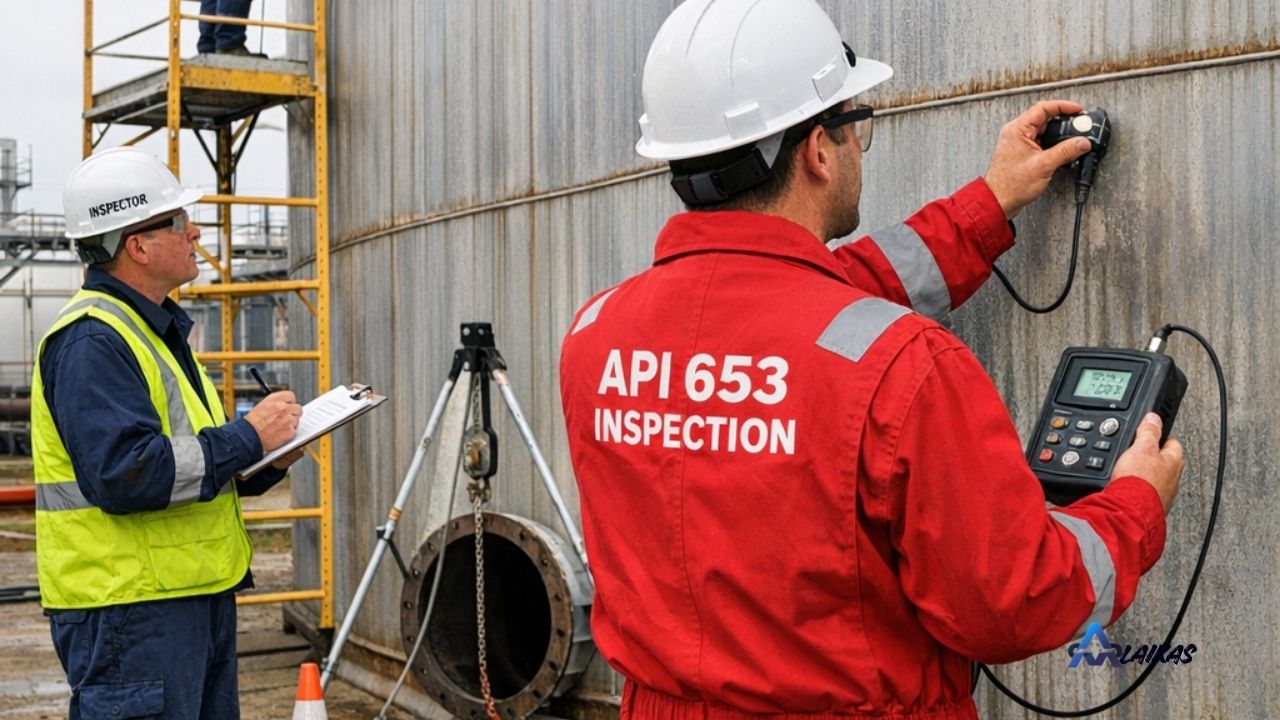
Maintaining the safety and reliability of aboveground storage tanks is essential for industries such as oil and gas, chemical processing, manufacturing, and energy production. Over time, storage tanks are exposed to corrosion, environmental conditions, and operational stress that can affect their structural integrity. An API 653 Inspection is a recognized inspection process used to assess the condition of aboveground storage tanks, helping operators identify potential issues, support maintenance planning, and promote safe operation. Following applicable industry standards and regulatory requirements can help organizations extend the service life of their tanks while reducing operational risks.
What Is an API 653 Inspection?
API 653 Inspection refers to the inspection, repair, alteration, and reconstruction standard developed by the American Petroleum Institute (API) for aboveground storage tanks that are built in accordance with API 650 or its predecessor, API 12C.
The standard provides guidance for evaluating a tank’s condition throughout its service life. Qualified inspectors assess the tank’s structural integrity, identify signs of deterioration, and recommend maintenance or repairs when necessary.
API 653 inspections are widely used in industries that store petroleum products, chemicals, and other liquid materials in aboveground tanks.
Why API 653 Inspections Are Important
Storage tanks play a critical role in industrial operations, and their condition directly affects workplace safety, environmental protection, and operational efficiency.
Key reasons for conducting API 653 inspections include:
- Supporting safe tank operation
- Detecting corrosion and structural damage
- Helping prevent leaks and product loss
- Extending tank service life
- Supporting maintenance planning
- Meeting applicable industry and regulatory requirements
- Reducing operational downtime
- Protecting personnel and the environment
Routine inspections help identify issues before they develop into more significant maintenance or safety concerns.
What Does an API 653 Inspection Include?
An API 653 inspection typically involves several evaluation methods depending on the tank’s condition, service history, and inspection schedule.
External Visual Inspection
The inspector evaluates the visible condition of the tank, looking for signs such as:
- Surface corrosion
- Coating deterioration
- Settlement
- Roof damage
- Shell deformation
- Foundation issues
- Leakage indicators
External inspections can often be completed while the tank remains in service, depending on site conditions and inspection requirements.
Internal Inspection
Internal inspections generally require the tank to be removed from service so inspectors can safely examine internal components.
The inspection may include evaluation of:
- Tank floor
- Internal corrosion
- Weld integrity
- Bottom plates
- Roof structure
- Shell interior
- Coating condition
Internal inspections provide detailed information about the tank’s structural health.
Thickness Measurements
Inspectors commonly use ultrasonic testing (UT) to measure the remaining thickness of the tank shell, roof, and floor.
These measurements help determine:
- Corrosion rates
- Remaining useful life
- Areas requiring repair
- Compliance with minimum thickness requirements
Foundation Assessment
The foundation is evaluated for:
- Settlement
- Cracking
- Drainage issues
- Structural movement
- Stability concerns
A stable foundation is essential for maintaining the integrity of the entire storage tank.
Non-Destructive Testing Methods
API 653 inspections frequently incorporate non-destructive testing (NDT) techniques that evaluate the condition of the tank without causing damage.
Common methods include:
- Ultrasonic Testing (UT)
- Magnetic Particle Testing (MT)
- Liquid Penetrant Testing (PT)
- Vacuum Box Testing
- Visual Testing (VT)
- Radiographic Testing (RT), where appropriate
The selected testing methods depend on the inspection scope and tank condition.
Who Performs an API 653 Inspection?
API 653 inspections should be conducted by qualified inspectors with the appropriate training, experience, and certification.
Certified inspectors are expected to understand:
- Tank construction standards
- Corrosion mechanisms
- Inspection procedures
- Repair methods
- Applicable safety requirements
- Industry regulations
Organizations should ensure that inspections are performed by personnel who meet the relevant qualification requirements.
How Often Should API 653 Inspections Be Performed?
Inspection frequency depends on several factors, including:
- Tank age
- Service conditions
- Corrosion rates
- Previous inspection findings
- Product stored
- Maintenance history
- Applicable regulations
- Risk assessment results
Rather than relying on a fixed schedule, inspection intervals are determined using the requirements of API 653 and engineering evaluations.
Benefits of API 653 Inspection
Improved Safety
Routine inspections help identify defects that could affect the safe operation of storage tanks.
Longer Equipment Life
Early detection of corrosion and wear allows maintenance to be performed before significant structural damage occurs.
Better Maintenance Planning
Inspection reports provide valuable information for scheduling repairs and allocating maintenance resources.
Environmental Protection
Identifying leaks or deteriorated components can help reduce the risk of environmental contamination.
Regulatory Compliance
Following recognized inspection standards supports compliance with applicable regulations and industry best practices.
Common Issues Identified During API 653 Inspections
Inspectors may identify a variety of conditions requiring attention.
Common findings include:
- Internal corrosion
- External corrosion
- Bottom plate thinning
- Roof damage
- Shell distortion
- Weld defects
- Foundation settlement
- Coating failure
- Nozzle deterioration
- Leakage
Addressing these issues promptly can help maintain tank reliability and reduce operational risks.
Preparing for an API 653 Inspection
Proper preparation contributes to a safe and efficient inspection process.
Recommended steps include:
- Review previous inspection reports.
- Gather maintenance records.
- Verify tank operating history.
- Ensure safe access for inspectors.
- Complete required cleaning if an internal inspection is planned.
- Follow all applicable safety procedures.
- Coordinate with operations and maintenance personnel.
Good preparation helps reduce delays and improves inspection efficiency.
Best Practices for Storage Tank Maintenance
An API 653 inspection should be part of a broader tank integrity management program.
Best practices include:
- Conduct regular visual inspections.
- Monitor corrosion rates.
- Maintain protective coatings.
- Repair defects promptly.
- Keep accurate inspection records.
- Evaluate drainage around foundations.
- Train maintenance personnel.
- Follow applicable API standards and regulatory requirements.
A proactive maintenance approach can improve reliability while reducing long-term repair costs.
Industries That Use API 653 Inspections
API 653 inspections are commonly performed in industries that operate aboveground storage tanks.
These include:
- Oil and gas
- Petroleum terminals
- Chemical manufacturing
- Power generation
- Refineries
- Mining
- Food and beverage processing
- Water treatment
- Industrial manufacturing
Organizations across these sectors rely on storage tanks to safely contain valuable products and raw materials.
Frequently Asked Questions
What is an API 653 Inspection?
An API 653 Inspection is a standardized evaluation of aboveground storage tanks covered by API 653 to assess their condition, structural integrity, and suitability for continued service.
Which tanks require API 653 inspections?
API 653 generally applies to aboveground welded storage tanks originally constructed in accordance with API 650 or API 12C. The applicability should be confirmed based on the specific tank and governing requirements.
Who can perform an API 653 Inspection?
Inspections should be carried out by qualified personnel with the appropriate knowledge, training, and certifications relevant to API 653 and storage tank inspection practices.
What testing methods are used during API 653 inspections?
Common methods include visual inspection, ultrasonic thickness measurements, magnetic particle testing, liquid penetrant testing, vacuum box testing, and other non-destructive examination techniques as appropriate.
Why are API 653 inspections important?
These inspections help identify corrosion, structural deterioration, and other issues that could affect tank safety, environmental protection, operational reliability, and compliance with applicable standards.
Conclusion
API 653 Inspection is an essential component of effective aboveground storage tank management, helping organizations evaluate structural integrity, identify maintenance needs, and support safe, reliable operations. Through regular inspections, qualified personnel can detect corrosion, wear, and other defects before they lead to more serious operational or environmental issues. By incorporating API 653 inspections into a comprehensive maintenance program and following recognized industry standards, businesses can extend the life of their storage tanks, improve safety, and maintain compliance with applicable regulations.
