
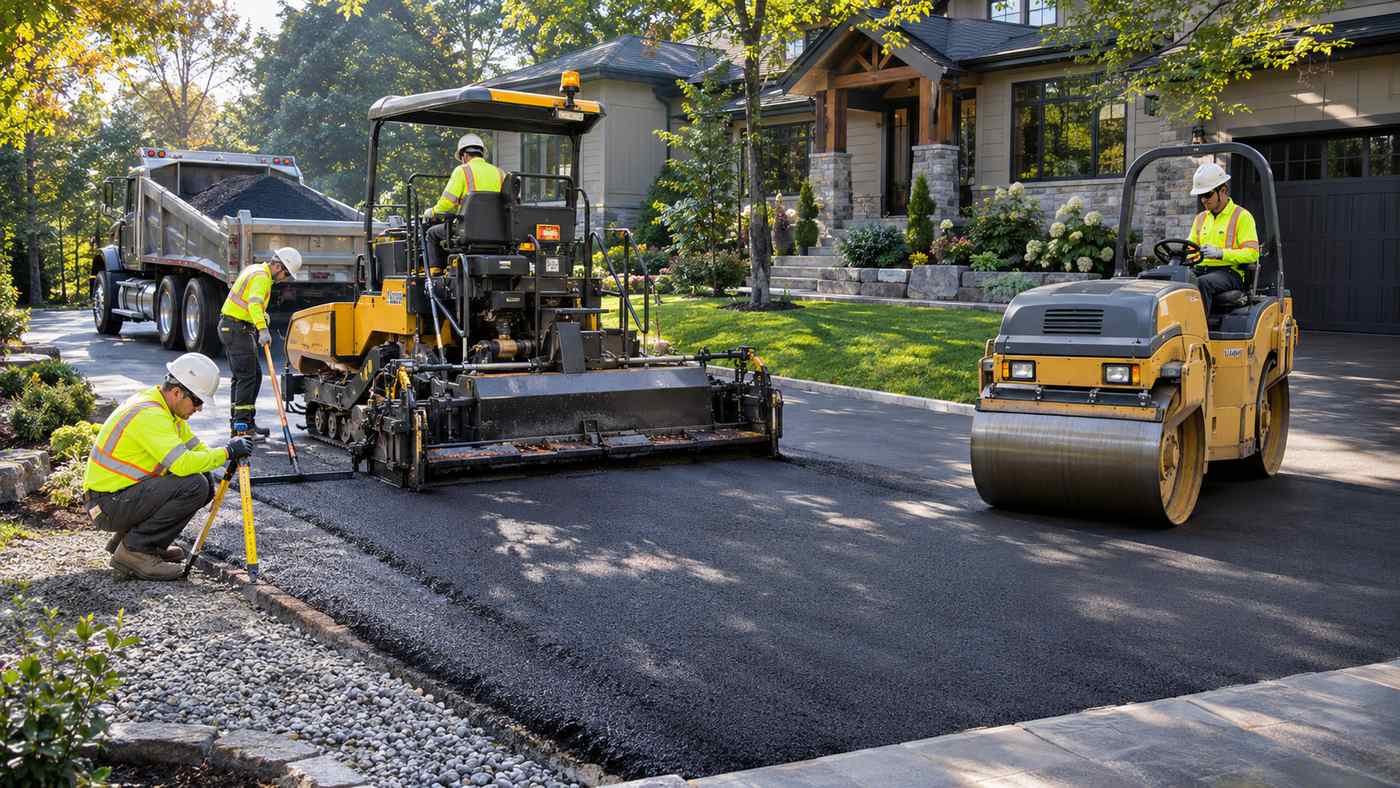
A new driveway or parking area can look excellent on installation day and still develop cracks, depressions or standing water sooner than expected. Quality asphalt paving depends on much more than the dark surface visible after construction. Ground conditions, drainage, pavement thickness, mixture selection, temperature, compaction and subsequent maintenance all affect performance. A surface designed for occasional passenger cars may not support regular delivery trucks, even when the two look identical. This guide explains seven decisions that help property owners understand paving proposals, evaluate workmanship and plan repairs. It also separates routine upkeep from structural problems, so money is spent on the work a pavement actually needs rather than on cosmetic fixes that leave the cause untouched.
What Is Asphalt Paving and How Does It Work?
Asphalt paving creates a flexible pavement using carefully proportioned mineral aggregates and an asphalt binder. The mixture is produced under controlled conditions, transported to a job site, spread to the planned line and grade, and compacted while it remains workable. A typical pavement may include a compacted soil foundation, an aggregate base and one or more asphalt courses. Some engineered designs place asphalt layers directly on a prepared subgrade.
Asphalt can serve residential driveways, parking lots, access roads and heavily trafficked transportation corridors, but those applications are not built to one universal specification. Traffic loading, soil strength, climate and expected service determine the structural design.
Asphalt Versus Concrete
Asphalt is spread and compacted while workable, whereas cement concrete is placed and then undergoes a curing process. Both can be appropriate for residential or commercial surfaces, but installation methods, repair techniques, appearance and traffic reopening requirements differ. The better choice depends on site conditions, expected loads and total ownership costs.
Why the Foundation Matters
The upper layer distributes loads, but the soil and base beneath it must support those loads consistently. A smooth finish cannot compensate for an unstable foundation. This is the starting point for every carefully planned asphalt paving project.
1. Inspect the Site and Prepare a Stable Subgrade
The first decision in asphalt paving is whether the existing ground can support the intended vehicles. Subgrade is the soil below the pavement structure. It must be graded, compacted and assessed for moisture or weak areas. Simply placing fresh asphalt over unstable ground can allow the same underlying problem to reappear as settlement or cracking.
Evaluate Soil and Existing Pavement
A contractor should inspect the site, note previous repairs, identify water accumulation and assess areas that yield under traffic. Proof rolling, where specified, helps reveal weak spots by observing the response of prepared ground to controlled vehicle loading. If an area deforms excessively, work should pause until the support problem is corrected.
For asphalt paving over an existing driveway, the condition of the old pavement matters. Widespread fatigue cracking, severe rutting or recurring settlement can indicate problems in the layers below. An overlay cannot be assumed to restore an inadequate foundation.
Build a Suitable Base
An aggregate base may help distribute loads and provide a consistent construction platform. Its thickness, grading and compaction should follow the project design. Ask for compacted thicknesses rather than loose material depths.
Protect Buried Services
Before excavation or grading, locate utilities using the appropriate local notification service and available property records. Accidental damage can create safety hazards and expensive delays.
2. Design Drainage Before Choosing the Surface Finish
Water is a major threat to pavement performance because it can enter cracks, weaken soil support and contribute to damage during freezing and thawing. Good asphalt paving uses appropriate surface grades, edge conditions and subsurface drainage where necessary. The aim is to carry water to a lawful, suitable discharge location rather than allowing it to pool next to the driveway, garage or building foundation.
Check Slope and Low Spots
A paved surface may be crowned, sloped toward an approved drainage feature or arranged with another engineered cross section. The Asphalt Institute’s residential driveway guidance describes a cross slope or crown of at least one quarter inch per foot for certain relatively flat driveway situations. That figure is not a universal rule for every accessible route, road or parking area.
A contractor should identify low points before placing material. Ask where stormwater will travel during heavy rainfall, how it leaves the pavement and whether changes could direct runoff toward a neighbour. For asphalt paving next to a garage, doorway or walkway, elevation details deserve particular attention.
Keep the Pavement Edges Supported
Poorly supported edges may crack or crumble when vehicle tyres repeatedly pass close to them. Adjacent shoulders, curbs or properly detailed landscape transitions can protect the pavement edge. Roof downspouts should not discharge concentrated water beside a vulnerable foundation or onto an area where it will remain trapped.
Fix Drainage Defects, Not Just Their Appearance
A shallow depression filled with a surface patch may continue to settle if saturated soil or damaged drainage remains beneath it. Investigate recurring puddles before commissioning a cosmetic resurfacing treatment.
3. Match Asphalt Mix and Thickness to Traffic
Not all asphalt mixtures or layer designs are identical. Asphalt paving for a passenger car driveway may differ significantly from paving for a loading area where heavy trucks turn and brake. Mix design can consider aggregate gradation, binder characteristics, traffic stresses, climate and local materials. The project specification should describe the relevant mixture and completed pavement structure.
Understand Compacted Thickness
A paving proposal should state the finished compacted thickness of each layer, not simply the depth of loose asphalt spread ahead of the roller. Compaction reduces the volume of the mixture. The Asphalt Institute has published residential full-depth driveway guidance discussing a minimum four-inch compacted asphalt structure on suitable prepared subgrade, with greater thickness for demanding circumstances. Other designs use an aggregate base and separate asphalt courses. None of these examples replaces a project-specific assessment.
Choose a Surface Suitable for the Job
Dense graded asphalt mixtures are common for driveways and parking areas. Different projects may require modified binders, particular aggregate sizes or specialised mixtures. Heavy turning traffic, concentrated loads and fuel exposure require careful consideration.
Separate Base and Wearing Courses
Multi-layer asphalt paving can include a lower structural course and a finer surface course. Each should be placed to the specified thickness and compacted appropriately. A tack coat between asphalt layers may be required to help them bond, depending on the condition and design of the pavement. The layers need to work together under traffic rather than slide or separate.
4. Pay Attention to Placement, Weather and Compaction
Even a sound design can perform poorly if the mixture is mishandled during construction. Asphalt paving requires coordination among the plant, delivery trucks, paver and rollers. Hot mix needs to arrive and be placed within the temperature range appropriate to its formulation and the project specification. Cold, wet surfaces and delays can complicate placement and compaction.
Understand the Paving Sequence
The contractor should prepare the support layers, check grades and address any remaining defects. The paving crew then delivers and spreads the mixture using suitable equipment. Rollers compact the material while conditions permit it.
Why Density Is So Important
The Federal Highway Administration identifies adequate compaction as a key factor in pavement performance. Insufficient density can allow excessive air and water into the mixture, potentially contributing to cracking, raveling and premature deterioration. The correct target depends on the mixture, specifications and testing methods; a single roller pass count is not a substitute for proper quality control.
For asphalt paving on substantial commercial or public works, specifications may require density testing and documented acceptance. Small residential work may use a simpler quality assurance approach, but the crew should still have appropriate equipment and a clear rolling plan.
Ask When Traffic Can Return
There is no reliable universal number of hours before every new pavement can accept vehicles. Mix type, layer thickness, weather and equipment loading affect the advice. Follow the contractor’s written opening instructions and avoid turning heavy vehicle tyres sharply on a surface that has not sufficiently cooled and stabilised.
5. Compare Complete Project Costs and Contractor Quotes
The cost of asphalt paving depends on area, excavation, base preparation, access, layer thickness, material supply, drainage work and traffic control. An advertised price per square foot may exclude much of that work.
Ask for an Itemised Scope
A useful proposal should describe what will be removed, how unsuitable soil will be corrected, the compacted base and asphalt thicknesses, the mix, edge treatment, drainage measures, disposal and site cleanup. Check whether existing concrete, utility covers or landscaping require adjustment. Clarify taxes, permits, payment schedule and how unexpected ground conditions will be priced.
Compare Equivalent Solutions
If one contractor proposes a thin overlay while another recommends complete reconstruction, their prices are not directly comparable. Ask each to explain the pavement condition, why its approach is appropriate and what defects the proposal is expected to address. An inexpensive surface treatment can be good value on sound pavement but wasted money when the supporting layers have failed.
Verify the Business Before Signing
For asphalt paving, check appropriate business registration or licensing where required, insurance, relevant local experience and comparable completed work. Obtain a written agreement and be wary of pressure to pay the full amount before completion.
Think Beyond Initial Price
Compare durability expectations, repairability, drainage and future maintenance obligations. A properly constructed foundation may cost more initially but can avoid repeated work if it addresses an actual weakness. No contractor should guarantee a particular lifespan without qualifications about traffic, weather and upkeep.
6. Distinguish Maintenance, Resurfacing and Reconstruction
One of the most valuable asphalt paving decisions comes years after installation: determining whether the existing surface needs preservation or structural repair. Not every crack means the driveway must be replaced, and not every tired-looking surface can be rescued with a coat of sealer.
Routine Inspection and Crack Care
Inspect paved areas periodically for cracks, potholes, edge damage, standing water and changes in level. Keep drainage outlets clear and address isolated defects before they become larger. Appropriate crack sealing may reduce water entry in a structurally sound surface, but the treatment and timing should match the crack type and existing condition.
What Sealcoating Can and Cannot Do
A surface seal treatment may help protect or refresh certain pavements, but it does not restore failed structural support. The Asphalt Institute advises that a well-designed, low-traffic driveway typically should not need immediate sealing after construction; its guidance suggests that the first treatment may not be needed for approximately two to five years, depending on climate and construction quality. Evaluate the surface rather than following a rigid calendar.
When an Overlay Makes Sense
A new asphalt overlay can improve an existing pavement that remains structurally suitable, provided defects are treated and the surface is properly prepared. The Asphalt Paving Handbook advises removing and replacing failed areas before overlaying. Deep fatigue cracking, extensive rutting or unstable base layers may call for more substantial rehabilitation or reconstruction.
Repair the Cause Before the Surface
For asphalt paving repairs, investigate whether water, inadequate base support, heavy loading or poor drainage caused the damage. Covering a persistent problem without correcting it increases the chance that distress will return through the new layer.
7. Consider Recycling, Climate and Long Term Performance
Modern asphalt paving can include reclaimed asphalt pavement, commonly called RAP, in new mixtures when permitted by the specification and supported by appropriate mix design. RAP contains both reusable aggregate and aged asphalt binder. The National Asphalt Pavement Association’s 2024 construction season survey reported that more than 101 million tons of RAP were incorporated into new asphalt mixtures in the United States. That demonstrates established industry use, not that every reclaimed material proportion works in every pavement.
Understand Warm Mix Technology
Warm mix asphalt technologies can allow production or compaction at temperatures below those used for comparable conventional hot mix, depending on the system. Potential advantages include energy savings and improved workability in certain circumstances. Ask whether the contractor’s selected mix meets the intended performance specification.
Account for Weather and Climate
Hot summers, freeze and thaw cycles, repeated heavy rain and winter maintenance practices can all affect pavement. Asphalt paving design should reflect local climatic conditions, drainage and traffic. A pavement built for warm, dry weather may require different considerations from one exposed to frequent freezing, deicing or heavy freight.
Plan for Responsible Material Handling
Ask how removed asphalt will be transported and whether it can enter an appropriate recycling stream. Debris and contaminated materials may need separate management. Recycling is valuable when it meets environmental requirements and produces a mixture suited to the project.
Common Asphalt Paving Mistakes Property Owners Can Avoid
Many problems begin before the first truck arrives. A vague agreement, an unexamined soft area, poor drainage grades or an unspecified finished thickness can create disputes and performance issues. Other mistakes include judging quality only by surface colour, parking heavy equipment too soon, overlooking edge support and buying a cosmetic treatment for a pavement with extensive structural damage.
A thoughtful asphalt paving project uses a clear scope, suitable materials and realistic inspection. Property owners should receive an explanation of what will be built and how it will be checked rather than relying solely on verbal assurances that the job will last for decades.
Practical Project Checklist
- Describe vehicle types, traffic frequency and expected heavy loads.
- Inspect subgrade support, existing damage and buried utility locations.
- Confirm drainage grades, water discharge and edge protection.
- Record the proposed layer structure and compacted thicknesses.
- Clarify mixture specification, installation process and quality checks.
- Compare complete written quotes, permits, insurance and payment terms.
- Obtain opening-to-traffic instructions and a realistic maintenance plan.
Frequently Asked Questions
What is asphalt paving used for?
It creates flexible surfaces for driveways, parking lots, roads and access areas. The pavement structure must be designed for the expected vehicles, soil and climate.
How thick should residential asphalt paving be?
There is no universal thickness. The appropriate design depends on the soil, base, traffic and construction method, and should specify finished compacted layers.
How long does asphalt paving last?
Service life varies with structural design, construction quality, loading, drainage, climate and maintenance. A fixed lifespan cannot be guaranteed for every project.
Can new asphalt be placed over old pavement?
Sometimes. A sound existing pavement may be suitable for an overlay after preparation, but failed base material and serious structural distress need appropriate repair first.
Is sealcoating necessary immediately after paving?
Usually not for a properly constructed low-traffic pavement. Inspect actual condition and follow suitable maintenance guidance rather than applying sealer automatically.
What should I check before hiring an asphalt contractor?
Review the proposed base and drainage work, compacted thickness, mixture, written price, credentials, insurance, relevant experience and completion conditions.
Conclusion
Durable asphalt paving begins with a stable foundation, reliable drainage and a pavement design matched to real traffic. Suitable mixtures and careful compaction matter as much as the finished appearance, while clear quotations make costs easier to understand. Routine inspections and targeted preservation help protect sound pavement, but serious underlying failures require more than surface treatment. Evaluating these decisions together supports a safer, more practical long term investment.
