
Water in a basement waterproof costs you time, money, and peace of mind—but you can stop it. You can protect your home by choosing the right waterproofing approach—interior drainage, exterior excavation and membrane, crack repairs, or a sump pump system—based on the leak source and budget.
This post Basement Waterproofing shows how to identify why your basement leaks, compare proven waterproofing methods, and weigh the long-term benefits so you can pick a solution that lasts. Expect clear guidance on signs to watch for, practical fixes you can consider now, and when to call a pro.
Basement Waterproofing Methods
You’ll learn practical options to stop water at the wall surface, block it outside the foundation, control groundwater with drainage, and remove collected water with mechanical pumps. Each method targets a different point in the water path and often works best combined with others.
Interior Sealants and Coatings
Interior sealants block hairline leaks and reduce moisture migration through poured concrete or block walls. Use hydraulic cement for active seepage and epoxy or polyurethane injections for cracks; these materials bond into the crack and stop moving water. After structural repairs, apply a breathable masonry coating or waterproofing paint to the masonry surface to slow vapor transmission and protect interior finishes.
Interior approaches are lower cost and can be DIY, but they don’t stop water pressure from the outside. Expect periodic reapplication or further work if hydrostatic pressure persists. Always prep surfaces: clean, patch voids, and follow manufacturer cure times for reliable adhesion.
Exterior Waterproofing Solutions
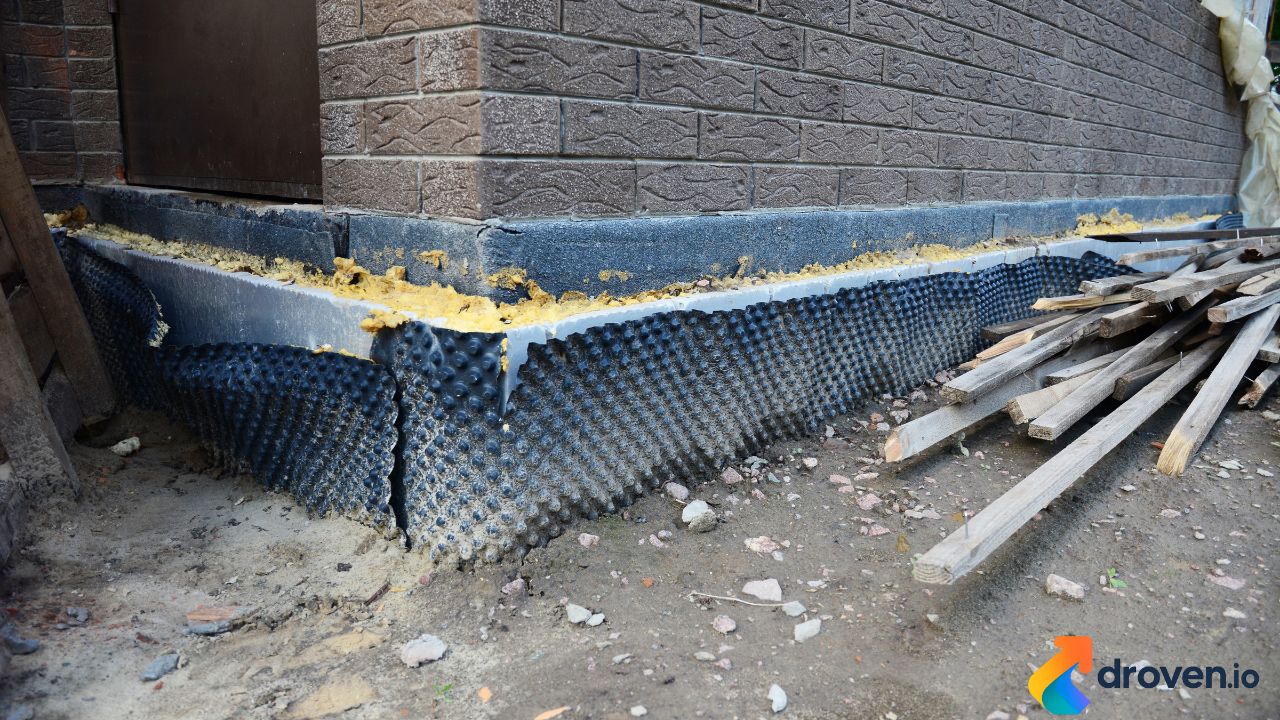
Exterior waterproofing prevents water from reaching the foundation by creating an exterior barrier. Typical steps include excavating down to the footing, cleaning the foundation wall, applying a polymer-modified waterproof membrane or liquid-applied membrane, and adding a protection board to shield the membrane from backfill damage.
Combine the membrane with exterior insulation or drainboard where needed. Exterior work is invasive and costlier but stops moisture before it enters and reduces long-term pressure on the foundation. Hire experienced contractors for excavation, membrane installation, and site grading to ensure proper slope away from the house.
Drainage Systems
Drainage systems intercept and redirect water away from the foundation to reduce hydrostatic pressure. Interior drain tile (perimeter trenches with PVC or perforated pipe) sits along the footing inside the slab and routes water to a sump or storm drain. Exterior drain tile performs a similar function outside the foundation before backfill.
Choose gravel-encased perforated pipe placed at the footing level and sloped at least 1% toward the discharge. Maintain access points (cleanouts) and use filter fabric to prevent sediment clogging. Proper grading and downspout extensions complement drain tile and prevent surface water from overwhelming the system.
Sump Pump Installations
A sump pump collects groundwater from drain tiles or a sump pit and pumps it away from your foundation. Select a pump based on flow rate (GPM) and head (vertical lift) for your property’s needs; typical residential pumps handle 20–50 GPM at low head. Use a battery backup or water-powered backup to ensure operation during power outages.
Install a sealed sump basin with a tight-fitting lid, a check valve on the discharge line to prevent backflow, and a routed discharge line that ends at least 4–6 feet from the foundation or to approved storm connections. Test the pump after installation and check it seasonally; replace worn float switches and clean the pit to avoid failures.
Common Causes and Long-Term Benefits
You will learn why basements get wet, what that moisture does to your home over time, how waterproofing reduces health risks, and how it affects resale value. Expect specific causes, structural impacts, mold risks, and practical value gains.
Sources of Basement Moisture
Water enters basements through several specific paths you can inspect. Look for foundation cracks, porous concrete, and failing mortar joints where groundwater seeps in during heavy rain or a high water table. Surface water pooling near downspouts and compacted soil that directs runoff toward your foundation also forces water through weak points.
Interior sources matter too. Condensation forms on cold walls and pipes when humidity inside your home is high or ventilation is poor. Leaking plumbing, appliance overflows, and sump pump failures create episodic floods that damage finished basements quickly. Track moisture with a hygrometer and inspect after storms to identify the dominant source.
Impact on Home Structure
Moisture harms structural elements in predictable ways you can spot early. Persistent water intrusion softens wood framing, causes joist rot, and can warp subflooring in finished basements. Concrete and masonry suffer freeze-thaw cycles when saturated; that enlarges cracks and undermines footing over multiple seasons.
Hydrostatic pressure from saturated soil pushes on foundation walls, producing bowing, horizontal cracks, and separation at wall-to-floor joints. Left unchecked, these conditions escalate repair complexity and cost. Regularly check for new cracks, uneven floors, or doors that stick—these often indicate progressive foundation movement.
Mold Prevention and Health
Mold grows whenever damp conditions persist for 24–48 hours on organic surfaces. You prevent growth by eliminating moisture sources and keeping relative humidity below about 50% in the basement. Use exhaust fans, dehumidifiers sized to your space, and ensure HVAC systems circulate air to reduce stagnant, humid zones.
Mold exposure can trigger allergic reactions and respiratory irritation in occupants, especially children, older adults, and people with asthma. Testing for visible mold and addressing moisture immediately reduces remediation costs and health risks. Keep records of repairs and moisture readings if anyone in your household has respiratory sensitivities.
Increasing Property Value
Waterproofed basements add measurable appeal to buyers focused on usable square footage and low-maintenance homes. Interior systems—like perimeter drains, basements converted to living space with vapor barriers, and reliable sump pumps—make the space certifiable as dry and usable. Exterior fixes—proper grading, gutters, and exterior drain membranes—signal long-term protection that reduces perceived risk.
Real estate appraisers and inspectors note documented waterproofing work and transferable warranties. That documentation often shortens time on market and limits price negotiation related to moisture concerns. Keep invoices and contractor warranties to maximize the value benefit when you sell.
