
You do not need to know how to play the piano or spend hours in a recording studio to make a song anymore. If you have a simple idea, you can now turn it into music with the help of AI. An AI music generator can take a brief description and turn it into something you can hear, change, and build on.
But with so many tools hitting the market, finding the best AI music generator in 2027 isn’t just about choosing the one that makes the fastest song. It’s about sound quality, creative control, editing options, and how you can actually use the music once it’s made.
What Is MusicGPT, and How Does It Work?
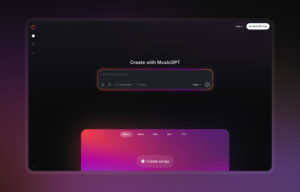
An AI music generator uses artificial intelligence to create music from written instructions.
With MusicGPT, you can describe a song without knowing much about music production. A prompt such as “Create a mellow acoustic song about coming home, with soft guitar and warm vocals” gives the system a direction to follow.
You can also work with instrumentals, lyrics and other audio formats. Instead of building each piece of a track yourself, you begin by describing what you want.
For beginners, it takes away a lot of the technical barrier.
What Are the Main Features of MusicGPT?
Here are some features that stand out.
Text-to-Music Generation
You can include details such as:
- Music genre
- Mood
- Instruments
- Tempo
- Vocal style
- Subject
- Song structure
This makes the platform approachable for people who have never produced music before.
Chat-Based Editing
This feature is one of the more interesting parts of MusicGPT. Instead of treating the first generation as the finished track, you can continue working on it.
Want a heavier beat? Ask for one.
Want softer vocals? Say so.
Need a longer section? Tell the AI.
This conversational approach is easier to understand than digging through a long list of production controls.
A Wide Range of Music Styles
MusicGPT is not tied to one sound. You can experiment with genres such as:
- Pop
- Rock
- Hip hop
- EDM
- Jazz
- Classical
- Lo-fi
- Acoustic
- Cinematic
The range is useful when you are not sure which direction is best for your idea. You can try the same concept in two or three styles and see which one works.
AI Lyrics and Custom Lyrics
If you already have lyrics, you can use your own words. If you are starting with only an idea, AI-generated lyrics can help create a first draft. This gives you two different ways to approach songwriting.
Instrumental Music
MusicGPT can also be used to create instrumental tracks, which can work well for videos, podcasts, presentations, games, and other creative projects. You can describe the mood and style without asking for a singer.
AI Sound Generation
MusicGPT also includes AI-based sound generation, giving users another way to create audio without searching through traditional sound libraries. This can be useful for short films, games, social videos, animations, and experimental projects.
Additional Audio Tools
In addition to making songs, MusicGPT also has tools for working with audio. With different plans and features, you may be able to do things like remixing, extending tracks, and separating vocals from instrumental parts.
These options become more useful once you start treating the generated music as something to edit rather than something to simply download.
Best AI Music Generators Compared for 2027
| AI Music Tool | Best For | Text-to-Music | Vocals | Editing | Commercial Use |
| Music GPT | Song ideas and AI music creation | Yes | Yes | Yes | Check current plan |
| Suno | Full AI-generated songs | Yes | Yes | Yes | Depends on plan |
| Udio | Detailed song creation | Yes | Yes | Yes | Depends on plan |
| Soundraw | Background and creator music | Yes | Limited | Yes | Depends on plan |
| AIVA | Instrumental and soundtrack music | Yes | No | Yes | Depends on plan |
How to Write Better MusicGPT Prompts
You do not need complicated prompts. A simple structure works well:
Genre + mood + topic + instruments + vocals + structure
For example:
“Create a slow R&B song about missing an old friend. Use soft piano, deep bass, light drums, and smooth vocals. Keep the verses quiet and make the chorus emotional.”
You can then experiment. Change the genre. Remove an instrument. Make the mood darker. Or ask for a stronger chorus.
The target is not to find one perfect prompt. It is to give yourself enough room to explore.
Commercial Use, Copyright, and Licensing
MusicGPT’s usage rights can depend on the plan and the way the music is created or used. Always check the current licensing terms before using a generated track for commercial work.
So if you are creating music for a business, client, film, game, or paid campaign, read the relevant terms before publishing it.
What Are the Limitations of MusicGPT?
No review would be complete without looking at the other side. MusicGPT is useful, but it does not remove every challenge.
The quality can vary between generations.
You may also need several attempts before the music matches what you had in mind. And while AI can imitate musical styles and structures, it does not replace the personal experience of a human musician.
For professional releases, you may still want a human songwriter, producer, vocalist, or engineer involved.
Can MusicGPT Replace Human Musicians?
Probably not. Musicians make choices based on emotion, experience, performance, and personal taste. They know when a note should be imperfect or when a song needs to breathe.
Turn Simple Ideas Into Original Music With MusicGPT
The most interesting part is not simply that it can generate a song. It’s how quickly you can test an idea.
You can start with a sentence, hear a musical version, change the direction, and try again. That makes MusicGPT useful for beginners who want to make their first song and experienced creators who need another way to explore ideas. AI may not replace the human side of music. But it is making the first step much easier.
