
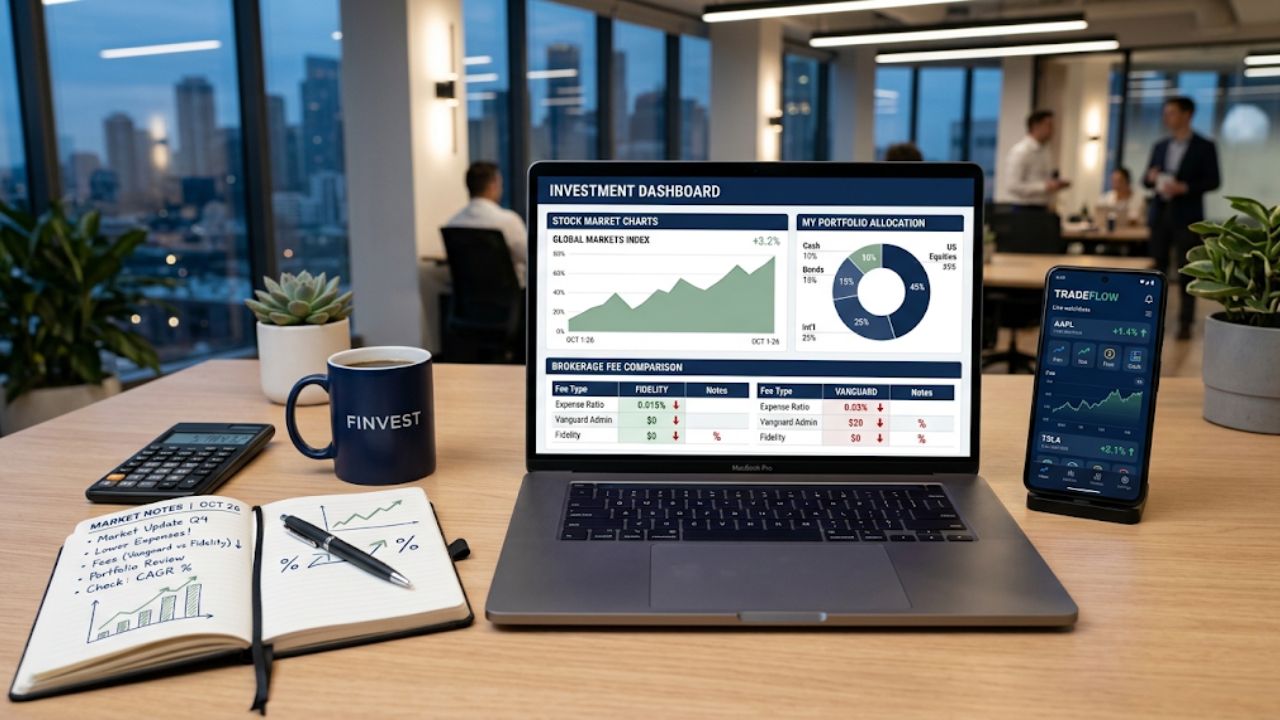
Keeping investment costs low starts with understanding where those costs actually come from. A broker may advertise low or zero trading commissions, but currency conversion, account charges, spreads and other fees can still affect what you pay.
That is where broker comparison platforms can help. They make it easier to see how different providers structure their fees and which charges are most relevant to the way you invest.
We’ve looked at five broker comparison and investment platforms that can help you assess low-cost options, including what each one does well and where it stands out.
Broker comparison platforms for low fees: pros and cons
| Platform | Pros | Cons |
| BrokerChooser | Very detailed fee research, covers more than 100 brokers, tracks trading and non-trading costs, uses real accounts to verify information | The amount of detail may be more than some casual investors need |
| Lightyear | Simple pricing, low-cost investing, multi-currency features, access to international markets | Less suited to investors looking for advanced trading tools |
| Freetrade | Commission-free investing, straightforward app, multiple account options | Currency conversion and plan charges can still affect overall costs |
| Interactive Brokers | Competitive costs, broad international market access, advanced tools | More complex than simpler investment platforms |
| Finder | Broad platform coverage, fee filters, beginner-friendly guides | Less detailed than specialist broker research platforms |
Note: Broker fees, platform features and account terms can change over time. Use comparison sites as a starting point, but check the latest information directly with each provider and carry out your own research before opening an account or investing.
1. BrokerChooser – Best overall for comparing broker fees
BrokerChooser takes the top spot because fees are a major part of its broker research. The platform evaluates more than 100 brokers and investment platforms and uses around 1,200 data points per broker, with 921 of those data points relating specifically to fees.
Why BrokerChooser stands out
- More than 100 brokers and investment platforms covered
- Around 1,200 data points assessed per broker
- 921 fee-related data points tracked for each broker
- More than 170,000 verified data points across its database
- Trading and non-trading fees both considered
- Real accounts used to check published costs
- Dedicated brokerage fee calculator
BrokerChooser looks beyond headline trading commissions. Its research also covers costs such as spreads, currency conversion, deposits, withdrawals and inactivity fees, helping you get a clearer idea of what using a broker may actually cost.
That makes it particularly helpful if you want to compare several brokers rather than simply choose whichever one advertises the lowest headline fee.
Who it suits: Investors who want a detailed way to research broker costs and understand where fees may arise.
2. Lightyear – Best for simple low-cost pricing
Lightyear is an investment platform rather than a comparison site, but its straightforward pricing structure makes it relevant for investors who want to keep costs easy to understand.
Why Lightyear stands out
- Simple pricing structure
- Low-cost share and ETF investing
- Multi-currency account features
- Access to international markets
- Limited reliance on complicated pricing tiers
Lightyear keeps its fee structure relatively simple, which can make it easier to understand what you are likely to pay. Investors should still check costs linked to currency conversion, funds and individual markets.
Who it suits: Investors looking for a simple platform where costs are relatively easy to understand.
3. Freetrade – Best for straightforward commission-free investing
Freetrade is designed to make investing feel less complicated, with an app-led experience and a range of account options for UK investors. If you want something simple to use, it can be an easy place to start.
Why Freetrade stands out
- Commission-free investing available
- Multiple account types
- Access to shares, ETFs and investment trusts
- Simple mobile investing experience
- Different plans depending on your needs
- Suitable for newer and more experienced investors
The platform is straightforward to get to grips with, but it is still worth looking beyond the headline commission rate. Currency conversion, account-plan costs and other charges can all affect what you end up paying.
Who it suits: Investors who want a simple, accessible platform with flexible account options and an easy-to-use app.
4. Interactive Brokers – Best for international investors
Interactive Brokers is a well-established platform aimed at investors who want access to a large number of international markets and more advanced trading tools.
It offers a wide selection of investment products and can be a practical option if you regularly invest outside the UK or want more control over how you place trades.
Why Interactive Brokers stands out
- Broad international market access
- Advanced trading tools
- Competitive trading costs
- Wide range of investment products
- Strong currency-conversion capabilities
Its main strength is breadth, but that also means there is more to learn. The platform may feel more complex if you are new to investing, especially if you only want a simple way to buy a few funds or shares.
Who it suits: Investors who want international market access and are comfortable using a more detailed trading platform.
5. Finder
Finder is a comparison website covering a wide range of financial products, including brokers, investment platforms and share-dealing accounts.
It is particularly helpful for investors who are still exploring their options and want a broad view of the market before looking more closely at individual providers.
Why Finder stands out
- UK investment platform comparisons
- Broker and platform reviews
- Coverage of shares, ISAs and investment apps
- Beginner-friendly comparison tools
- Filters for fees and account types
Finder’s guides and comparison tools can help you work out which platforms may suit your needs, especially if you are still deciding what features matter most. It is still worth checking current pricing and terms directly with the provider before signing up.
How to choose a low-fee broker comparison platform
If low fees are your main priority, the comparison platform you use should make costs clear rather than just highlight headline commission rates. Look for sites that explain trading fees alongside other charges such as currency conversion, account fees and withdrawals.
You should also check how the platform gathers its information. Detailed research, consistent comparison criteria and regularly updated pricing can make it easier to judge which brokers are genuinely low cost.
The best broker comparison platform for you will depend on how you plan to invest, so focus on the fees and features that are most relevant to your own trading habits.
