
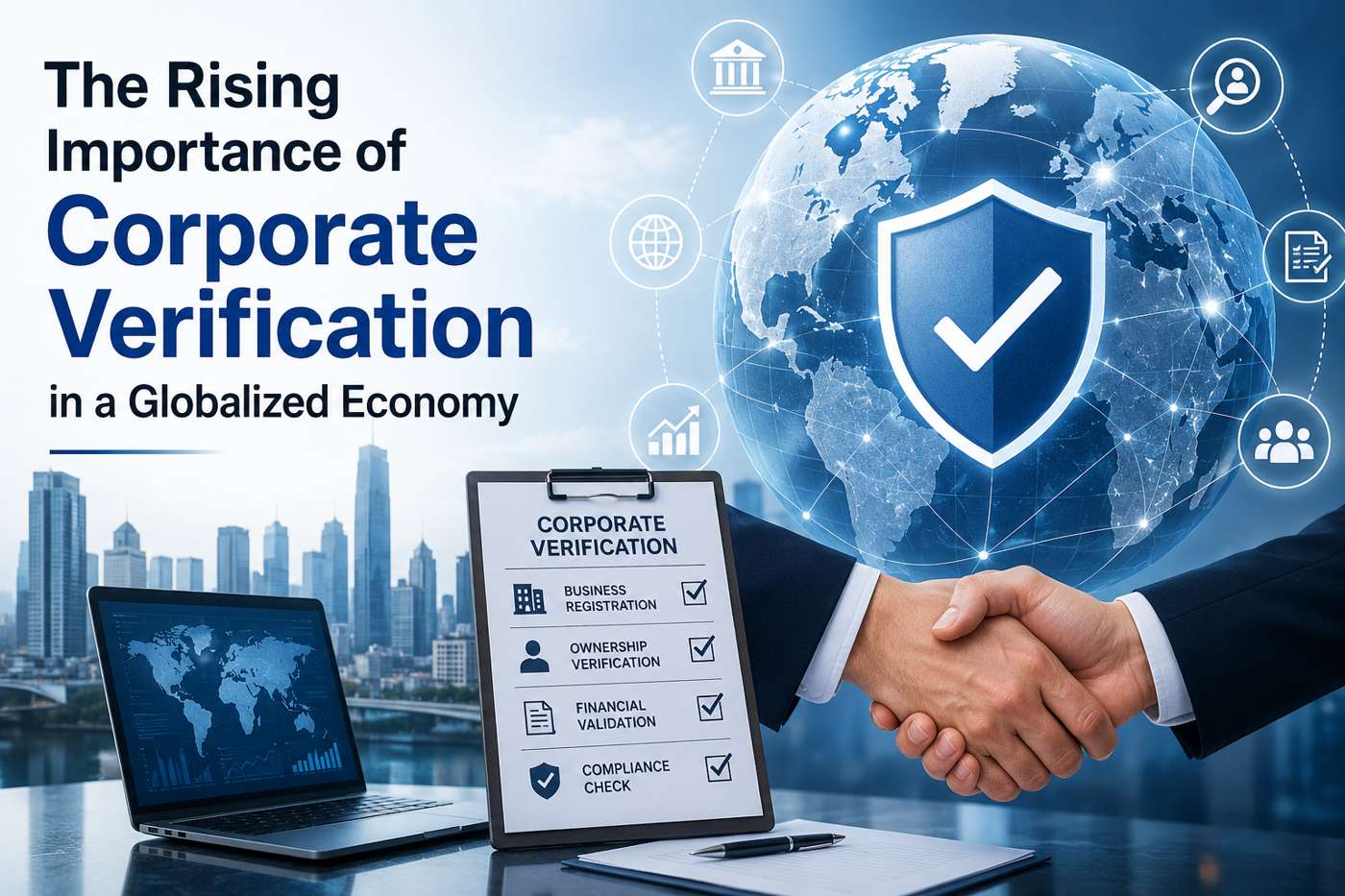
Global commerce has never moved faster. Cross-border transactions, international supply chains, and digital-first business models have created an environment where companies routinely engage with partners, vendors, and clients they have never met face to face. While this connectivity opens enormous opportunities, it also introduces a layer of risk that cannot be ignored. Fraudulent entities, shell corporations, and sanctioned businesses operate alongside legitimate ones, and distinguishing between the two requires more than intuition — it requires reliable, data-driven verification.
Know Your Business, or KYB, has emerged as the standard framework for addressing this challenge. Originally rooted in financial regulation, KYB practices have now spread to virtually every industry that involves business-to-business relationships. From logistics companies vetting new carriers to SaaS platforms validating enterprise customers, the need to confirm that a business is real, active, and compliant has become universal.
What Corporate Verification Actually Involves
At its core, KYB verification answers a series of straightforward questions. Is the company legally registered? Where is it incorporated, and is its registration still active? Who are the directors and officers? Who are the shareholders, and who ultimately benefits from the company’s activities? Is the business or any of its associated individuals subject to sanctions, regulatory enforcement actions, or adverse media coverage?
Answering these questions manually is time-consuming and error-prone. It involves searching through government registry websites — many of which are poorly designed, only available in local languages, or require paid access — and then piecing together fragments of information into a coherent profile. This is precisely why automated solutions have gained so much traction. As these systems become more sophisticated, thorough computer system validation can help ensure that automated processes operate reliably, consistently, and according to defined requirements. The best kyb verification providers eliminate this friction by connecting directly to official registries in dozens of countries and delivering structured, normalized data through a single integration point.
How Automation Is Changing the Game
The transition from manual verification to automated, API-driven workflows represents one of the most significant operational improvements available to modern businesses. Instead of assigning analysts to spend hours researching a single entity, companies can now trigger a verification request programmatically and receive a comprehensive company profile in seconds. This capability transforms onboarding timelines, reduces operational costs, and allows compliance teams to focus their expertise on edge cases rather than routine lookups. A detailed comparison of how top platforms stack up on coverage, data depth, and integration design can be found in this industry overview.
Automated verification also brings consistency. When a human analyst reviews a company, the depth and quality of the review can vary based on experience, workload, and familiarity with a particular jurisdiction. An API returns the same structured dataset every time, ensuring that every business is evaluated against the same criteria regardless of who initiated the check or when it was performed.
The Ownership Transparency Challenge
Perhaps the most complex aspect of business verification is uncovering the true ownership structure of a company. On paper, a business might list a handful of corporate shareholders, each of which is itself owned by another entity in a different jurisdiction. Tracing these chains to identify the natural persons who ultimately control the business — known as ultimate beneficial owners, or UBOs — is a task that requires access to multiple registries and the ability to connect data across borders.
This challenge is at the heart of modern anti-money laundering regulation. The Financial Action Task Force, the European Union, and regulators in North America, Asia, and the Middle East have all introduced or strengthened requirements around beneficial ownership transparency. Companies that cannot demonstrate a clear understanding of who stands behind their business relationships face growing legal and financial exposure.
Industries Where KYB Is Making an Impact
While financial services companies were the earliest adopters of structured KYB processes, the practice has expanded far beyond banking. Payment facilitators and merchant acquirers use KYB to assess the legitimacy of businesses before enabling them to accept card payments. Marketplaces and gig economy platforms verify sellers and service providers to protect consumers and reduce liability. Insurance underwriters validate the corporate entities they cover to prevent fraud and ensure accurate risk pricing.
Even industries that have traditionally operated on handshake agreements are embracing verification. Construction firms vet subcontractors, logistics companies confirm the credentials of freight brokers, and franchise networks verify the corporate standing of potential franchisees. In every case, the logic is the same: verified data reduces surprises, protects margins, and builds stronger business relationships.
Continuous Monitoring as the New Standard
A single point-in-time verification provides a snapshot, but businesses are dynamic entities. Directors change, ownership stakes are transferred, companies merge or dissolve, and sanctions lists are updated regularly. A business that was compliant six months ago may no longer be today. This reality has driven a shift toward continuous monitoring, where changes in a company’s profile trigger automatic alerts that allow compliance teams to respond in real time.
Continuous monitoring is particularly valuable for companies with large portfolios of business relationships. Rather than scheduling periodic reviews that may miss critical changes between cycles, automated monitoring ensures that every material update is captured as it happens. This approach is not only more effective from a risk management perspective — it also creates a stronger audit trail for regulators.Programs that document each KYB control against a specific regulatory obligation tend to scale more cleanly than those assembled as a vendor checklist.
Building Trust Through Transparency
Ultimately, the goal of business verification is trust. In a world where digital interactions have replaced in-person meetings and where business relationships can span continents, trust cannot be assumed — it must be earned and verified. Companies that invest in robust KYB processes signal to their partners, regulators, and customers that they take integrity seriously.
The technology to do this well already exists. Real-time registry access, automated ownership tracing, sanctions screening, and continuous monitoring are all available through modern platforms that are designed to integrate seamlessly into existing business workflows. The companies that embrace these tools today will be the ones best positioned to grow confidently in an increasingly complex and interconnected global economy.
In the end, verification is not about slowing business down — it is about making sure that every relationship your company builds is standing on solid ground.
Why Financial Literacy Should Be Taught Before Graduation
