
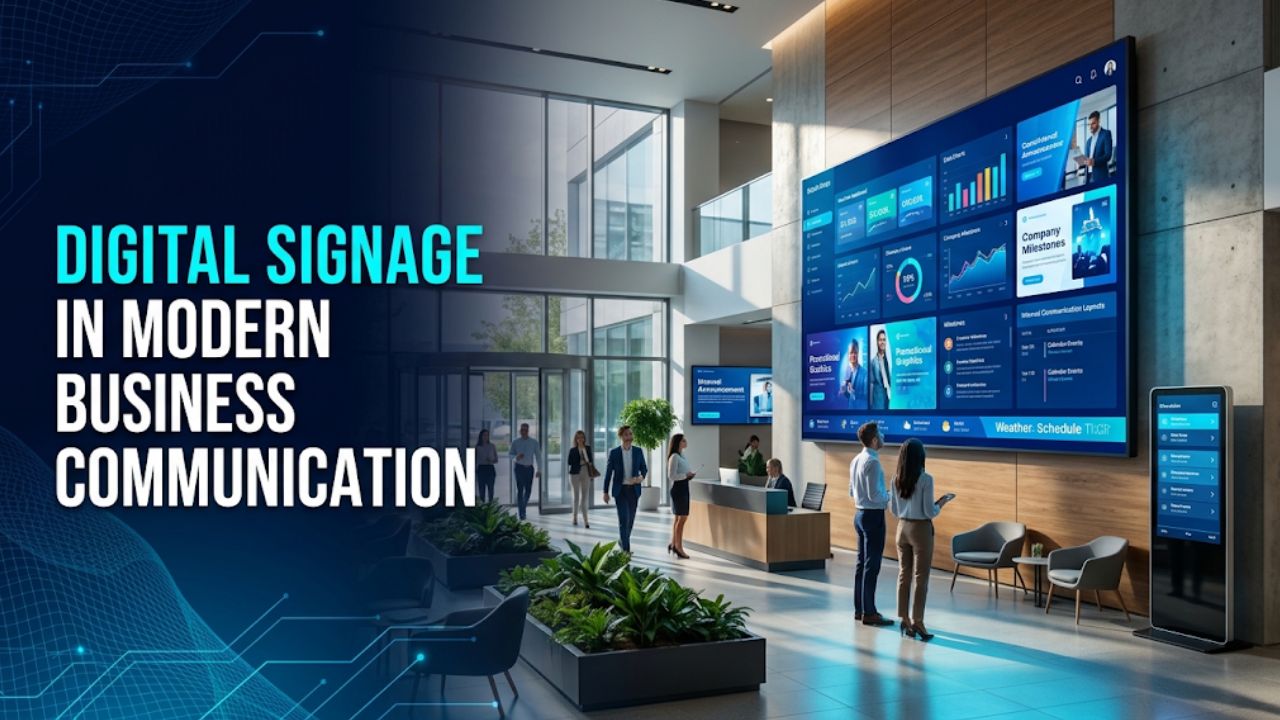
Businesses need to share information with customers, employees, and visitors quickly and clearly. However, printed notices, posters, and traditional communication methods can make it difficult to keep information updated across different locations. Digital signage offers a more flexible approach by allowing organisations to display announcements, directions, promotions, and other important messages on screens.
As digital displays become more common in retail spaces, offices, shopping centres, and public venues, their role in everyday business communication continues to expand. Shenzhen, China, is home to manufacturers in the LED display industry, supporting the development of display technology for a wide range of applications. Understanding how businesses use these screens can help explain why digital signage is becoming an increasingly valuable communication tool.
Why Digital Signage Is Becoming a Business Communication Tool
Communication often breaks down in familiar ways: a customer cannot find the right department, an employee misses a schedule change, or a visitor does not know which room to enter. Digital signage places relevant information where people need it.
Unlike a printed poster, a digital display can show different messages throughout the day. Depending on the system, teams can update one screen or coordinate content across locations.
This flexibility can help businesses:
- Share timely announcements, service updates, and schedule changes.
- Present product details and instructions using text, images, and video.
- Keep messages consistent across branches, departments, or venues.
- Adapt content for different audiences, locations, and times.
The main benefit is easier access to relevant information.
Choosing Display Technology That Fits the Message
A screen should be selected for its purpose, not simply its appearance. An outdoor plaza has different requirements from a meeting room. Viewing distance, ambient light, installation conditions, content, and maintenance all influence the choice.
Businesses comparing LED display solutions can consider the setting and purpose before choosing a format. Hongwei LED, based in Shenzhen, China, describes applications across retail spaces, shopping malls, outdoor advertising, conferences, exhibitions, and events. These examples illustrate how display requirements can vary by environment.
Common formats include:
- Indoor LED displays: Used in shops, reception areas, conference rooms, and indoor public spaces.
- Outdoor LED displays: Designed for external environments, where brightness, weather protection, and viewing distance need attention.
- Transparent LED displays: Allow digital content to appear on glass installations while retaining some visibility through the display.
- Flexible LED displays: Support curved or shaped installations when a standard flat screen does not suit the space.
- Rental LED displays: Provide temporary screen setups for exhibitions, concerts, conferences, and other events.
Where Digital Signage Makes a Difference
Let’s take a look:
Helping Customers Make Quicker Decisions
In retail shops, screens can show product information, current offers, store directions, or details about services. Restaurants can use digital menus to communicate available choices, while hotels can display facility information and event schedules. Near a decision point, a clear message can answer a question before a customer needs to ask.
Keeping Employees and Visitors Informed
Internal communication is not limited to email. Screens in reception areas, corridors, staff canteens, and shared workspaces can display meeting-room changes, visitor instructions, safety reminders, and company announcements. They complement rather than replace direct communication.
Making Public Updates Easier to See
Some information is useful only when it is current. Transport authorities, for example, use dynamic message signs to share travel times, incidents, and road information. The US Federal Highway Administration explains how these signs provide information to motorists and support travel decisions.
Improving the Event Experience
At conferences and exhibitions, attendees may need to find rooms, check session times, locate exhibitors, or follow last-minute schedule changes. Digital displays can bring these details together in visible locations and help organisers update information as plans evolve. Large screens can also support presentations and demonstrations when content is readable from the audience’s seats.
What Makes a Digital Signage Strategy Effective?
Installing screens is only the starting point. If the message is confusing, out of date, or shown in the wrong place, the technology will not solve the communication problem. A useful strategy begins with the audience and the information they need.
Before implementation, businesses should:
- Set a clear purpose: Decide whether each screen will guide visitors, share staff updates, explain services, or promote products.
- Choose the right location: Consider where people pause, make decisions, or need directions.
- Keep messages focused: Use short headlines, readable text, and visuals that support one main point.
- Assign content responsibility: Make sure someone checks accuracy, schedules updates, and removes expired messages.
- Plan for accessibility: Use suitable text sizes and contrast, plain language, and alternative ways to access essential information.
- Prepare for maintenance: Account for connectivity, software, power, cleaning, repairs, and technical support.
These practical details determine whether a screen becomes useful or merely part of the background.
Conclusion
Digital signage is changing business communication by giving organisations a flexible way to share relevant information in the places where people need it. It can help customers navigate services, employees stay informed, and visitors follow events or public updates.
The strongest results come from matching the display to its environment and pairing it with clear, current content. When businesses start with a communication need rather than the screen itself, digital signage becomes a practical part of the customer and workplace experience.
Frequently Asked Questions
What is digital signage used for in business?
It is used to display information such as promotions, menus, directions, schedules, service updates, and workplace announcements.
How does digital signage support customer communication?
It places useful information in visible locations and can present it through text, images, and video that businesses can update as needed.
Can digital signage be used for internal communication?
Yes. Organisations can display staff announcements, meeting schedules, safety reminders, and visitor instructions in shared workplace areas.
What should businesses consider when choosing an LED display?
They should assess the installation environment, viewing distance, ambient light, content needs, durability, maintenance, and accessibility.
