
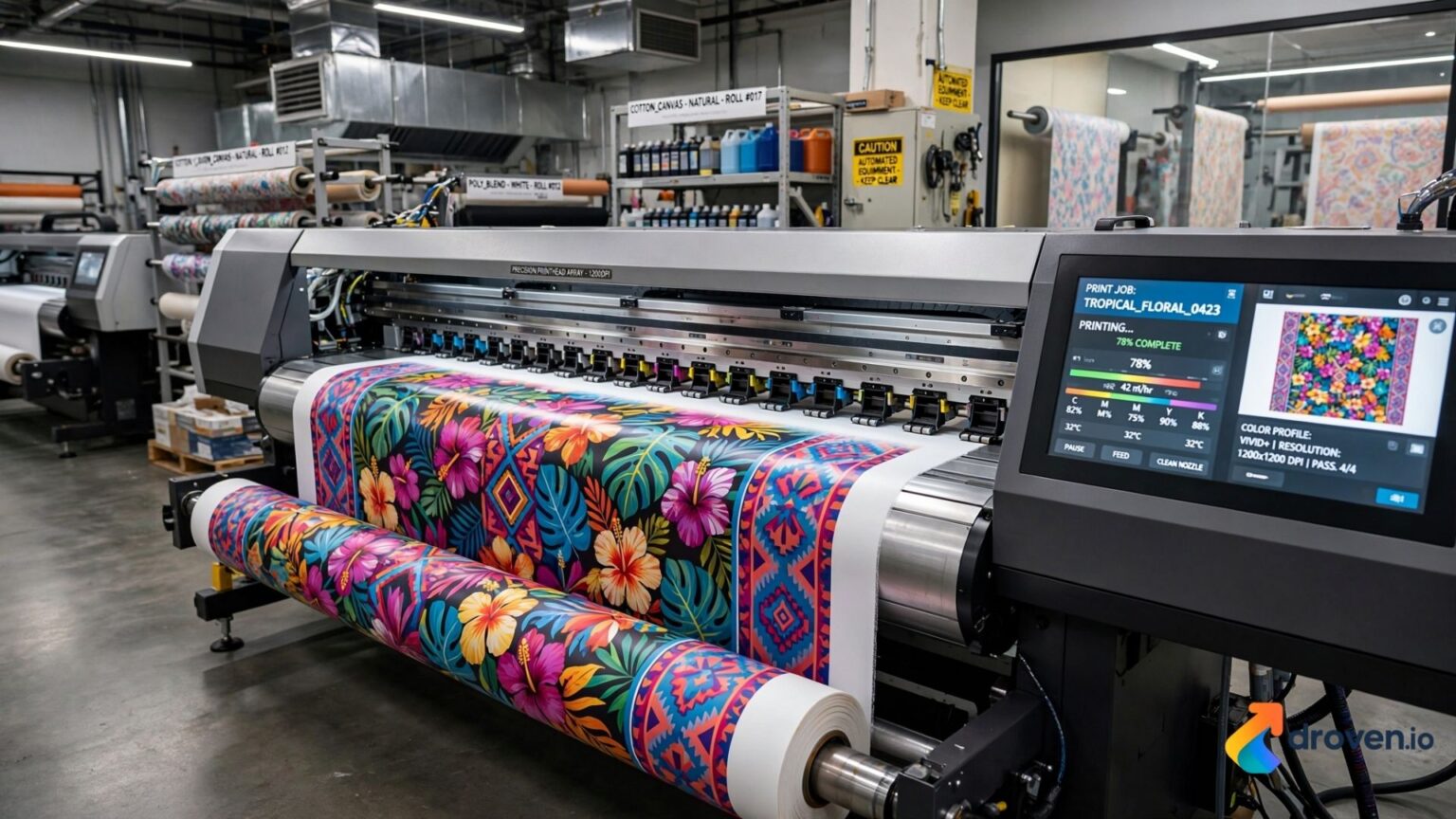
The textile printing industry has evolved rapidly as businesses seek faster production, vibrant colors, and sustainable printing methods. From fashion brands and custom apparel businesses to home décor manufacturers and commercial print shops, digital textile printing has become an increasingly popular solution. A direct to fabric printer allows businesses to print designs directly onto textiles without requiring transfer paper, making it an efficient option for producing detailed graphics on a wide range of fabrics. Whether you’re starting a textile printing business or upgrading your production capabilities, understanding direct-to-fabric printing can help you make informed decisions.
What Is a Direct to Fabric Printer?
A direct to fabric printer is a digital printing machine that applies ink directly onto fabric instead of printing onto transfer media first.
Unlike traditional textile printing methods, direct-to-fabric technology allows designs to be printed directly onto the material, producing detailed images, vibrant colors, and complex patterns.
Depending on the printer model, compatible fabrics may include:
- Cotton
- Linen
- Silk
- Polyester
- Canvas
- Rayon
- Blended fabrics
Fabric compatibility depends on the printer, ink type, and pretreatment requirements.
How Does a Direct to Fabric Printer Work?
The printing process generally includes several stages.
Fabric Preparation
Some fabrics require pretreatment before printing to improve ink adhesion and color performance.
Preparation methods vary depending on:
- Fabric type
- Ink technology
- Manufacturer recommendations
Digital Design
Artwork is prepared using graphic design software and exported in a compatible file format.
Common file types include:
- PNG
- TIFF
- PSD
- AI
The supported formats depend on the printer’s RIP software.
Printing
The printer deposits ink directly onto the textile using precision printheads.
Digital control allows detailed reproduction of:
- Photographs
- Logos
- Artwork
- Patterns
- Illustrations
Fixation and Finishing
After printing, fabrics may require heat fixation, steaming, washing, or curing depending on the ink chemistry and textile type.
Always follow the printer manufacturer’s recommended finishing process.
Benefits of a Direct to Fabric Printer
High Print Quality
Digital textile printing produces:
- Sharp details
- Smooth gradients
- Vibrant colors
- High-resolution graphics
This makes it suitable for premium fashion and custom textile applications.
Faster Production
Digital workflows eliminate many of the setup requirements associated with traditional screen printing.
This can reduce production time, particularly for:
- Small orders
- Custom products
- Prototype samples
Short Production Runs
Direct-to-fabric printing is well suited for businesses producing:
- Personalized apparel
- Limited collections
- On-demand products
- Sample garments
Traditional printing methods may be more economical for very high-volume production, depending on the application.
Reduced Material Waste
Digital printing often uses only the amount of ink required for the design, helping reduce waste compared with some conventional processes.
Actual efficiency depends on the printer, workflow, and production practices.
Common Applications
A direct to fabric printer is used across multiple industries.
Popular applications include:
- Fashion apparel
- Sportswear
- Home textiles
- Curtains
- Upholstery
- Scarves
- Flags
- Promotional products
- Soft signage
- Custom fabric printing
The versatility of digital textile printing supports both commercial and creative projects.
Ink Technologies
Different printers use different ink systems.
Common options include:
Pigment Ink
Pigment inks are often compatible with a wide variety of fabrics and are commonly used for:
- Cotton
- Linen
- Blended textiles
Reactive Ink
Reactive inks are frequently used for natural fibers and may require additional post-processing.
Sublimation Ink
Sublimation printing is generally used for polyester fabrics and polyester-coated materials.
Acid Ink
Acid inks are commonly used for certain protein-based fibers such as silk and wool.
Ink selection depends on fabric type and production requirements.
Direct to Fabric Printer vs. Direct to Garment (DTG)
These technologies are often confused.
Direct to Fabric Printer
Designed for:
- Fabric rolls
- Large textile production
- Interior textiles
- Fashion manufacturing
- Industrial applications
Direct to Garment Printer
Designed primarily for:
- Finished garments
- T-shirts
- Hoodies
- Individual apparel items
Choosing between them depends on your production workflow.
Industries Using Direct to Fabric Printing
Many industries rely on digital textile printing.
Examples include:
- Fashion manufacturing
- Interior design
- Hospitality
- Advertising
- Event branding
- Textile production
- Home décor
- Sports apparel
Digital printing continues to expand across commercial markets.
Choosing the Right Direct to Fabric Printer
Before purchasing equipment, consider:
- Maximum print width
- Print resolution
- Ink compatibility
- Supported fabrics
- Production speed
- Maintenance requirements
- Software compatibility
- Warranty
- Technical support
Matching the printer to your production goals helps maximize efficiency.
Maintenance Best Practices
Regular maintenance helps maintain print quality.
Recommendations include:
- Clean printheads according to manufacturer guidelines.
- Use recommended inks.
- Perform routine nozzle checks.
- Keep the machine in a controlled environment.
- Follow scheduled servicing intervals.
Proper maintenance can help extend equipment life.
Sustainability in Textile Printing
Many textile manufacturers are adopting more sustainable production methods.
Digital printing may contribute by:
- Reducing water usage in some workflows
- Minimizing excess ink consumption
- Supporting on-demand production
- Reducing inventory waste
Environmental benefits vary depending on equipment, ink systems, and manufacturing processes.
AI and the Future of Textile Printing
Artificial intelligence and automation continue to influence textile manufacturing.
Emerging technologies include:
- Automated color correction
- Predictive maintenance
- AI-assisted workflow optimization
- Smart production scheduling
- Automated quality inspection
These innovations may improve productivity while reducing operational downtime.
Why Businesses Choose Direct to Fabric Printing
Businesses often select direct-to-fabric technology because it offers:
- Flexible production
- High-quality output
- Faster design changes
- Customization capabilities
- Efficient short-run printing
The ideal printing solution depends on production volume, fabric type, and business objectives.
FAQs
What is a direct to fabric printer?
A direct to fabric printer is a digital textile printing machine that prints designs directly onto fabric instead of using transfer paper or traditional screen printing methods.
Which fabrics can a direct to fabric printer print on?
Depending on the printer and ink technology, it may print on cotton, linen, silk, polyester, canvas, rayon, and blended fabrics.
Is direct to fabric printing better than screen printing?
Each method has advantages. Direct-to-fabric printing is often preferred for detailed graphics, customization, and shorter production runs, while screen printing may be more cost-effective for certain high-volume jobs.
What industries use direct to fabric printers?
Fashion, home décor, advertising, hospitality, textile manufacturing, sportswear, and promotional product businesses commonly use direct-to-fabric printing technology.
How do I choose the best direct to fabric printer?
Consider print quality, supported fabrics, ink type, production speed, maintenance requirements, software compatibility, technical support, and your expected production volume before purchasing.
Conclusion
A direct to fabric printer has transformed modern textile production by enabling businesses to print vibrant, high-resolution designs directly onto a wide range of fabrics. From fashion collections and custom apparel to home décor and commercial textiles, this technology offers flexibility, efficiency, and exceptional print quality for many production environments. By selecting the right printer, understanding fabric compatibility, maintaining equipment properly, and adopting efficient workflows, businesses can create professional textile products while remaining competitive in the growing digital printing industry.
