
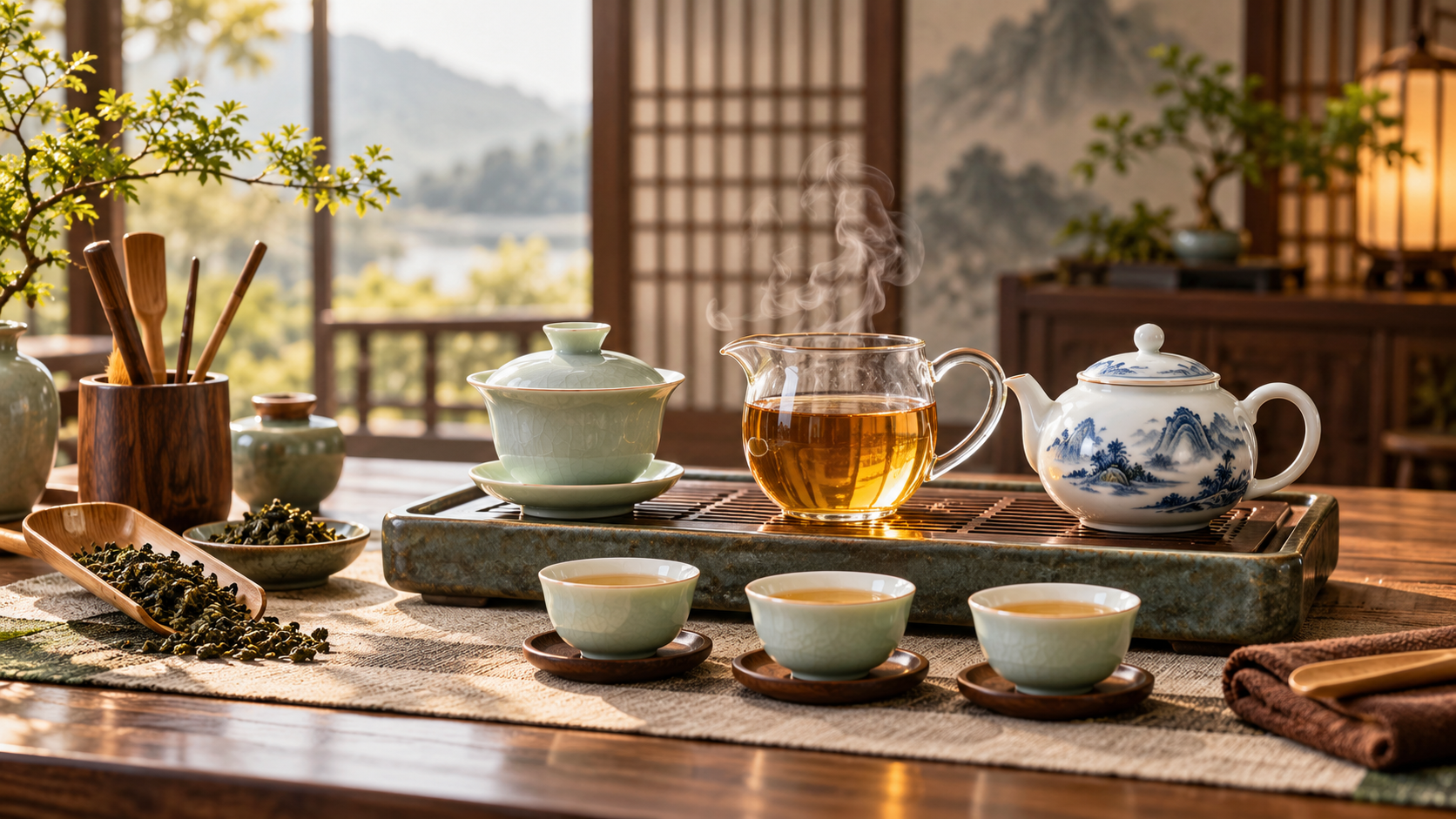
Tea is one of the world’s most widely enjoyed beverages, but the experience of preparing it can be just as meaningful as drinking it. Across different cultures, tea preparation reflects practical knowledge, craftsmanship, hospitality, and personal preference. For people interested in exploring traditional Chinese brewing methods, choosing suitable teaware is an important starting point. East Artisan offers a curated collection of Gongfu tea sets featuring porcelain, ceramic, glass, and clay designs intended for smaller brewing vessels, repeated infusions,ons and a more attentive approach to enjoying loose-leaf tea.
Unlike making a large pot of tea and leaving the leaves to steep for several minutes, Gongfu-style brewing typically involves relatively small quantities of water and a series of shorter infusions.
This approach allows the drinker to experience how the tea changes from one pour to the next.
A delicate floral aroma may become more noticeable in the early infusions, while later servings may reveal different flavours or textures.
The method does not require an elaborate ceremony or expensive equipment. A suitable brewing vessel and a few cups can be enough to begin.
However, the choice of teaware can affect how convenient and enjoyable the process feels.
Capacity, material, pouring control, ease of cleaning, and the number of people being served all deserve attention.
This guide explores seven practical benefits of well-designed Gongfu tea sets, explains the different components and materials, and examines how to choose suitable products from the East Artisan collection.
What Is Gongfu Tea Brewing?
Gongfu tea brewing, often called Gongfu Cha, is a Chinese approach to preparing tea using a relatively high proportion of leaves, a small brewing vessel, and multiple short infusions.
The expression Gongfu Cha is commonly associated with preparing tea through attention, practice and skill.
The precise customs differ across regions, households and tea traditions.
Rather than following one universal ceremony, people may adapt the process to their preferred tea, equipment and setting.
How Gongfu Brewing Differs From Western-Style Tea Preparation
A common Western-style method uses a larger pot or mug, a relatively small amount of loose tea, and one longer infusion.
Gongfu brewing typically uses a smaller vessel and more concentrated leaf-to-water proportions.
The drinker pours the brewed tea into cups or a serving pitcher, then adds fresh water to the leaves for another infusion.
The process is repeated while the tea continues to produce enjoyable flavour.
Neither approach is automatically better.
They simply offer different ways to enjoy tea.
Why Small Brewing Vessels Matter
A compact gaiwan or teapot allows the brewer to work with smaller water volumes.
This makes it practical to explore a series of infusions without producing too much tea at once.
A smaller vessel can also provide more direct control over steeping time and pouring.
However, the best capacity depends on the number of people being served.
Which Teas Work Well With Gongfu Brewing?
Oolong, pu-erh and many whole-leaf Chinese teas are frequently prepared using Gongfu methods.
Some black, white, and green teas can also be brewed this way.
Water temperature, leaf quantity, and infusion duration should be adjusted according to the specific tea.
Delicate teas may respond better to gentler brewing conditions than heavily roasted or compressed teas.
The method is flexible, and personal taste remains important.
1. East Artisan Gongfu Tea Sets Support Multiple Short Infusions
One of the defining characteristics of Gongfu brewing is the opportunity to prepare the same leaves several times.
Instead of extracting most of the flavour during a single long steep, the brewer works through a sequence of shorter infusions.
Exploring Changing Flavours
Tea is a complex agricultural product.
Its flavour is influenced by cultivar, growing conditions, harvesting, processing, storage and brewing.
Different compounds are extracted at different rates, which can change the character of successive infusions.
A tea might initially taste bright and fragrant, then develop a fuller body during later pours.
Not every tea changes in the same way, and the number of enjoyable infusions varies.
Understanding Infusion Control
A small gaiwan or teapot provides a convenient environment for repeated brewing.
The brewer can increase or decrease steeping time after evaluating each serving.
If the tea tastes too strong, the next infusion may use less time.
If the flavour becomes weak, extending the infusion may help.
This direct feedback is an important part of the experience.
Avoiding Unnecessary Complexity
A beginner does not need expensive measuring equipment to enjoy Gongfu tea.
A small brewer, drinking cups, and a suitable way to handle hot water are enough for a basic session.
As experience develops, a scale, timer, or additional serving vessel may become useful.
Building a More Attentive Routine
Multiple infusions encourage people to notice changes rather than drinking the entire beverage without much consideration.
For some, this creates a relaxing daily habit.
For others, it is simply an enjoyable way to compare tea varieties.
The value lies in personal experience, not in following a rigid set of rules.
2. Porcelain and Ceramic Tea Sets Offer Versatile Brewing Options
Material choice is one of the most important decisions when selecting a Gongfu tea set.
Different materials have different practical characteristics, including surface finish, weight, visibility, and care requirements.
Why Porcelain Is Popular
Porcelain is widely used for Chinese tea brewing vessels.
A glazed porcelain gaiwan generally provides a relatively neutral surface that can be cleaned between different teas.
This makes it practical for someone who enjoys trying widely varied varieties.
Light-coloured porcelain can also make it easier to observe the colour of the brewed tea.
The appearance of the liquor may provide useful information about the infusion.
The Appeal of Glazed Ceramic
Glazed ceramic teaware can offer a wide range of finishes and textures.
Some pieces feel substantial, while others are relatively light.
The glaze may provide a convenient surface for cleaning, although the appropriate care depends on the individual item.
A comfortable handle, stable lid, and controlled pour can be more important than decorative complexity.
Traditional Decorative Styles
East Artisan lists Gongfu sets with blue-and-white motifs, celadon finishes, floral patterns, and other decorative approaches.
These designs can complement different homes and personal preferences.
For example, a blue-and-white porcelain set may appeal to someone who enjoys traditional Chinese-inspired patterns.
A celadon design may suit a calmer, minimalist table setting.
Crackle Glaze Designs
Crackle-glazed ceramics have distinctive networks of fine lines within their glaze decoration.
They are often valued for their visual texture.
However, the appearance of crackle glaze should not be confused with an automatic guarantee of food-contact suitability or easy maintenance.
Buyers should check the individual product’s construction and care instructions.
Choosing Based on Use
For someone who frequently switches between oolong, black, white, and green teas, glazed porcelain is often a straightforward starting point.
A person who values visual character may prefer a decorative ceramic set.
The best material is one that fits the brewing routine and can be cared for properly.
3. Gongfu Tea Sets Create an Enjoyable Way to Serve Guests
Tea is closely associated with hospitality in many cultures.
Sharing several small infusions can provide a comfortable setting for conversation.
A Gongfu tea set is particularly well suited to serving a small group when the vessel and cups have appropriate capacities.
The Role of Small Tea Cups
Gongfu tea cups are usually smaller than ordinary mugs.
They are designed for modest servings that can be refreshed throughout the session.
A small cup makes it easier to enjoy tea while it remains at a comfortable temperature.
It also allows several people to taste successive infusions from the same leaves.
Understanding the Fairness Pitcher
A Gong Dao Bei, sometimes called a fairness pitcher or Cha Hai, is used to hold brewed tea before it is distributed among drinking cups.
After brewing, the tea is poured from the gaiwan or teapot into the pitcher.
The host then serves the guests from that combined infusion.
This helps avoid serving the earliest and latest portions of a pour at noticeably different strengths.
Why Consistent Serving Matters
When tea remains in contact with the leaves, extraction continues.
If the brewer pours directly into several cups one after another, the final cups may receive tea that has steeped longer.
A fairness pitcher provides a simple way to mix the infusion before serving.
It is particularly useful for groups.
Creating a Welcoming Table
A tea set can be arranged on a small serving tray or another suitable surface.
Guests can watch the tea being prepared and take part in conversation between infusions.
The arrangement does not need to be elaborate.
The quality of the tea, comfort of the seating, and ease of serving are usually more important than the number of accessories.
Serving Different Group Sizes
A compact teapot may be suitable for one or two people.
A larger group may require additional cups, a larger brewer or repeated service.
Before selecting a set, check the actual capacity of its brewing vessel and the number of cups supplied.
Decorative product photographs do not always communicate scale accurately.
4. East Artisan Offers Different Teaware Styles for Different Preferences
A broad Gongfu tea collection can be useful because tea drinkers have different priorities.
Some prefer traditional forms, while others enjoy contemporary materials or unusual mechanisms.
Classic Chinese-Inspired Designs
East Artisan lists sets featuring mountain landscapes, floral decorations, blue-and-white porcelain, and celadon finishes.
These styles may suit collectors who appreciate traditional decorative language.
However, a design inspired by a particular tradition should not automatically be assumed to be an antique or handmade in a specific historical workshop.
Buyers should rely on the product’s stated manufacturing details.
Modern Minimalist Sets
Minimalist teaware focuses on simple forms and restrained decoration.
A clean silhouette may suit a contemporary home, office, or small apartment.
Practical details remain important.
Even an attractive minimalist teapot should pour accurately and feel comfortable when filled.
Glass Tea Sets
Glass offers a different experience by making the brewing process visible.
People can watch leaves unfold and observe the colour of the infusion.
This can be enjoyable when preparing visually interesting whole-leaf teas.
Only glassware specifically intended for hot liquids should be used with hot tea.
Clay Tea Sets
The collection includes products associated with Yixing purple clay and Jianshui Zitao pottery.
Clay teaware has an established place in Chinese tea culture.
Different clay bodies and construction methods can produce different handling characteristics.
A buyer should avoid assuming that all clay teapots are identical or that a named clay automatically improves flavour.
Rotating and Automatic Tea Brewers
Some of the collection’s products include rotating teapot arrangements or mechanisms described as automatic.
These designs can offer an alternative way to manage pouring or brewing.
However, buyers should inspect how the actual mechanism operates.
The word automatic does not necessarily mean that the product heats water electronically or controls every brewing stage.
Matching Design to Lifestyle
A decorative tea set may be ideal for relaxed weekend brewing.
A simpler porcelain gaiwan may be more practical for daily use.
Someone who travels frequently may prefer a compact set with a protective bag.
The best choice reflects how often and where the equipment will be used.
5. Travel Gongfu Tea Sets Make Brewing More Portable
Tea enthusiasts sometimes want to enjoy loose-leaf tea away from home.
A travel set can make it easier to prepare tea in a hotel, workplace, holiday home, or other suitable environment.
Compact Brewing Equipment
Travel Gongfu tea sets often combine a small brewing vessel with matching cups.
Some also include a strainer, pitcher or storage case.
The precise contents vary between products.
Compact equipment can reduce the space required for brewing and storage.
Protective Carrying Cases
A carrying bag or case can help organise delicate teaware.
However, protection depends on the design and how the items are packed.
Fragile ceramics should still be handled carefully.
A carrying case does not make them unbreakable.
Brewing at Work
A compact set may suit someone who enjoys a short tea break during the working day.
A simple setup with minimal cleanup may be more practical than an elaborate tea table.
The brewing vessel should be stable and positioned away from computers, documents, and other items that could be damaged by spilled water.
Travel Safety
When travelling, use a safe source of hot water.
Confirm that the teaware is intended for the temperatures involved.
Avoid placing hot ceramic or glass vessels directly on surfaces that may be damaged by heat.
East Artisan Travel Options
The collection includes a Blue and White Vintage Ceramic Travel Gaiwan Tea Set with Strainer and Bag.
It also lists modern compact ceramic and glass-based travel arrangements.
These products illustrate the range of portable formats available.
Buyers should check the stated contents, measurements, and packaging before ordering.
6. A Well-Chosen Tea Set Can Be a Thoughtful Gift
Tea sets are often chosen as gifts because they combine everyday function with visual appeal.
Unlike purely decorative objects, suitable teaware can become part of a person’s daily routine.
Matching the Recipient’s Experience
A beginner may appreciate a straightforward porcelain set.
An experienced tea drinker may enjoy a particular clay vessel or a distinctive decorative design.
The recipient’s preferences matter more than the apparent complexity of the set.
Considering the Number of Cups
A person who regularly hosts guests may prefer a set with several matching cups.
Someone who normally drinks tea alone may find a smaller setup more practical.
The number of pieces should reflect actual use.
Choosing a Versatile Material
Glazed porcelain is often a safe starting point for gift selection because it can be used with many tea varieties.
Unglazed clay may be better suited to someone who already understands its care requirements.
Presentation and Storage
A set with a suitable storage or carrying arrangement may be convenient for gifting.
However, the included packaging should be confirmed from the product listing.
Some sets may be shipped in protective packaging that is not intended as a permanent presentation box.
Avoiding Common Gift Mistakes
A highly decorative set is not necessarily easy to use.
Check whether the lid fits correctly, the brewer is a practical size, and the recipient will have somewhere to store the pieces.
If the set is intended for daily use, maintenance requirements should also be considered.
A Personal Rather Than Prescriptive Gift
There is no single correct tea set for every person.
The strongest gift choice is one that fits the recipient’s habits and tastes.
7. Gongfu Tea Sets Encourage More Intentional Tea Preparation
Gongfu brewing can encourage people to slow down and pay attention to an ordinary activity.
This is not a medical benefit or a guarantee of stress reduction.
It is a practical consequence of a brewing style that involves repeated, hands-on preparation.
Paying Attention to Aroma
Different teas produce distinctive aromas during brewing.
A small vessel allows the drinker to experience those aromas repeatedly as the leaves are reinfused.
Observing the Leaves
Whole tea leaves can change shape as they absorb water.
Watching this process can be part of the enjoyment.
A glass vessel makes it particularly visible, while a gaiwan allows the lid to be lifted for inspection.
Adjusting Brewing Through Experience
The first infusion provides feedback about water temperature, leaf quantity, and timing.
Subsequent pours create opportunities for adjustment.
Over time, tea drinkers can develop an understanding of how their preferred teas respond.
Appreciating Everyday Design
A comfortable cup, smoothly pouring teapot, and practical tray can improve the brewing experience.
These small functional details often become more important after repeated use.
Making the Ritual Personal
Some people enjoy a carefully arranged tea table with multiple accessories.
Others prefer a simple gaiwan and one cup.
Both approaches can be valid.
The purpose of the equipment is to support the person preparing tea, not to enforce unnecessary complexity.
East Artisan Gongfu Tea Sets: Products and Collection Highlights
East Artisan presents a broad catalogue of Gongfu-style teaware.
Its current collection page lists 43 results across several pages.
Products differ in appearance, construction, included pieces, and intended use.
Mountain-Range Cloud Porcelain Kung Fu Tea Set
This design uses a mountain-inspired decorative theme and a rotating teapot arrangement.
It may appeal to people seeking a visually distinctive tea table.
The rotating mechanism should be reviewed on the product page to understand how it functions.
Celadon Chinese Gongfu Tea Set
The celadon porcelain design offers a traditional-inspired appearance with a restrained colour palette.
It may be suitable for someone who values an elegant serving presentation.
The exact number of cups and capacity depends on the selected configuration.
Crescent Moon Ge Ware Crackle Glaze Set
This collection item features crackle-glazed ceramic styling.
Its visual character may appeal to collectors and people who prefer textured finishes.
Product-specific care guidance should be followed.
Cloud Motif Yixing Purple Clay Set
East Artisan also lists a purple clay tea set with cloud-inspired decoration.
Buyers considering clay teaware should review the precise material description, vessel size, and care instructions.
Claims about provenance or handmade production should be supported by the individual listing.
Blue and White Vintage Ceramic Travel Gaiwan Set
This option includes a travel-oriented presentation with a strainer and carrying bag identified in the product title.
It is worth considering for someone who wants a more portable brewing arrangement.
Jianshui Zitao Automatic Gongfu Tea Set
The catalogue includes a rotating brewer design associated with Jianshui Zitao pottery.
It offers a different visual and functional approach from a conventional gaiwan.
As with other specialty items, check the mechanism, dimensions, and complete contents before purchasing.
What East Artisan Emphasises
The company describes its approach as curating teaware with attention to material, form, craft and everyday use.
Its own guidance encourages customers to select a brewing vessel according to practical needs rather than treating one material as universally superior.
This is useful advice for anyone comparing products.
Essential Pieces in a Gongfu Tea Set
A Gongfu tea set does not need a fixed number of components.
A few well-chosen items can support an enjoyable session.
Gaiwan
A gaiwan is a lidded bowl used to steep and pour tea.
It commonly includes a bowl, lid, and saucer.
The lid helps manage the pouring opening and retain the leaves.
Because the vessel becomes hot, beginners should learn a comfortable and safe pouring technique.
Small Teapot
A small teapot provides another way to brew tea in multiple short infusions.
Its handle and spout may feel familiar to people accustomed to conventional teapots.
Consider pouring control, lid security, and ease of cleaning.
Gong Dao Bei
The fairness pitcher receives a completed infusion before it is divided into cups.
This can support consistent serving.
It is useful but not mandatory for every session.
Tasting Cups
Small cups make it practical to share repeated infusions.
Choose enough cups for the people normally being served.
Comfortable rims and stable bases are important.
Tea Strainer
A strainer can catch small leaf fragments as tea is poured into a pitcher.
Not every brewing arrangement needs one.
Tea Tray
A tray provides a convenient serving surface.
Some trays are designed to collect waste water.
Others simply provide a stable place to arrange the vessels.
Tea Tools
Some sets include tongs, scoops, or other tools.
These accessories can be useful, but they are not essential to every brewing session.
How to Choose the Right East Artisan Gongfu Tea Set
Selecting teaware becomes easier when the decision is based on practical questions.
Start With the Brewing Vessel
Decide whether a gaiwan or teapot suits your preferences.
A gaiwan can provide direct control over the infusion and is generally straightforward to rinse.
A teapot may offer a more familiar pouring motion.
Check Capacity
A very small brewer may be ideal for one person but inconvenient for a larger group.
The number of cups alone does not tell you how much tea one infusion will produce.
Review the vessel’s stated capacity.
Review the Material
Porcelain and glazed ceramic are versatile.
Glass offers visibility when rated for hot tea.
Unglazed clay may suit a more specialised routine.
Choose according to use and care preferences.
Check Every Included Component
Do not assume a pitcher, tray, strainer, or storage bag is included because one appears in a promotional photograph.
Read the selected product’s contents list.
Assess Pouring Comfort
A lid that feels insecure or a teapot that drips excessively can make brewing frustrating.
Look for clear product photographs, measurements, and reliable information about the pouring design.
Consider Storage Space
Some decorative tea sets contain several separate pieces.
Make sure there is enough space to store them safely.
Compare Care Requirements
A tea set that is difficult to clean may be used less frequently.
Choose something compatible with your normal routine.
Review Shipping and Return Terms
Before buying, check the seller’s current delivery policy, breakage procedures, and return conditions.
These details are especially relevant to fragile ceramics and glassware.
How to Brew Tea With a Gongfu Tea Set
A simple procedure can introduce beginners to the method.
Step 1: Prepare the Equipment
Place the gaiwan or teapot on a stable, heat-resistant surface.
Arrange the drinking cups and fairness pitcher, if using one.
Step 2: Heat the Water
Use water at a temperature appropriate for the chosen tea.
Some green and delicate teas benefit from cooler water, while many darker teas are commonly prepared with hotter water.
Follow the tea producer’s guidance as a starting point.
Step 3: Measure the Leaves
A common starting point for Gongfu-style brewing is approximately 4–6 grams of tea per 100 millilitres of water.
This is an adjustable example, not a fixed rule.
The right amount depends on the tea’s density, processing, and personal preference.
Step 4: Begin With a Short Infusion
Add water and allow the tea to steep briefly.
For some teas, an initial infusion of roughly 10–20 seconds can provide a useful starting point.
Other teas may require significantly different timing.
Step 5: Decant the Tea
Pour the entire infusion into the fairness pitcher or directly into a cup.
Avoid leaving brewed tea in prolonged contact with the leaves unless that is the intended method.
Step 6: Taste and Adjust
Observe the flavour, aroma, and strength.
Shorten or lengthen subsequent infusions according to your preference.
Step 7: Repeat
Add fresh water and continue brewing while the leaves provide enjoyable results.
There is no universal number of infusions for every tea.
Step 8: Clean and Dry
After the session, remove the used leaves and clean the equipment according to the manufacturer’s care instructions.
Allow items to dry thoroughly before storage.
Caring for Porcelain, Glass and Clay Tea Sets
Proper care helps keep teaware pleasant to use.
Porcelain Care
Glazed porcelain is often relatively straightforward to rinse.
However, thin rims and decorative surfaces may be delicate.
Avoid impacts and follow the product’s washing instructions.
Glass Care
Only use glass designed for hot liquids.
Avoid sudden temperature changes unless the maker specifically confirms that the piece can tolerate them.
Inspect for chips or cracks before use.
Glazed Ceramic Care
Clean glazed ceramics using suitable, non-abrasive methods.
Some decorative finishes may require additional care.
Unglazed Clay Care
Unglazed clay can require different cleaning practices from glazed porcelain.
Follow the maker’s instructions.
Avoid assuming that every clay teapot should be cleaned or seasoned in exactly the same way.
Preventing Damage During Storage
Store tea cups and brewing vessels on stable surfaces.
Avoid stacking delicate pieces in ways that place pressure on rims or lids.
Use suitable padding when transporting fragile teaware.
Common Mistakes When Buying a Gongfu Tea Set
A frequent mistake is choosing a set entirely by appearance.
A beautiful teapot can become inconvenient if it is too large, difficult to pour, or poorly matched to the user’s routine.
Another mistake is assuming that a larger set is always better.
Extra accessories may be useful, but they can also increase cleaning and storage requirements.
Some buyers overlook the capacity of the brewing vessel.
A set with many cups may still have a relatively small teapot that requires frequent refilling.
Material assumptions can also create problems.
Not all ceramic pieces have the same glaze, durability,y or care requirements.
A product described as clay does not necessarily have the same characteristics as a particular authenticated Yixing teapot.
Finally, buyers should confirm exactly what is included with the product.
The most useful purchase is a set that makes the preferred brewing style easy and enjoyable.
The Future of Gongfu Tea and Modern Teaware
Traditional tea practices continue to attract people interested in food culture, design, and thoughtful everyday routines.
At the same time, contemporary teaware offers new interpretations of familiar vessel forms.
Traditional Forms in Modern Homes
Gaiwans and small teapots can fit comfortably into contemporary kitchens and living spaces.
A traditional brewing method does not require a historically styled room.
Interest in Material Knowledge
Consumers are increasingly able to compare porcelain, glass, glazed ceramic, and different clay products through detailed online information.
Clear material descriptions can help buyers make better choices.
Compact Brewing Solutions
Portable tea sets make it practical to prepare loose-leaf tea away from home.
Convenience and ease of cleaning will remain important design considerations.
Greater Appreciation of Function
Attractive finishes may attract attention, but long-term satisfaction often depends on pouring control, comfortable handling and durability.
Thoughtful Collecting
Tea drinkers may gradually add specialised vessels as their preferences develop.
A smaller, carefully chosen collection can be more useful than purchasing many pieces without a clear purpose.
Keeping the Brewing Experience Central
Regardless of changes in teaware design, the central experience remains preparing and sharing tea.
The most appropriate set is the one that supports that experience.
Frequently Asked Questions
1. What is East Artisan known for?
East Artisan offers curated teaware and tea sets, including porcelain, ceramic, glass, clay nd travel-oriented Gongfu tea sets.
2. Are East Artisan Gongfu tea sets suitable for beginners?
Yes. The collection includes versatile porcelain and glazed ceramic options, although buyers should check vessel capacity, included pieces, and care guidance.
3. What is included in a Gongfu tea set?
A basic set usually includes a small gaiwan or teapot and drinking cups. Some sets also include a fairness pitcher, strainer, tray, or tea tools.
4. Which Gongfu tea set material is best?
Porcelain or glazed ceramic is often a practical starting choice. Glass provides visibility, while unglazed clay may suit specialised brewing preferences.
5. Can East Artisan tea sets be used for different types of tea?
Many porcelain and glazed ceramic sets can be used with different loose-leaf teas. Suitability depends on the vessel and the brewing method selected.
6. How do I choose the right East Artisan Gongfu tea set?
Consider the brewing vessel, material, capacity, number of cups, pouring comfort, ease of cleaning, included accessories, and your usual tea routine.
Conclusion
East Artisan provides a varied collection of Gongfu tea sets for people interested in traditional Chinese-style brewing and contemporary teaware design. Its porcelain, ceramic, glass,s,s and clay options allow buyers to choose according to personal preferences, practical needs, nd desired appearance. A successful tea setup does not need excessive accessories; a comfortable brewer, suitable cups,,nd thoughtful preparation are often enough. By choosing teaware carefully and learning through repeated infusions, tea enthusiasts can build a brewing experience that is both enjoyable and p
