
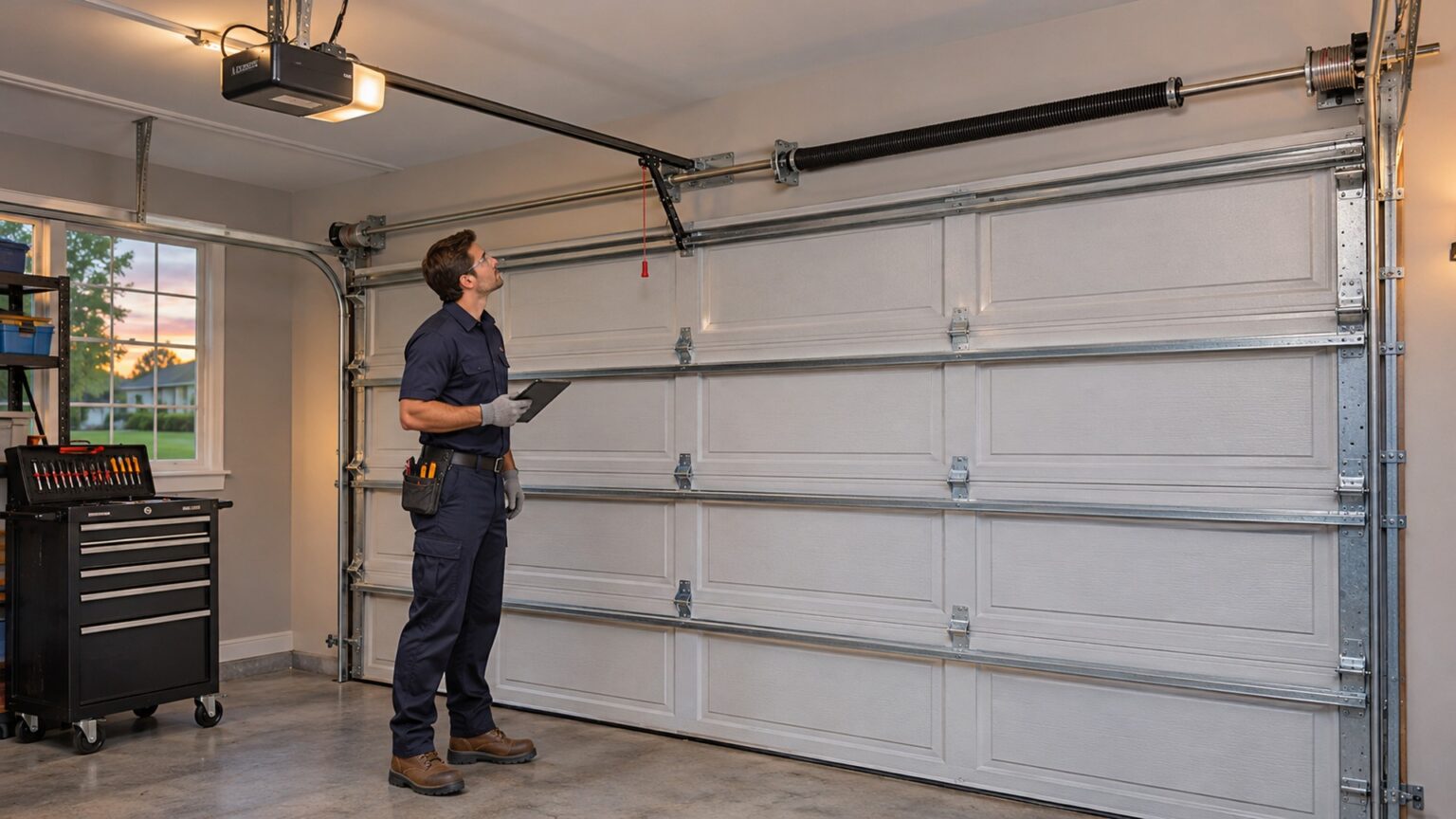
emergency garage door services help homeowners respond when a garage door stops working, becomes unstable, or creates an immediate security concern. A broken spring, loose lift cable, damaged track, or door that will not close may prevent normal access and expose people to serious hazards. The safest response begins with recognising what has failed, keeping everyone away from dangerous components, and contacting a qualified technician when the door cannot be operated reliably. Fast service matters, but sound diagnosis and safe repair matter more than simply getting the door moving again.
A garage door is a complete mechanical system, not just a motor and a few metal panels. Springs balance its weight, cables transfer forces, tracks guide movement, and electronic controls manage automatic operation. An issue in one part may affect several others. This guide explains twelve practical safety decisions, urgent repair options, realistic pricing questions, and ways to prevent avoidable future breakdowns.
When Are Emergency Garage Door Services Necessary?
A garage door needs prompt professional attention when it hangs crookedly, falls unexpectedly, has a visible broken spring, shows a loose cable, leaves the garage unsecured, or fails an essential safety function. A loud bang followed by unusual movement may indicate a spring failure. A door that has come off its tracks can be unstable even while standing still. Stop using it and keep children, pets, and vehicles away from the opening.
Not every inconvenience is equally urgent. A remote control with a flat battery may be an ordinary troubleshooting issue if the door itself is otherwise safe. A door stuck open overnight can create a security problem even without a mechanical collapse risk. Describe both the symptoms and their consequences when arranging emergency garage door services so the company can prioritise appropriately.
Know When to Call Emergency Responders Instead
If someone is trapped or injured, a door is collapsing, or electrical equipment is smoking or burning, contact emergency responders as appropriate. A garage door repair company is not a substitute for medical, fire, or rescue services. Do not enter an unsafe area to examine the mechanism.
12 Safe Repair Decisions Every Homeowner Should Know
1. Stop Operating a Door That Looks Unstable
If one side is noticeably lower, a roller has left its track, or a cable hangs loose, do not press the opener again to see whether the problem corrects itself. Repeated movement may increase damage and create a falling door hazard. Keep the area clear and tell household members not to use wall buttons, remotes, or connected apps. The technician should assess how the door is supported before deciding whether any movement is safe.
2. Recognise the Signs of a Broken Spring
A spring may fail with a sharp noise, after which the opener struggles or the door becomes unusually heavy. Torsion springs are commonly located above the opening, while extension springs are positioned alongside the horizontal tracks on some systems. Both store significant energy. Do not touch winding hardware, try to stretch a spring, or lift the door manually to confirm the problem. Ask for a professional inspection and a replacement matched to the actual door.
3. Treat Damaged Cables and Brackets as Dangerous
Lift cables work with the spring system to manage the door’s weight. Frayed cables, loose ends, a displaced cable drum, or a damaged lower bracket should be assessed by a trained technician. Bottom brackets and related fittings may remain under dangerous tension when the door is closed. Never loosen them or attempt to wind the cable back into position. Photograph the visible problem only from a safe distance if the dispatcher requests an image.
4. Avoid Pulling the Emergency Release on a Suspect Door
The emergency release disconnects the opener from the door; it does not repair a broken spring or make a heavy door safe to lift. Releasing an open or unstable door can allow unexpected movement. If you suspect damaged counterbalance parts, leave the release alone and request professional help. In an ordinary power outage with a sound door, the manufacturer’s instructions may describe manual operation, but do not apply that procedure to a damaged system.
When Manual Operation May Be Appropriate
Consider manual operation only if the manufacturer permits it and there is no indication of spring, cable, track, or structural failure. If anything feels unusually heavy or unbalanced, stop and arrange service. Never attempt to catch a moving door.
5. Secure the Home Without Forcing the Door
When a door is stuck open, protect people first and consider securing the interior door between the garage and living space. Move valuables only if you can do so without going beneath unstable panels. A technician may be able to make the opening secure temporarily before completing a full repair. Ask what can be achieved safely if replacement parts are unavailable. Do not wedge, prop, or tie up a damaged door with makeshift materials.
6. Distinguish an Opener Failure From a Door Failure
A motor that hums without moving the door may have a drive problem, but it can also be struggling against a mechanical fault. A remote that does not respond might involve batteries, controls, power supply, or a receiver. Report whether the wall button works and whether lights or error indicators appear, without repeatedly cycling a faulty door. The technician should inspect both the opener and mechanical system rather than replace the motor automatically.
7. Take Safety Sensor Problems Seriously
Modern automatic openers commonly use photoelectric sensors and a reversal mechanism to reduce entrapment hazards. If a closing door behaves unpredictably, ignores a detected obstruction, or fails a manufacturer specified safety test, stop automatic operation until it is corrected. Visible dirt or an obvious object blocking the sensor path may be noted safely, but do not bypass the sensors or increase closing force to defeat a safety problem. A trained technician can identify whether alignment, wiring, controls, or another defect is involved.
8. Explain the Problem Clearly When Calling
Give the dispatcher the door type, approximate size, visible symptoms, and whether it is stuck open, closed, or partly raised. Mention a vehicle trapped inside, suspected storm damage, an urgent security concern, or a broken cable. Explain whether the garage can be reached through another entrance. Clear details help the company determine the appropriate technician, tools, and likely parts. Never approach unstable hardware just to collect a serial number.
9. Verify the Company Before Authorising Work
Urgency can make homeowners vulnerable to misleading listings and pressure selling. Ask for the legal business name, local operating area, insurance information, and any credentials required where you live. Confirm whether a company employee or subcontractor will arrive. Read specific feedback about pricing, completed work, and customer support rather than trusting a star rating alone. A genuine emergency garage door services provider should be able to explain who is responsible for the repair and subsequent warranty support.
10. Get an Itemised Emergency Repair Estimate
Ask whether there is a dispatch charge, diagnostic fee, travel charge, after hours premium, or additional cost for parts. Request a written explanation of what failed and which replacements are necessary before approving work, when circumstances permit. An emergency does not automatically justify replacing the entire door or every spring and roller. If new damage is discovered, request an updated price and clear reason for the change. Keep the scope and authorisation documented.
11. Confirm the Correct Parts and Repair Method
Compatible springs, rollers, cables, and opener components must match the actual door and its operating requirements. A heavier duty label does not guarantee a correct spring. Ask whether parts are available immediately and whether the technician recommends replacing related components based on wear or manufacturer guidance. The provider should also explain any unfinished work if a temporary security measure is used. Repair quality depends on suitable parts, correct adjustment, and proper testing, not speed alone.
12. Require a Safety Check Before Reusing the Door
Before the job is closed, ask the technician to demonstrate smooth travel and explain which components were repaired. The final checks should follow the manufacturer and applicable safety requirements, including appropriate opener reversal tests and counterbalance assessment when relevant. Confirm that no unusual rubbing, tilting, or cable slack remains. Request an itemised invoice and the applicable warranty terms. A door that moves once is not necessarily a door that is ready for normal use.
What Emergency Garage Door Services Typically Repair
Most urgent calls involve a smaller group of mechanical or electrical problems. A broken spring can prevent the door from lifting. A displaced cable can cause uneven travel. A bent track or damaged roller may jam the door. Failed opener components and sensor faults can prevent reliable automatic operation. Weather or vehicle impact may damage panels, supports, and surrounding framing.
Broken Springs and Counterbalance Issues
Spring work deserves special caution because components store substantial mechanical energy. A technician should evaluate the complete counterbalance arrangement and identify replacement parts suitable for the door. If one spring has failed on a two spring setup, ask whether replacing the pair is recommended and why. The answer should consider the system’s condition and manufacturer guidance, not a sales script.
Doors Off Track or Partly Open
A door sitting diagonally in the opening may be supported unevenly and could shift without warning. Keep the area clear and avoid trying to push the panels or rollers into place. Repairs may include track work, cable correction, roller replacement, and checking whether panels or mounting points were damaged. The technician should determine why the door left its normal path to reduce the chance of recurrence.
Openers, Controls, and Electrical Faults
An opener may fail because of a motor, drive mechanism, power supply, control board, or safety input. Other issues can imitate an opener failure. Professional diagnosis is important because replacing the motor will not correct a broken spring or obstructed track. If the device shows signs of electrical damage, leave it unused and seek appropriate help rather than opening the housing yourself.
How Much Does an Emergency Garage Door Repair Cost?
When comparing emergency garage door services, there is no single dependable national price for urgent repairs. Costs vary by location, damage, door size, part availability, labour requirements, and service time. A straightforward adjustment and a major counterbalance repair involve different risks and materials. Evening, weekend, and holiday appointments may carry additional charges. Ask for the full total rather than relying on a low advertised starting rate.
Understand the Parts of a Repair Quote
A quote may separate the initial visit, diagnosis, parts, labour, and optional work. For example, a hypothetical bill with a $90 service charge, $200 in labour, and $100 in parts would total $390 before any applicable taxes. These are illustration figures, not verified local market rates. Confirm whether the diagnostic charge is credited toward repairs and whether an unsuccessful visit or special order creates another fee.
When Repair Versus Replacement Makes Sense
Isolated hardware faults are often evaluated for repair, while extensive panel damage, unavailable compatible parts, structural problems, or multiple failing components may favour replacement. Ask for separate estimates when the choice is not clear. Compare safety, service life expectations, warranty coverage, and the cost of returning for additional work. A rushed replacement decision should be supported by documented findings, not simply the fact that a door stopped working at night.
What Happens During a Professional Emergency Visit?
During emergency garage door services, a responsible technician begins by assessing the immediate hazard and controlling access around the opening. The inspection identifies whether the problem concerns springs, cables, tracks, panels, opener controls, or more than one component. After explaining the findings and obtaining approval, the technician performs the repair or arranges a safe temporary solution where possible.
The handover should include operating tests, relevant safety checks, instructions for normal use, and documentation. Ask whether the door may be operated immediately or whether additional work is pending. The company should explain what happens if the same problem returns and how warranty claims are submitted.
Questions Worth Asking Before the Technician Leaves
Ask what caused the failure, whether other related parts show concerning wear, and how often the system should be inspected. Confirm that the safety sensors and automatic reversal function have been checked according to the manufacturer’s procedure. Request clear advice about anything you should not operate. These questions help turn emergency garage door services into a more reliable long term repair rather than a temporary restart.
How to Avoid Garage Door Emergencies in the Future
Routine observation may reduce the future need for emergency garage door services by revealing a problem before the door becomes stuck. Listen for new grinding or snapping sounds, notice uneven movement, and look for visible cable damage without touching the mechanism. Keep the tracks and sensor area free from ordinary household clutter. Arrange professional inspection when the door behaves differently or when maintenance is due under the manufacturer’s guidance.
Follow a Sensible Maintenance Routine
Use the opener manual for recommended safety checks and cleaning. Certain hinges and rollers may need a specified lubricant, while other parts should not be lubricated. Do not tighten spring hardware or adjust cable tension during routine home maintenance. A qualified inspection can evaluate balance, mounting hardware, and the condition of parts that are not safe for homeowners to service.
Prepare for Outages and Bad Weather
Know where the opener manual is stored and make sure household members understand that an emergency release is not a remedy for mechanical damage. Keep an alternative household entrance accessible when practical. In storm prone areas, ask whether the door and its installation meet the applicable wind resistance requirements. After a severe impact or storm, inspect visible damage from a safe location before attempting automatic operation.
What to Do While Waiting for Emergency Repairs
While a technician is on the way, explain to everyone at home that the door is out of use. Keep children and pets away, and do not stand beneath a partly raised door. If a vehicle is trapped, arrange another ride rather than risking a dangerous manual lift. You can gather invoices, photographs taken safely, and the opener manual for the visiting professional. Avoid repeatedly pressing control buttons to demonstrate the fault.
If the garage cannot be secured, ask the dispatcher whether a temporary securing visit is possible and describe any immediate exposure to weather or theft. Never promise a technician that the door can be moved manually when you have not established its condition. The most useful preparation is a clear description of symptoms and safe access to the property. A realistic arrival window is better than an unsupported guarantee of instant service.
Common Mistakes That Make Emergencies Worse
Repeatedly pressing the remote on a crooked door can turn a repairable issue into wider damage. Pulling the release on a suspended door can create a sudden falling hazard. Attempting to replace a spring with household tools is particularly dangerous. Other mistakes include accepting an unexplained quote, ignoring sensor failures, and assuming every service advertised as immediate will actually arrive within a guaranteed time.
A useful response is simple: identify the concern from a safe distance, stop operation if the door appears defective, keep others away, and communicate clear symptoms to a qualified provider. Prioritise people and security over getting a vehicle out a few minutes sooner.
Frequently Asked Questions
1. When should I call emergency garage door services?
Call when a door is unstable, has a broken spring or cable, fails a safety function, or leaves the garage unsecured. Keep clear of damaged moving parts.
2. Can I open a garage door with a broken spring?
Do not operate it manually or with the opener. The counterbalance may be compromised, making unexpected movement or falling possible.
3. Are emergency garage door repairs available overnight?
Some companies advertise overnight or continuous response, but actual availability varies. Confirm dispatch timing, service area, and after hours fees directly.
4. What should I do if the garage door is stuck open?
Keep people away from unstable panels, secure the interior entrance if safe, and request professional assessment. Do not improvise supports.
5. How can I avoid unnecessary emergency repair charges?
Ask for an itemised written estimate covering diagnosis, labour, parts, dispatch, and any after hours premium before approving work when safe to do so.
6. Can a technician repair a garage door during one visit?
Many faults can be addressed during one visit if the correct parts are available, but major damage or unusual components may require additional work.
Conclusion
Emergency garage door services are most valuable when they restore dependable operation without overlooking the hazards that caused the breakdown. If springs, cables, tracks, or essential safety features appear damaged, stop using the door and leave repairs to a trained professional. Compare clearly explained repair recommendations, itemised pricing, and final safety checks before accepting the work. With responsible maintenance and prompt attention to warning signs, homeowners can reduce avoidable disruptions and protect everyone who uses the garage.
