
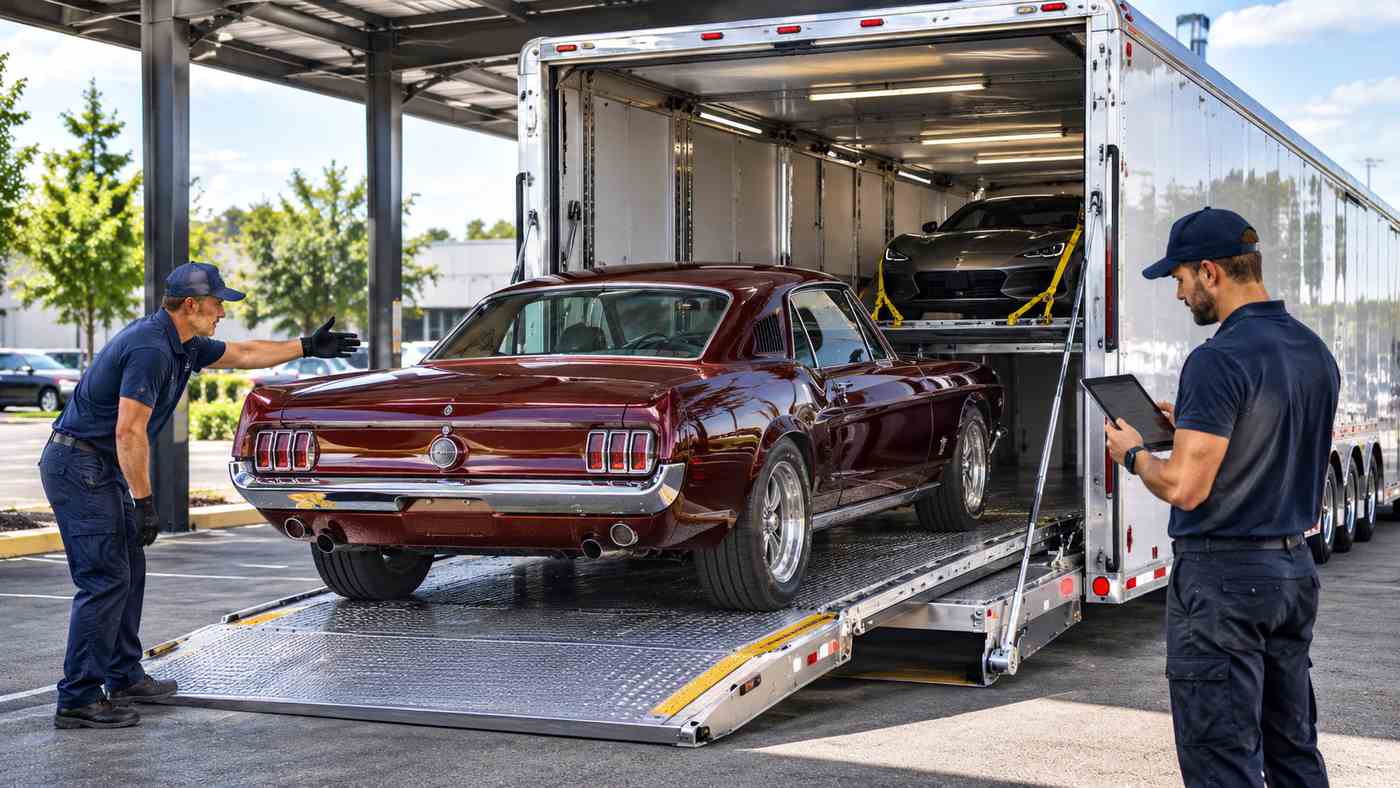
Shipping a valuable vehicle requires more planning than arranging ordinary transportation. Whether you own a restored classic car, an exotic sports car, a collector’s vehicle, or a luxury sedan, protecting its condition throughout the journey is essential. From selecting the appropriate trailer to checking insurance coverage and preparing for pickup, every decision can influence the shipping experience.
Enclosed auto transport offers a specialized vehicle shipping option designed to reduce exposure to rain, road debris, dust, and other external conditions. Unlike open car carriers, enclosed trailers surround vehicles with protective walls and a roof, helping safeguard sensitive paintwork, custom finishes, and valuable automotive components.
This transportation method is particularly useful for vehicles that require additional care during loading, transit, and unloading.
However, selecting an enclosed carrier does not automatically guarantee damage-free delivery. The quality of the carrier, loading equipment, insurance arrangements, and inspection procedures remains important.
Many vehicle owners also have questions about shipping prices, delivery times, transport insurance, and the differences between open and enclosed trailers.
Understanding these details can help you avoid unnecessary costs and choose transportation that matches your vehicle’s requirements.
This guide explains how enclosed vehicle shipping works, the types of cars that benefit most, seven practical tips for a safer shipping experience, and what to consider when choosing a professional auto transport provider in the United States.
What Is Enclosed Auto Transport?
Enclosed auto transport is a vehicle transportation service that uses a covered trailer to move cars between locations.
Instead of placing the vehicle on an open carrier, the shipping company loads it into a trailer with protective walls and a roof.
This helps reduce direct exposure to weather conditions, flying debris, and other elements commonly encountered during highway transportation.
Enclosed shipping is frequently used for luxury, exotic, classic, vintage, modified, and collectible vehicles.
It can also be suitable for ordinary passenger cars when owners prefer additional protection.
How Enclosed Vehicle Shipping Works
The process generally begins when a customer requests a transportation quote.
The shipping provider reviews important information, including the pickup location, delivery destination, vehicle dimensions, condition, and preferred shipping dates.
A suitable carrier is then arranged.
Before loading, the driver and customer or authorized representative inspect the vehicle’s condition.
Any existing damage should be documented.
The vehicle is then loaded using the carrier’s available equipment and secured inside the trailer.
During transportation, the car remains enclosed until the driver reaches the destination.
At delivery, the vehicle is inspected again to identify any changes in condition.
Enclosed Transport vs. Open Transport
Open transport involves loading vehicles onto trailers without complete protective enclosures.
It is widely used for everyday passenger cars, dealership deliveries, and vehicle relocations.
Open carriers typically accommodate more vehicles, which can make the service less expensive.
Enclosed carriers generally transport fewer vehicles per trip.
They may also require specialized loading equipment and experienced drivers.
These differences help explain the higher prices associated with enclosed shipping.
Both transport methods can be suitable when performed by qualified carriers using appropriate equipment.
Why Choose Enclosed Car Shipping?
Vehicle owners select enclosed shipping for several reasons.
The most common is the desire to reduce exposure to environmental conditions.
However, the decision may also involve vehicle value, ground clearance, privacy, and restoration requirements.
Protection Against Road Debris
Vehicles transported on open carriers may encounter dust, small stones, insects, or other road debris.
A fully enclosed trailer provides a physical barrier against many of these external elements.
This can be particularly important for expensive paintwork or rare exterior finishes.
However, protective walls do not eliminate risks associated with loading, securing, or movement inside the trailer.
Reduced Weather Exposure
Long-distance shipments may encounter rain, snow, road salt, and changing temperatures.
An enclosed trailer reduces direct exposure to these conditions.
This may be valuable for classic vehicles, restored cars, and automobiles with sensitive exterior components.
Additional Privacy
Some high-value vehicle owners prefer not to display their cars throughout transit.
Enclosed trailers keep vehicles out of public view during transportation.
This can provide an additional level of discretion.
Specialized Loading Options
Low-clearance vehicles may require equipment that reduces the risk of scraping.
Some enclosed carriers use hydraulic lift gates to load vehicles without the steep approach angles associated with ordinary ramps.
However, lift gates are not universal on every enclosed trailer.
Customers should confirm the loading equipment before booking.
7 Smart Tips for Safe Enclosed Auto Transport
Choosing the right transportation service requires careful preparation.
These seven practical recommendations can help vehicle owners reduce avoidable problems during the shipping process.
1. Choose the Right Type of Enclosed Trailer
Not every enclosed car carrier has the same design.
Different trailers offer varying levels of protection, capacity, loading equipment, and cost.
Understanding these differences is important before selecting a service.
Hard-Sided Enclosed Trailers
Hard-sided trailers use rigid walls made from suitable structural materials.
They provide a protective enclosure around the transported vehicles.
These trailers are commonly used for classic cars, luxury vehicles, and high-value automobiles.
A hard-sided design can offer more substantial protection from direct weather exposure and road debris than an open carrier.
However, the condition of the trailer and its loading procedures still matter.
Soft-Sided Enclosed Trailers
Soft-sided carriers use a structural frame with reinforced flexible coverings.
They provide a degree of weather and debris protection while allowing a different trailer configuration.
The exact protection depends on the design and condition of the coverings.
Customers should confirm whether the quoted service includes a hard-sided or soft-sided trailer.
Multi-Car Enclosed Transport
Multi-car enclosed trailers carry several vehicles within one protected structure.
This arrangement can distribute transportation costs among different shipments.
It may provide a practical balance between protection and price.
However, additional loading or unloading stops may affect the delivery schedule.
Single-Car Enclosed Transport
A single-car trailer carries one vehicle.
This may be appropriate for rare automobiles, specialized deliveries, or shipments requiring particularly careful coordination.
It can also reduce handling associated with additional vehicle pickups.
However, the service generally costs more than shared enclosed transportation.
Climate-Controlled Transport
Some specialized enclosed carriers offer temperature or humidity management.
These services may be relevant for museum vehicles, sensitive restorations, or other unusual transportation requirements.
Climate control should not be assumed to be included in a standard enclosed shipping quote.
Customers should confirm its availability and specifications.
2. Check the Auto Transport Company’s Registration and Credentials
Before shipping a valuable vehicle, confirm who is responsible for arranging and performing the transportation.
In the United States, interstate automobile transportation is regulated through the Federal Motor Carrier Safety Administration.
The FMCSA maintains information about registered carriers and brokers.
Understand the Difference Between Brokers and Carriers
An auto transport broker arranges transportation with a motor carrier.
The broker generally coordinates booking, scheduling, and communication.
The motor carrier operates the truck and physically transports the vehicle.
Some businesses may hold different types of operating authority, but their actual role should be clear.
The distinction matters because the carrier physically handling the vehicle may be a different company from the organization arranging the shipment.
Verify FMCSA Registration
Customers can use the official FMCSA registration resources to review relevant operating authority information.
Important identifiers include the USDOT number and MC number.
The FMCSA also provides guidance about avoiding deceptive auto transport practices.
Registration is a useful verification step, but it should not be treated as a guarantee of service quality.
Ask About the Assigned Carrier
A shipping provider should be able to explain how carriers are selected.
Relevant questions include whether the carrier has experience with enclosed transportation, appropriate equipment, and suitable insurance.
For expensive or unusual vehicles, experience with similar shipments may be especially valuable.
Review Contract Terms
Before accepting a quote, review the transportation agreement.
Important conditions may include cancellation fees, payment requirements, pickup windows, delivery arrangements, and damage reporting procedures.
A professional-looking website or attractive advertisement should not replace a careful review of the contract.
3. Understand Enclosed Auto Transport Costs
One of the most common questions vehicle owners ask is how much enclosed shipping costs.
The answer depends on the route, vehicle, transportation method, market conditions, and service requirements.
Why Enclosed Shipping Costs More
Enclosed carriers generally transport fewer vehicles than open trailers.
They may also use additional protective equipment and specialized loading systems.
These factors increase the cost of moving each vehicle.
Navi Auto Transport’s published enclosed shipping guide describes prices starting from approximately $499 on certain shorter routes.
The company also estimates that enclosed transportation commonly costs around 40% to 60% more than comparable open shipping.
These figures are provider-advertised estimates, not guaranteed market rates.
Actual quotations may vary considerably.
Distance and Route
Longer distances generally increase the total shipping price.
However, the price per mile may decrease on longer routes.
Popular transportation corridors can have different carrier availability from remote destinations.
Vehicle Size and Weight
A large SUV or truck may require more trailer capacity than a small sports car.
This can affect pricing.
Vehicles with unusual dimensions or modifications may also require special arrangements.
Vehicle Condition
A non-running vehicle may require winches or other loading equipment.
Not every enclosed carrier is equipped to handle an inoperable vehicle.
Customers should disclose mechanical or mobility problems before accepting a booking.
Seasonal Demand
Carrier availability may change throughout the year.
Relocation patterns, seasonal weather, and holiday schedules can influence pricing and pickup availability.
Urgent Shipping
A request for immediate pickup can reduce the number of suitable carriers available.
Expedited transportation may involve additional charges.
Request a Detailed Quote
A useful quotation should explain the transport type, expected pickup arrangements, delivery location, payment terms, and relevant additional fees.
Compare quotations based on the same vehicle details and service requirements.
A very low initial estimate may not reflect the final cost of securing a suitable carrier.
4. Verify Vehicle Transport Insurance
Insurance is particularly important when transporting an expensive or irreplaceable vehicle.
However, insurance arrangements can be misunderstood.
Customers should not assume that every type of loss is covered simply because the shipment is described as insured.
Understand Cargo Insurance
Motor carriers may maintain cargo insurance covering specified losses involving transported vehicles.
The available limits, deductibles, exclusions, and claim procedures depend on the actual policy.
Navi’s enclosed transport page advertises carrier cargo coverage ranging from $250,000 to $1 million for certain arrangements.
However, customers should confirm the coverage applicable to their assigned carrier and specific shipment.
An advertised limit is not a guarantee that every claim will be paid.
Ask for Insurance Documentation
Customers transporting high-value vehicles may request confirmation of the carrier’s relevant insurance arrangements.
The documentation should be current and applicable to the shipment.
It is also important to understand whether the stated limit applies per vehicle, per occurrence, or under another condition.
Check Policy Exclusions
Different policies may contain exclusions involving particular circumstances.
Examples can include certain pre-existing damage, mechanical problems, or property left inside the vehicle.
Customers should review the applicable terms instead of relying solely on general marketing statements.
Understand Broker Bonds
A broker’s financial security arrangement is different from the motor carrier’s cargo insurance.
The presence of a broker bond should not be confused with coverage for physical damage to an individual vehicle.
The actual carrier’s insurance and the transportation contract remain important.
Consider Additional Protection
Owners of exceptionally valuable cars may want to discuss transportation with their personal automobile insurer.
Some specialty insurers provide coverage relevant to collector vehicles or transportation-related risks.
The appropriate arrangement depends on the policy and vehicle.
5. Prepare Your Car Before Pickup
Vehicle preparation is an important part of a successful shipping experience.
Proper preparation helps the driver handle the vehicle safely and establishes a clear record of its condition.
Clean the Vehicle
Washing the exterior before pickup makes existing scratches, chips, and other defects easier to identify.
A clean surface can improve the accuracy of the initial inspection.
Take Detailed Photographs
Photograph the vehicle before transportation.
Useful images include the front, rear, sides, wheels, roof, interior, and any existing damage.
Take clear photographs in suitable lighting.
Keep the original files with their dates where possible.
These records may be useful if questions arise about vehicle condition.
Remove Loose Personal Items
Carriers may restrict personal belongings inside transported vehicles.
Loose objects can move during transportation and may not be covered by cargo insurance.
Remove unnecessary valuables, documents, electronic devices, and other personal property.
Confirm the carrier’s requirements before pickup.
Check Fluid Levels and Tires
Review basic vehicle operating conditions.
The car should have sufficient fuel for safe loading and unloading, but many carriers prefer a low fuel level to reduce unnecessary weight.
Follow the assigned carrier’s instructions.
Ensure the battery is suitable for starting and that tires are properly inflated.
Secure Accessories
Removable antennas, exterior accessories, and aftermarket components may need special attention.
Disclose modifications such as low spoilers, wide body kits, or unusual suspension settings.
The driver should know about features that affect loading clearance.
Disable Unnecessary Alarms
Vehicle alarms may activate during transportation.
Discuss the appropriate settings with the carrier.
Do not disable essential security functions without understanding the consequences.
6. Confirm Loading Equipment and Vehicle Handling Procedures
Loading and unloading are important stages of enclosed vehicle transportation.
A trailer can provide excellent protection during transit, but incorrect loading may still damage a vehicle.
Hydraulic Lift-Gate Loading
A hydraulic lift gate uses a platform to raise or lower a vehicle between the ground and trailer level.
This can be particularly useful for vehicles with limited ground clearance.
It helps avoid certain approach-angle problems associated with loading ramps.
However, the equipment must be suitable for the vehicle’s dimensions and weight.
Low-Clearance Vehicles
Sports cars and modified automobiles may have front splitters, low bumpers, side skirts, or aftermarket suspension.
These features can create loading challenges.
Customers should provide accurate clearance information before shipping.
The carrier can then determine whether appropriate equipment is available.
Wheel and Frame Restraints
Vehicles must be secured to prevent inappropriate movement during transportation.
Carriers may use suitable wheel straps or other approved restraint systems.
The securing method should follow applicable equipment guidance and avoid damaging delicate components.
Avoid Unnecessary Handling
For valuable collector vehicles, minimizing unnecessary movement can be desirable.
However, some shipments involve intermediate pickups, deliveries, or operational changes.
Ask whether the vehicle is expected to remain on the same trailer throughout the journey.
Do not assume a direct shipment unless the agreement specifies it.
Document the Loading Inspection
Before departure, the driver should conduct a vehicle condition inspection.
The findings are commonly recorded on the Bill of Lading or related inspection documentation.
Review the record carefully and retain a copy.
7. Inspect the Vehicle Carefully at Delivery
The delivery inspection is one of the most important final steps.
Customers should not assume that a vehicle is undamaged merely because it arrives inside an enclosed trailer.
Compare the Vehicle With Pickup Photographs
Examine the same areas documented before shipment.
Look at exterior panels, wheels, bumpers, mirrors, trim, and other relevant components.
Pay particular attention to low-clearance areas that may have been exposed during loading.
Review the Bill of Lading
The Bill of Lading commonly documents the vehicle’s condition and transportation details.
Compare delivery observations with the pickup record.
If new damage is visible, record it accurately according to the carrier’s procedures.
Photograph Any Concerns
Clear photographs can help document the condition of the vehicle at delivery.
Include both close-up images and wider views showing the location of any damage.
Report Damage Promptly
If damage is discovered, follow the transportation agreement’s reporting requirements.
Some providers have short notification periods.
Navi Auto Transport advises customers to document damage on the delivery Bill of Lading and promptly contact its support team.
The relevant deadlines and rights depend on the actual contract, carrier, policy, and applicable law.
Keep Important Records
Retain your quotation, booking confirmation, inspection reports, photographs, invoices, and relevant communications.
These documents may be helpful if a dispute arises.
Which Vehicles Benefit Most From Enclosed Auto Transport?
Different types of vehicles may justify the additional protection of enclosed shipping.
Luxury Cars
Premium sedans and luxury SUVs often have expensive paintwork, specialized materials, and valuable exterior components.
Owners may prefer the reduced environmental exposure offered by enclosed transport.
Classic and Vintage Cars
Older vehicles may have rare parts, original finishes, or restoration work that is difficult to reproduce.
For these automobiles, protecting their condition can be especially important.
Exotic Sports Cars
Exotic cars often have low ground clearance and specialized bodywork.
A suitable enclosed trailer with appropriate loading equipment may be preferable.
Collector and Auction Vehicles
Cars purchased through specialist auctions may need transportation from the auction location to a storage facility or private collection.
Coordinating pickup procedures with the seller or auction facility is important.
Restored and Custom Cars
Custom paint, modified suspension, and specialized body components can require additional care.
Vehicle owners should clearly communicate any modifications that affect handling or loading.
High-Value Electric Vehicles
Certain electric vehicles may benefit from enclosed shipping, especially when valuable finishes or specialized configurations are involved.
The carrier should understand relevant operating procedures and battery-related transportation requirements.
Enclosed Auto Transport vs. Driving the Car
Some owners consider driving their vehicle to its destination instead of arranging professional transportation.
The appropriate choice depends on distance, vehicle condition, costs, and personal preferences.
Vehicle Mileage
Driving increases the vehicle’s recorded mileage.
For certain collector vehicles, mileage preservation may be important.
Transporting the car on a trailer avoids the mileage associated with driving the route.
Road Exposure
A driven vehicle encounters normal traffic, weather, and road conditions.
Enclosed shipping reduces several forms of exterior exposure during transit.
However, transportation introduces its own loading and handling risks.
Travel Time and Personal Expenses
Driving a long distance may involve fuel, lodging, meals, and the driver’s time.
These costs should be compared with a transportation quotation.
Mechanical Considerations
Older collector vehicles may not be suitable for extended highway journeys.
A trailer can avoid unnecessary mechanical use.
However, the owner should confirm that the carrier can safely load the vehicle.
How Navi Auto Transport Arranges Enclosed Vehicle Shipping
Vehicle owners researching professional shipping services can review Navi Auto Transport’s information about covered vehicle transportation.
The company’s dedicated guide at naviautotransport.com/enclosed-auto-transport/ explains available enclosed carrier arrangements, loading equipment, advertised pricing, carrier selection, and delivery procedures.
Navi Auto Transport operates as an auto transport broker rather than a company that physically carries every shipment using its own trucks.
The FMCSA identifies Navi Transport Services LLC under USDOT 4248916 and MC-1646663, with active property broker authority as of its November 2026 record.
Enclosed Shipping Options
Navi describes arranging transportation with hard-sided, soft-sided, multi-car, and specialized enclosed carriers.
The appropriate equipment depends on the vehicle and selected service.
Carrier Screening
The company states that it reviews carrier authority, insurance, equipment, and relevant performance information.
Customers should confirm the assigned carrier’s credentials before shipment.
Specialized Loading
Navi advertises hydraulic lift-gate loading and suitable vehicle restraints for selected enclosed shipments.
These features may be useful for sports cars and other low-clearance vehicles.
However, customers should verify their availability for the specific booking.
Door-to-Door Delivery
The company describes door-to-door shipping across the United States.
In practice, large transport trucks may be unable to reach certain residential streets because of road restrictions, overhead obstructions, or limited access.
In these situations, an alternative nearby loading location may be arranged.
Shipment Tracking
Navi advertises a tracking service called Navi Track 360, intended to provide shipment-related updates.
Actual tracking capabilities and update frequency should be confirmed during booking.
Insurance and Claims Coordination
The company describes arranging transportation through insured motor carriers and assisting customers with damage claim coordination.
However, the assigned carrier’s insurance policy determines the applicable cargo coverage.
Before booking, request confirmation of the relevant insurance and claims procedures.
How Long Does Enclosed Auto Transport Take?
Shipping time depends on distance, route, carrier availability, and weather.
The process generally involves two separate periods: the time required to arrange pickup and the time required for transportation.
Pickup Scheduling
Enclosed carriers are more specialized than many open carriers.
Navi’s website advertises a typical enclosed pickup window of approximately two to five days.
This is a provider estimate, not a guaranteed schedule.
Vehicle owners with strict deadlines should confirm availability in advance.
Short-Distance Shipping
A relatively short interstate shipment may require less driving time than cross-country transport.
However, pickup coordination, road restrictions, and other stops can affect the total schedule.
Cross-Country Shipping
Long-distance transportation may require several days after pickup.
Routes between the East and West Coasts can involve changing weather conditions and operational requirements.
Customers should plan for reasonable schedule flexibility.
Factors That Can Cause Delays
Potential causes include severe weather, traffic restrictions, mechanical problems, route changes, and limited specialized carrier availability.
An experienced broker or carrier should explain how important changes will be communicated.
How to Compare Enclosed Car Shipping Quotes
A low quotation does not always represent the best value.
Customers should compare what each provider includes.
Confirm Trailer Type
Make sure every quote refers to the same type of enclosed transportation.
A single-car hard-sided trailer may cost more than shared soft-sided transport.
Review Insurance Details
Compare actual insurance arrangements rather than relying only on promotional coverage figures.
Check Loading Equipment
If your vehicle has low ground clearance, confirm whether a lift gate or another suitable loading method is included.
Understand Pickup Windows
A provider offering a lower price may have a longer scheduling window.
Decide whether the expected timing suits your needs.
Review Payment Terms
Check deposits, cancellation conditions, dispatch arrangements, and remaining payment requirements.
Verify the Transport Provider
Use official registration resources where appropriate and review available business information.
Be cautious about unclear company identities or requests for unusual payment arrangements.
Common Enclosed Car Shipping Mistakes to Avoid
Several avoidable errors can create problems during vehicle transportation.
Booking Too Late
Specialized carriers may have limited availability.
Booking early can provide more flexibility, although it does not guarantee a particular rate.
Failing to Disclose Modifications
A vehicle’s dimensions, ground clearance, or operating condition may affect carrier compatibility.
Provide accurate information before booking.
Assuming All Enclosed Trailers Are Identical
Different carriers use different equipment.
Confirm the trailer type and loading method.
Ignoring Insurance Exclusions
An advertised coverage amount does not mean every possible loss is covered.
Review the relevant terms.
Leaving Valuables Inside the Vehicle
Personal belongings may be restricted or excluded from insurance coverage.
Remove unnecessary items before pickup.
Skipping Condition Photographs
Without clear records, it can be more difficult to establish whether damage occurred during transportation.
Document the car carefully.
Signing Without Inspecting
Review the vehicle at delivery and accurately record any concerns before signing applicable condition documents.
Future Trends in Enclosed Vehicle Shipping
Vehicle transportation services continue evolving as logistics technology and customer expectations change.
More Detailed Shipment Tracking
Digital tracking systems can help customers receive updates about transportation progress.
However, tracking accuracy depends on the actual system and carrier integration.
Improved Logistics Coordination
Modern dispatch systems may help brokers and carriers organize schedules, routes, and communication.
These improvements can support efficiency when implemented effectively.
Specialized Electric Vehicle Handling
As electric vehicles become more common, transport providers need appropriate knowledge of vehicle-specific loading procedures and safety requirements.
Stronger Digital Documentation
Electronic inspection records and photographs can improve recordkeeping.
These tools may support communication and claims investigation.
Greater Transparency in Pricing
Customers increasingly expect clear information about service inclusions and potential additional charges.
Written quotations and straightforward contractual terms remain important.
Frequently Asked Questions
1. What is enclosed auto transport?
Enclosed auto transport is a vehicle shipping service that uses a covered trailer to reduce exposure to weather, road debris, and external conditions. It is commonly chosen for classic, luxury, exotic, and collectible cars.
2. How much does enclosed car shipping cost?
Prices vary by distance, vehicle size, trailer type, season, and carrier availability. Enclosed transport generally costs more than open shipping, so request a vehicle-specific quote.
3. Is enclosed auto transport safer than open shipping?
Enclosed transport reduces direct exposure to weather and road debris. However, it does not eliminate loading, handling, mechanical, or transit risks. Carrier qualifications and insurance remain important.
4. How should I prepare my car for enclosed transportation?
Clean the vehicle, photograph its condition, remove unnecessary belongings, check basic operating conditions, disclose modifications, and review the carrier’s pickup instructions.
Conclusion
Enclosed auto transport offers a practical option for owners who want additional protection when shipping luxury, classic, exotic, or otherwise valuable vehicles. Choosing the correct trailer, confirming carrier credentials, reviewing insurance, and documenting vehicle condition can help reduce avoidable risks.
The best transportation arrangement depends on the car’s value, design, condition, destination, and shipping budget. With careful planning and a qualified carrier, vehicle owners can make more informed decisions and arrange transportation that suits their needs.
